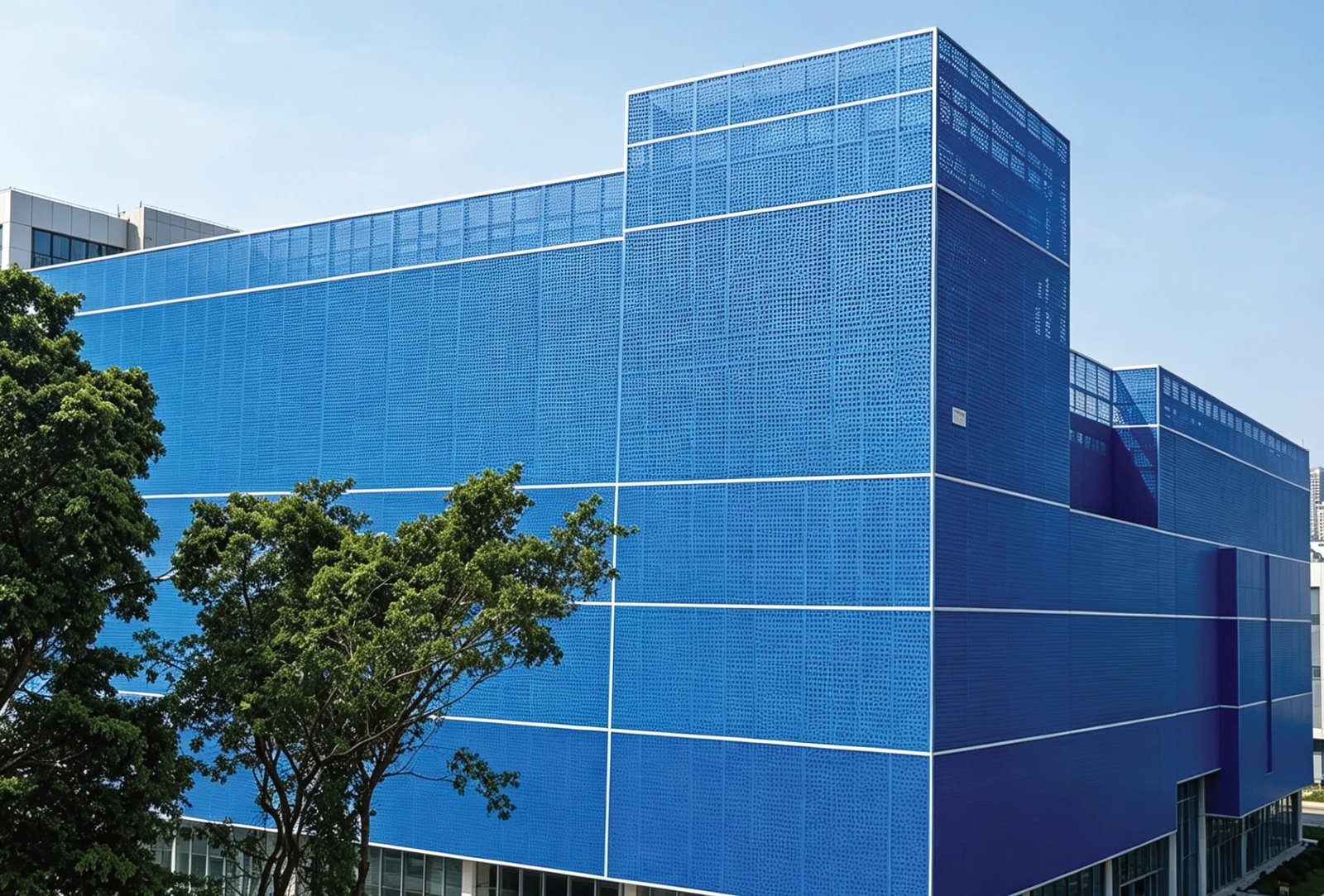
Specify 3.0 mm PVDF-coated custom-shaped aluminum veneer on stadium and shopping-mall rainscreens that take weather and long shaped bays. LINDELACR’s exterior ticket is 3003-H14 solid plate, typically 2.0–3.0 mm, PVDF to AAMA 2605, dry film ≥ 30 μm. Hospital interiors and sheltered medical halls take powder to AAMA 2604—not the same lot as the street face.
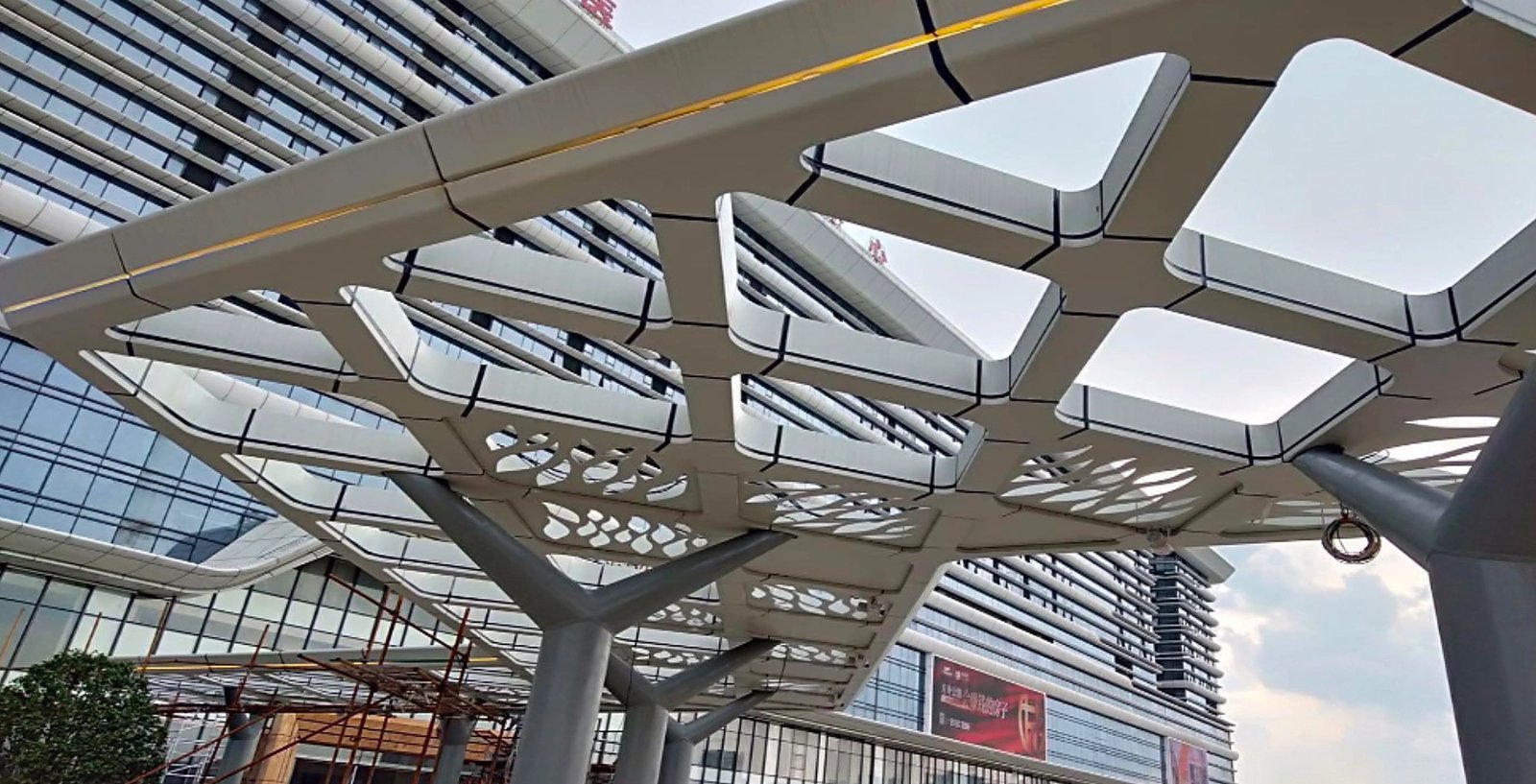
3.0 mm PVDF shaped veneer on stadiums and shopping malls
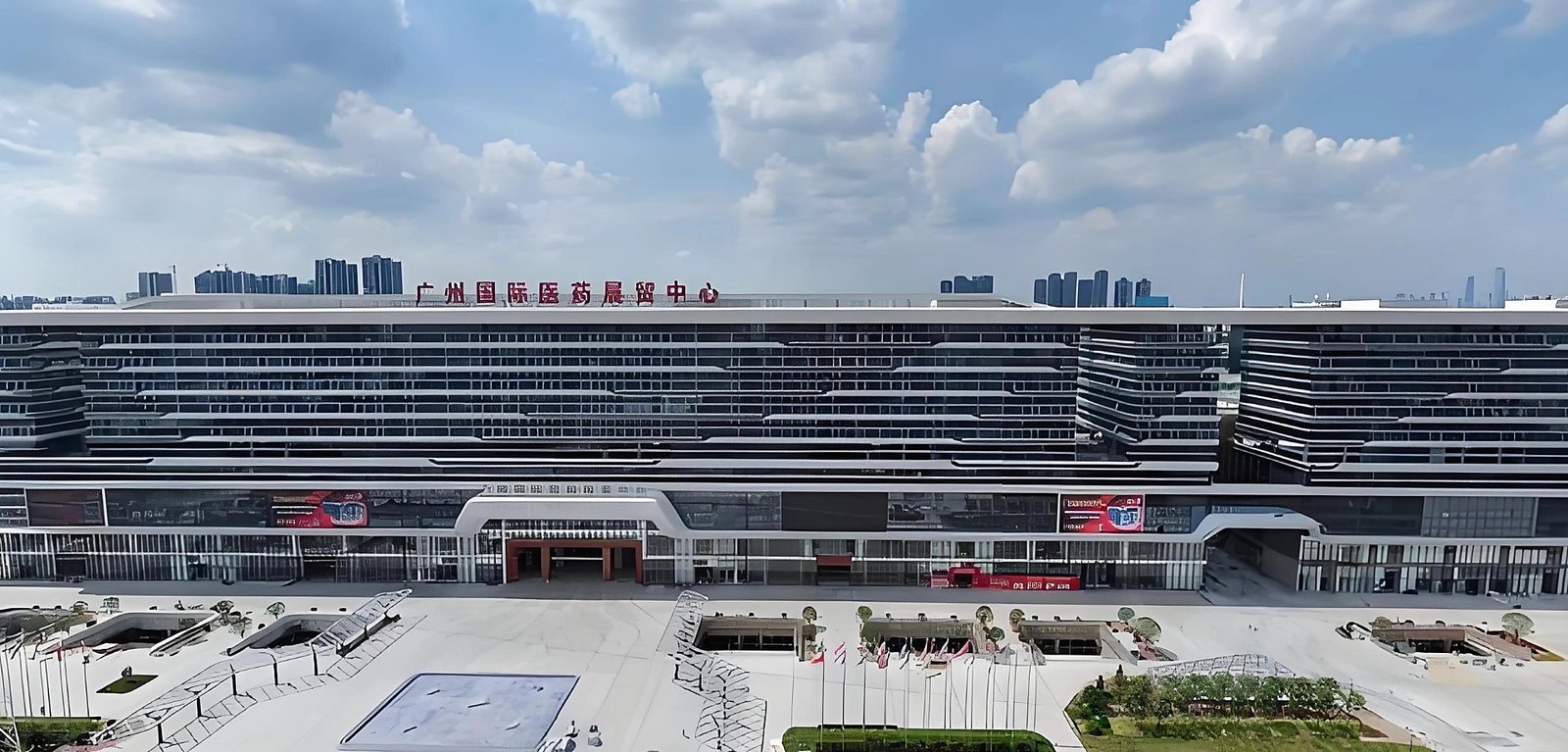
The query “3.0mm pvdf-coated custom shaped aluminum veneer” is a thickness-plus-coating ticket, not a catalog texture. A stadium soffit, a mall street canopy, or a mall-standard exhibition hall—such as Guangzhou International Medical Exhibition and Trade Center (Health Ark)—fails at the joint if the plate is ACP with 0.5 mm skins. LINDELACR folds flat metal panel and carved blanks as solid 3003-H14. Use 3.0 mm where the shaped bay, the carved opening, or the return leaves less remaining section; 2.0 mm stays on simpler, shorter trays.
| Item | Stadium / mall rainscreen | LINDELACR default |
|---|---|---|
| Alloy | Often unnamed coil | 3003-H14 exterior; 1100 only on simple low-wind interiors |
| Thickness | “3.0 mm” copied from another bay | Typically 2.0–3.0 mm solid plate; 3.0 mm on shaped / carved spans |
| Coating | PE or a thin PVDF claim | PVDF to AAMA 2605; dry film ≥ 30 μm |
| Build-up | ACP 3–4 mm, ~0.5 mm skins | Solid aluminum, no core |
| Return | Site-folded | Typically 20–25 mm shop return |
| Plant | — | Foshan 20,000 m²; 1,000+ engineering projects |
Wind is not a brochure kPa. Resistance comes from remaining plate after carving, return depth, and hanger spacing. LINDELACR sizes those from the bay on a customized-for-you ticket.
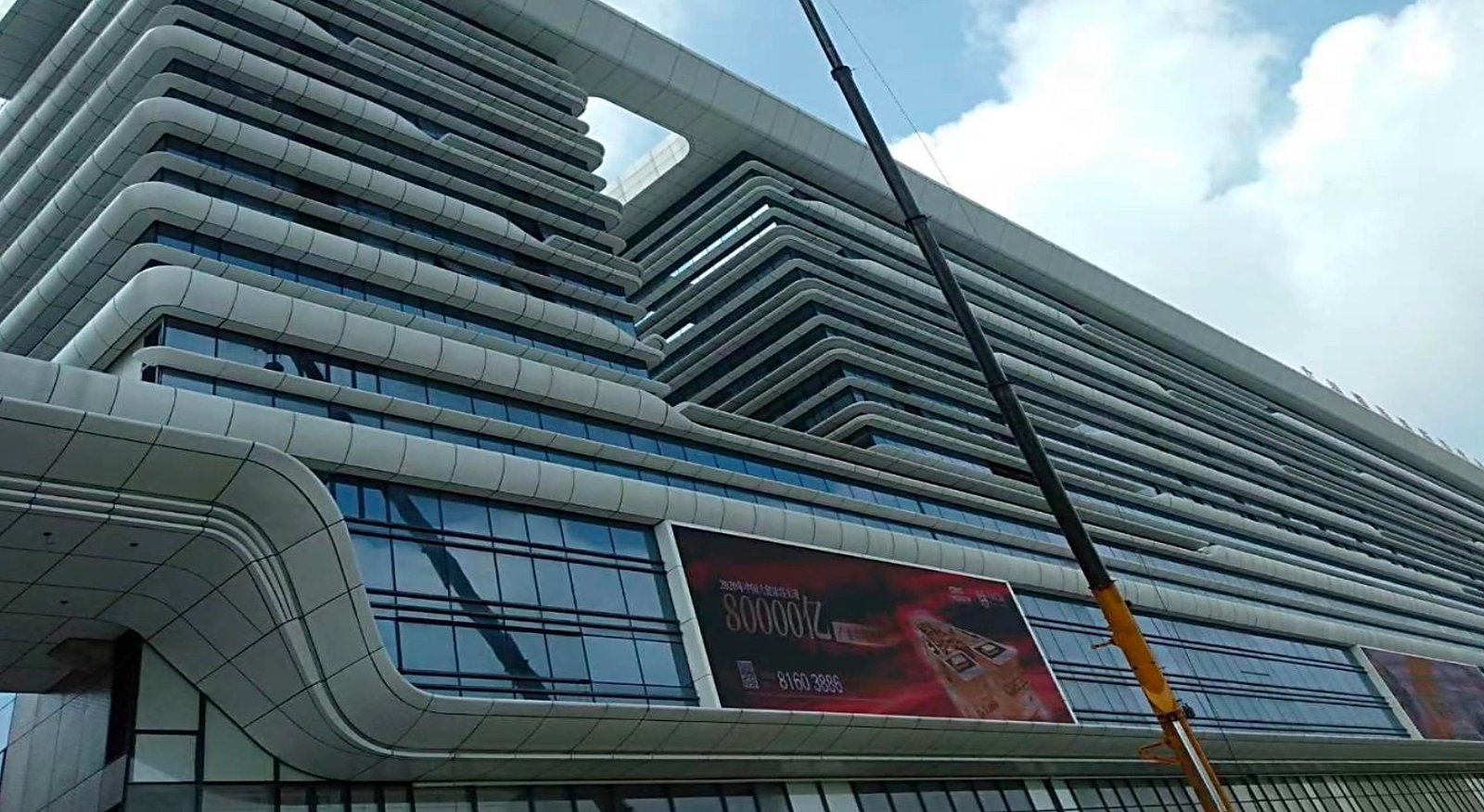
PVDF versus architectural powder: durability, cost, and which plane
PVDF to AAMA 2605 is the exposed language: stadium bowl, mall street face, open canopy. Architectural powder to AAMA 2604 is the interior and sheltered language: hospital corridor, clinic lobby, medical exhibition hall under a roof. Powder usually wins first cost. PVDF usually wins a 15–25 year outdoor colour comparison. Weather-resistant powder-coated shaped aluminum veneer is a real product—for sheltered elevations—not a substitute for fluorocarbon on a west-facing mall soffit.
A carved powder panel is still powder. CNC cuts the opening; the brake or compound form makes the tray; then the coating class is chosen by exposure. Do not coat a carved exterior canopy in interior powder because the renderer used one white. Weather-resistant powder on a shaped veneer is AAMA 2604-class film on a sheltered plane—not a fluorocarbon substitute on a west mall soffit that sees rain and UV all afternoon.
Hospital and medical-hall hygiene is a film you can wipe, not an OR myth
Hospital interior/exterior aluminum veneer is two tickets. Exterior: 3003-H14, typically 2.0–3.0 mm, PVDF AAMA 2605. Interior: powder AAMA 2604 on a closed film that cleaning staff can wipe. Health Ark is a mall-standard medical exhibition-trade hall, not an operating theatre. LINDELACR will not copy surgical-suite language onto a public atrium. Specify a sealed coating, not an open wood-grain that soaks disinfectant.
CNC carving, hyperbolic faces, and the CAD/BIM path
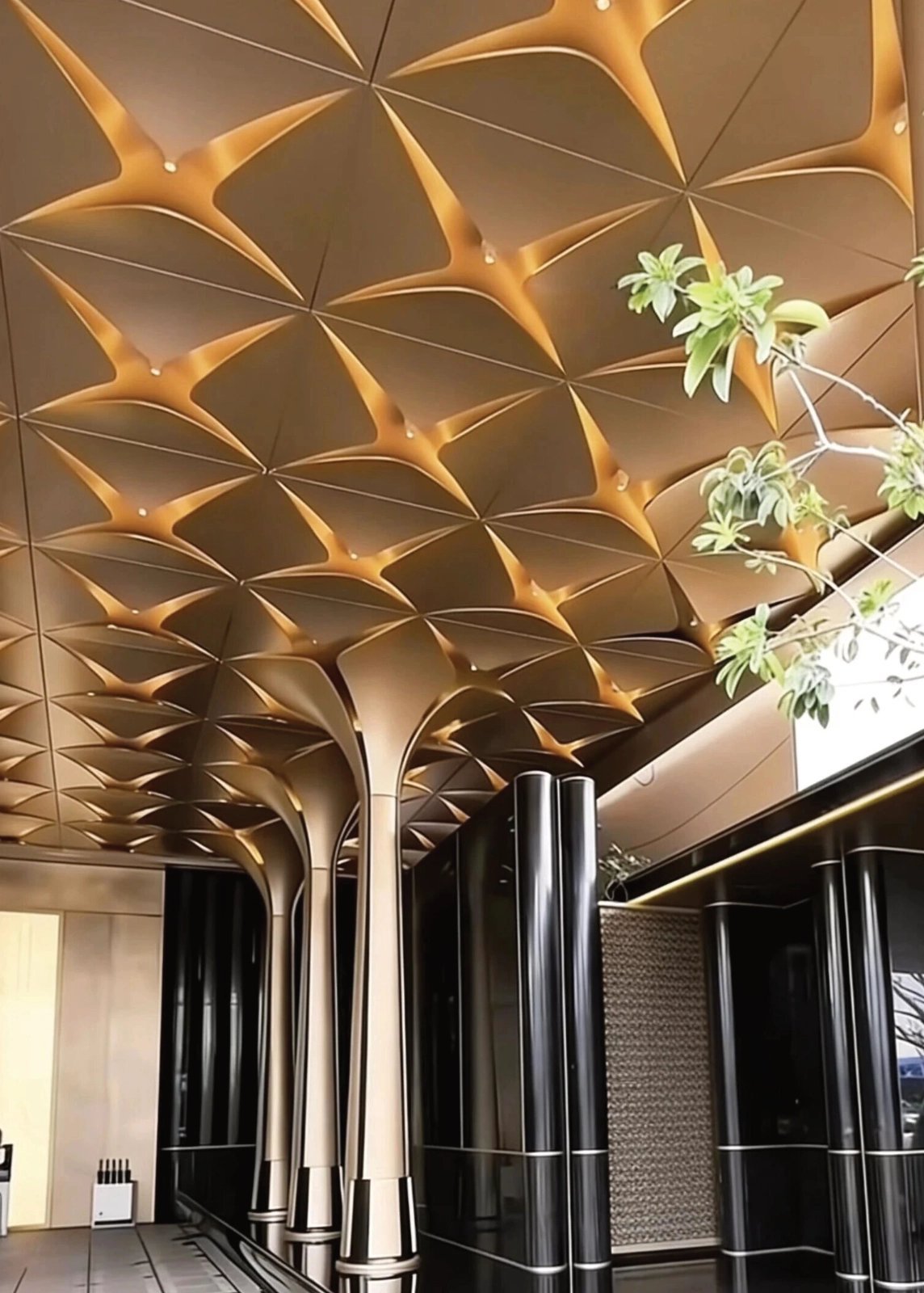
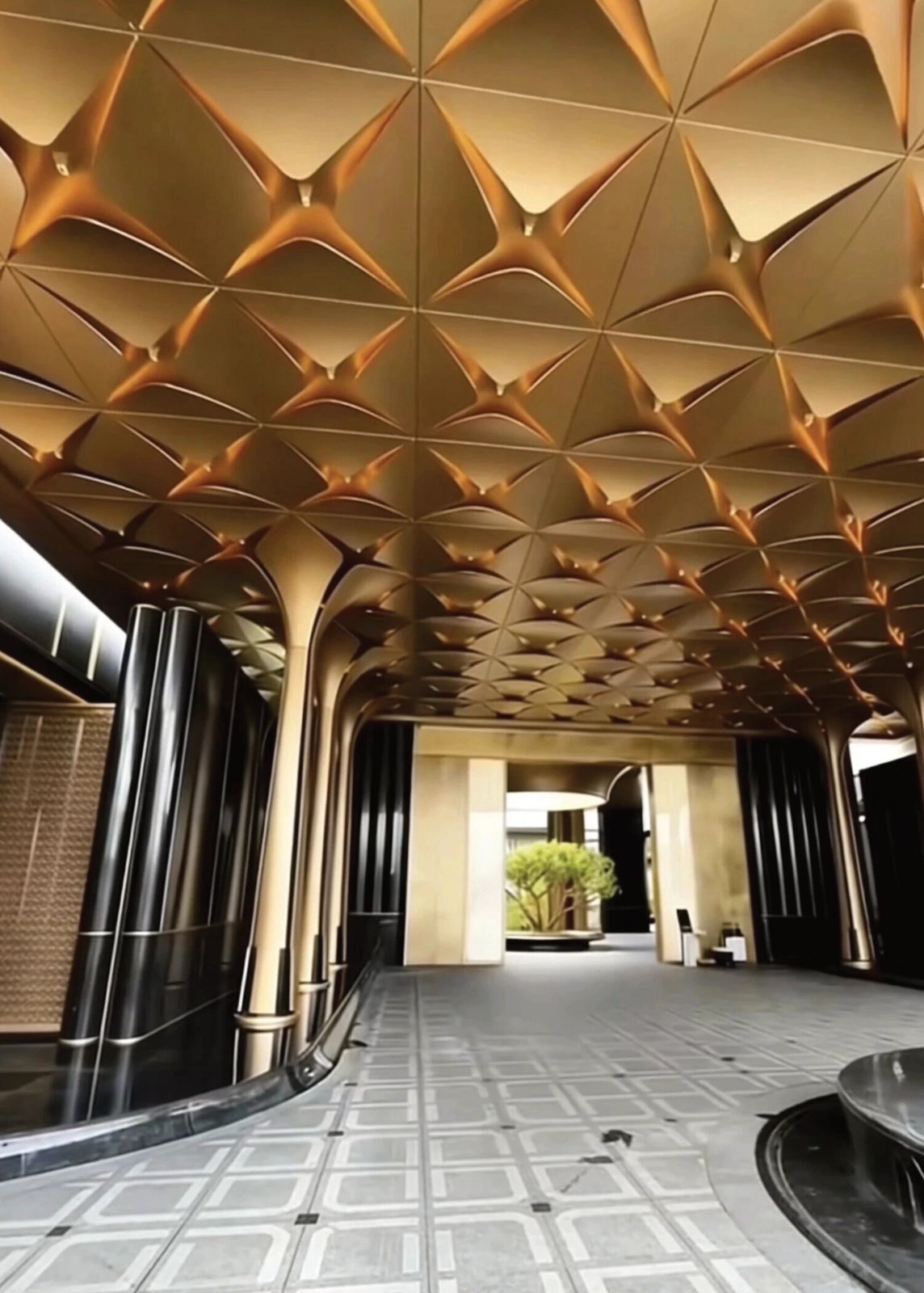
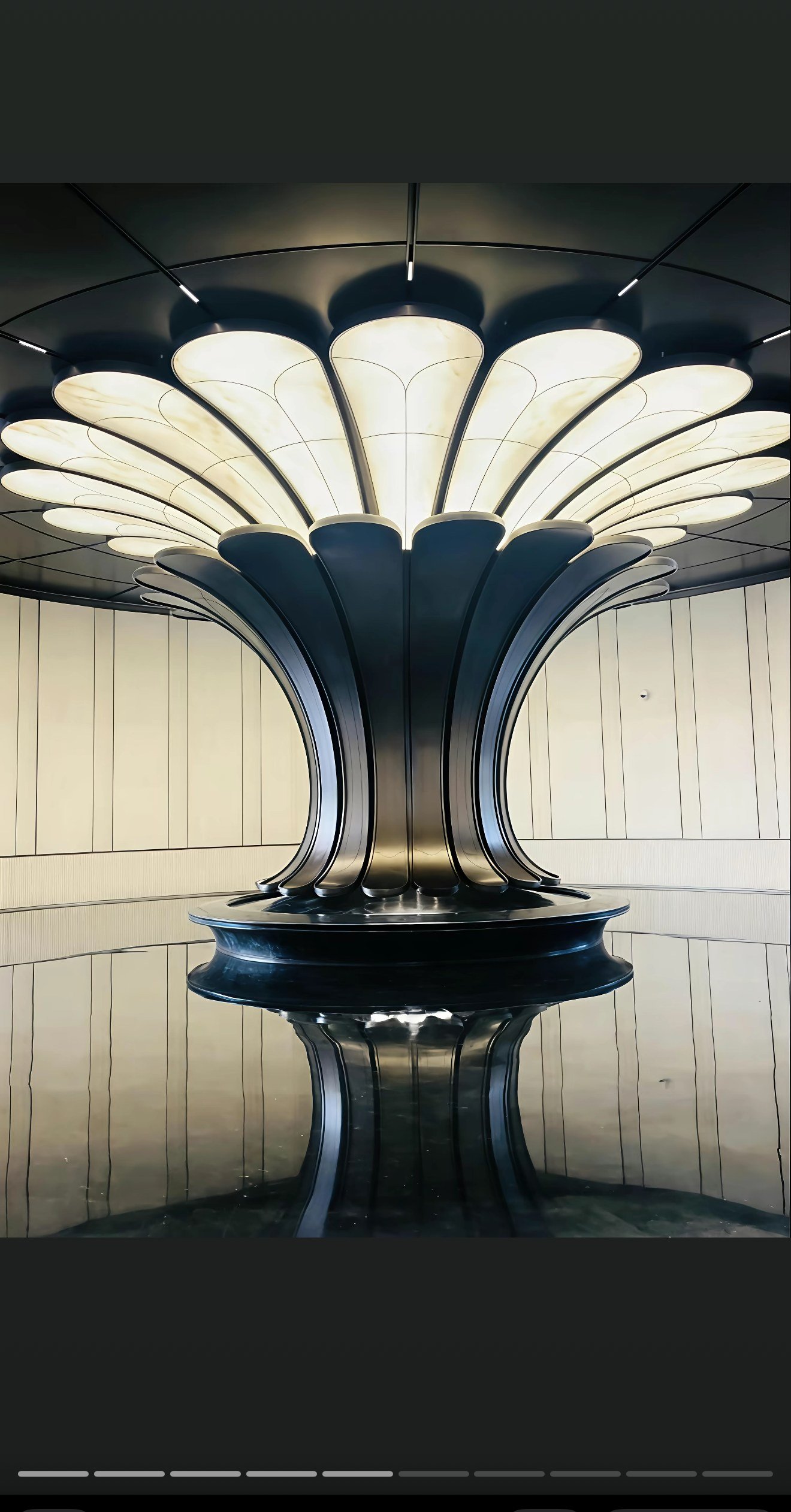
Custom CNC carving starts as a locked unfold—from CAD or BIM, not a JPEG. The turret punch or router cuts the carved field and the blank. Single-curved cassettes go to the brake. Hyperbolic or compound faces get a unique nest and a first-article fit before the rest of the set. Typical return is 20–25 mm. Then one coating lot so adjacent carved ribs do not shift hue.
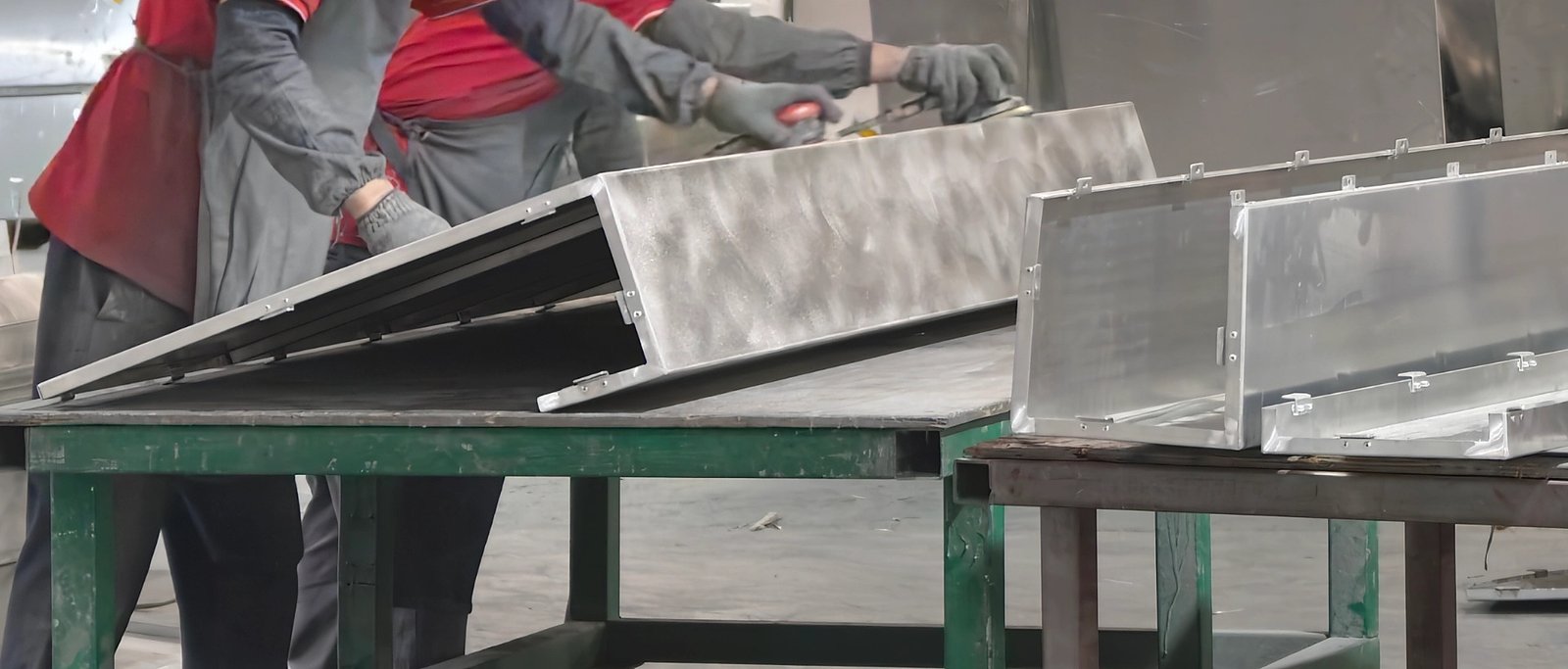
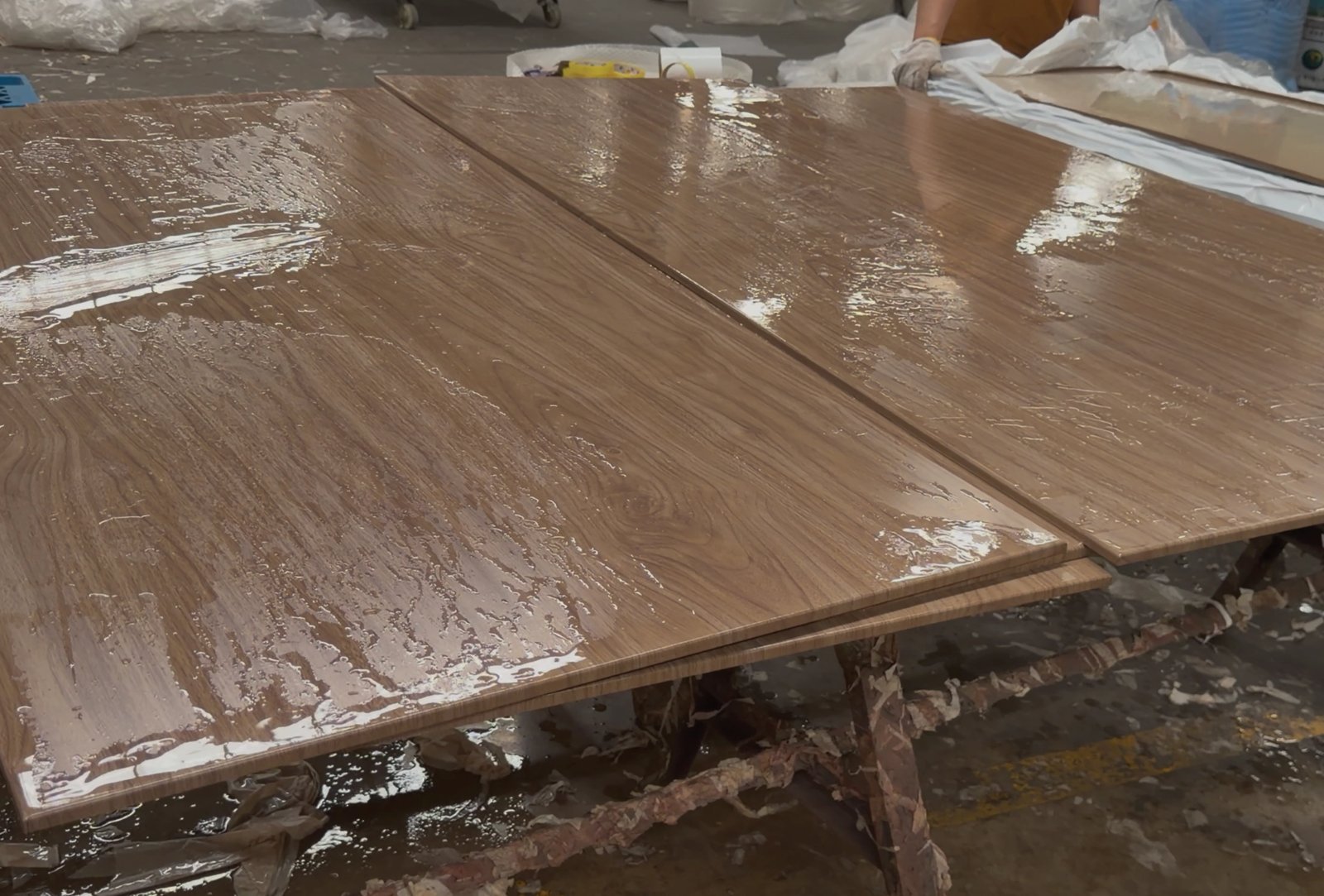
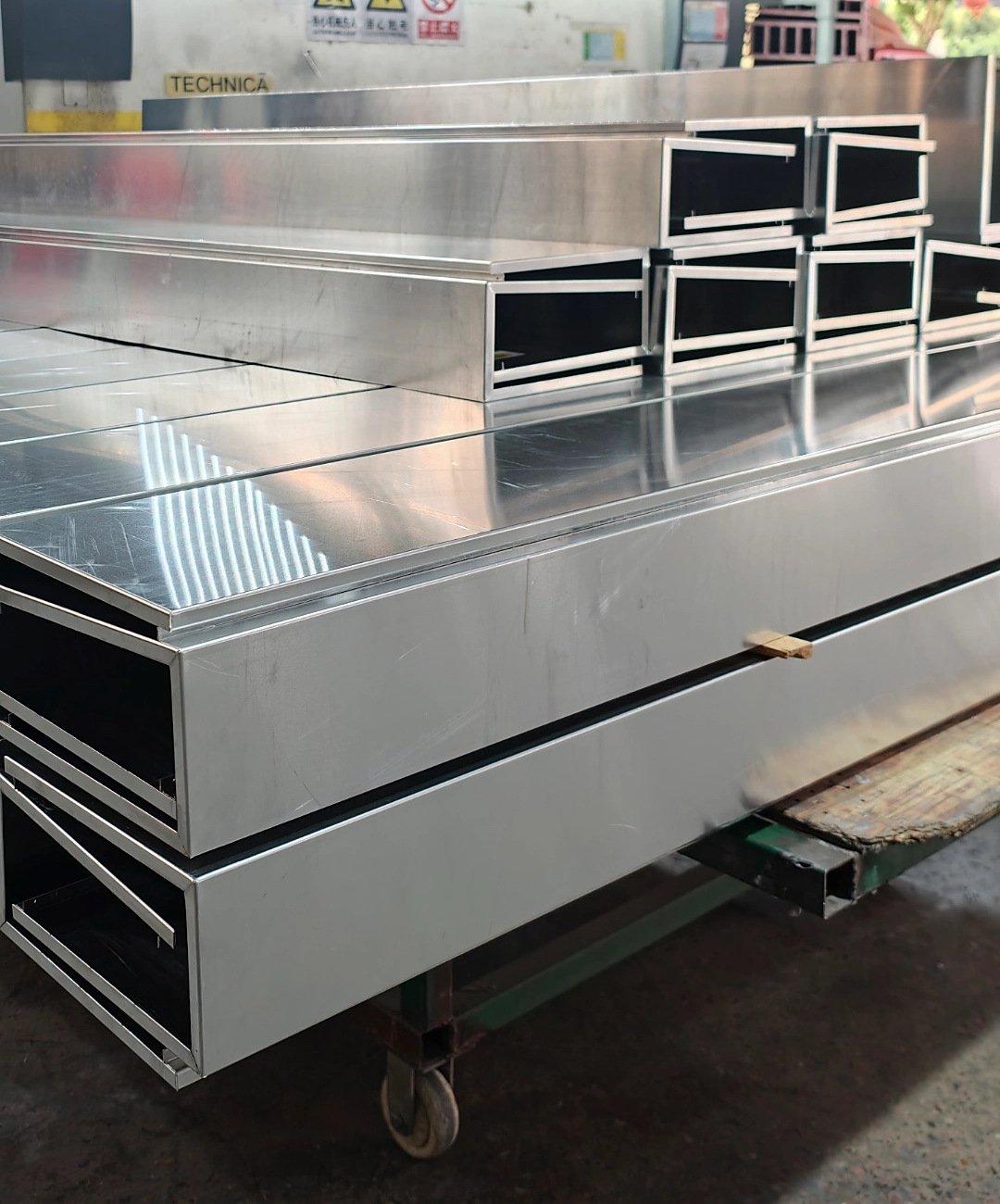
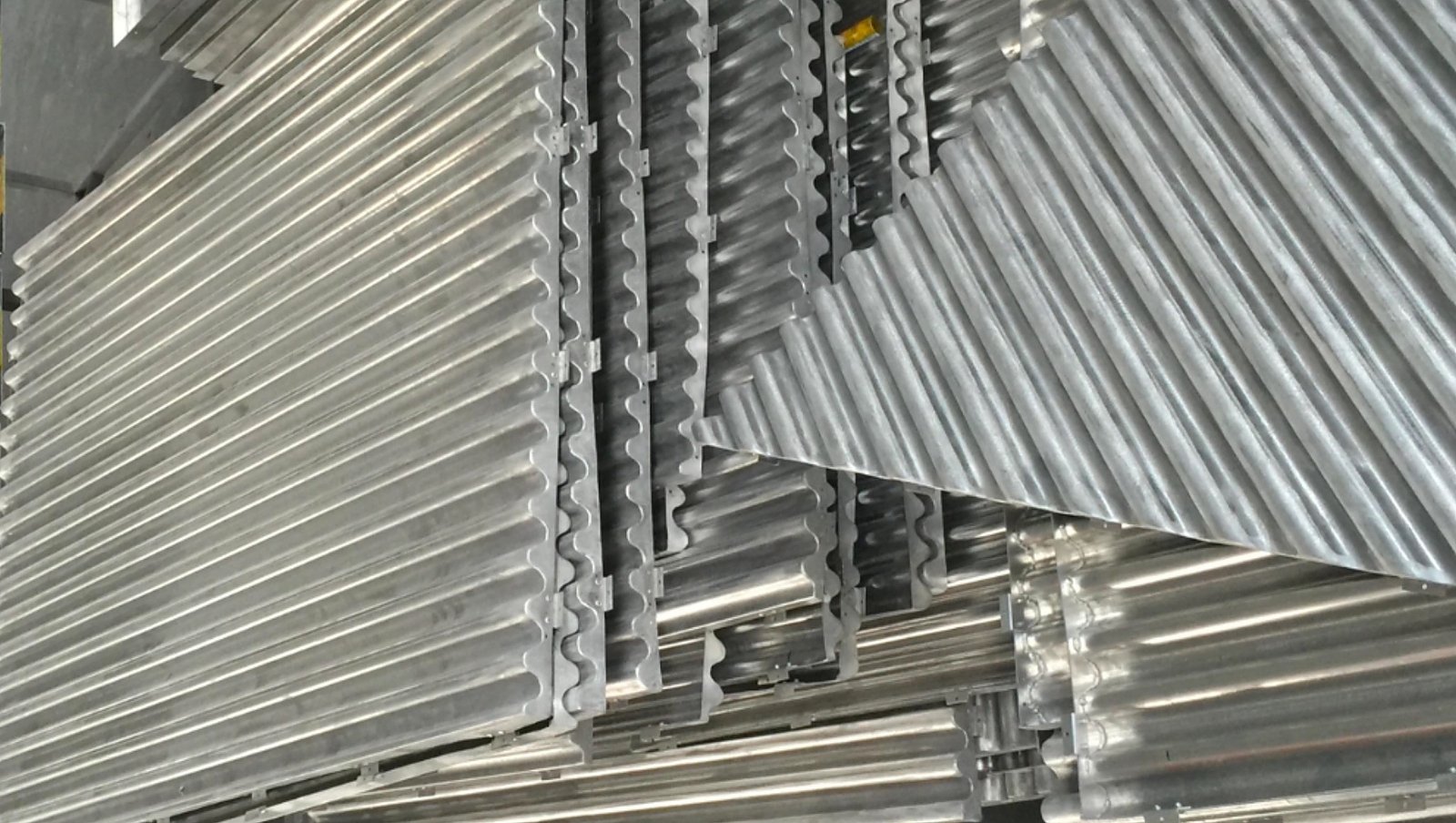
On the Foshan bench a Health Ark cassette is still mill finish: folded returns, corner holes, the face being ground before coating. Box-section trays and corrugated veneer share that line. LINDELACR does not invent a millimetre tolerance or a kPa for every carved canopy. Fit is proven on the first article against the BIM split.
Frequently asked questions
Why specify 3.0 mm PVDF-coated custom-shaped aluminum veneer on a stadium or shopping-mall facade?
Stadium and mall rainscreens see weather, sun, and long spans. LINDELACR’s exterior ticket is 3003-H14 solid plate, typically 2.0–3.0 mm, with 3.0 mm used where the shaped bay or return needs the extra remaining section. Coating is PVDF to AAMA 2605, dry film ≥ 30 μm—not a 0.5 mm ACP skin. Wind is sized from plate, fold, and hanger spacing, not a catalog kPa.
When should a shaped veneer be PVDF instead of architectural powder coating?
PVDF to AAMA 2605 is the exposed exterior language: stadium, mall street face, open canopy. Architectural powder to AAMA 2604 is for interiors and sheltered halls, including hospital corridors and medical exhibition interiors. Powder is usually the lower first cost; PVDF is the longer outdoor film. Do not run both as one lot unless the drawing names two lots.
What coating belongs on hospital and medical-hall aluminum veneer?
Wipeable powder to AAMA 2604 on interior planes; PVDF AAMA 2605 on any elevation that takes weather. Alloy 1100 is only for simple low-wind interiors; 3003-H14 is the usual exterior coil. A medical exhibition hall is not an operating theatre—do not copy OR hygiene language onto a public atrium. Specify a closed film that can be cleaned, not an open wood-grain that soaks.
How does LINDELACR CNC-carve and form custom-shaped aluminum from CAD or BIM?
The model is split into unique unfolds. CNC punching or routing cuts carved fields and blank outlines. Single-curved trays go to the brake; hyperbolic or compound faces get their own nest and a first-article fit. Returns are typically 20–25 mm. Then one coating lot. LINDELACR does not publish a fake millimetre tolerance or a catalog kPa on every carved canopy.
Request 3.0 mm samples and project BIM drawings
Send the typical shaped bay, the carved 3D, and whether the plane is rainscreen or a hospital interior. LINDELACR will return a 2.0 or 3.0 mm note, a PVDF or powder class, and a coated sample from the 20,000 m² Foshan plant.