Bird-Friendly Glass Requirements for Curtain Walls
Specify bird-friendly glass by the threat factor written in the code. The American Bird Conservancy calls a material bird-friendly at 30 or below. New York City writes 25, from grade to 75 feet. LINDELACR does not print a threat factor for its curtain-wall glass.
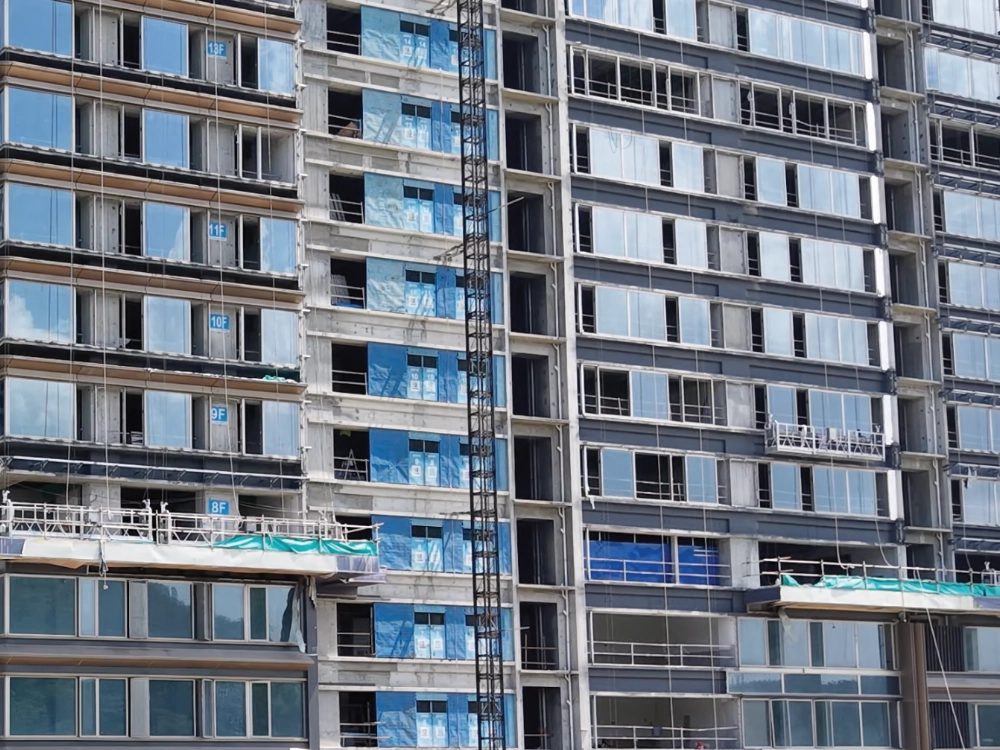
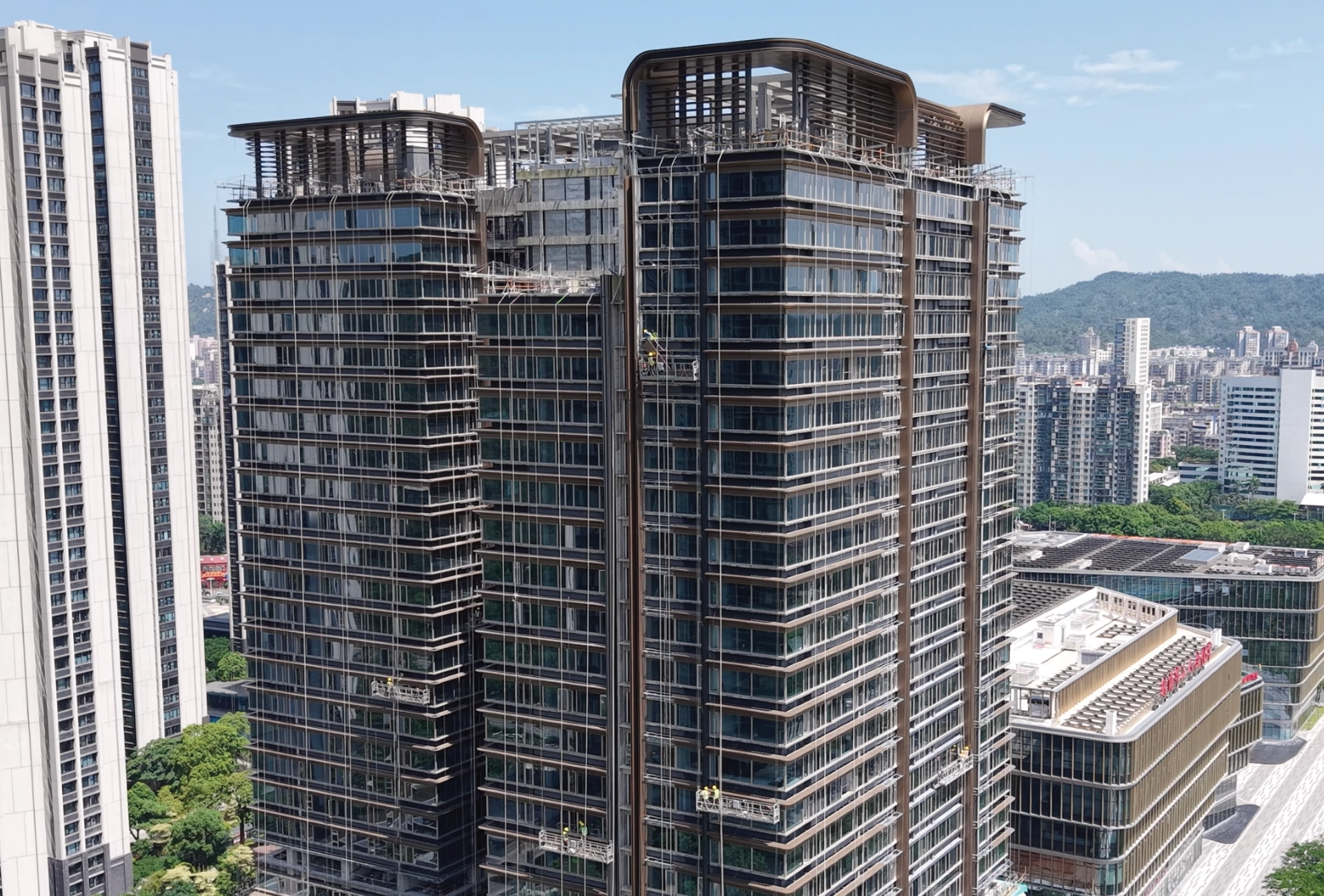
The tower is still being glazed. Blue film covers some openings. Nothing on the glass reads as a bird marker, and the building is not named. The number belongs on the glass order, before the unit is set. Buyers who type bird-friendly glass requirements are asking for that number.
The frame is a separate ticket. A glass curtain wall here is 6063-T5 or 6063-T6, with an upright of at least 2.5 mm and a beam of at least 2.0 mm. The mullion and the transom carry the glass. They do not carry a threat factor.
Bird-friendly glass threat factor
| Item | What the rule asks | What this shop publishes |
|---|---|---|
| Bird-friendly line | ABC threat factor 30 or below | No threat factor |
| New York City exterior wall | Threat factor 25, from grade to 75 feet | Not a city-specific glass product |
| Frame | The glass score does not set the alloy | 6063-T5 or 6063-T6. Upright minimum 2.5 mm. Beam minimum 2.0 mm |
| Glass build on the ticket | The test has to match the build that is bought | Single tempered 8, 10, 12, or 15 mm. Insulating 6+9A+6, 6+12A+6, or 8+12A+8 |
| Coat on the aluminum | Not the bird marker | PVDF, 2 or 3 coat, or powder |
| Price | Not a published rate | Not published |
The American Bird Conservancy assigns a threat factor from a flight tunnel. The score is the share of test birds that flew toward that material. Lower is better. The Conservancy calls a material bird-friendly at 30 or below. That line is not a warranty that a finished facade will cut collisions by a fixed percent, and it is not a number this shop has tested.
A score belongs to one assembly: the pattern, the spacing, and the surface. A marker that passed on the outer face does not automatically pass on an inner face, because the reflection sits in front of it. Ask the glass maker for the report on the build you are buying.
Bird-friendly glass patterns
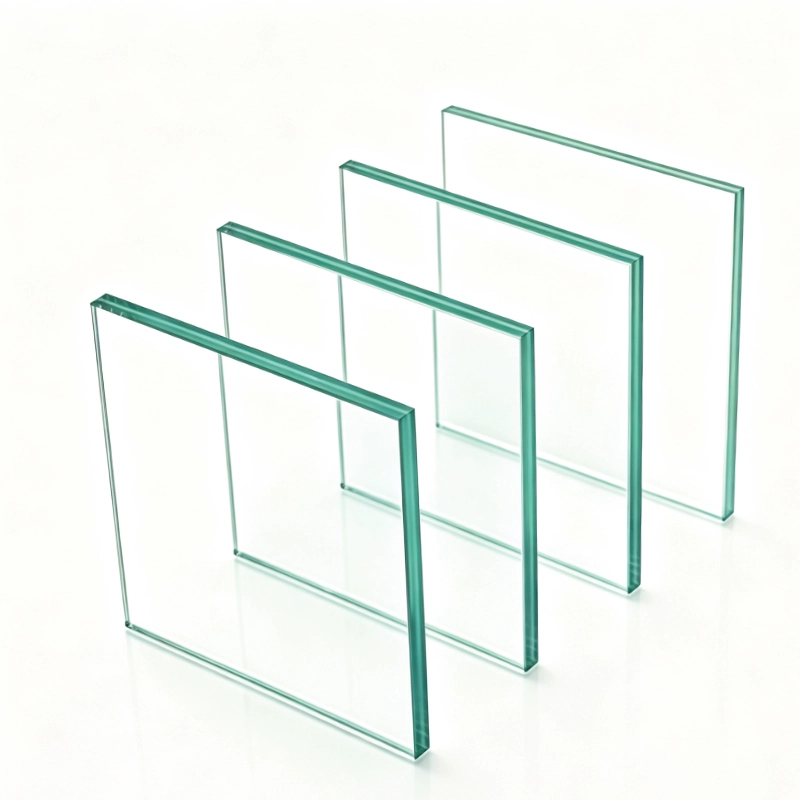
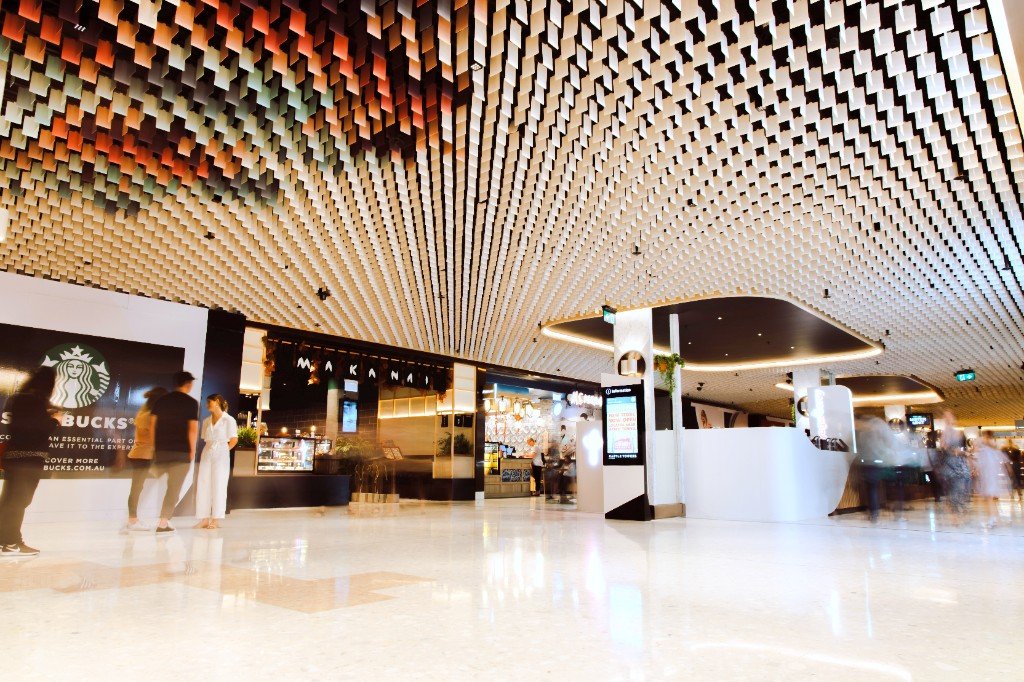
These four panes are clear. No frit, etch, or film is visible, and the edge does not print a thickness. Birds treat a reflection of sky or trees as open air, and they treat a see-through corner the same way. The marker has to break that reading across the treated area.
Older notes used markers 2 inches apart across and 4 inches apart up. Current Conservancy sheets are stricter about 2 inches in both directions, with conditions on the marker and the surface. That spacing is not a hole tolerance from this shop. A film can be the marker if it has its own score on that glass and a replacement note. UV patterns are less visible when ultraviolet light is low, and not every bird sees that range.
Bird-friendly glass requirements in New York City
Local Law 15 of 2020 is the New York City text buyers are typing. For the exterior wall and its openings, bird-friendly material runs from grade to 75 feet, which the law writes as 22,860 mm. The law’s bird-friendly material is a maximum threat factor of 25, tighter than the Conservancy’s line of 30. Inside any 10-foot by 10-foot square of that wall, material that is not bird-friendly is capped at 10 square feet.
Exceptions stay in the law. A transparent ground floor may use a UV pattern at 27, and the flood-zone case of that ground floor may use 36. Awnings, handrails, guards, and wind breaks take bird-friendly material at any height. A fly-through at 75 feet or below takes it too. Glass beside a green roof on the same building takes it for 12 feet above the walking surface. The law covers new buildings and alterations that replace all exterior glazing. Another city writes another height. Put that clause on the drawing.
What changes the cost
The catalog does not print a price. Cost moves with the treated height, the marker, the glass build, and any screen in front. Seventy-five feet of frit or etch is a different order from a shorter local zone. A film adds a replacement cycle. Single glass at 8, 10, 12, or 15 mm is not 6+12A+6 or 8+12A+8. A metal screen is a second element.
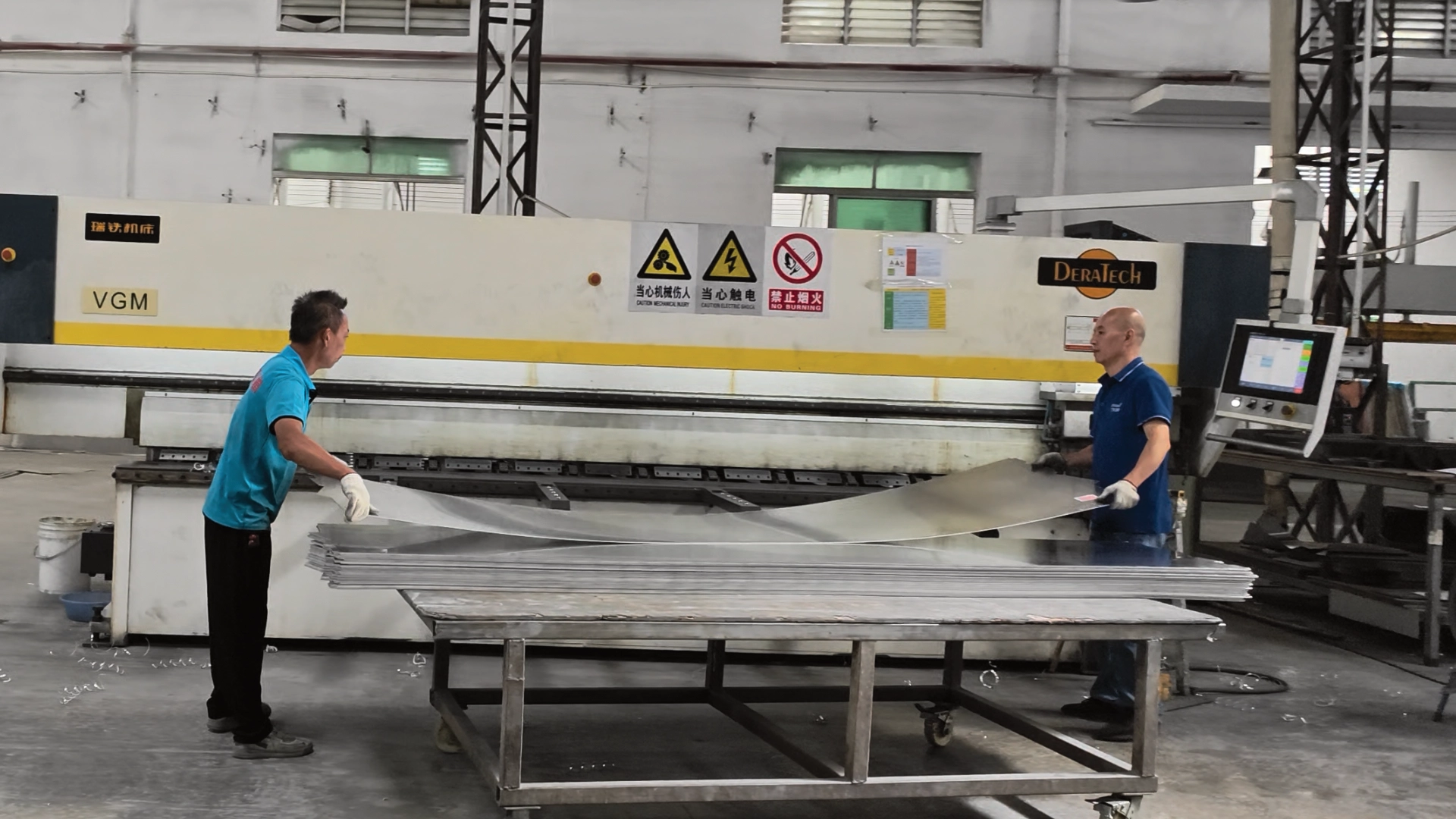
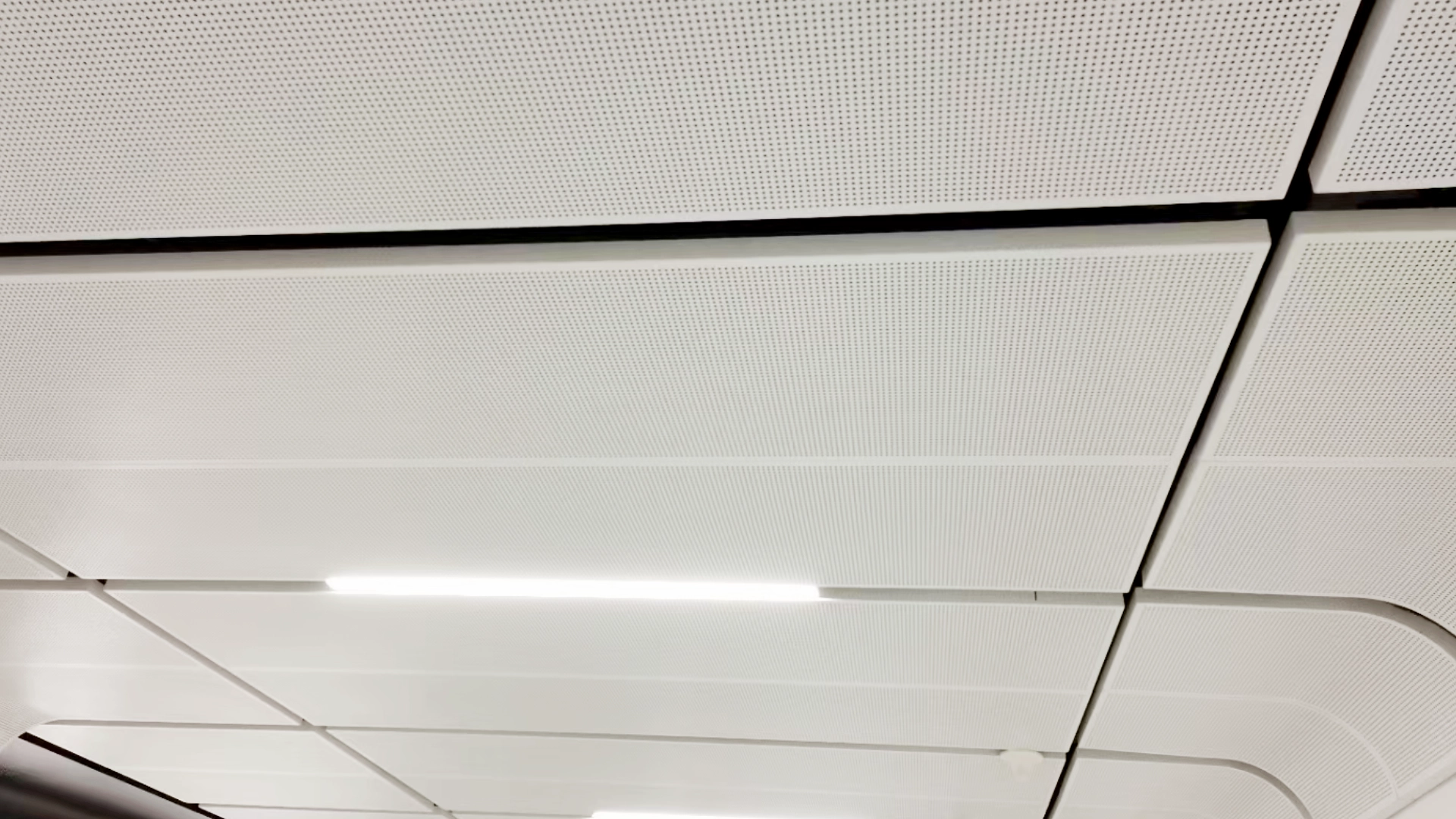
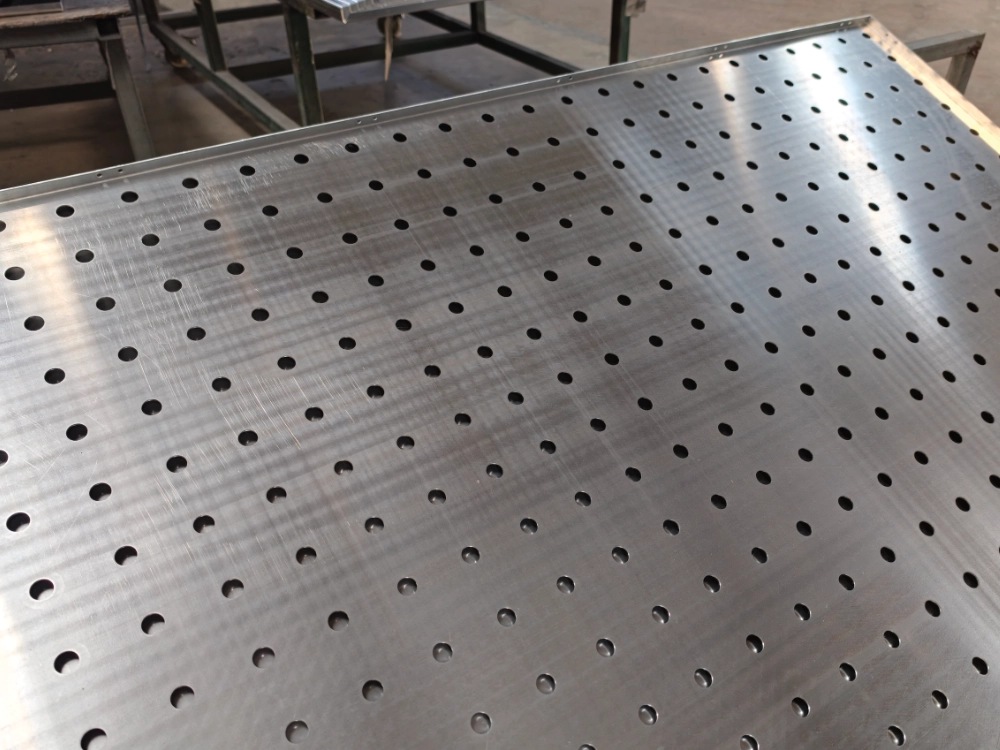
The sheet on the bench is mill-finish aluminum with a round-hole field and a formed edge. The holes are wider apart than a 2-inch glass marker, and nothing on the metal prints a threat factor. One published perforation example on the standard perforated panel is a 3.0 mm hole, a panel width up to 1,100 mm, aluminum up to 2.0 mm, and an open area of 11.0 percent. That is a hole schedule. It is not a bird-friendly rating, and it is not the decorative screen in the next photograph.
A metal screen is a separate line
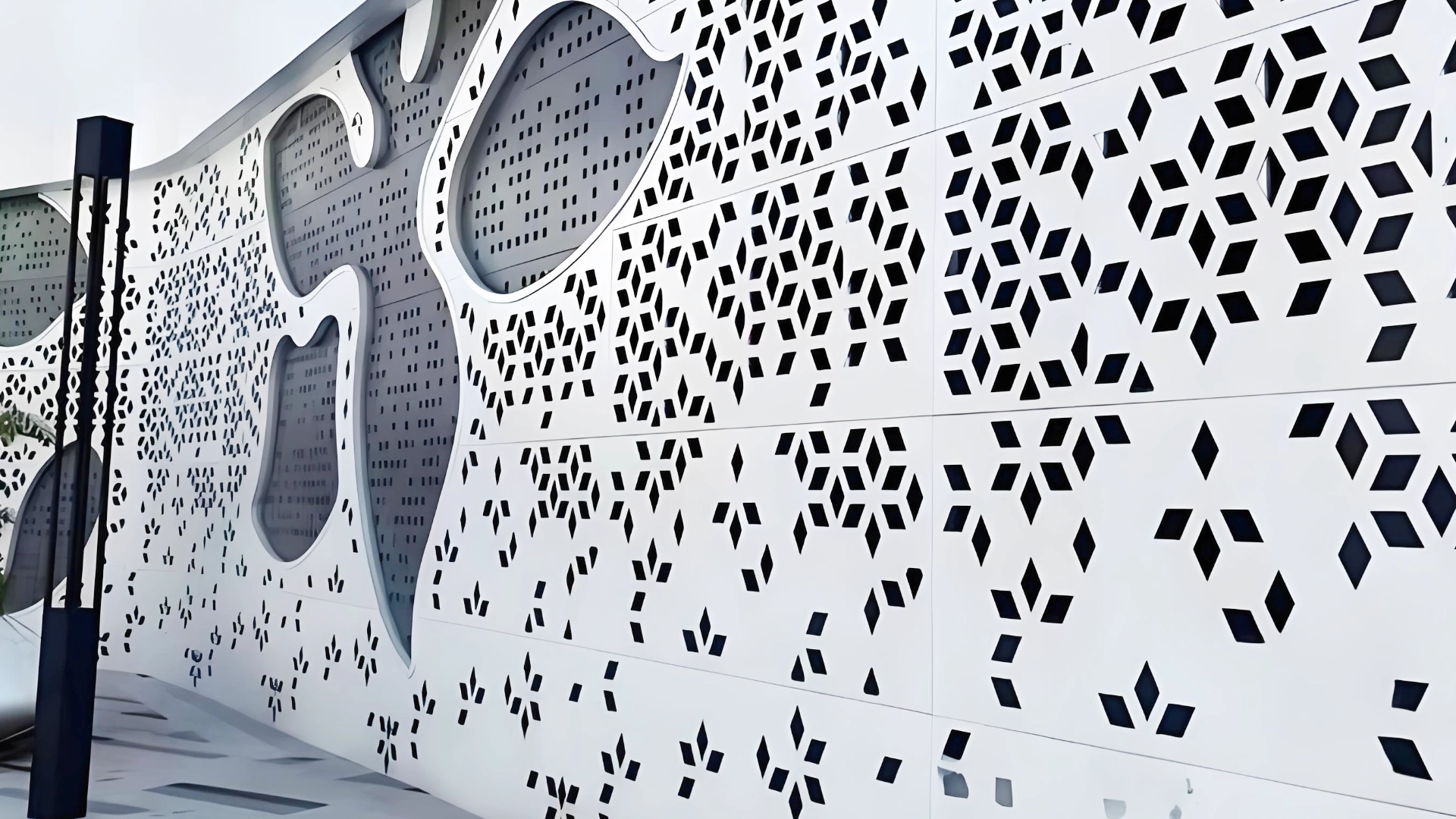
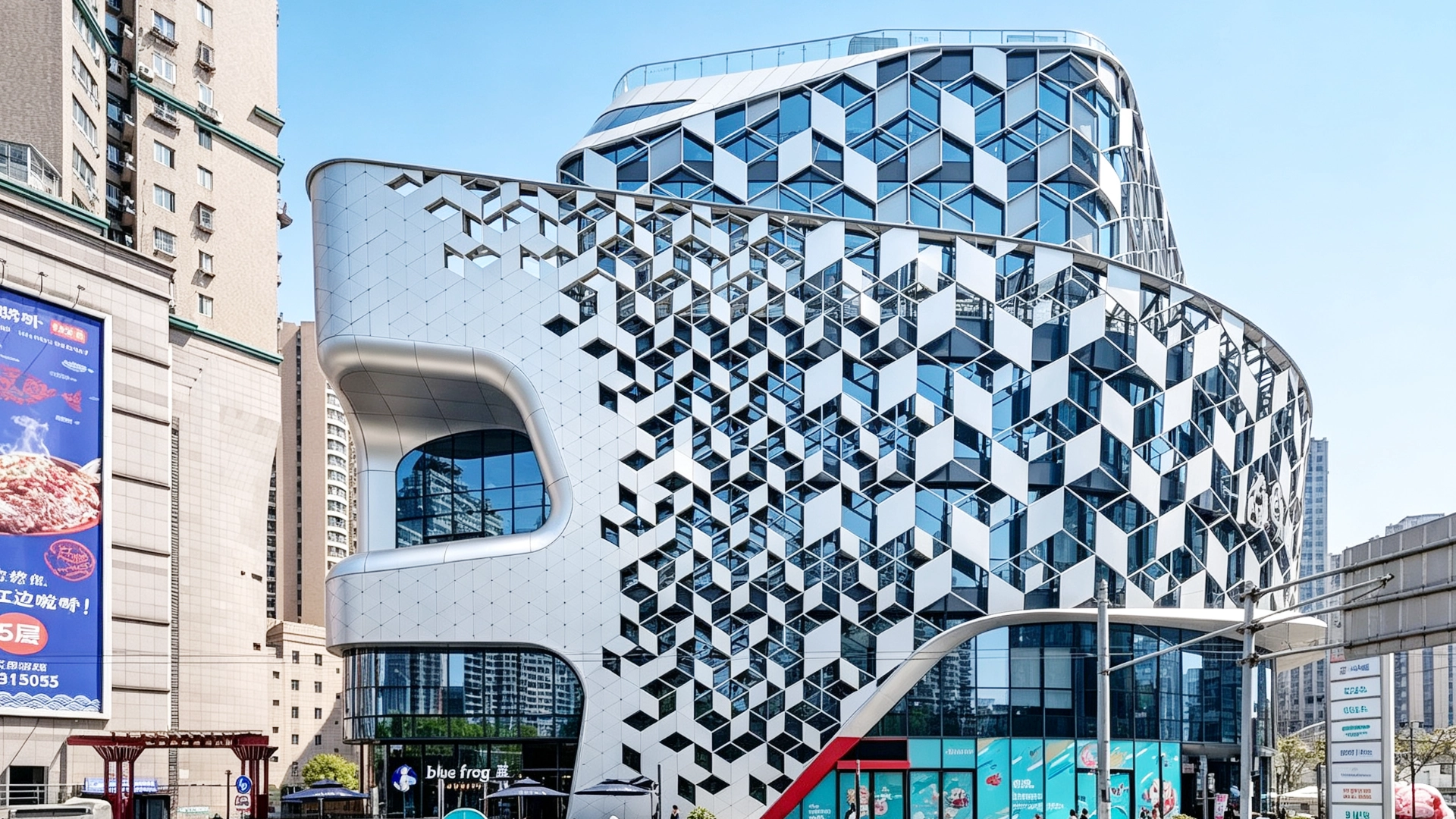
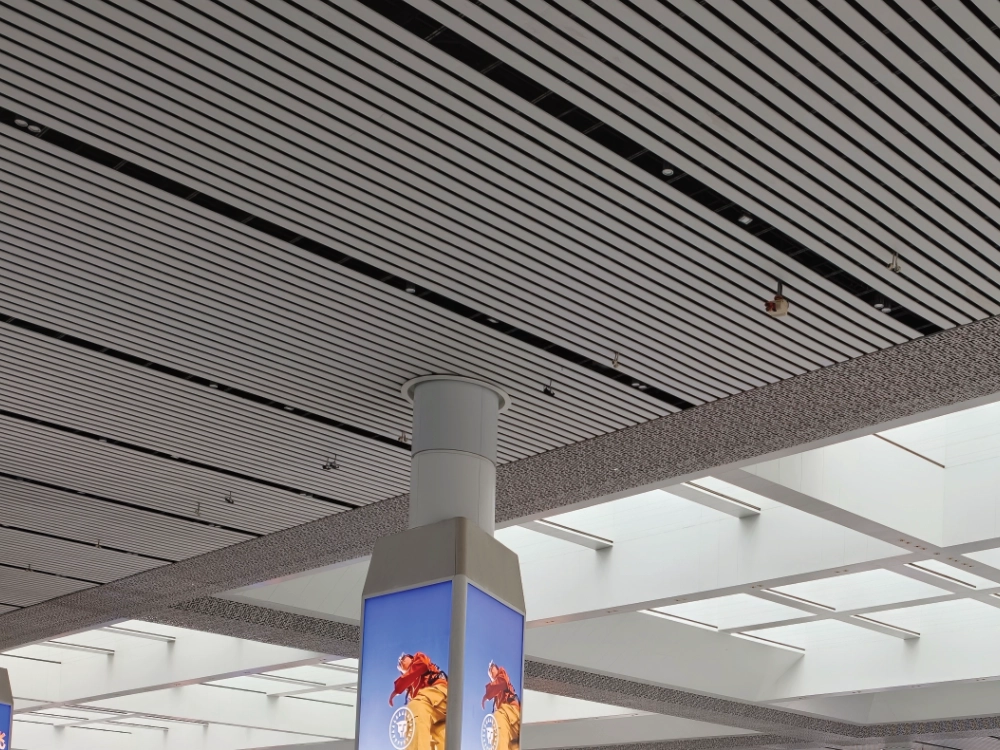
These panels are installed, white, and cut with large openings. The building is not named. A screen like this can sit in front of glass and break up a reflection, and New York City’s own notes list louvers and screens among the materials that show up in the Conservancy’s database. Showing up as a type of product is not the same as a score for this pattern. The openings here are large. They are not a 2-inch marker grid, and this shop does not publish a threat factor for them.
Write the hole, the open area, and the coat on the drawing if the screen is part of the wall. The glass behind it keeps its own thickness and insulating build. PVDF, in two or three coats, or powder, coats the aluminum. It is not a frit on the pane.
What the curtain-wall shop still supplies
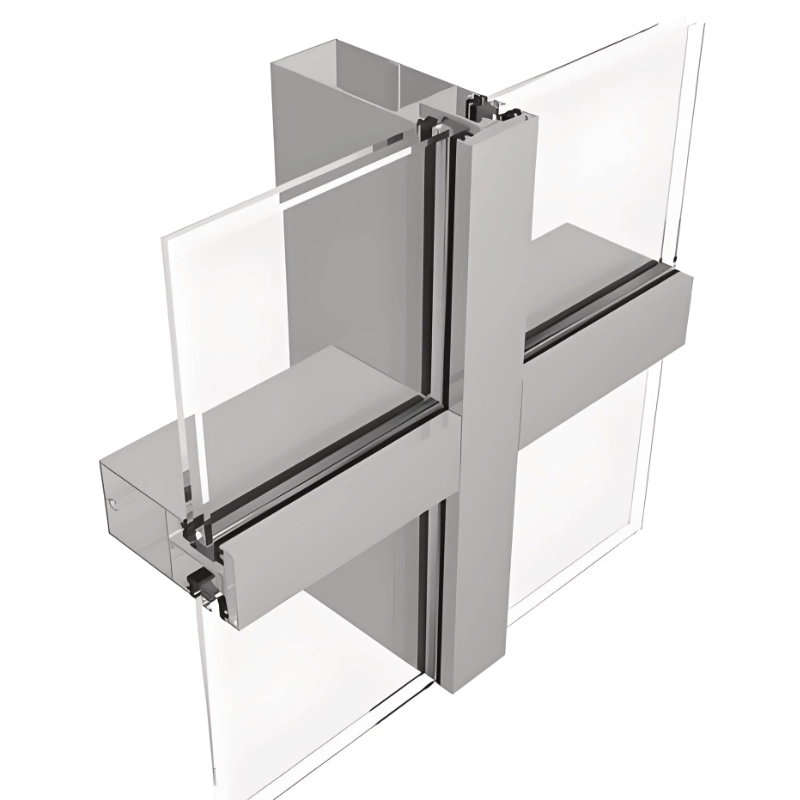
The model is a mullion crossing a transom, with glass in the rebate. The upright is at least 2.5 mm and the beam is at least 2.0 mm, in 6063-T5 or 6063-T6. The Foshan plant is 20,000 m². The frame is cut from the drawing. The bird marker is ordered with the glass.
Send the elevation, the code clause, and frit, etch, film, or a metal screen. This site does not host a blank drawing file. The quote starts when that set arrives with the glass build and the maker’s score.
Frequently asked questions
What do bird-friendly glass requirements ask for?
They ask for a measured threat factor on the glass assembly, not a description of the mullion. The American Bird Conservancy calls a material bird-friendly at a threat factor of 30 or below. New York City Local Law 15 writes 25 for the exterior wall from grade to 75 feet. Other cities write other numbers. Use the rule on the permit.
What is a bird-friendly glass threat factor?
It is the American Bird Conservancy score from a flight-tunnel test: the share of test birds that flew toward that material. Lower is better. A score belongs to the tested build, including the pattern and the surface it sits on. LINDELACR does not publish a threat factor for its curtain-wall glass.
What bird-friendly glass pattern belongs on the wall?
The marker has to be the one in the test or in the prescriptive sheet for that code. A clear pane with no frit, etch, or film is not a pattern. A round-hole aluminum sheet in the shop is a fabrication pattern, not a 2-inch glass marker, and it carries no threat factor from this catalog.
What changes the cost of bird-friendly glass?
The catalog does not print a price. The order moves with the treated height, whether the marker is fired into the glass or applied as a film, single glass or an insulating unit, and whether a perforated aluminum screen is added in front. Send the elevation and the rule.
Send the rule with the elevation
Mark the threat factor the permit uses, the treated height, and the glass build. Exterior aluminum on this wall is 6063, with the minimums above. The glass score comes from the maker’s test of that build. WhatsApp is the short path for the drawing.