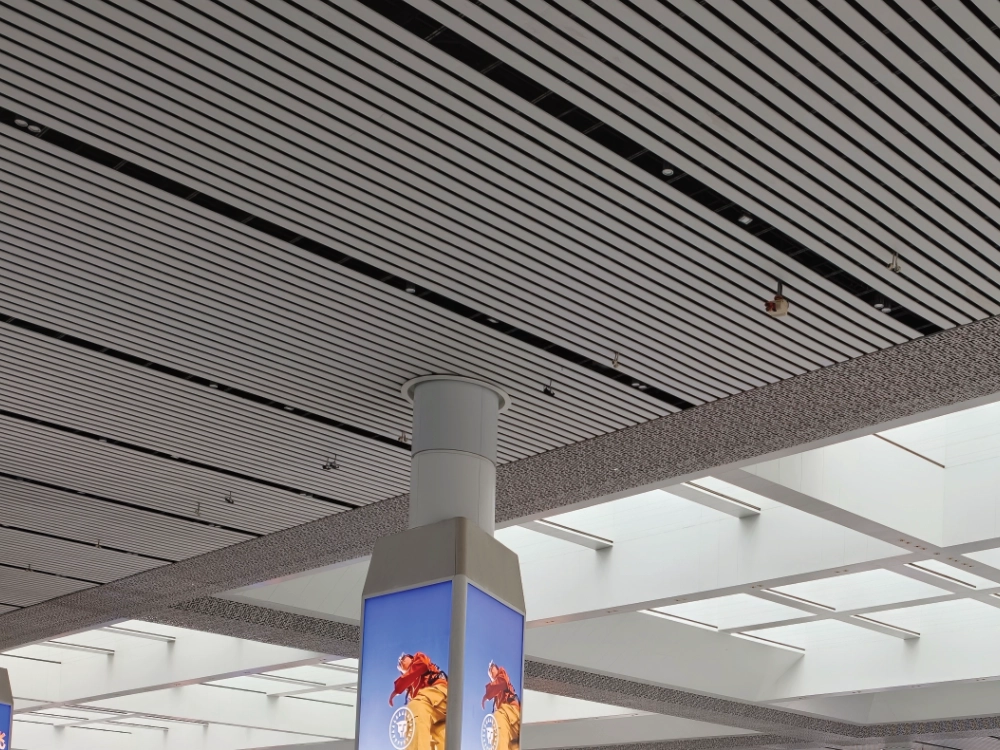
3003-H14 vs 1100: Aluminum Cladding Specifications
Specify 3003-H14 for formed exterior cladding at 2.0–3.0 mm. Specify 1100 for simple interior sheet where the wind is low. Exterior PVDF is a dry film of at least 30 μm to AAMA 2605. The catalog does not print a sheet price, and it does not publish 5052 or 6061 as a cladding ticket.
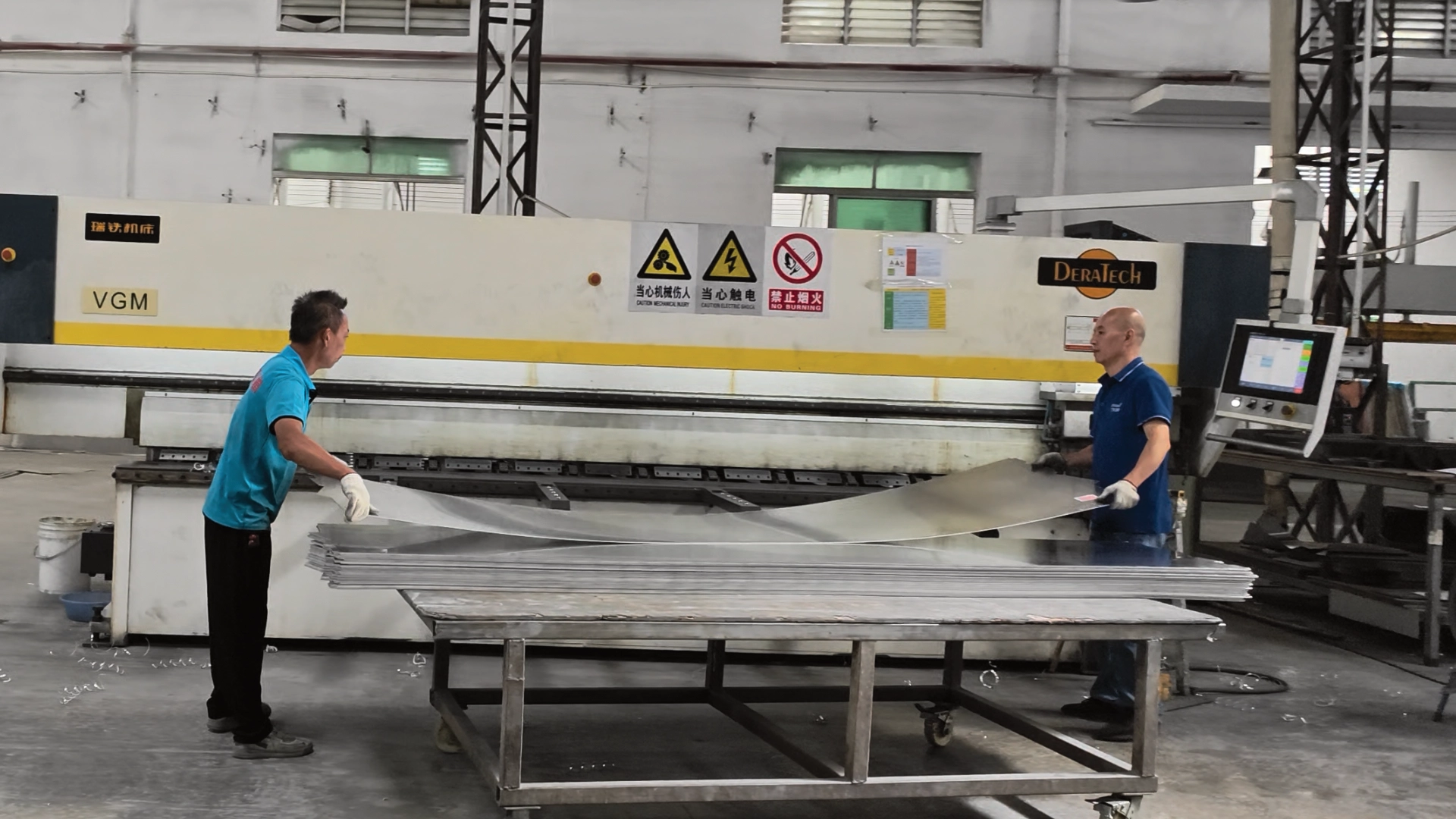
The sheet on the brake is still mill finish. Nothing in the photograph prints the alloy. The choice has to be on the order before this bend, because a facade return and a light interior panel are not the same ticket. Buyers who type 3003-H14 aluminum sheet specifications are asking which grade is allowed to leave the shop as cladding.
On this site the exterior formed sheet is 3003-H14. The interior grade for simple, low-wind work is 1100. Thickness for the wall is a separate note: exterior aluminum cladding thickness is 2.0–3.0 mm of base metal. A flat metal panel still needs the alloy written on the line. The coat is not the alloy. PVDF versus powder is that next decision.
3003-H14 aluminum sheet specifications
| Item | 3003-H14 | 1100 |
|---|---|---|
| Where this shop specifies it | Formed exterior cladding | Simple interior sheet, low wind |
| Published thickness | 2.0–3.0 mm base metal | Not printed as a facade thickness |
| Temper on the facade ticket | H14, strain-hardened | Not the H14 exterior ticket |
| Exterior coat | PVDF, dry film at least 30 μm, AAMA 2605 | Not the exterior coat |
| Interior or sheltered coat | Powder only when the drawing says so | Powder to AAMA 2604 when specified |
| Sheet price | Not published | Not published |
3003 is the manganese alloy used here for formed exterior sheet. H14 is the strain-hardened temper on that ticket. 1100 is the commercially pure grade kept for simple interiors. Both are aluminum sheet designations covered by ASTM B209. That standard names the product form. It is not a wind-load calculation, and this page does not add one.
People also search aluminum sheet 3003 versus 5052, and 1100 versus 5052 or 6061. Those comparisons are real mill questions. This catalog does not publish a 5052 or 6061 cladding thickness, coat, or price. Do not copy a 5052 data sheet into a 3003-H14 facade order.
3003 aluminum sheet thickness
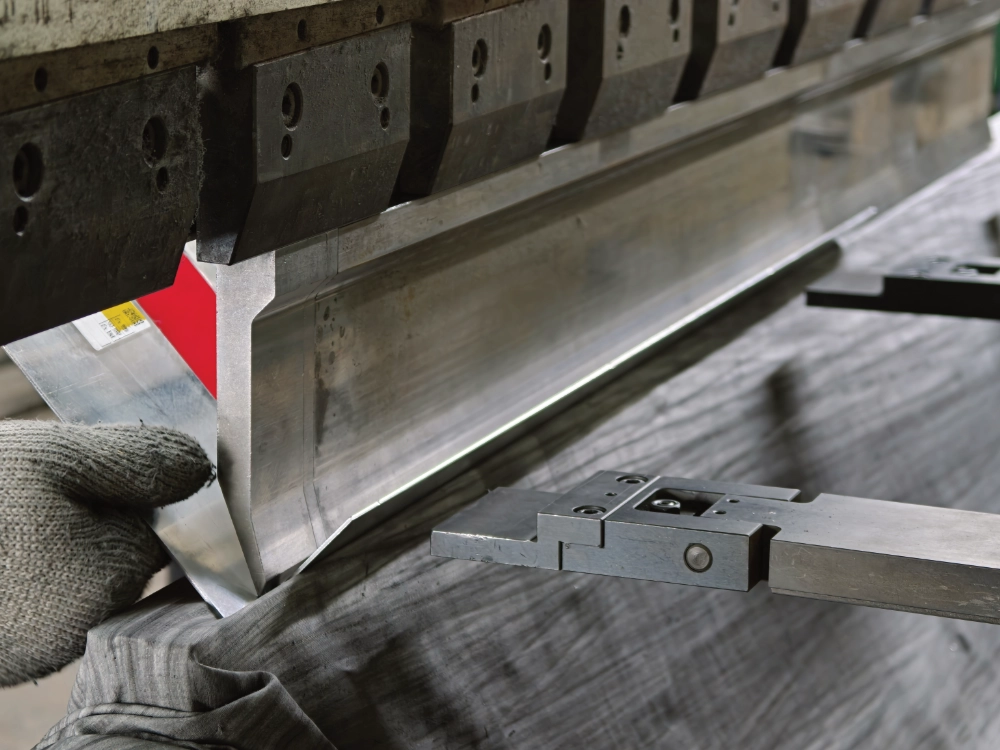
The brake is closing a return on mill-finish sheet. The glove and the die do not show a gauge. Exterior cladding from this shop is 2.0–3.0 mm of base metal, coating excluded. A frequent search is 3003 sheet at 0.063 in. That is about 1.6 mm, under the 2.0 mm start of the facade range. If the drawing says 0.063 in, it is not this exterior ticket until someone revises the thickness.
The same 2.0–3.0 mm range is what the fold has to survive. A thinner interior piece can be hemmed. It is not a substitute for the facade return. Write the millimetres on the shop drawing before the die is chosen. The Foshan plant is 20,000 m². The path for this formed sheet is scan or drawing, CAD, CNC, then the brake.
The folded cassette is still 3003-H14
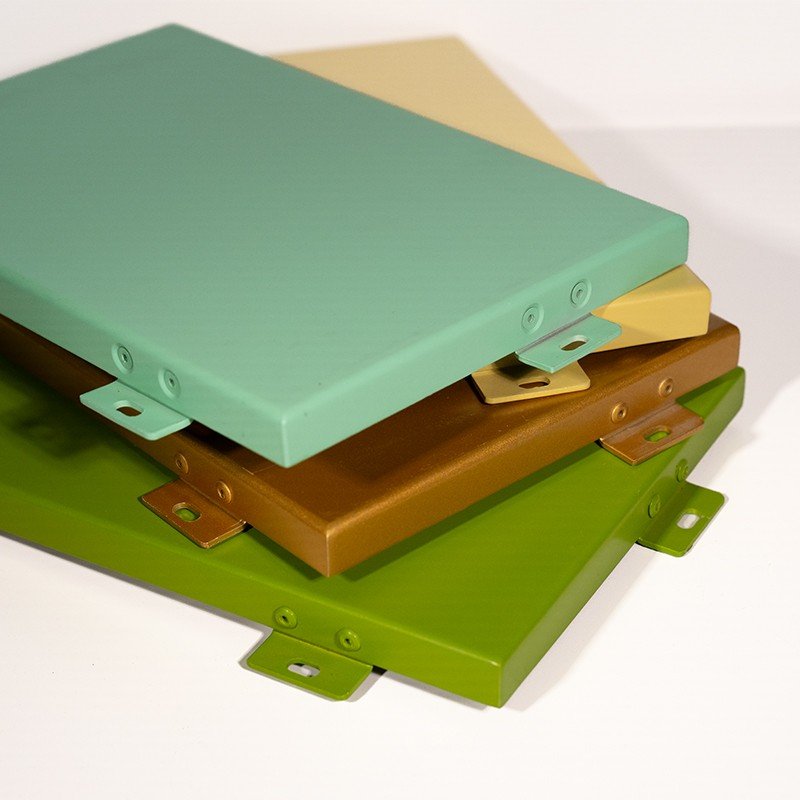
These four cassettes have returns and fixing ears. The colors are a finish schedule, not four alloys. The photograph does not state 2.0 mm or 3.0 mm. When the exterior face is PVDF, the dry film is at least 30 μm to AAMA 2605, the FGIA voluntary specification for superior organic coatings on aluminum. Powder on an interior or sheltered face is AAMA 2604, and it is not a silent swap for that PVDF film.
Send the CAD or the BIM with the alloy, the base thickness, the return, and the coat. This site does not host a blank drawing file to download. The joint is drawn from the project grid. The quote starts when that file arrives.
Aluminum 1100 specification
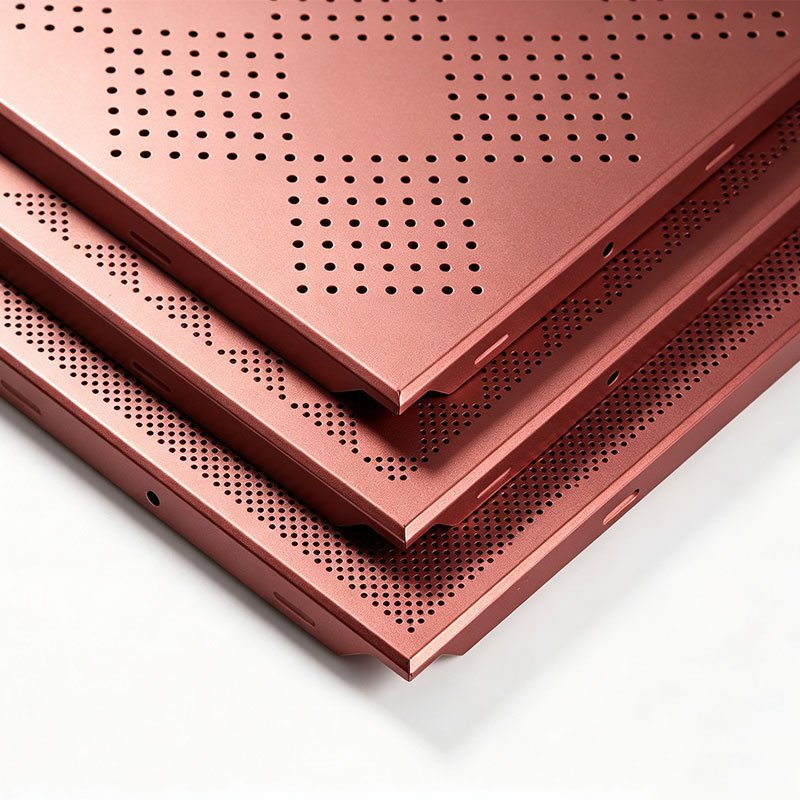
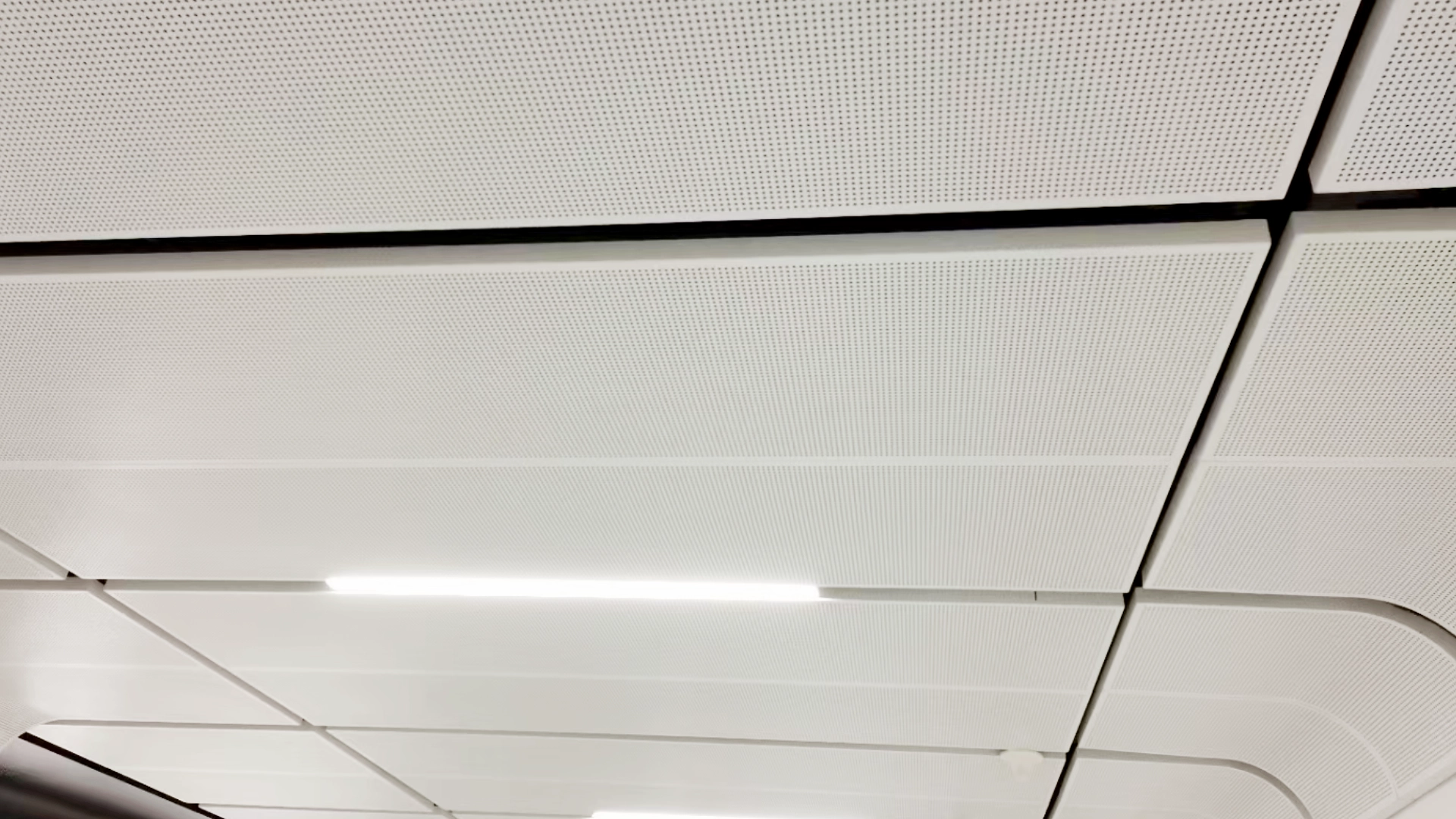
These are perforated clip-in tiles with a hemmed edge. The sample is rose gold. It does not print 1100, and it is not the exterior cassette above. Use it as the reminder that an interior panel is a different line. The 1100 specification on this site is simple interior sheet where the wind is low. The facade pages do not give 1100 a 2.0–3.0 mm exterior range.
1100 versus 3003, in the words people type, is which grade is on the wall and which grade is allowed inside. Put 3003-H14 on the formed facade. Put 1100 on the simple interior sheet. If the interior piece is also folded, perforated, or exposed to weather, it is no longer the simple 1100 line. Say so on the drawing. Powder to AAMA 2604 applies when that interior or sheltered coat is specified. It does not promote 1100 to an exterior PVDF panel.
Frequently asked questions
What is on the 3003-H14 aluminum sheet specification for cladding?
The exterior ticket is 3003-H14 solid sheet, formed in the shop, at 2.0–3.0 mm. When the face is PVDF, the dry film is at least 30 μm to AAMA 2605. ASTM B209 is the sheet and plate specification that covers these alloy designations. This page does not print tensile strength or a wind pressure.
What 3003 aluminum sheet thickness does the facade use?
Exterior formed cladding is 2.0–3.0 mm. A common mill search is 0.063 in, about 1.6 mm. That is below the exterior range used here. The thickness is the base metal, not the coating. Confirm it on the shop drawing before the brake is set.
What does the aluminum 1100 specification cover on this site?
1100 is the simple interior grade where wind is low. It is not the exterior 3003-H14 ticket, and the facade pages do not print an 1100 thickness. Interior or sheltered powder, when that coat is specified, is AAMA 2604. Buyers also type 1100 versus 5052 or 6061. Those alloys are not published here.
Does the catalog publish a 3003 aluminum sheet price?
No. The pages do not print a price per square metre or per sheet. The order changes with the alloy, the thickness inside 2.0–3.0 mm, PVDF or powder, and whether the panel is a flat face or a folded cassette. Send the drawing.
Send the alloy with the drawing
Mark 3003-H14 or 1100, the base thickness, and PVDF or powder. Exterior sheet in this shop is 2.0–3.0 mm of 3003-H14, with PVDF dry film at least 30 μm when that coat is specified. WhatsApp is the short path for the CAD. The two grades are not interchangeable after the brake is set.