Aluminum Baffle Ceiling Specification for One Blade
Specify a single-blade aluminum baffle by the drawing, the finish, and the carrier. Height, length, and thickness on the baffle line are custom. Powder and fluorocarbon are the published coats, in a custom color. The catalog does not print a blade price.
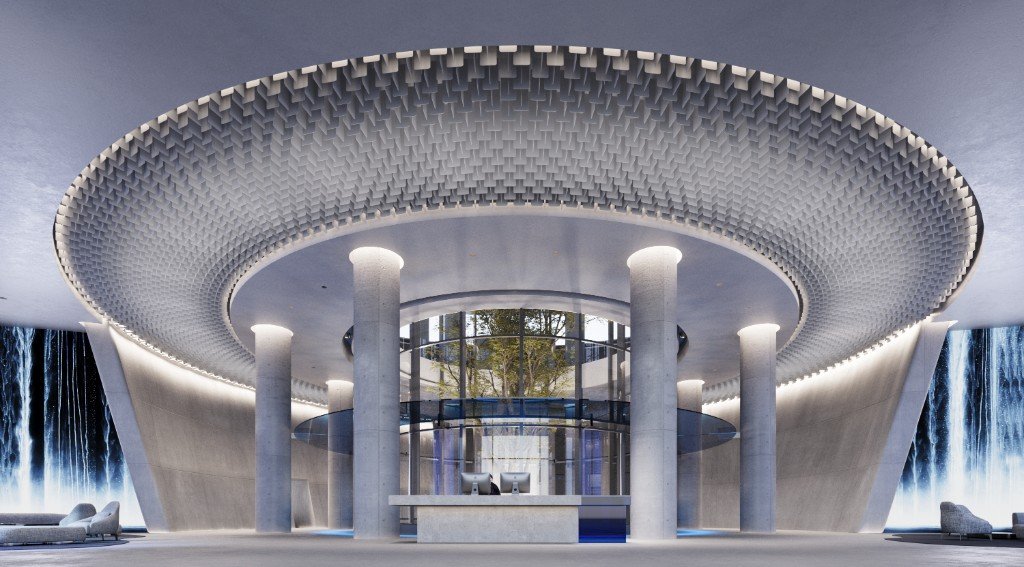
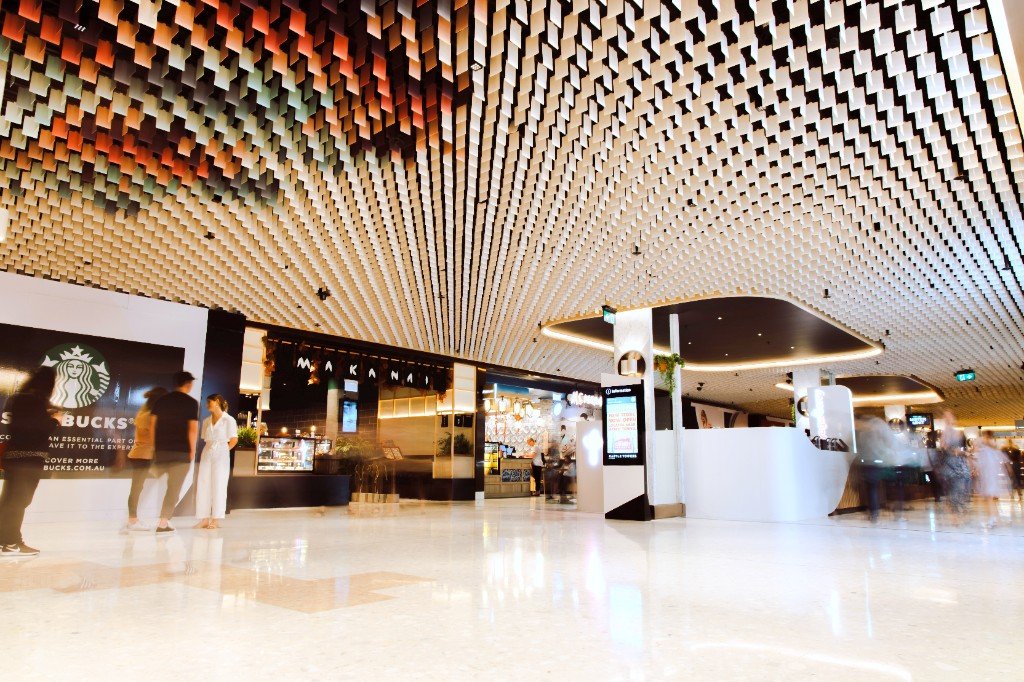
The round ceiling in the first image is a design visualization, not a photographed job, and the lobby is not named. It shows what a dense field of single blades looks like when the pieces turn with the circle. Each piece is one blade. Color, coat, and the carrier are chosen before that field is released to the shop.
Buyers who type an aluminum baffle ceiling specification are asking for those three lines, not for a ceiling-fan blade. The published aluminum baffle ceiling is a vertical piece in the 7, J, water-drop, bullet, or A series, with height, length, and thickness left custom. A U-baffle is a different profile, at 20–200 mm in width and height. The single blade in these photographs is neither of those shapes. It hangs from a carrier, one piece at a time.
Aluminum baffle ceiling specification
| Item | Single blade | Published baffle line |
|---|---|---|
| Piece | One blade, repeated on a carrier | 7, J, water-drop, bullet, and A vertical baffles |
| Size | Set on the shop drawing | Height, length, and thickness custom |
| U profile | Not this piece | U-baffle width and height 20–200 mm |
| Finish | Powder or fluorocarbon, custom color | Powder, fluorocarbon, wood-grain transfer, anodizing |
| Where it is used | Commercial ceiling field and a decorative wall | Malls, offices, lobbies, airports |
| Price | Not published | Not published |
The blade is aluminum. This page does not assign it a temper the way an exterior sheet ticket does. The size lives on the drawing for that room. Powder coating and fluorocarbon spraying are both on the baffle finish list, with wood-grain transfer and anodizing beside them. Custom color is the point of the chip rack: one blade can be a quiet gray, and the next bay can be a second color, without changing the piece.
People also search decorative aluminum ceiling panels and custom metal ceiling tiles. A tile is a closed module. This blade is an open piece on a carrier, so lights, diffusers, and sprinklers sit in the gaps the drawing leaves. Do not specify it as a lay-in tile.
Aluminum baffle ceiling detail
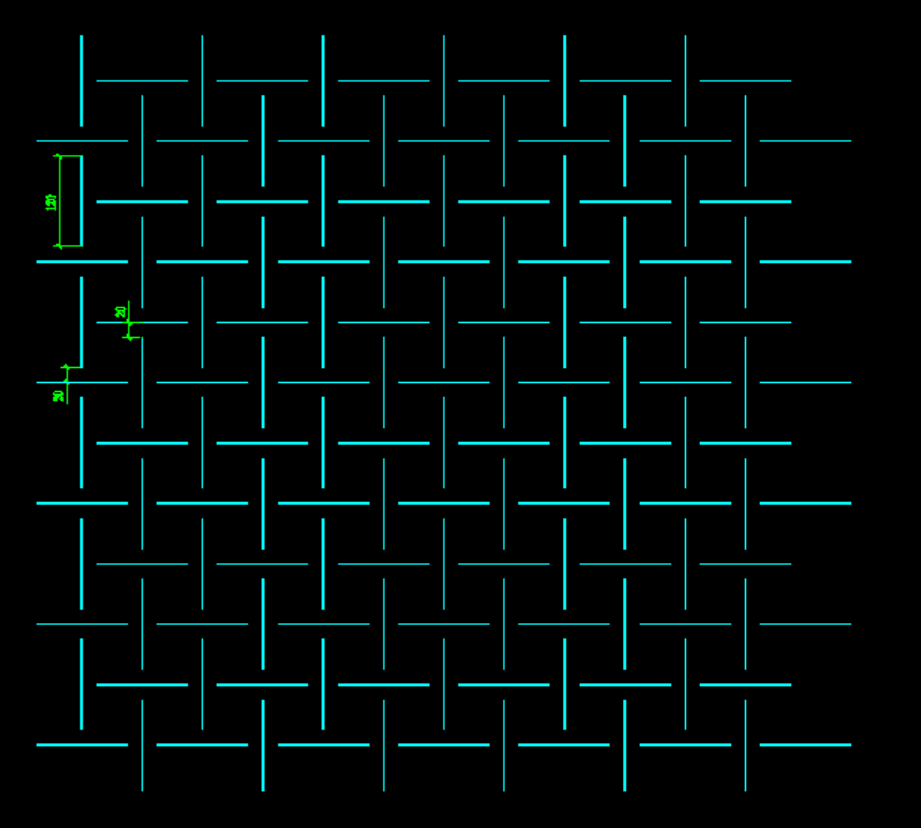
The layout is one blade, repeated. Vertical and horizontal strokes alternate so the field reads as a weave, which is the same idea as the radial ceiling when the plan is a circle instead of a rectangle. Green dimensions sit on the drawing. They are not copied here as a catalog size. Send this sheet, or the one for the project, and the shop follows that sheet.
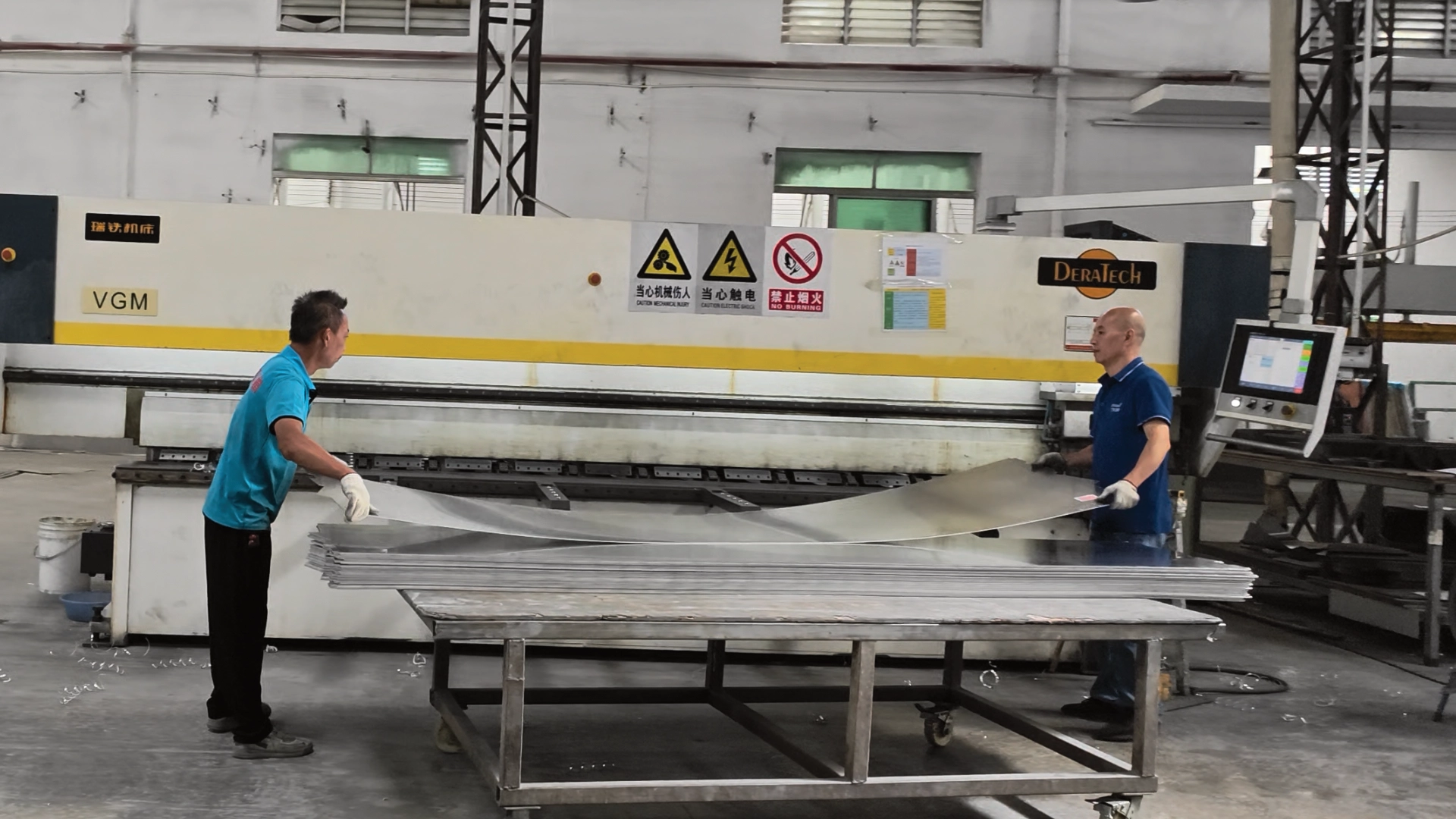
The Foshan plant is 20,000 m². A field this repetitive is cut from the CAD on the CNC, then coated, then hung. The visualization is the target. The layout is the instruction. They are not the same file.
How to install a baffle ceiling
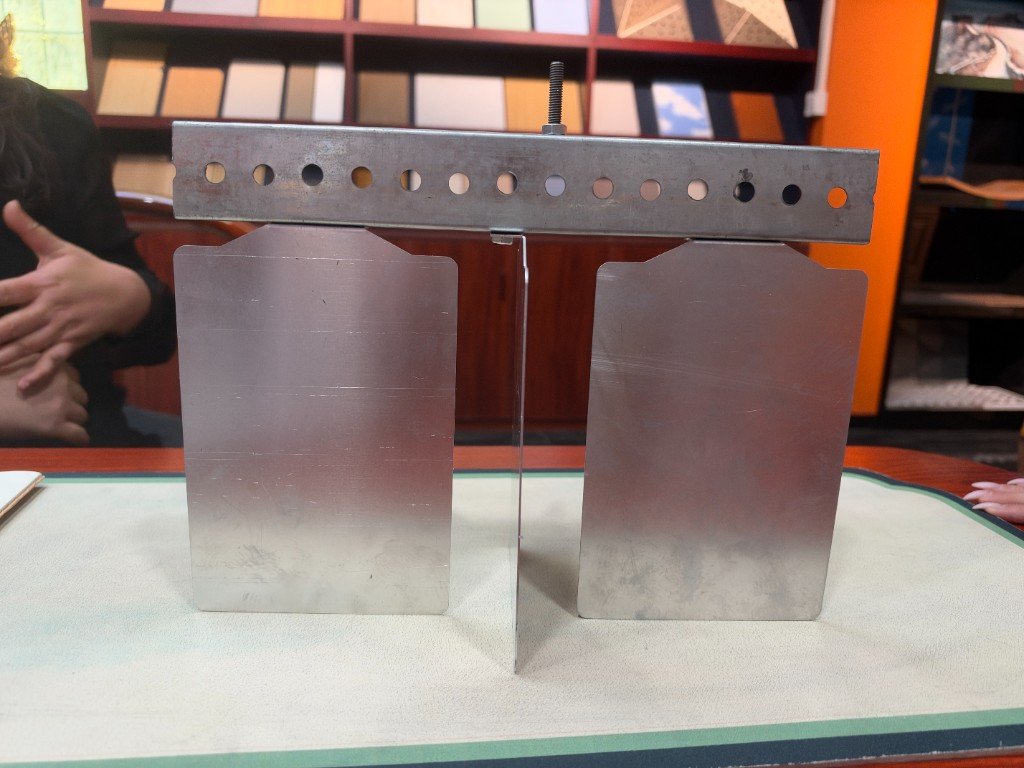
The sample is the install in one bay. Two mill-finish blades sit on a punched carrier. A threaded hanger drops through the center. The edges are formed, and the metal is still bare, so this is the piece before color. Nothing on the sample prints a thickness. The same carrier takes a coated blade. The punching is what lets the hanger land where the drawing puts it.
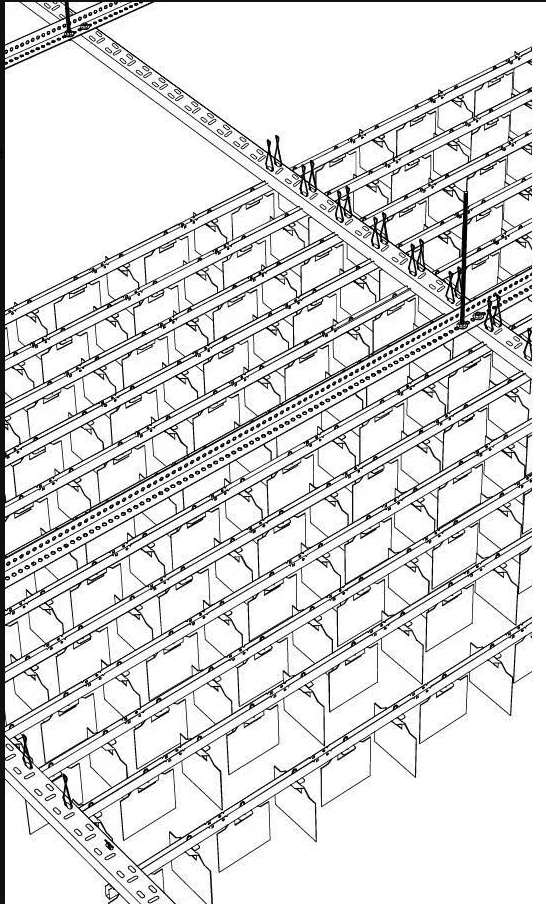
The isometric is the room, not the sample. Carriers run in parallel. Hangers drop to them. Rows of single blades fill the bays. That is the install sequence: set the hangers, level the carriers, then clip the blades. Spacing between carriers is a project dimension. It is not a number this catalog prints. A straight baffle ceiling uses the same idea of a hung line and a repeated piece. The piece here is the single blade, not a U profile.
Powder, fluorocarbon, and custom color
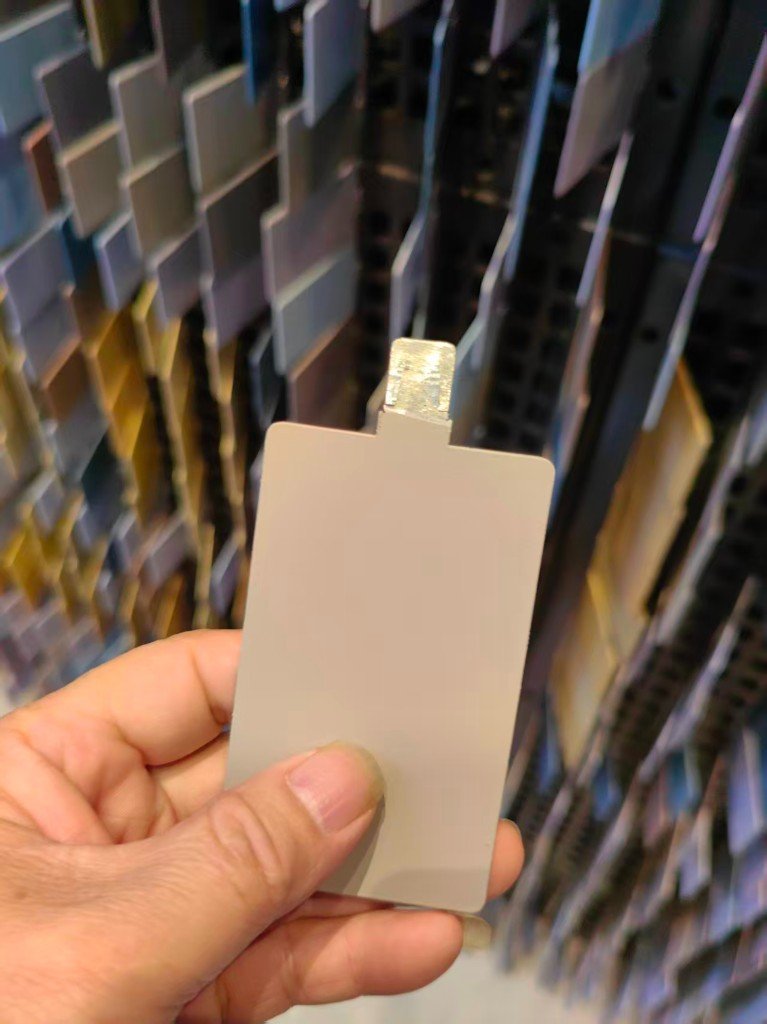
The chip is one coated face in front of a rack of other faces. No color code is printed on it. Interior commercial ceilings on this line take powder, the high-performance organic coat in AAMA 2604. When the same blade is decorative metal on an exterior wall, the coat is fluorocarbon, the superior organic coat in AAMA 2605. PVDF versus powder is that choice. The facade sheet ticket on this site is a PVDF dry film of at least 30 μm when that exterior coat is specified. The chip photograph does not show that reading.
Spray is how the fluorocarbon is applied. Powder is a separate booth. Both can be a custom color. Wood-grain transfer and anodizing stay on the baffle finish list when the drawing asks for them. A liquid color that is not one of those published coats is not a silent substitution.
A commercial ceiling, or a decorative wall
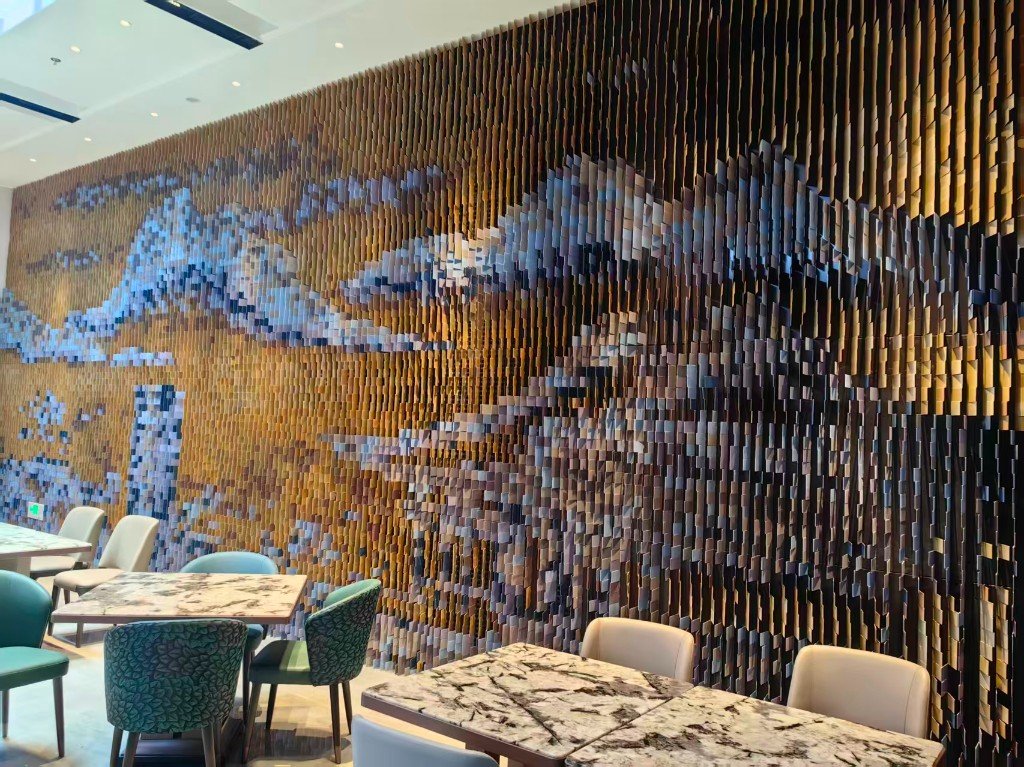
This wall is installed in a dining room. The building is not named. Thousands of single blades, in several colors, build a picture. That is the custom-color use at full scale: each blade is still one piece, and the color map is the drawing. The same piece can run overhead as a ceiling field or stand on a wall as decoration. An exterior decorative wall takes the fluorocarbon line. This photograph is indoors.
A radial lobby ceiling, a flat layout, and this picture wall are three plans for one blade. The carrier changes with the plan. The piece does not. Mark which plan is yours when you send the file.
What changes the price
The catalog does not print a price per square metre or per blade. Cost moves with the number of blades, how many colors are in the map, powder or fluorocarbon, and whether the field is a ceiling or a decorative wall. A straight baffle in one color is a shorter order than a picture wall. Send the layout. There is no blank drawing file on this site.
Frequently asked questions
What belongs on an aluminum baffle ceiling specification for one blade?
The drawing, the finish, and the carrier. Height, length, and thickness on the published baffle line are custom. A U-baffle is a different profile, published at 20–200 mm in width and height. Do not copy a green dimension off a layout into the catalog line.
How do you install a single-blade baffle ceiling?
Hang the carriers, then set each blade on the carrier. The sample shows two mill-finish blades on a punched rail with a threaded hanger between them. The isometric shows those carriers running in parallel. Spacing stays on the drawing for that room.
Is the coat powder or fluorocarbon?
Both are published. Powder is the interior and sheltered coat, specified to AAMA 2604. Fluorocarbon is the exterior decorative coat, specified to AAMA 2605. The facade sheet ticket on this site is a PVDF dry film of at least 30 μm when that coat is used. The color chip in the photograph does not print a micron reading.
Does the catalog publish an aluminum baffle ceiling price?
No. The order moves with the blade count, the number of colors, powder or fluorocarbon, and whether the field is a ceiling or a decorative wall. Send the layout.
Send the layout and the color count
Mark powder or fluorocarbon, the number of colors, and whether the blades are a ceiling or a wall. The piece is one aluminum blade on a carrier. WhatsApp is the short path for the drawing.