Which Acoustic Ceiling Tile Belongs in a T-Bar Grid?
An acoustic tile in a T-bar grid is perforated aluminum plus a backing, not a hole pattern by itself. Mineral fiber can absorb, then sag. LINDELACR punches 0.6–0.8 mm lay-in tiles in Foshan. The NRC has to be a lab report for that assembly.
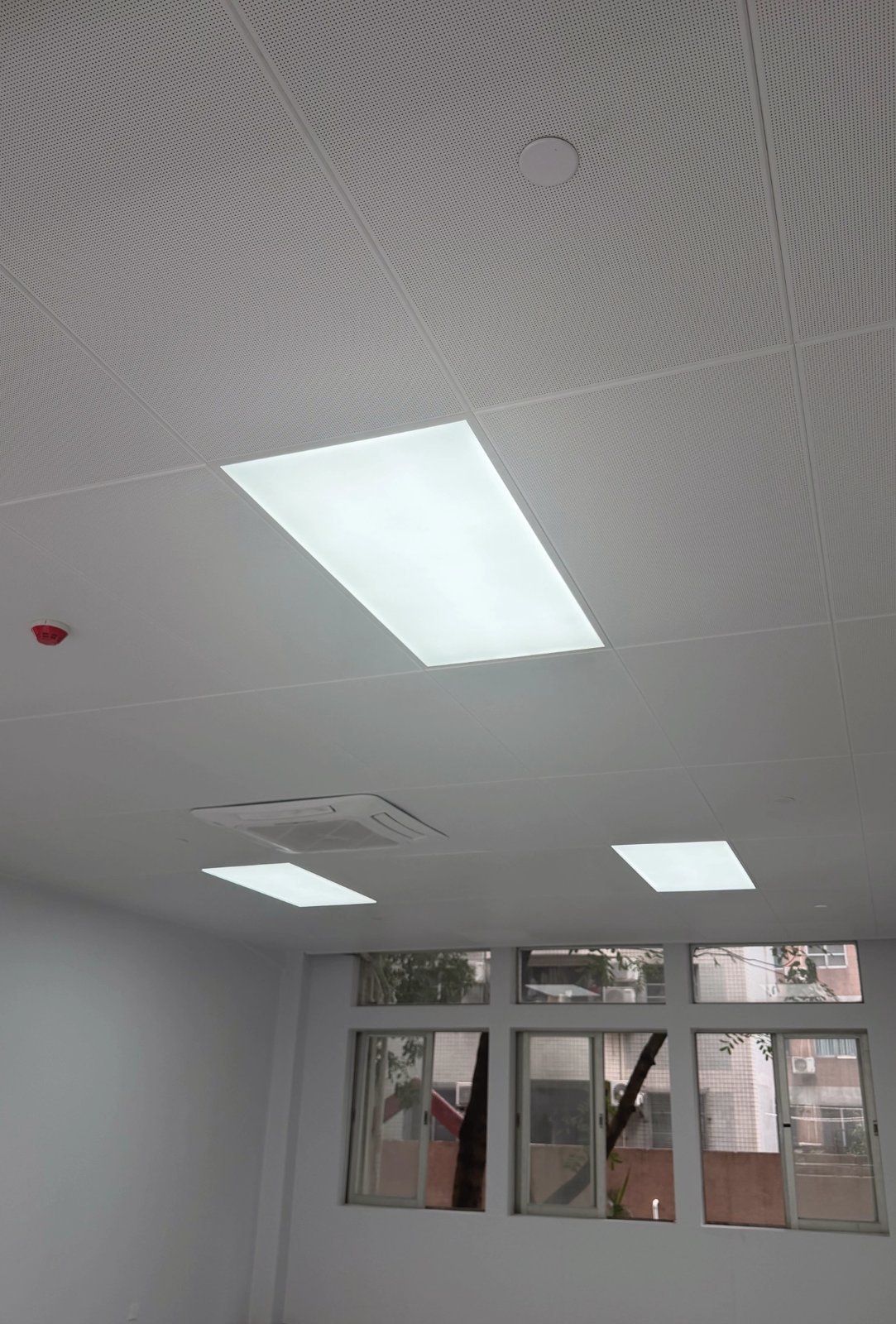
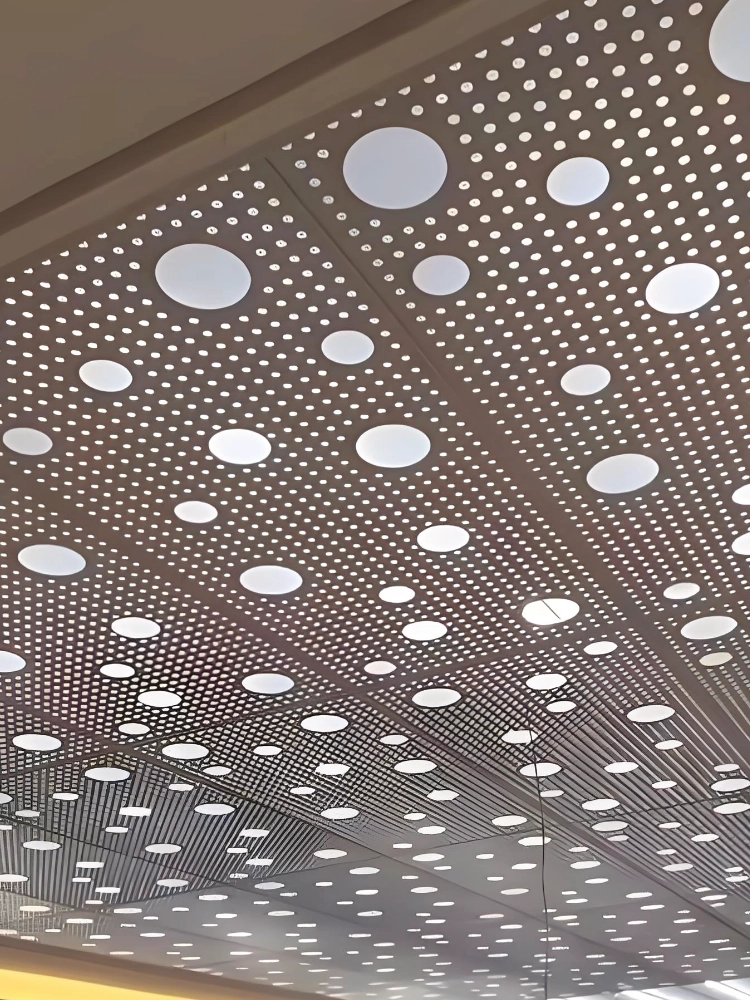
This office field at Guangzhou Baiyun University is micro-perforated aluminum in a suspended grid. Lights and a cassette sit in the module. From the floor the holes nearly disappear, so the ceiling still reads as a white plane. That look is not an absorption number. The metal only lets sound through. Whatever is bonded behind the sheet, and how deep the plenum is, decides what the room actually hears.
LINDELACR fabricates the tile in Foshan. Plant area is 20,000 m². The path is scan → CAD → CNC → fold, then one powder lot. A T-bar tile has to seat on the tee the contractor is buying. LINDELACR does not invent an NRC from a photograph of this room. The teaching-building corridors on the same campus use powder-coated U-baffles. This office is the micro-perforated tile. They are different ceilings.
What the tile is actually doing
| Decision | Mineral fiber | Perforated aluminum lay-in | Solid aluminum |
|---|---|---|---|
| What absorbs | The board itself | Backing behind the holes | Almost nothing |
| Metal | None | Indoor 0.6–0.8 mm, 1100 or 3003-H14 | Same gauge, no holes |
| Humidity | Can sag and stain | Stays flat | Stays flat |
| Access | Edges crumble after repeated lifts | One tile up, then back | One tile up, then back |
| Proof | Absorption report plus sag class | ASTM C423 or ISO 354 for this hole, backing, and plenum | Do not label it acoustic |
NRC, tested to ASTM C423 or ISO 354, is how much sound stays in the room. CAC, tested to ASTM E1414, is how much leaks across the plenum into the next room. An open face helps the first. Mass and a closed joint help the second. One product rarely leads both lists. If a consulting room has to stay private, take the partition to the slab. Do not ask a perforated tile to be a wall.
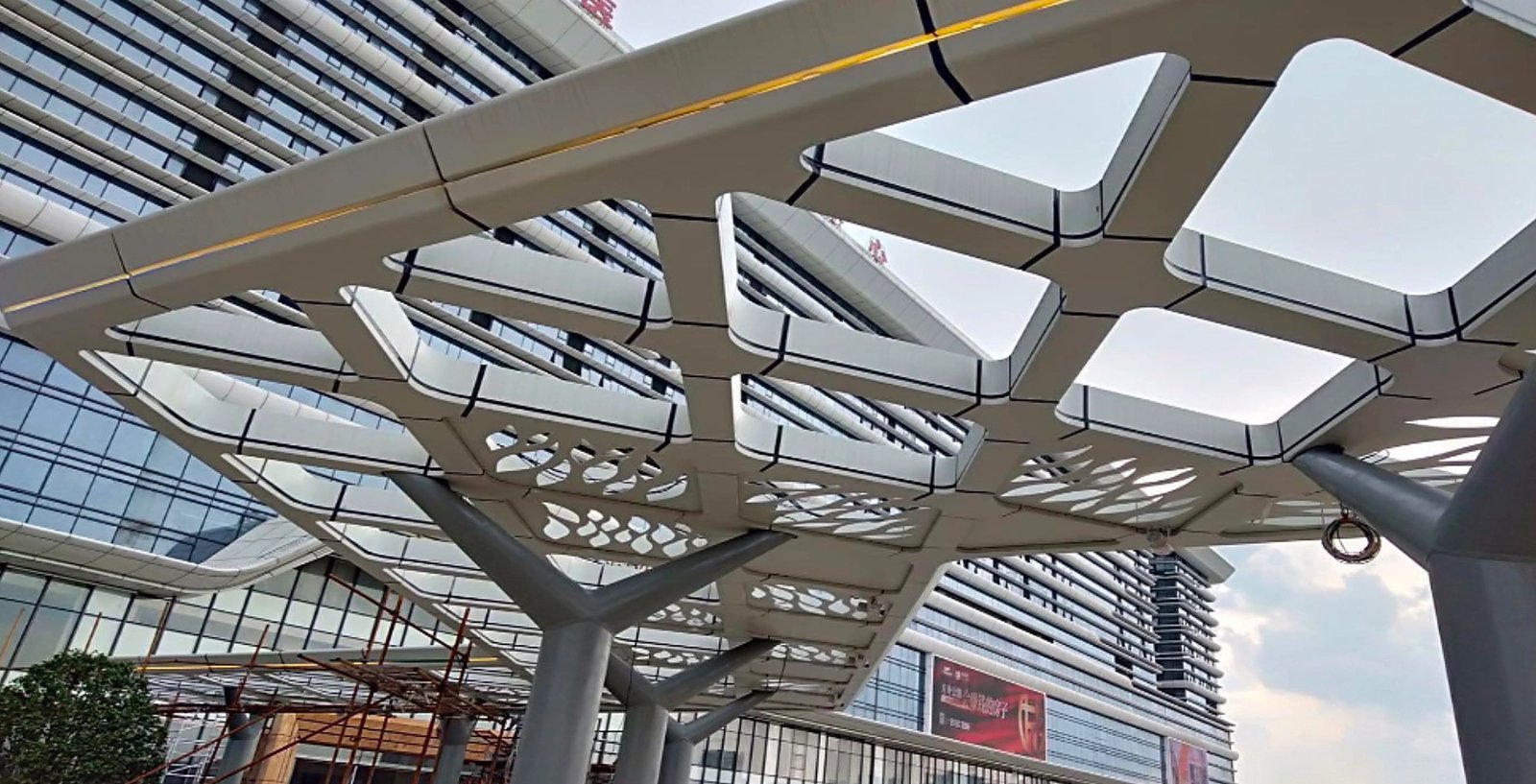
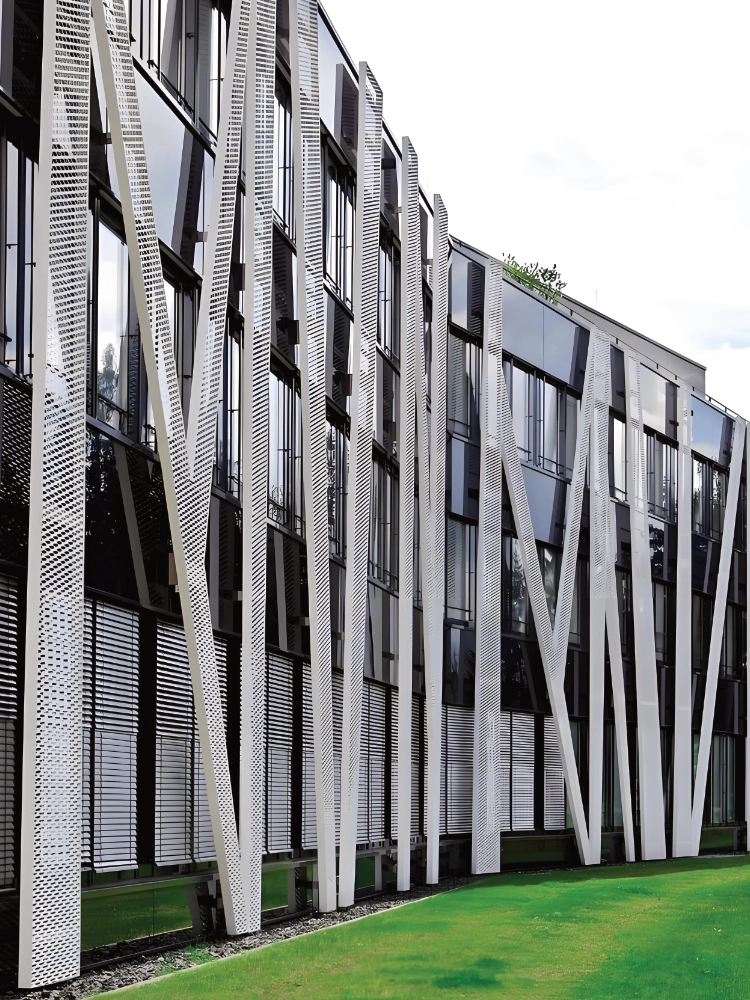
Indoor trays stay 0.6–0.8 mm. Alloy 1100 is enough on a simple dry room. 3003-H14 is the step up when the module is larger or the return has to stay flat. Powder to AAMA 2604 is the indoor coat. A 2.0–3.0 mm exterior lid, and PVDF to AAMA 2605, belong on a facade or a weather soffit, not in this grid. Write the acoustic target as a number on the RCP. A report for a different hole diameter, a different open area, or an empty plenum does not cover the tile that will be hung.
Solid aluminum in the same grid is a finish, not an acoustic tile. If the brief asks for absorption and the sheet has no holes and no backing, the ceiling is not doing that job. Say so on the drawing before the grid is bought.
Match the edge to the tee
The hole field is not the edge
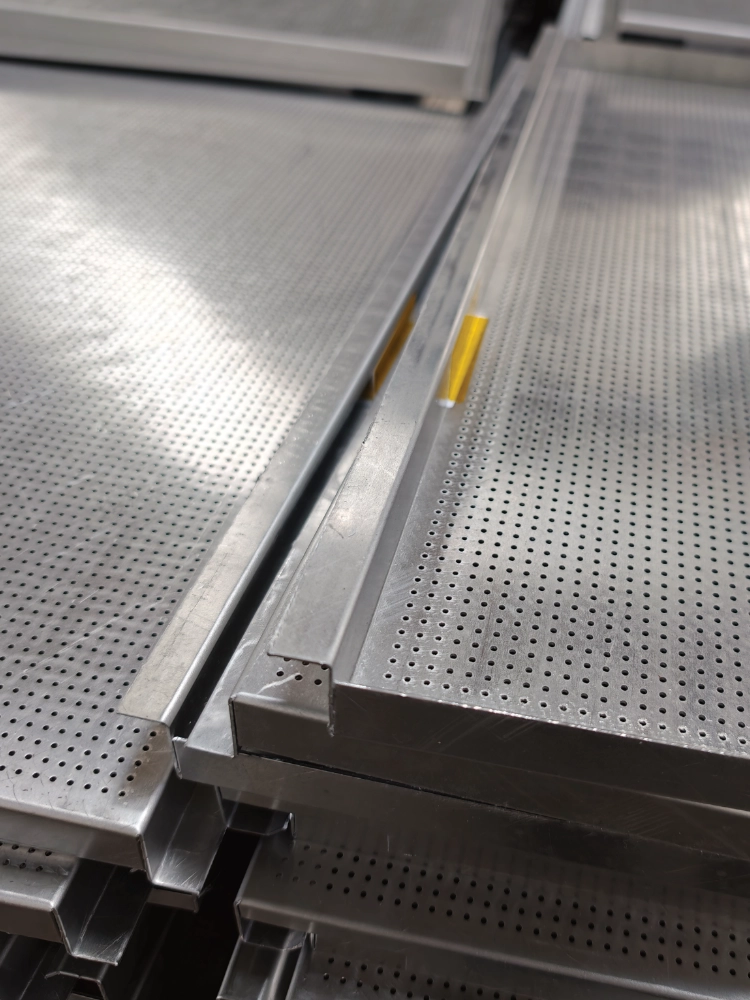
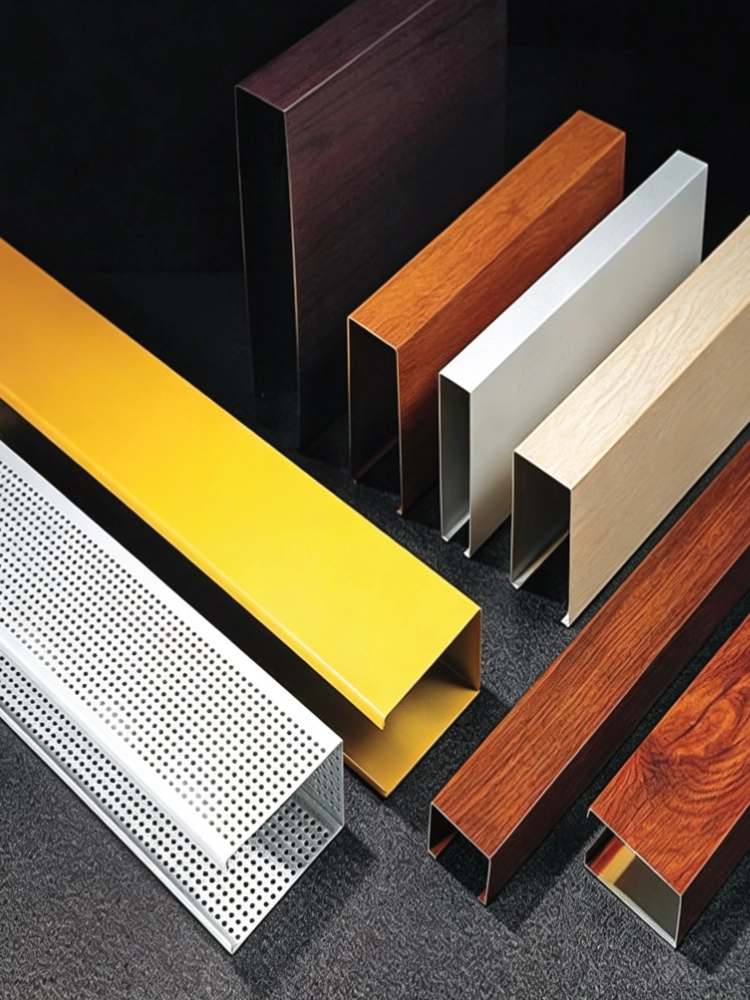
These trays show the split. The face is a dense micro-perforation. The side is a folded return and a clip slot, typically 20–25 mm on an indoor tray. That edge clips up. It does not drop onto a tee. A clip-in metal ceiling is the right call when the joint has to disappear and access is planned. A T-bar tile is the other edge: square, so it sits on a standard tee, or tegular, so it reveals the tee the drawing names.
Tee face is part of the seat. A 24 mm tee and a 14 mm narrow tee are not interchangeable, and a tegular tile will rock in the wrong one. Perforated metal is heavier than a mineral-fiber board of the same module. The grid’s load class has to carry the aluminum, the lights, and the backing, not the weight of the board it replaced. Confirm that before the first row is hung.
Punch the holes the report describes
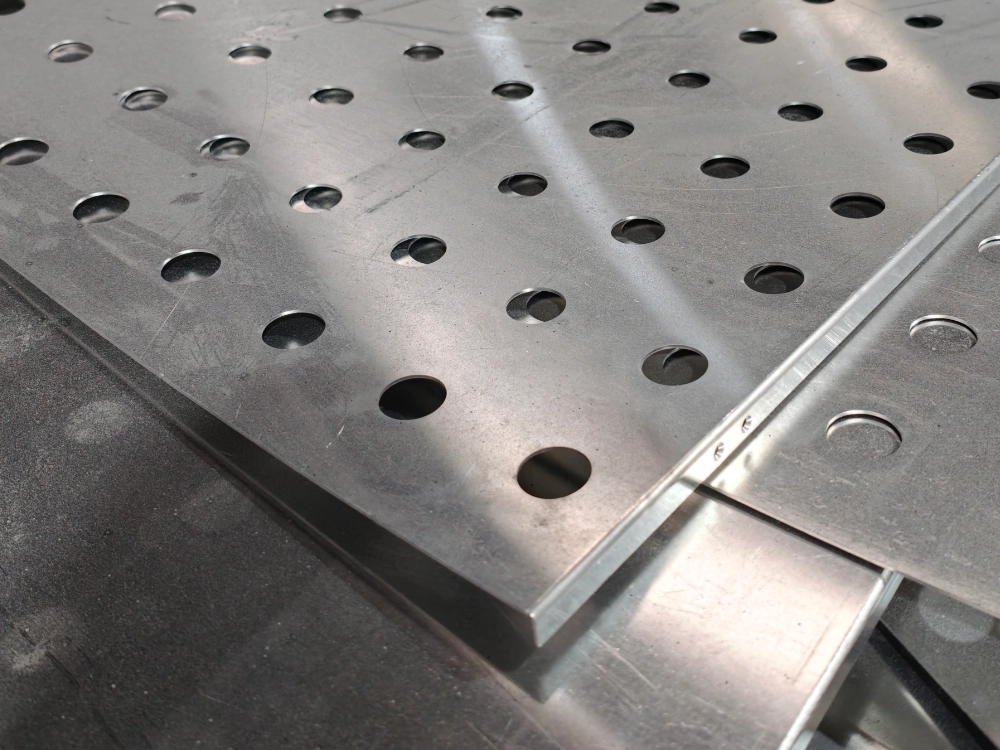
These larger holes are a different product from the Baiyun field. Open area, hole diameter, and pitch are drawing numbers, punched in Foshan, not adjectives added after the sample is approved. A decorative gradient of big and small holes can look acoustic and still be the wrong assembly for the lab sheet in the spec. Match the punched sheet to the tested article: same open area, same hole, same backing.
Fleece on the back of the tile is the usual pad. A mineral-wool infill is a different build, heavier, and it has to be named. Nothing behind the holes means the datasheet does not apply. The cavity is part of the test. A result taken at one plenum depth does not automatically hold when the services force the tile closer to the slab. The report has to state the mounting. The laboratory has to be named. Fire class belongs to that same assembly: aluminum is non-combustible, and a fleece or a wool pad is not the metal. Ask for the classification of the tile plus the backing, not of the bare sheet.
The tile still has to come down. A lay-in lifts one module for a driver or a valve and goes back without a new edge. That access is the same decision as in wood versus a metal drop ceiling: price the spare and the lift, not only the face. Record the powder code. A later reorder without that code will not disappear into this white field. Lights, diffusers, and sprinklers go on the RCP before the nest is cut, the way the Baiyun cassettes were set into the grid instead of sawn on site.
Frequently asked questions
Does a perforated tile absorb sound without backing?
No. The holes only pass sound into the plenum. Fleece or a mineral-wool pad, and the depth behind the tile, do the absorption. A report that assumed backing does not cover a bare sheet.
Is mineral fiber a better acoustic tile than aluminum?
It can post a similar absorption number and it costs less on the first quote. It also sags in humidity, stains, and crumbles when tiles are lifted often. A 0.6–0.8 mm aluminum lay-in stays flat and comes down one module at a time. Compare the lab report and the spare, not the slogan.
Can one T-bar tile give both high NRC and high CAC?
Rarely at the top of both. NRC (ASTM C423 or ISO 354) wants an open face. CAC (ASTM E1414) wants mass and a tight joint. Where speech must stay in the room, run the partition to the slab instead of asking the ceiling to do both jobs.
What should the drawing say before the tile is punched?
Module size, square or tegular edge, tee face, hole diameter, pitch, open area, backing, and the test method. Indoor powder is AAMA 2604. Thickness stays 0.6–0.8 mm; step to 3003-H14 when the module has to stay flat.
Send the grid and the target
Mark the tee, the module, and whether the problem is absorption in the room or privacy next door. LINDELACR will return a 0.6–0.8 mm lay-in that seats in that grid, a hole pattern, a backing, and a powder lot from Foshan. The NRC is the lab number for that assembly. If the drawing still says only “acoustic tile,” keep the coil off the PO.