What Are the Best Wood-Grain Materials and Finish Options for a Ceiling?
Specify wood-grain on aluminum, not timber, when the ceiling sits in sun, rain, or a coastal porch. LINDELACR transfers the grain onto 0.6–0.8 mm indoor baffles or 2.0–3.0 mm 3003-H14 soffits, then coats powder to AAMA 2604 inside or PVDF to AAMA 2605 at ≥ 30 μm outside. One lot across a sightline.
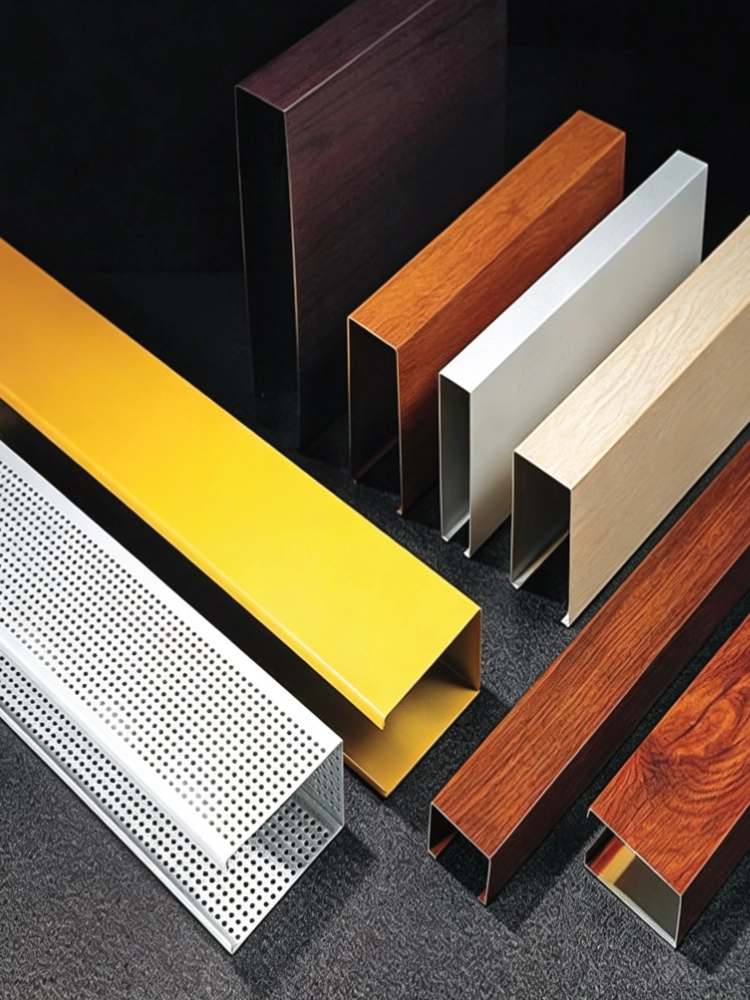
This is the finish you are buying: LINDELACR aluminum U-baffles on a black cloth—oak and teak transfers, a dark walnut, a pale wood, a yellow powder, a white powder, and a white perforated tube. The grain is a shop face, not a timber board. A porch, hotel entry, or semi-outdoor soffit that still wears stained pine does not get this plane from a paint crew.
The same nest is a U-baffle ceiling: fold the tube, then lock one coating lot. Guangzhou Baiyun University hung LINDELACR U-baffles on teaching-building corridors—the same carrier logic, a white powder lot, not a wood-grain film. Do not invent a named wood-grain hotel from a sample photo. Plant area is 20,000 m². A unique oak or teak still needs enough area to fill the transfer line, the same MOQ logic as a custom RAL on clip-in trays.
Timber, PVC, WPC, or wood-grain aluminum
| Item | Timber / PVC / WPC | Wood-grain aluminum |
|---|---|---|
| Face | Stain, print film, or a plastic skin | Transfer or print on coated 1100 / 3003-H14 |
| Thickness | Board or thin PVC plank | Ceiling 0.6–0.8 mm; outdoor soffit 2.0–3.0 mm |
| Coating | Field stain or a factory print | Powder AAMA 2604 inside; PVDF AAMA 2605 ≥ 30 μm outside |
| Shape | Straight plank; site-cut returns peel | U-baffle, cassette, curve: nest, then fold, then grain |
| Moisture / salt | Wood swells; PVC creeps in heat | Plate does not rot; coastal jobs still need PVDF and sealed cuts |
| Lot | Mixed cartons shift hue | One Foshan lot across a sightline |
Indoor baffles and clip-in trays stay 0.6–0.8 mm. A weather soffit or porch lid steps up to 2.0–3.0 mm 3003-H14. Alloy 1100 is enough on a dry, simple room. The coating split is the same as PVDF versus powder on aluminum veneer: powder to AAMA 2604 under cover, PVDF to AAMA 2605 at ≥ 30 μm where sun and rain hit. Wind is sized from the panel and the folded edge. Perforation on a wood-grain tube is a CNC nest, not a site drill: open area is a number on the shop drawing. If one bay is solid oak and the next is a vented teak, both leaves leave Foshan in one lot so the hue does not split.
What a wood-grain ceiling ticket actually is
A visualization is not a site photo

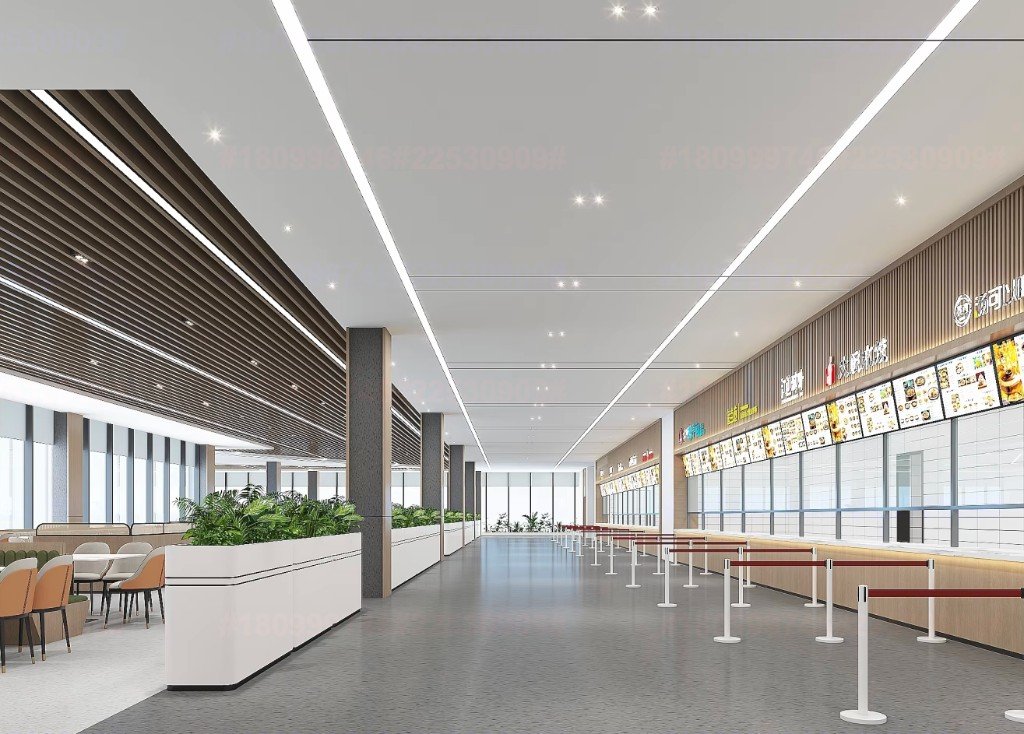
This lobby is a visualization: wood-look linear bands, a white perforated clip-in field, a ribbon light. It is not a named LINDELACR project. Use it as the language of the RCP—closed perforated trays where you need a wipeable plane, open linear or U-baffles where the plenum must stay visible.
A porch or canopy that only exists as this kind of still still needs a thickness and a coating class. Do not take a warm oak render as permission to hang 0.6 mm indoor coil over an open eave. If the perforated field must hide a sprinkler or a light, that cut is in the unfold, not a hole saw on a stained plank.
Fold the aluminum before the grain
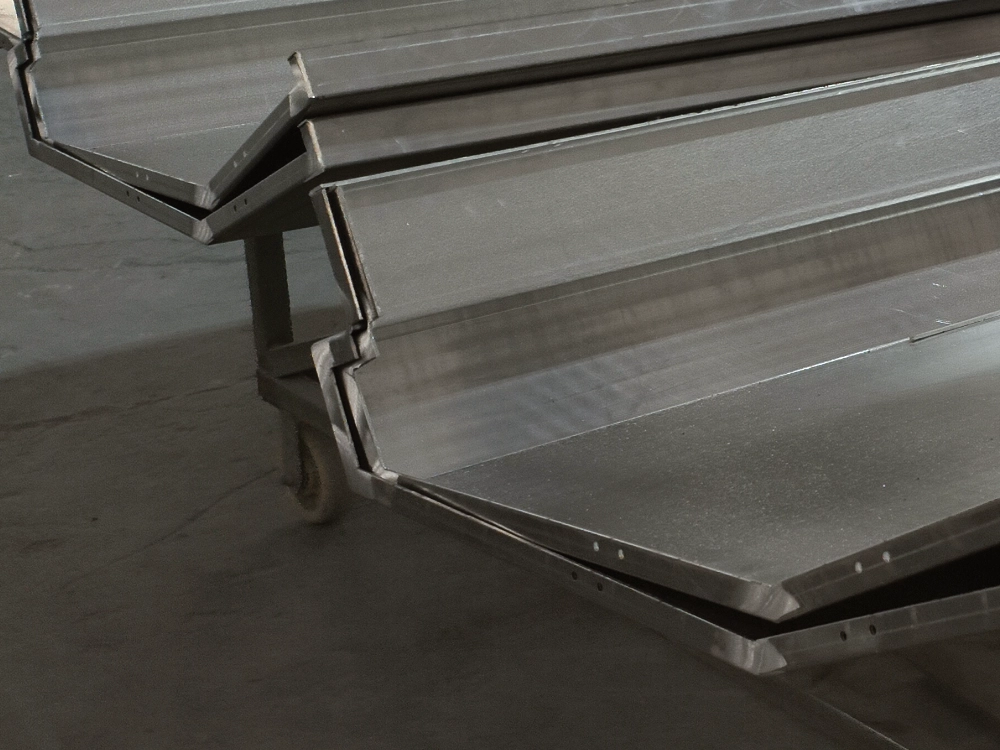
This mill-finish cassette is LINDELACR shop stock: a folded return, a face, holes for hangers, no paint yet. Wood-grain that peels at the brake is a film applied after a bad fold. The return is typically 20–25 mm on a ceiling tray; exterior soffits keep the same logic on thicker 3003-H14.
PVC and WPC do not hold that return after the first clash. If the porch lid must turn a beam or a light box, the unfold is cut in Foshan, then the grain lot is run on the formed part.
Form the baffle, then coat one lot
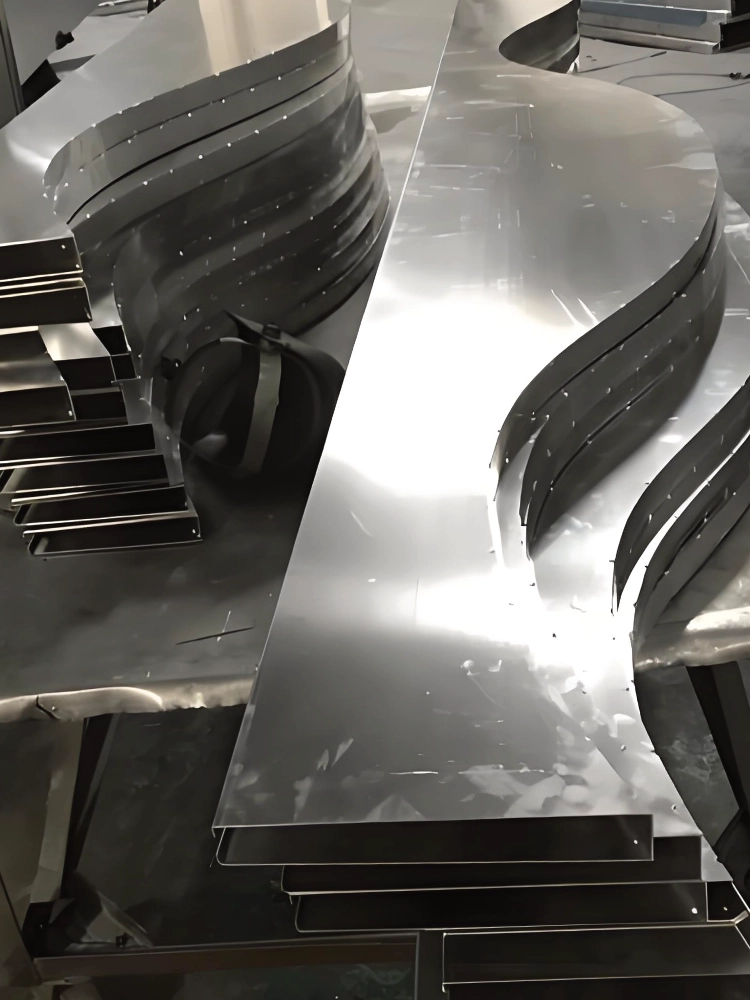
These are mill-finish curved aluminum baffles on the Foshan floor—stacked, still bare, a strap on the pile. They are not a stained timber ribbon. The curve is a nest. The wood-grain or powder goes on after the shape is locked, so the afternoon sun does not split hue between a straight tube and a wave.
Baiyun’s corridor baffles used this shop sequence with a white powder. A wood-grain porch or lobby uses the same sequence with a transfer lot. Do not buy curved blanks from one vendor and grain them in another plant. GIMEEC Health Ark used shaped 3.0 mm PVDF on a public soffit—the coating class of a weather plane, not a timber stain. The wood-grain porch ticket is the same split: name the alloy and the film before coil is allocated.
Frequently asked questions
Will wood-grain aluminum look like real wood?
It reads as wood at room distance when the grain, gloss, and direction are frozen on one coating lot. It is still metal: 1100 or 3003-H14 plate with a transferred or printed face, not a timber board.
Can you hang wood-grain aluminum on a humid porch or coastal soffit?
Yes if the ticket is exterior plate. Use 2.0–3.0 mm 3003-H14, PVDF to AAMA 2605 at ≥ 30 μm, and fasteners and cut edges sized for salt. Indoor 0.6–0.8 mm powder baffles stay under cover.
When is a PVC wood-grain panel enough?
On a small, shaded residential porch with no custom shape. A hotel entry, a coastal soffit, or a formed U-baffle needs aluminum: the grain sits on a nest you can fold, perforate, and coat as one lot.
How do you keep wood-grain the same across a sightline?
Approve a physical chip, lock grain direction and gloss, then run one Foshan lot for that plane. Do not mix a leftover walnut tube with a new oak tray on the same soffit.
Send the chip, not a timber name
Mark the bays that must read as one oak or one teak. LINDELACR will return an alloy, a thickness, a powder or PVDF class, and a 1:1 baffle or cassette from Foshan. If the ceiling is still only a stain quote, keep coil off the PO.