How Do You Find a Facade Partner With In-House 3D Modeling and Fabrication?
Pick a facade partner who owns both the 3D split and the brake. LINDELACR panelizes the surface in-house, CNC-nests 2.0–3.0 mm 3003-H14, then folds the returns in Foshan. If the model and the coil live in two companies, the first as-built clash becomes a change order, not a new nest.
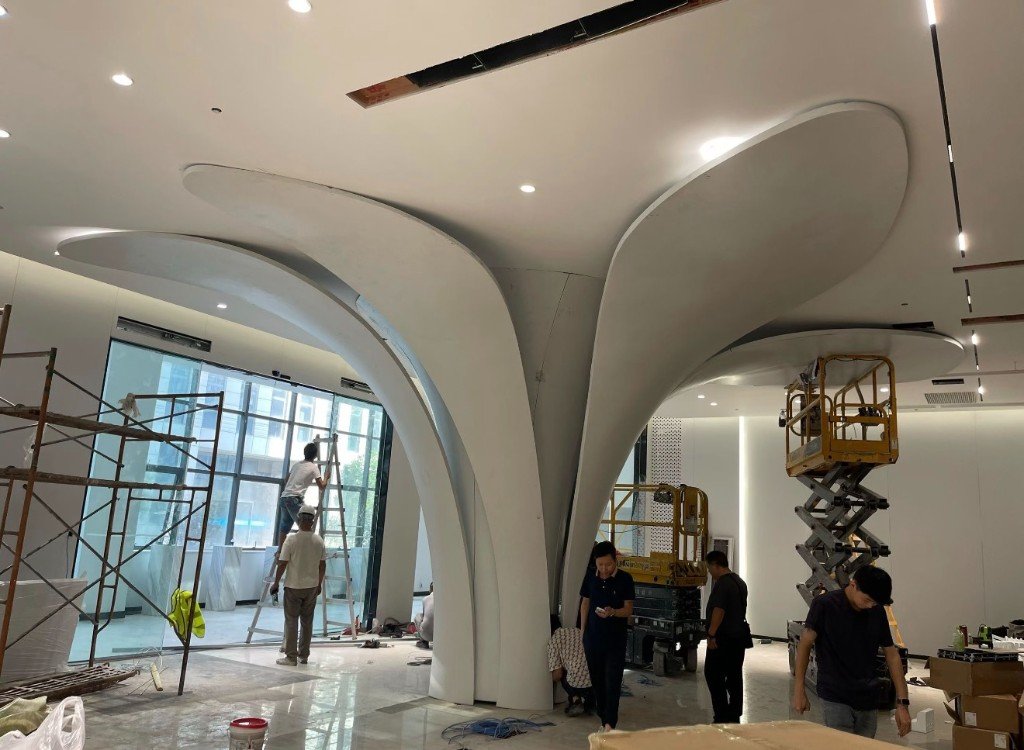
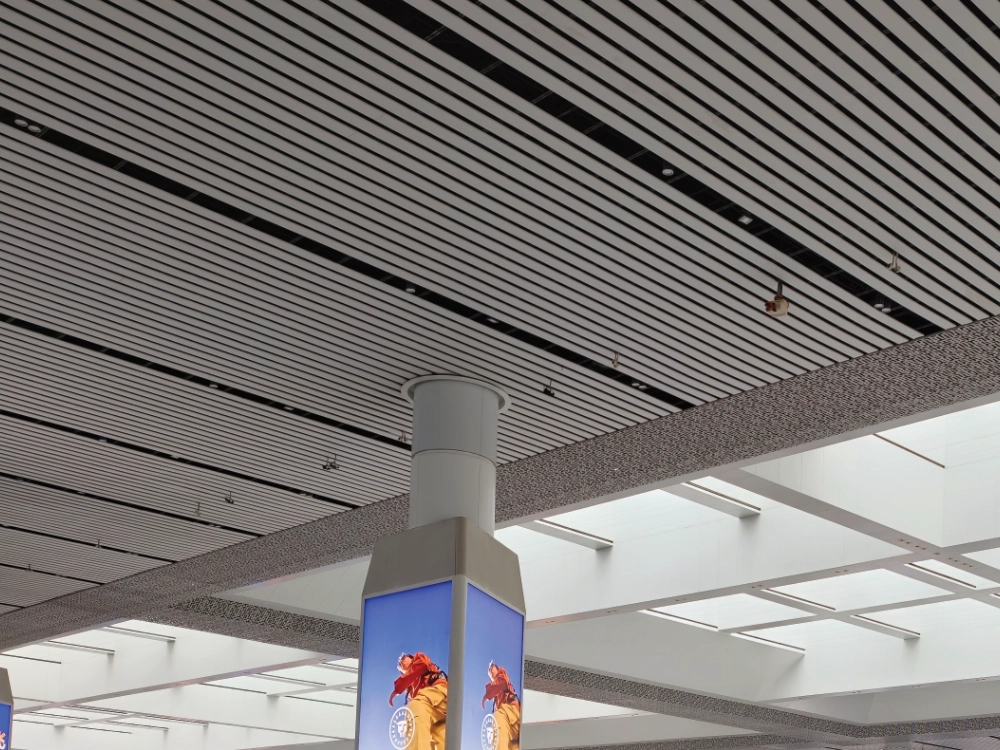
This lobby is the test. Compound aluminum petals meet a flat ceiling, lights are already in, and two scissor lifts are still on the floor. A partner who only sells coil cannot close that joint. The petal is a unique unfold. The ceiling plane is another nest. If those two files were never in the same plant, the installer is the one who discovers the miss.
LINDELACR runs that chain as a customized-for-you ticket: model → nest → CNC → brake → one coating lot. Plant area is 20,000 m². Exterior faces are 2.0–3.0 mm 3003-H14; interior trays can drop to 0.6–0.8 mm. CTS Baichen Yunqi’s lobby flower column used the same hold at a different geometry: a 16-fold radial CAD and unique 3003-H14 petals. Do not treat that as a catalog SKU. Do not invent a kPa for a photo.
What to check before you award the metal
| Check | Drawing-only fabricator | In-house 3D + metal plant |
|---|---|---|
| Source of truth | PDF elevation / pretty BIM | Scan or locked model, then a unique unfold per tray |
| Who cuts coil | A third-party nest | Same plant as the 3D team |
| Alloy / thickness | Finish name on a quote | 3003-H14 or 1100; exterior 2.0–3.0 mm |
| Return | Site fold if the blank is short | Typical 20–25 mm on the brake before coating |
| Coating | Mixed lots across a sightline | PVDF AAMA 2605 ≥ 30 μm as one lot |
| Proof on the floor | A catalog photo | Mill-finish first article + shop ticket matching the 3D code |
Ask who writes the unfold the day the site cloud moves a hanger 12 mm. If the answer is a trading desk, you do not have an integrated partner. PVDF to AAMA 2605 at ≥ 30 μm is the weather coat; powder to AAMA 2604 stays inside. Wind is calculated on panel size and the folded edge, not printed as a slogan.
Four proofs an integrated partner can put on the table
A panelized 3D, not a pretty mesh
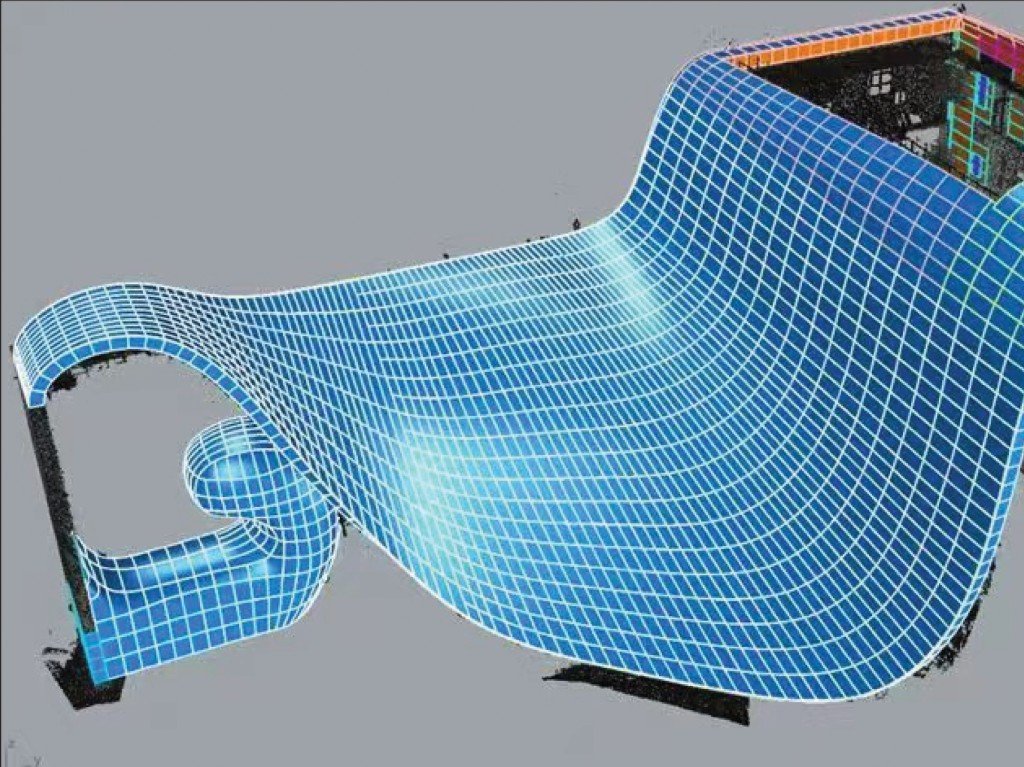
This is a LINDELACR panelization of a freeform surface: each blue cell is a tray the CNC can cut. A hyperbolic or double-curved bay is a hyperbolic panel nest, not a repeated rectangle stretched in Photoshop. If a supplier cannot show this split—unique codes, joint direction, the hole for a light or a hanger—they are quoting a picture.
The architect’s Rhino file is not enough. The plant has to rebuild it as manufacturable cassettes. That rebuild is the 3D modeling you are paying for.
The same surface as a field of trays
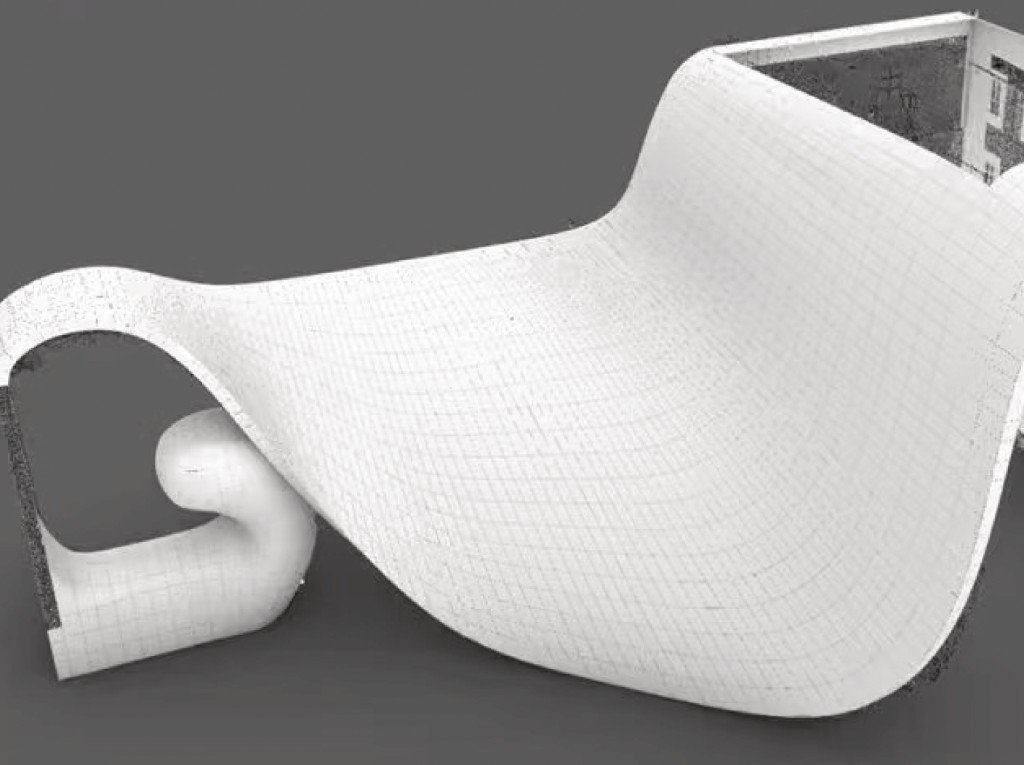
The white mesh is the same geometry after the split is frozen. Joints read as a cassette field. This is what the brake and the installer both use. If the blue view and the white view live in two offices, someone will re-mesh the surface and the returns will walk.
Ask to see both views on the same ticket, with the same tray codes. LINDELACR will not cut 2.0–3.0 mm coil from a view that still has no unfold.
A brake that can form the compound, in the same plant
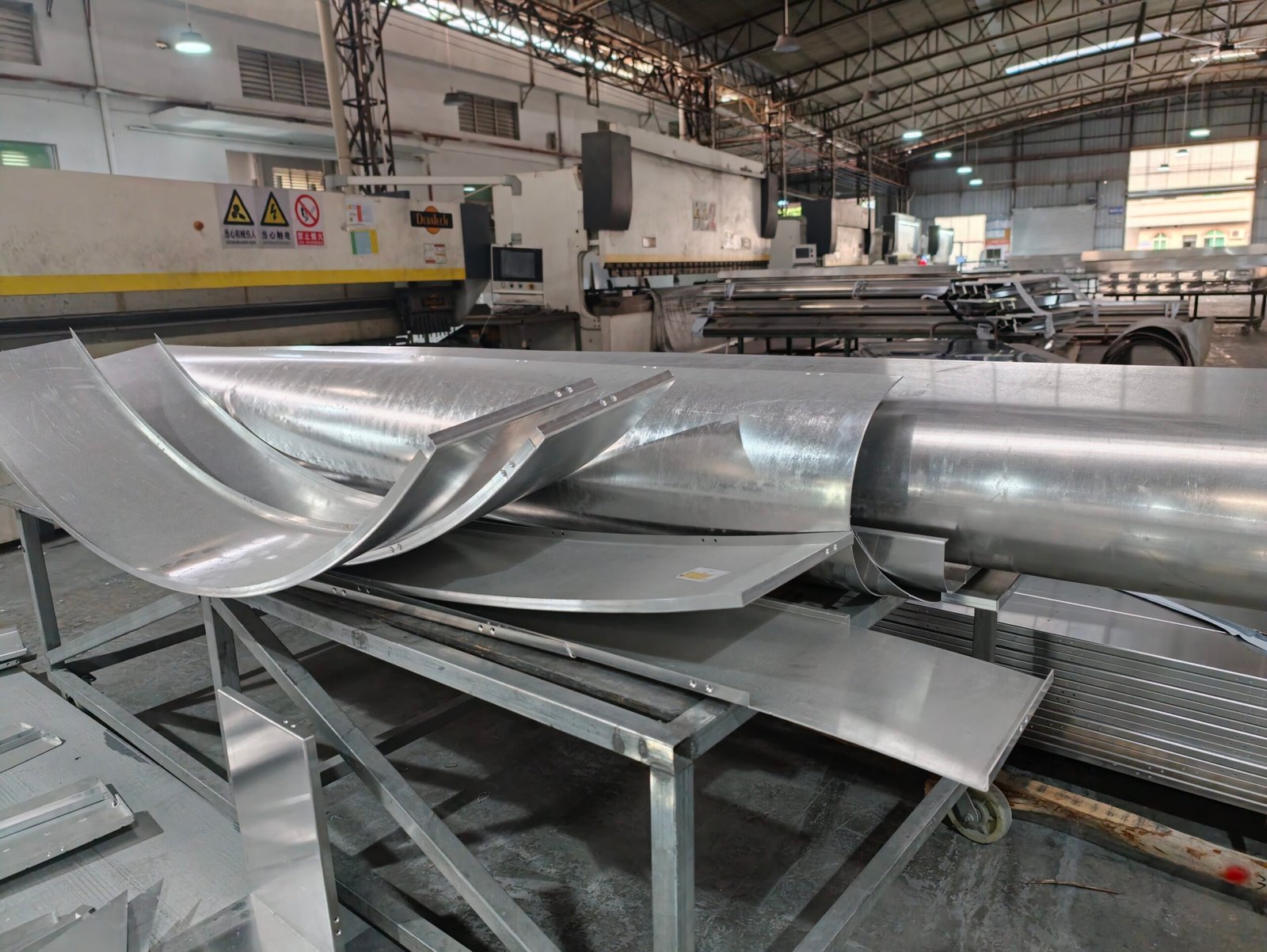
Mill-finish curved trays sit in front of a Durma brake in Foshan. That is the proof the 3D left the screen. Compound and single-curve blanks need the extra for the return before they see the die. Typical cassette returns run 20–25 mm unless the section calls a deeper box. If forming is subcontracted, the nest and the die never share a first-article table.
First articles leave mill-finish on purpose. Geometry is cheaper to reject before PVDF. Once the curve and the gap match the white mesh, the lot goes to coating as one ticket.
A ticketed cassette the 3D can still name
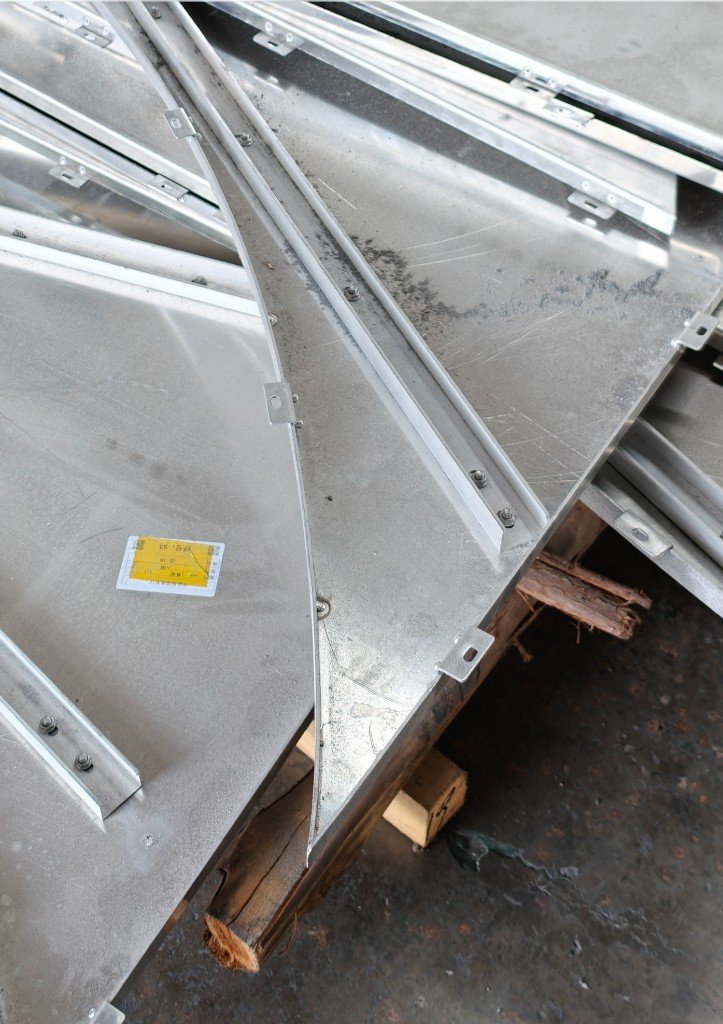
Folded returns, hanger tabs, a yellow shop ticket on mill-finish aluminum. The ticket is how the crate order still matches the model after the brake. If a partner cannot show a coded cassette—only a painted sample—the 3D stopped at the sales deck.
Exterior faces then take PVDF to AAMA 2605, typically ≥ 30 μm, one lot across any sightline the architect drew as one plane. Do not mix lots to save a leftover sheet.
Frequently asked questions
What 3D files should a facade partner show before you award the metal?
A panelized model of the actual surface, not a rendering. Each tray should have an unfold the CNC can read: unique codes, joint direction, and the return. LINDELACR starts from a scan or a locked BIM, then nests 2.0–3.0 mm 3003-H14 in Foshan.
Does in-house CNC matter if the architect already issued drawings?
Yes. Issued elevations are still a visual. The plant that cuts the coil must own the unfold. If CNC sits at a subcontractor, the first as-built clash comes back as a phone call, not a new nest.
How do you check that a compound column will match the 3D split?
Ask for a mill-finish first article from the same nest that built the model. CTS Baichen Yunqi’s lobby flower column used unique 3003-H14 unfolds from a 16-fold radial CAD. A petal that only exists in the rendering will not close on the brake.
What on the cassette proves the factory ran the model?
A shop ticket on a folded return: hanger tabs, fold millimetres, and a code that matches the 3D tray. Exterior faces then take PVDF to AAMA 2605, typically ≥ 30 μm, as one lot.
Send the model and the first article, not a finish name
Mark the bays that must read as one plane. LINDELACR will return an alloy, a thickness, a PVDF class, and a 1:1 nest from Foshan. If a partner cannot put the 3D and the mill-finish cassette on the same table, keep the coil off the PO.