Do Acoustic Ceiling Panels Replace Soundproofing?
An acoustic panel and a soundproof wall do different jobs. A perforated aluminum ceiling can sit in a room where echo is the complaint. It does not replace the wall, the door, or a sealed partition. Indoor LINDELACR sheet is 0.6–0.8 mm. This shop does not publish an NRC, an STC, or a CAC.
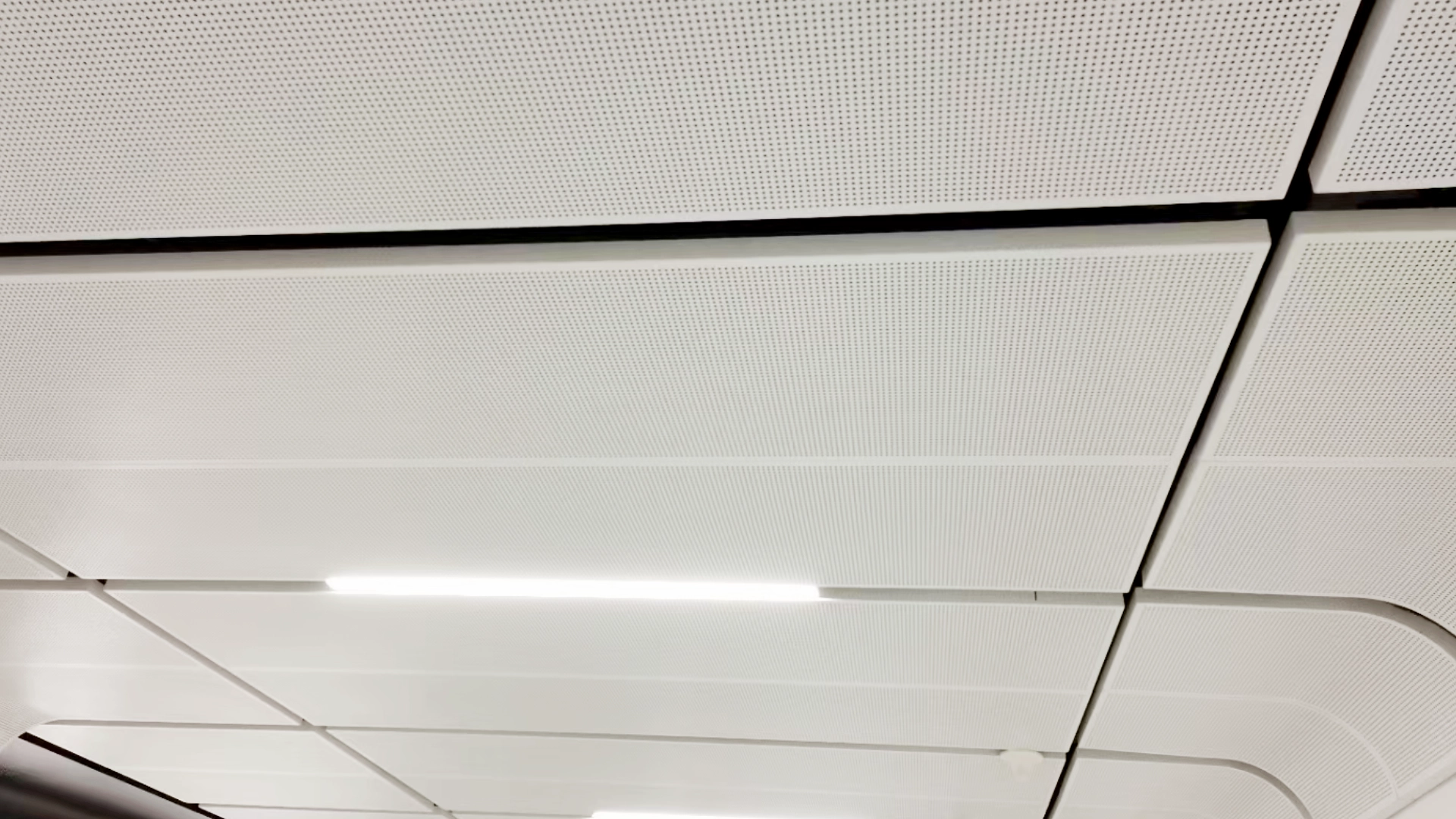
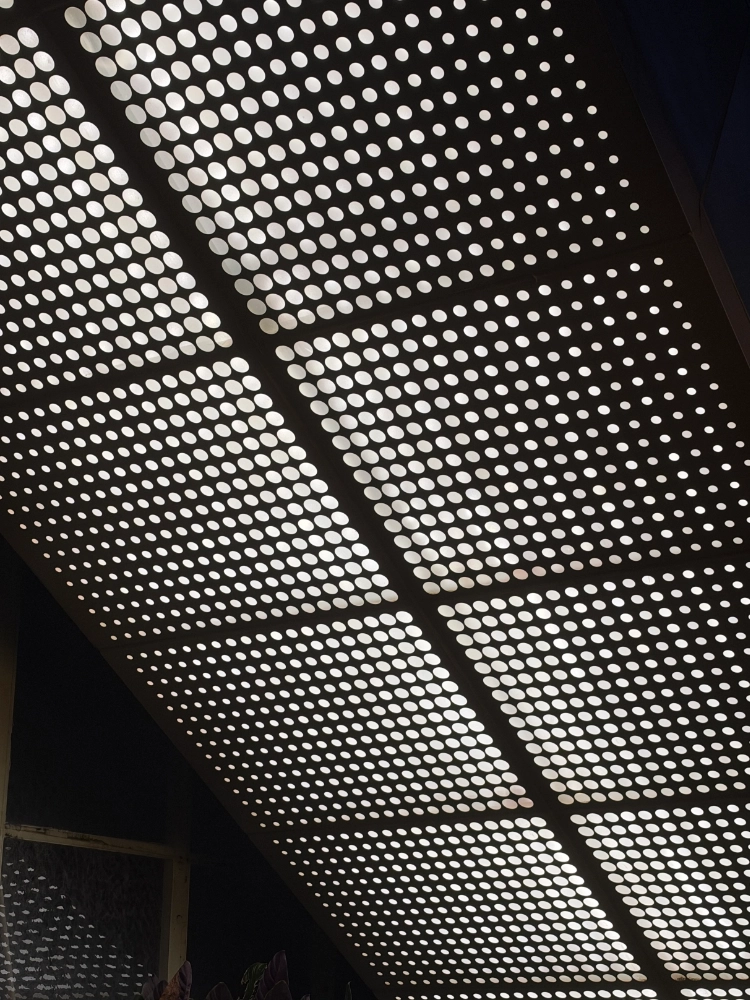
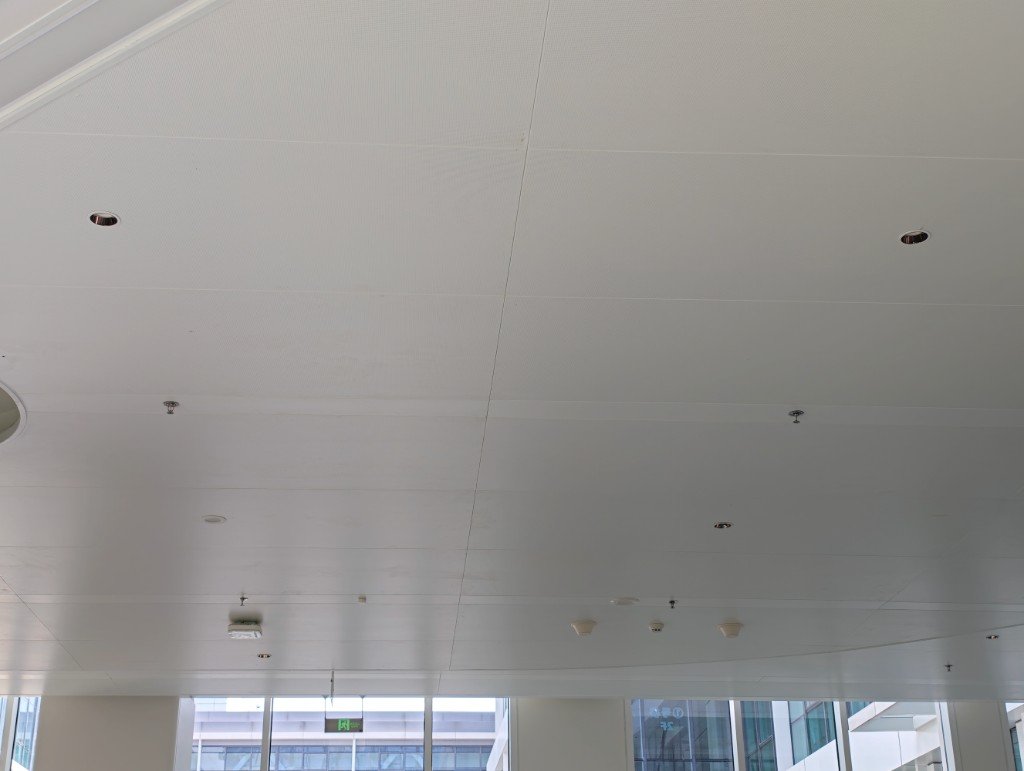
This field is white perforated aluminum, with dark joints and a linear light. The building is not named. The holes are in the face of the tile. They are not a wall between two rooms.
Buyers looking this week ask for micro perforated metal, an aluminum baffle ceiling, open cell ceiling panels, and a U-baffle. Those are four drawings. A later note on how to choose an aluminum panel ceiling sorts them by access and module. This note sorts them by the complaint: echo in the room, or noise from the next room.
Match the complaint to one ticket
| Buyer question | Ceiling on the drawing | What the product page lists |
|---|---|---|
| Echo inside one room | Micro-perforated panel or a lay-on | Micro sheet 1300×3000 mm, one piece up to 2000×6000 mm. Lay-on 0.7 or 0.75 mm, module 595×595×19 mm |
| Noise from the next room | Not a ceiling ticket | Indoor sheet 0.6–0.8 mm is not a partition. LINDELACR publishes no STC |
| Plenum stays visible | Open cell, U-baffle, acoustic baffle | Cells 100×100, 150×150, 200×200 mm. Baffle 20–200 mm wide and high, length to 6000 mm |
| Face has to close | Clip-in or lay-on | Clip-in modules 300×300 mm to 800×800 mm. Edge height 20 mm on the 300 mm rows |
| A named hole | Standard perforated panel | 0.7 mm hole, 1.54% open, up to 0.8 mm thick. 2.3 mm hole, 16.6% open. 5.0 mm hole, 30.7% or 19.63% open |
Indoor alloy is 1100 for a simple dry room, or 3003-H14 when a 20–25 mm return has to stay flat. Interior powder is AAMA 2604. LINDELACR does not publish an NRC for any row above.
What each ceiling actually is
A micro-perforated tile is still a thin sheet
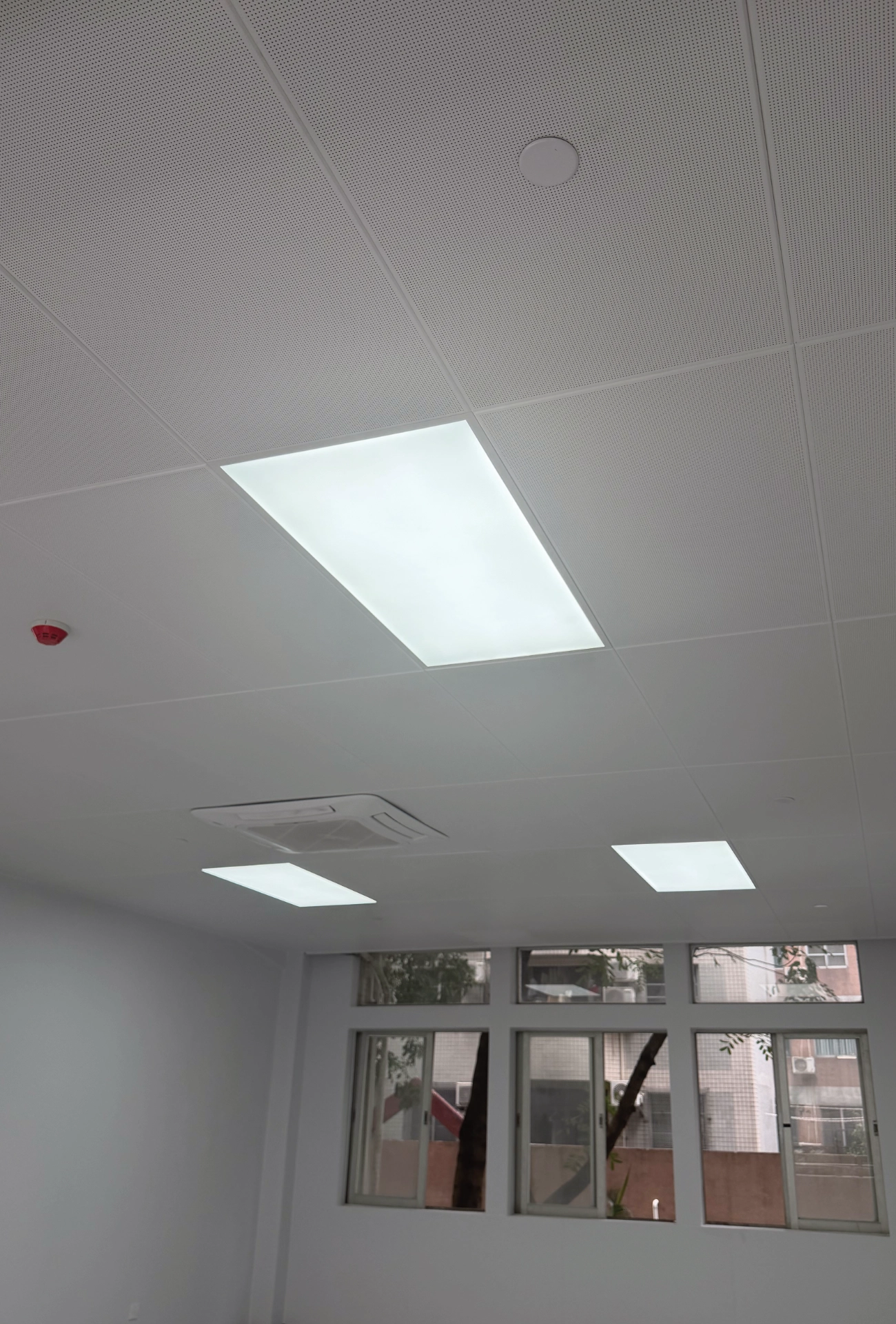
This teaching room is at Guangzhou Baiyun University. The face is micro-perforated aluminum. The corridors in the same building are U-baffles, and that is a second order. The micro-perforated panel page lists a standard sheet of 1300×3000 mm and a single piece up to 2000×6000 mm. Hole diameter and open area stay on the drawing. The exact module of this room is not stated here.
A dense hole field does not turn 0.6–0.8 mm aluminum into a soundproof lid. If the complaint is echo in the teaching room, name the hole. If the complaint is the room next door, the wall and the door are the other ticket.
An aluminum baffle ceiling leaves a gap
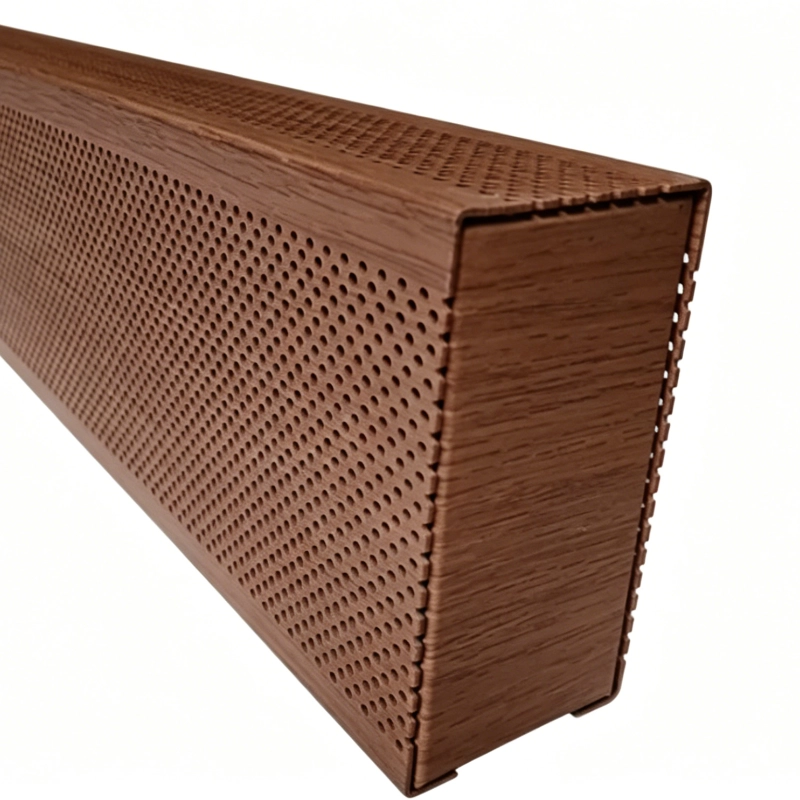
This is a studio view of one baffle, not a named hall. The face is perforated and the finish is wood grain. The acoustic baffle page lists width 20–200 mm, height 20–200 mm, and length up to 6000 mm, in aluminum or steel, wood-grain or a solid color. Hole size is custom. Once the baffles are hung, the gap between them stays open. That gap is not an STC wall. A plain baffle ceiling is the same idea with the profile named on the drawing: J, water drop, bullet, or 7-baffle.
A U-baffle corridor is not a sealed ceiling
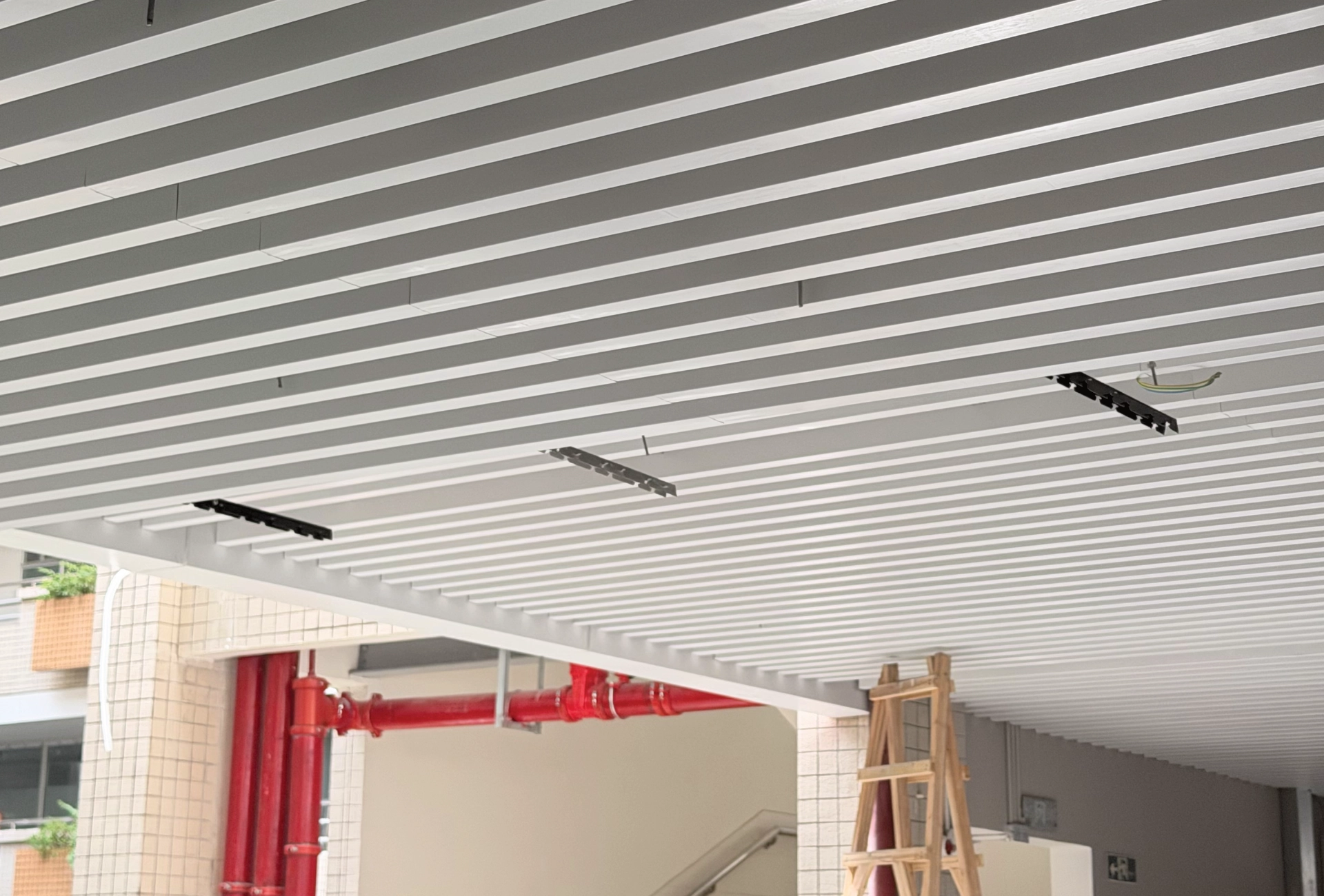
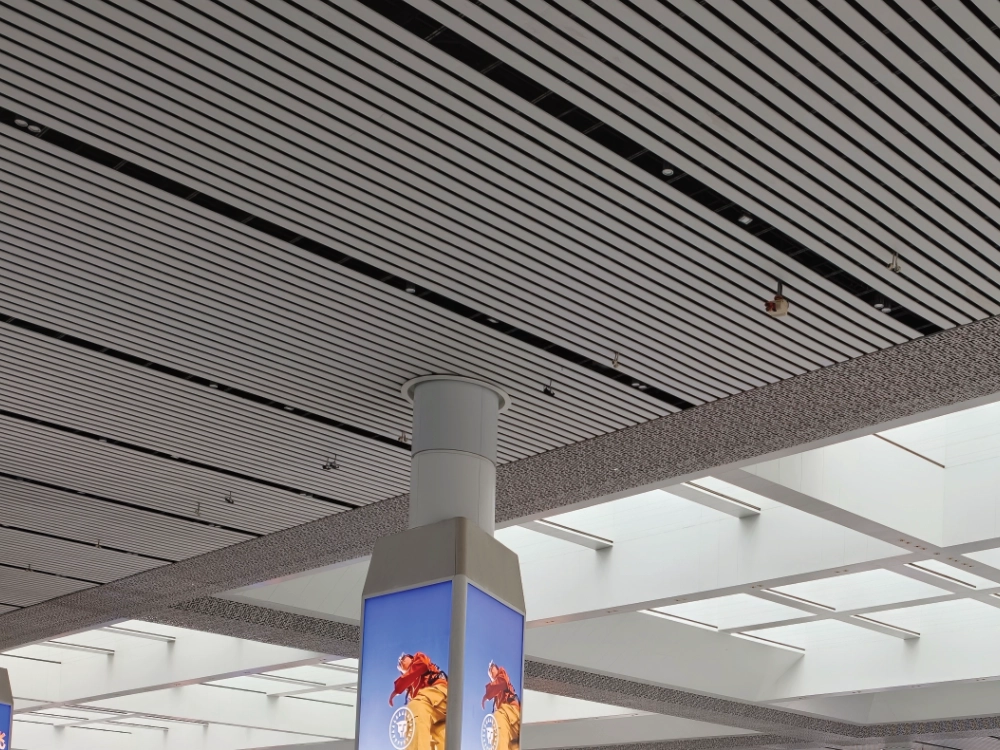
This corridor is also at Guangzhou Baiyun University. Powder-coated aluminum U-baffles run the length of the bay, and the carriers show in a few openings. Height and spacing stay on the shop drawing. Interior powder is AAMA 2604. The profile is the U-baffle ceiling. Sound from the corridor can move through the gaps. The teaching-room tile above does not close those gaps.
An open cell is a grid, not a lid
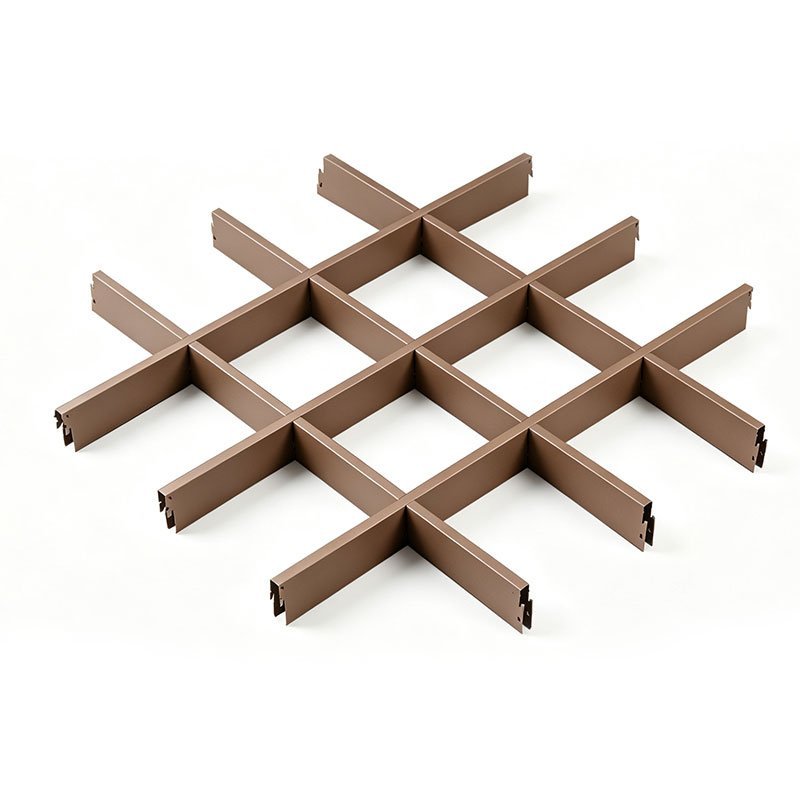
This bronze module is a product shot. The ends are slotted, and the plenum would stay visible. The open-cell ceiling page lists bar width 10–50 mm, bar height 10–200 mm, thickness 0.4–2.0 mm, length 1000–6000 mm, and cells of 100×100, 150×150, and 200×200 mm. Use it when the lights and the ducts have to stay in sight. Do not specify it when the rooms share a plenum and speech has to stop at the wall.
A clip-in return closes the face, not the next room
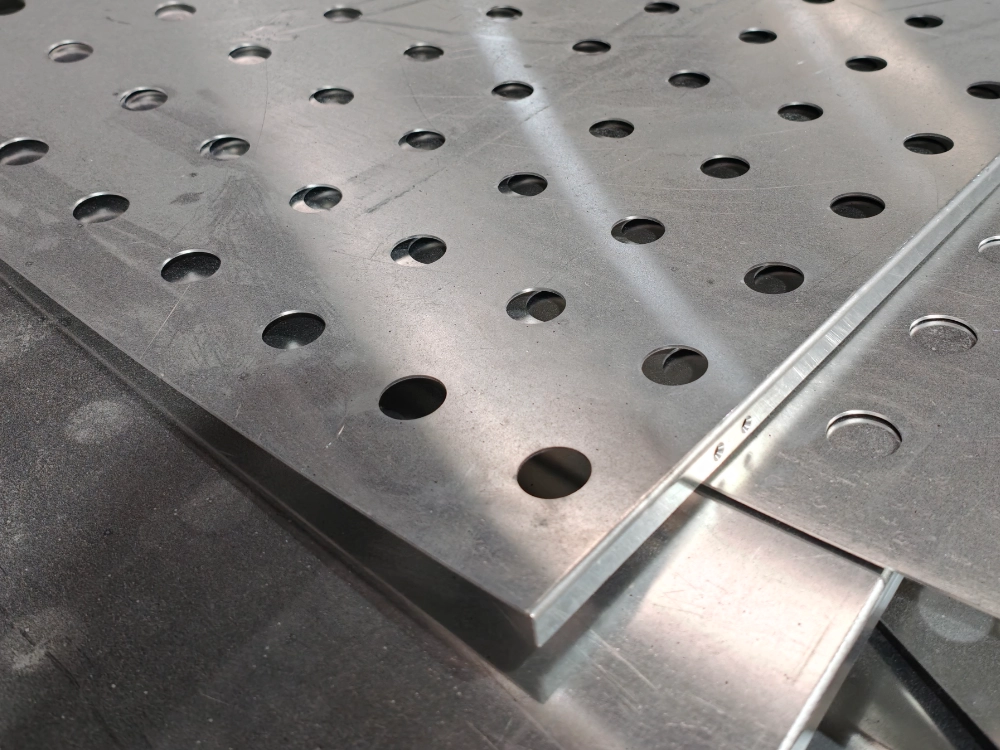
This cassette is mill finish, before powder. The return is hemmed and the face is perforated. The clip-in metal ceiling page lists modules from 300×300 mm up to 800×800 mm, and an edge height of 20 mm on the 300×300 mm and 300×600 mm rows. A formed indoor tile from this shop is 0.6–0.8 mm, with a return of 20–25 mm. The tile comes down when the clip releases. A closed face is still not a partition.
A lay-on ceiling sits on a T-bar and lifts out. The product page lists aluminum at 0.7 or 0.75 mm, a module of 595×595×19 mm, and formats from 300×300 mm up to 600×1200 mm. The 19 mm figure is the module height. How that tile meets a T-bar grid is a separate note. Neither tile carries an NRC on the quotation.
The hole is punched before anyone calls it acoustic
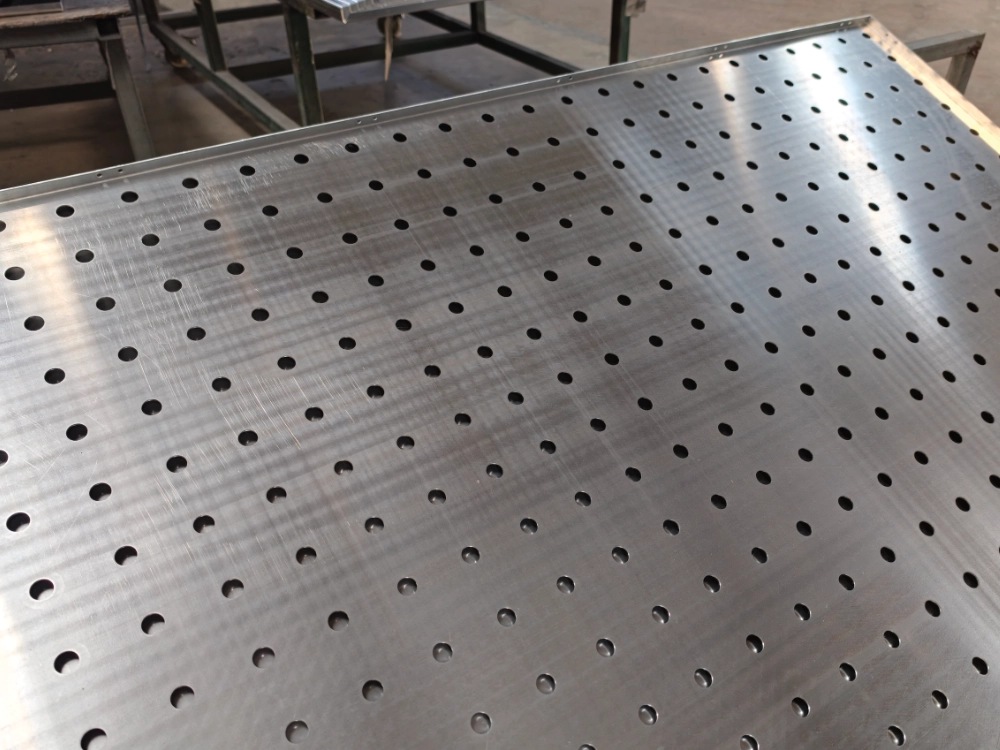
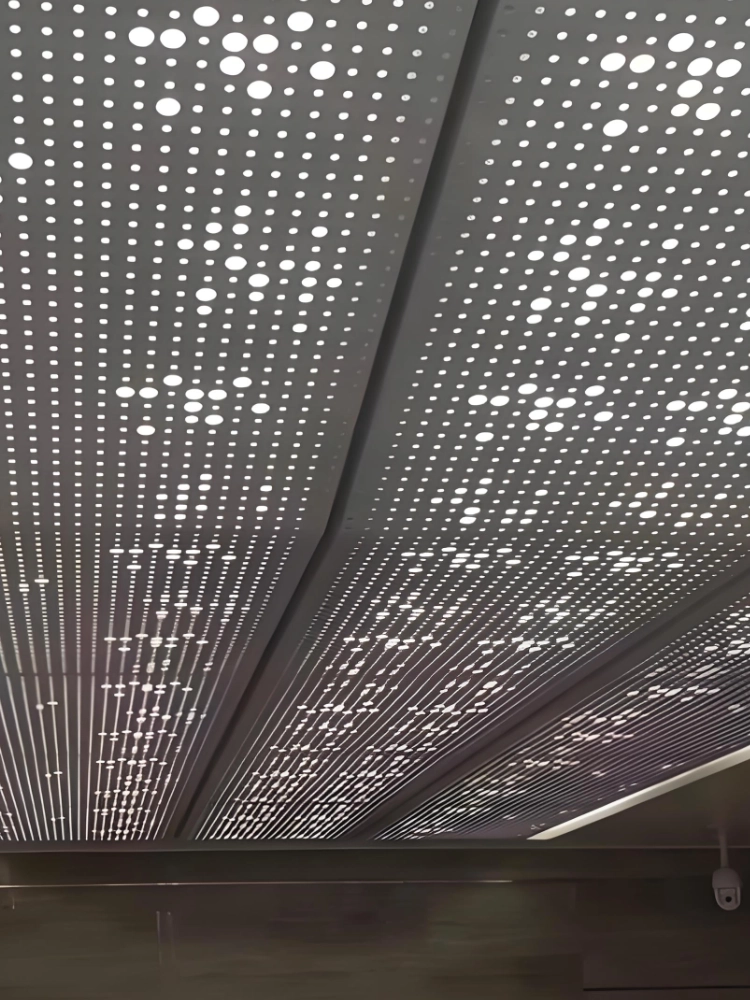
This sheet is mill finish on a bench in Foshan, with the return already formed. The path in the 20,000 m² plant is scan, CAD, CNC, then the brake. The standard perforated panel page names the hole. One catalog line is a 0.7 mm hole at 1.54% open area, width up to 600 mm, aluminum up to 0.8 mm thick. Another is a 2.3 mm hole at 16.6% open area, width up to 600 mm, aluminum up to 1.0 mm thick. A 5.0 mm hole is listed at 30.7% open area and again at 19.63%, width up to 1100 mm, aluminum up to 2.0 mm thick. Pick the line. Do not send the word acoustic in place of the diameter.
Frequently asked questions
What is the difference between acoustic panels and soundproofing?
Acoustic panels treat sound inside one room. A perforated ceiling or a baffle can be that treatment. Soundproofing is the wall, the door, the seals, and the structure between rooms. A 0.6–0.8 mm aluminum tile is not that structure.
Can a perforated aluminum ceiling stop noise from leaving a room?
No. The holes are a path through the face. A closed clip-in or lay-on is still not a tested partition. LINDELACR does not publish an STC for either tile.
Which aluminum ceiling leaves a path through the plenum?
An open cell, a U-baffle, and a linear acoustic baffle. Catalog open-cell sizes are 100×100, 150×150, and 200×200 mm. An acoustic baffle is 20–200 mm wide and high, up to 6000 mm long. The gap stays open.
What should the order name when the complaint is echo?
Name the system, the module, the thickness, and the hole. A catalog line can be a 2.3 mm hole at 16.6% open area, or a 5.0 mm hole at 30.7% or 19.63%. Those figures are not an NRC.
Send the complaint with the bay
If the complaint is echo, send the system, the module, the thickness, and the hole. Indoor sheet is 0.6–0.8 mm, return 20–25 mm on a clip-in, powder to AAMA 2604. If the complaint is the next room, the ceiling ticket is the wrong sheet. Baiyun’s teaching room and its corridors are already two orders.