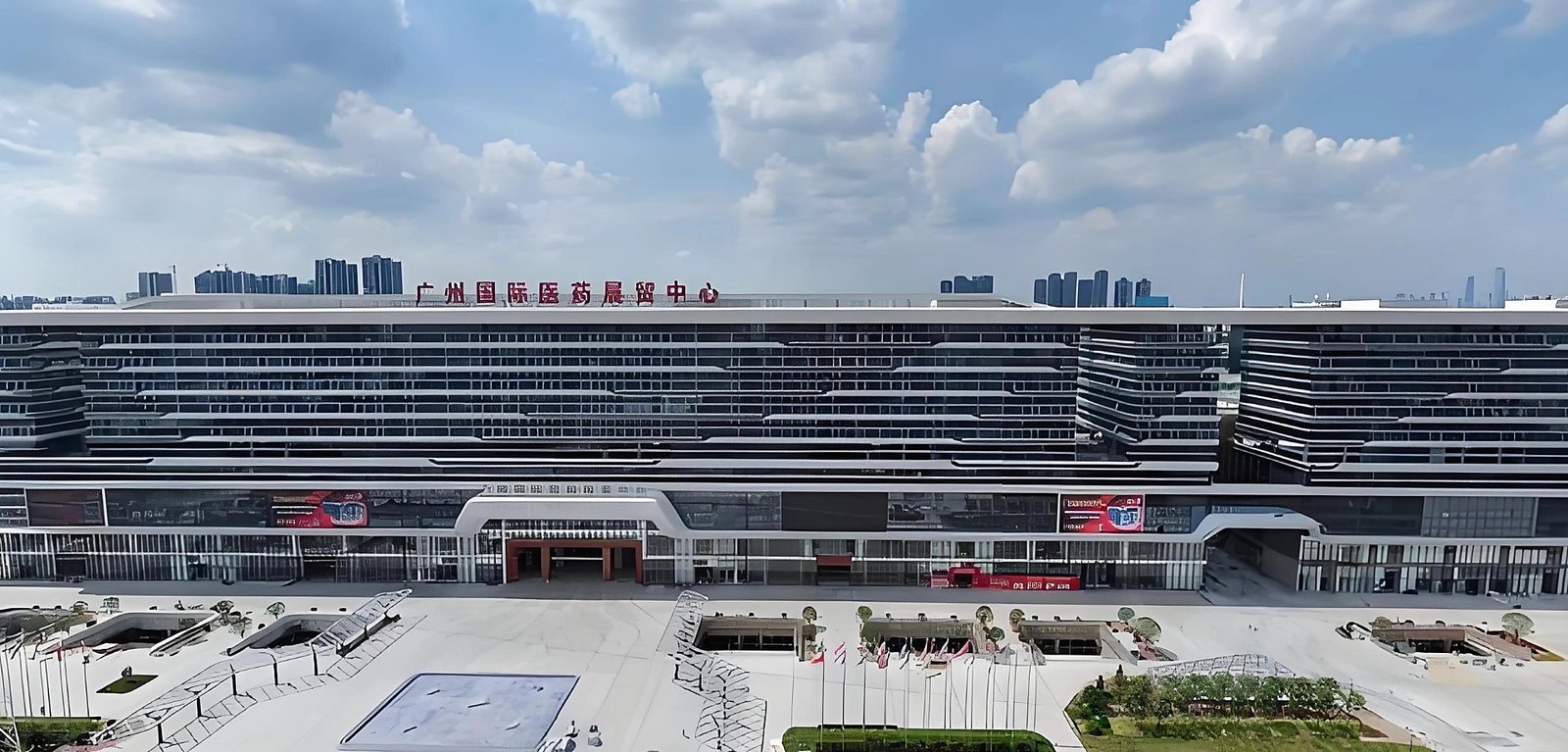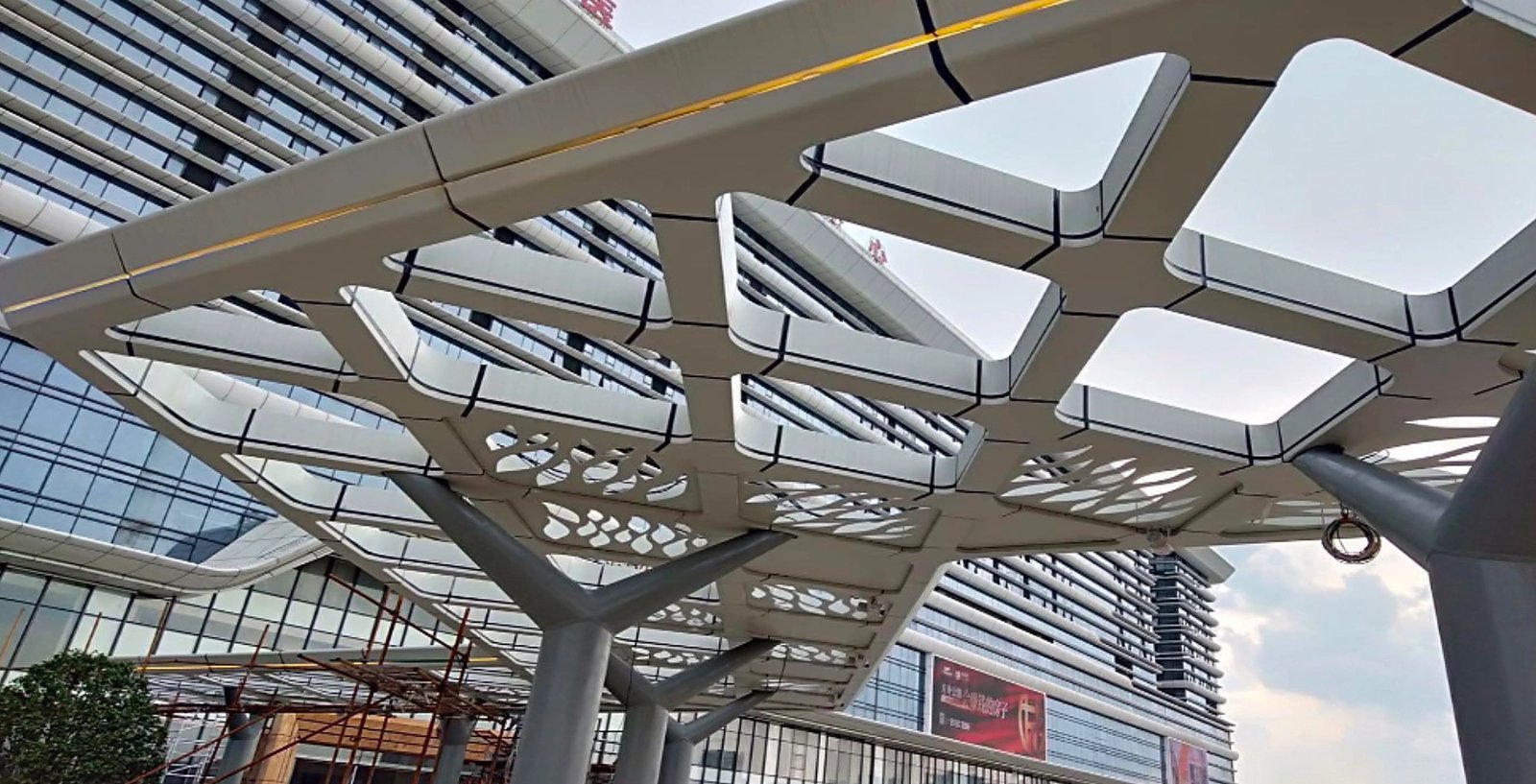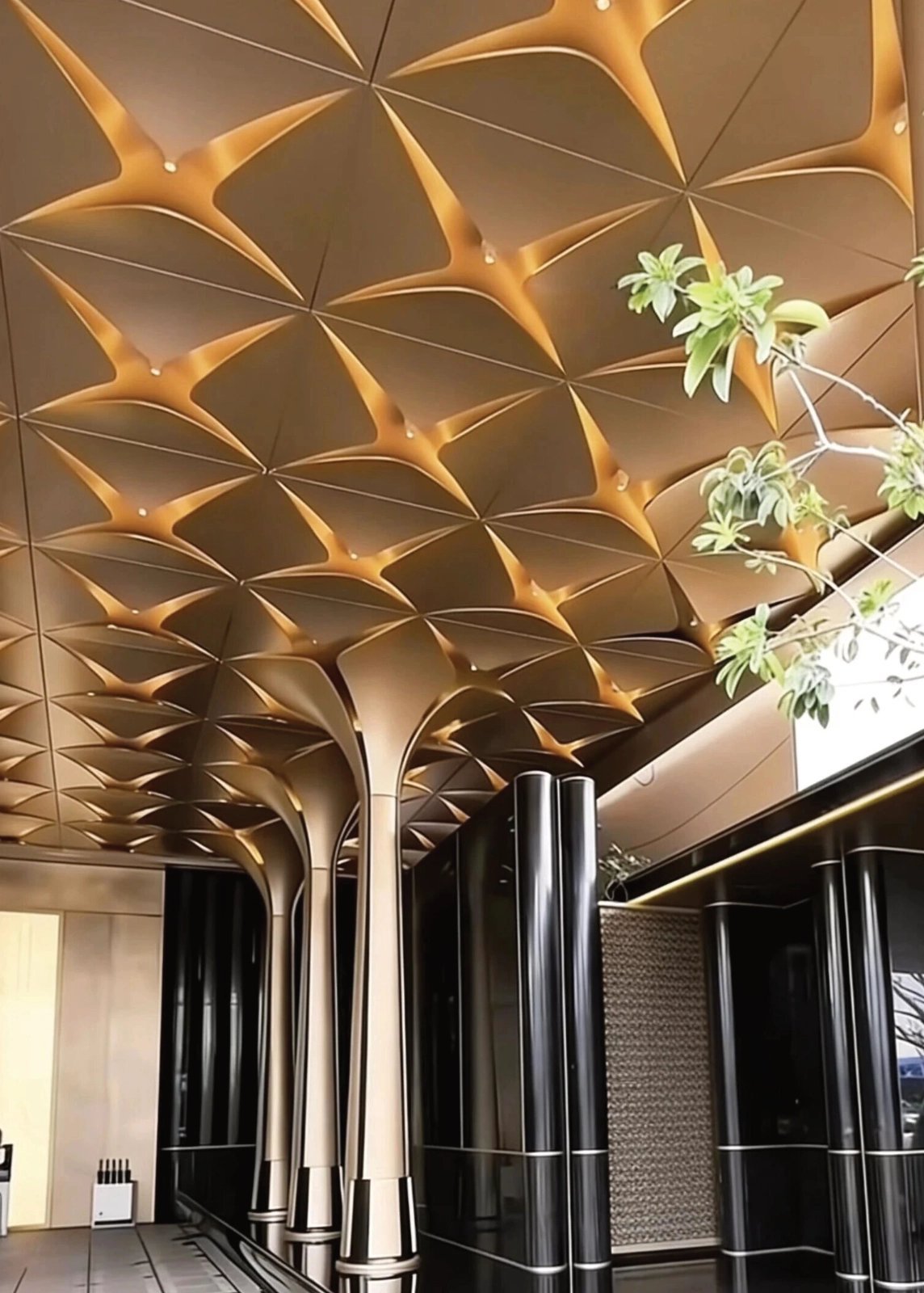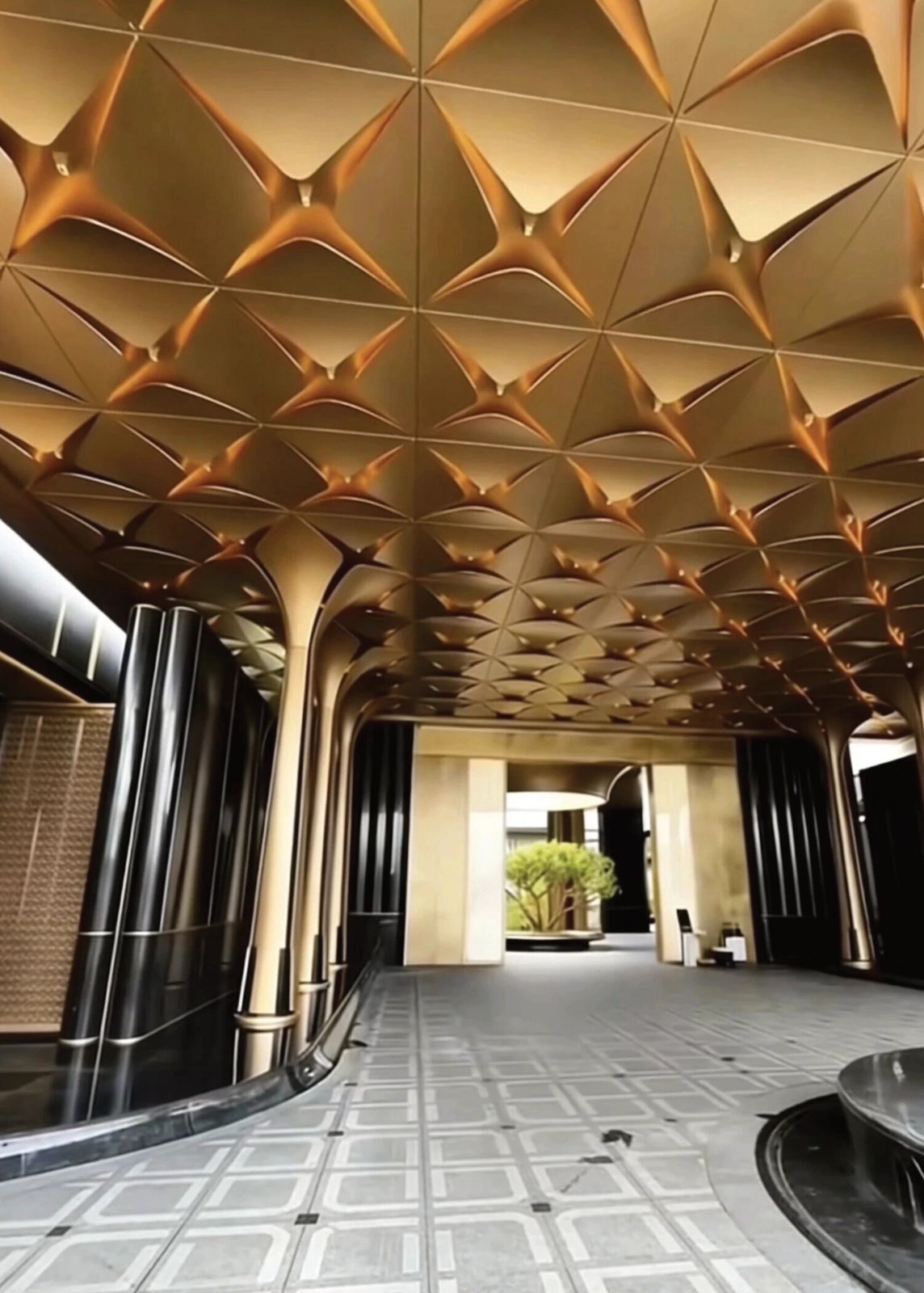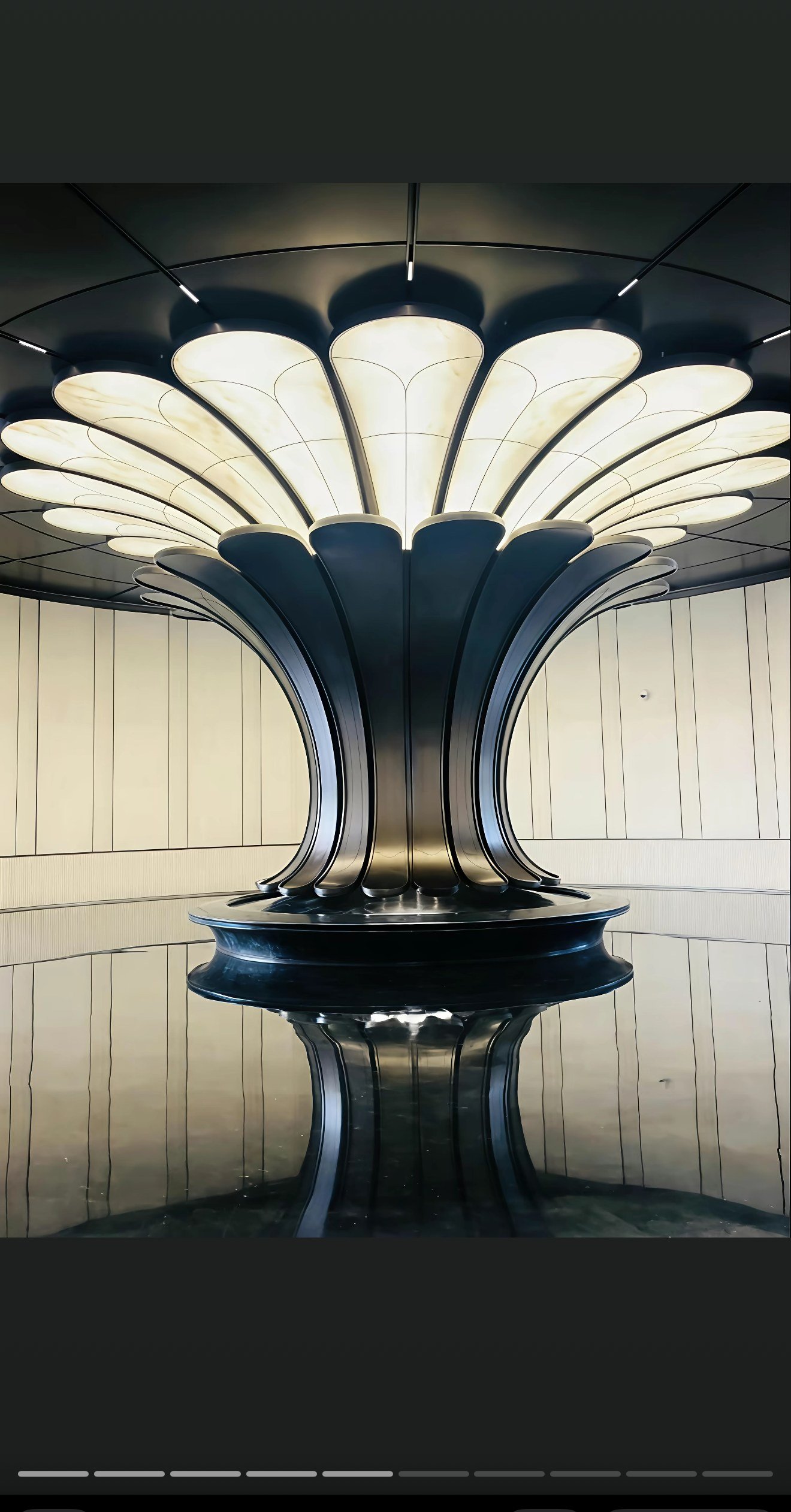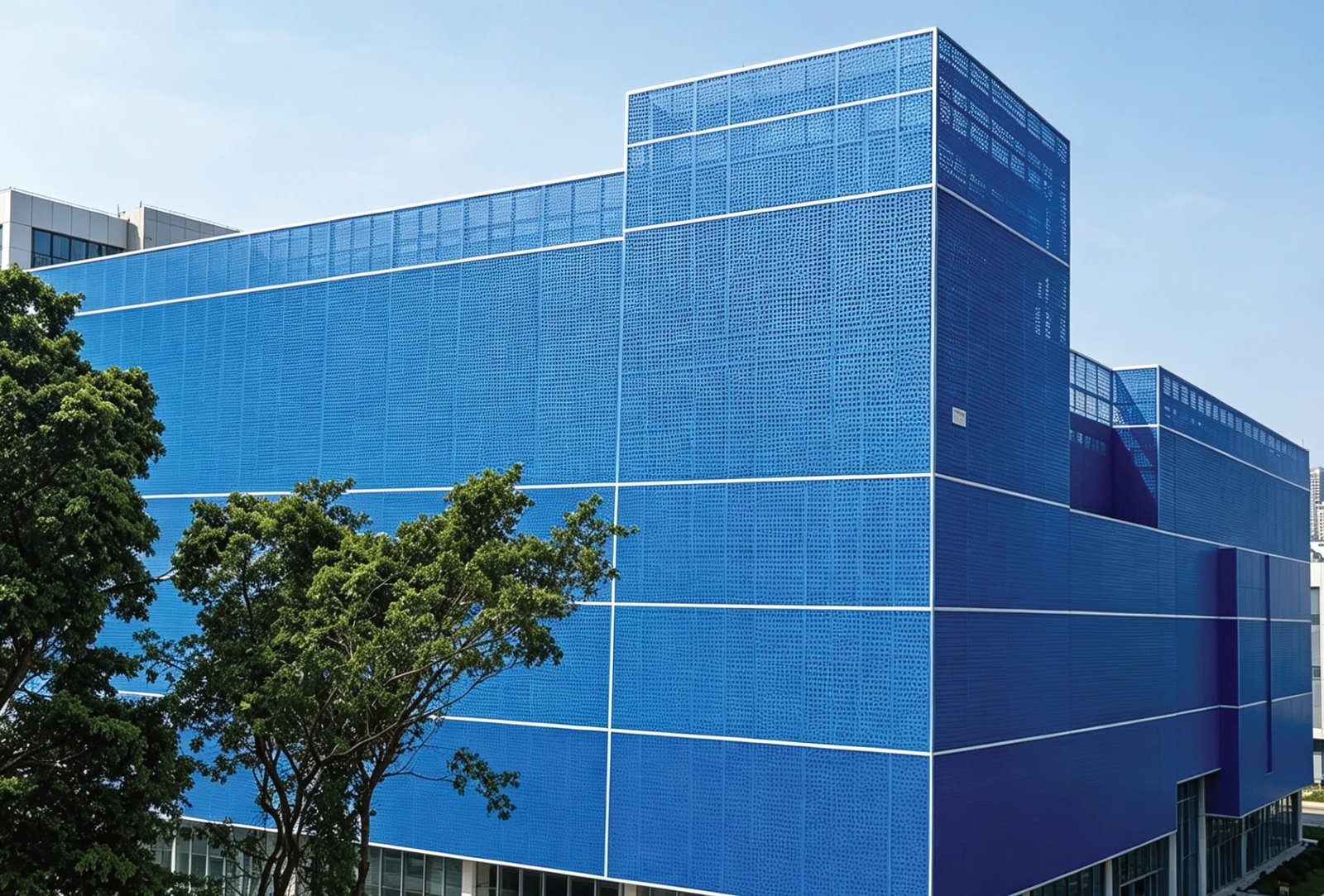
For a new commercial facade, LINDELACR specifies solid 3003-H14 aluminum cassettes at 2.0–3.0 mm with PVDF ≥ 30 μm (AAMA 2605) as the default skin. Perforated modules take solar shading; hyperbolic or single-curved panels take organic corners; honeycomb stays on large, sheltered, ultra-flat spans. Brackets follow wind zone and module—not a catalog look.
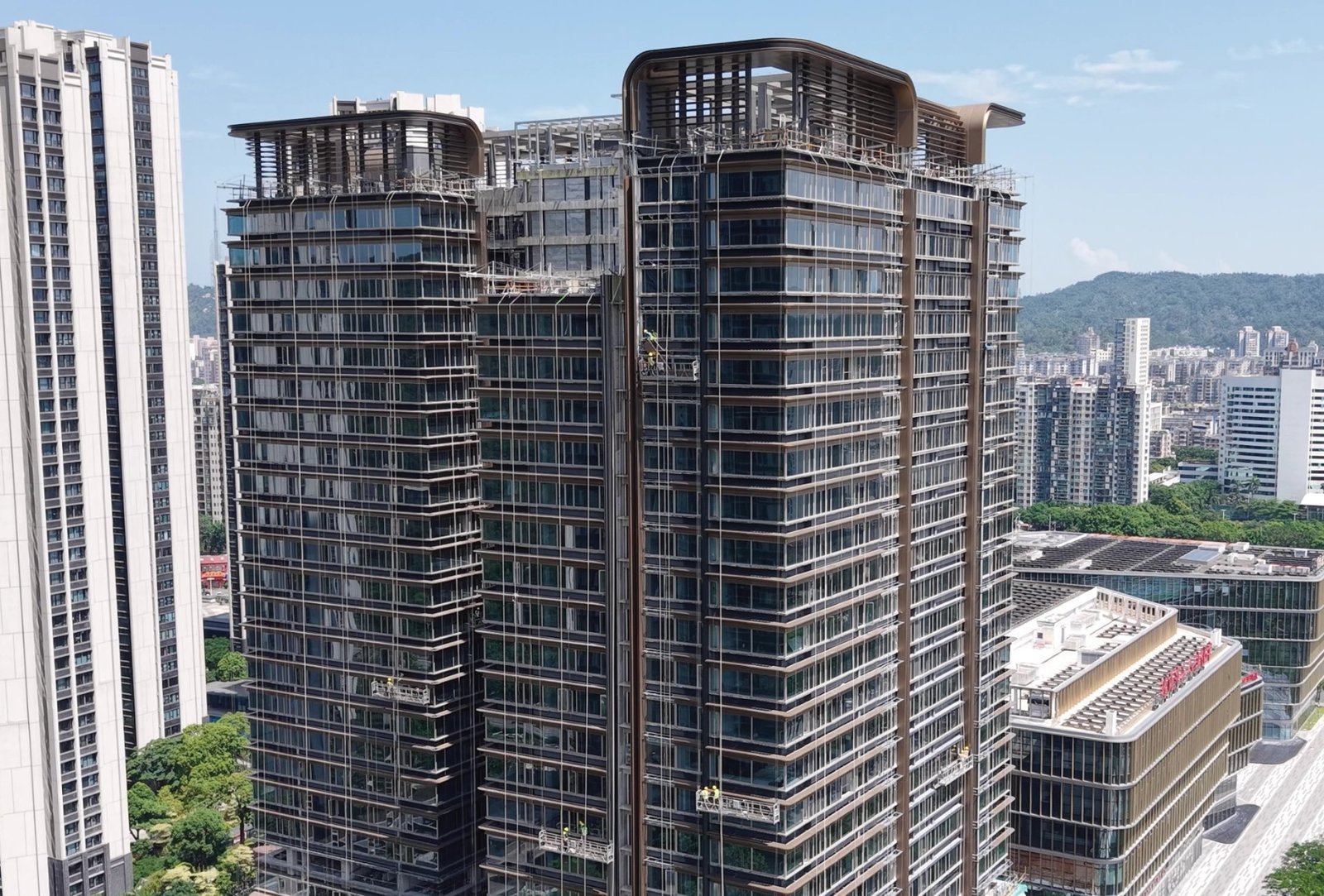
Four cladding families that actually appear on commercial specs
Architects often ask for “the best metal look.” Factories quote systems. On a new office, hotel, or mixed-use tower the envelope almost always mixes two or three of the families below. LINDELACR keeps them on one alloy and one coating batch so color and joint logic stay consistent across elevations.
| Option | Typical use | LINDELACR default |
|---|---|---|
| Solid aluminum cassette | Field wall, parapet, column wrap | 3003-H14, 2.0–3.0 mm, PVDF AAMA 2605, film ≥ 30 μm |
| Perforated aluminum | Solar screen, parking, plant screen | Same plate and PVDF; open area and hole pitch per drawing |
| Hyperbolic / double-curved | Crown, corner, organic massing | Same alloy; thickness from radius, return, and span |
| Honeycomb metal panel | Large-span interior or sheltered soffit | Not a substitute for 2.0–3.0 mm rainscreen plate |
Interior low-wind linings can drop to alloy 1100. Powder to AAMA 2604 is for sheltered or indoor metal, not for a full-height commercial rainscreen. Wind pressure is calculated per bay and fold depth; LINDELACR does not publish a fake kPa rating for a generic tower.
| Parameter | LINDELACR commercial default |
|---|---|
| Exterior alloy | 3003-H14 solid aluminum plate |
| Simple interior / low-wind | 1100 where folds and span allow |
| Exterior thickness | Typically 2.0–3.0 mm (not ACP 0.5 mm skins) |
| Cassette return | Typically 20–25 mm; deeper where wind or span requires |
| Coating (exposed facade) | PVDF to AAMA 2605; dry film ≥ 30 μm |
| Coating (interior / sheltered) | Powder to AAMA 2604 class |
| Plant | Foshan 20,000 m²; 1,000+ engineering projects |
How to choose by elevation, not by a mood image
Start with the field. A flat metal panel cassette with a 20–25 mm return is the workhorse of a new commercial wall. It takes PVDF metallic or solid color, hides the subframe, and can be recut or replaced as a single metal tray. That is the opposite of an ACP sheet whose 0.5 mm skins and plastic core cannot hold a deep return after a site clash.
Add perforation only where the brief needs shade or a screened elevation. A punched screen that shares coil, coating lot, and bracket grid with the solid field will read as one facade. A decorative mesh bought as a separate package usually drifts in color and module. Hole diameter, pitch, and open area belong on the shop drawing with the fold, not as a last-minute overlay.
Reserve hyperbolic and double-curved work for corners, crowns, and masses that a brake cannot hit in one radius. Single-curved barrels are cheaper and faster when the geometry is a true cylinder. Compound curves need stretch forming, a 1:1 sample, and a tighter nest. Specify them where the architecture actually bends—not on every bay “for language.”
Honeycomb earns its keep on long, flat interior spans and some canopies where stiffness-to-weight matters. It does not replace solid plate on a wind-loaded commercial rainscreen. If the consultant’s note is exterior durability, fire of a metal skin, and replaceable cassettes, stay on 2.0–3.0 mm 3003-H14.
Hidden-frame vs unitized: what the factory needs before CNC
Fixing is not a look. Hidden-frame (stick) walls hang cassettes on a site-set grid. Unitized walls leave Foshan as framed modules. Both can carry solid, perforated, or curved skins. The difference is when the joint is locked: on site after survey, or in the plant against a checked jig.
- Freeze the typical bay: module width, joint (open or sealed), and return depth.
- Name the coating system: PVDF to AAMA 2605 with dry film ≥ 30 μm for the exterior field.
- State wind zone or send the consultant’s cladding note. LINDELACR sizes plate and fold from that, not from a stock “3 mm everywhere” rule.
- Mark which bays are perforated, which are single-curved, and which are hyperbolic so nests and dies are not mixed.
- Agree a 1:1 sample for color, fold, and—if used—hole pattern before the line runs the tower.
That sequence is the same customized-for-you path used for other LINDELACR envelopes: drawings first, metal second. If the core is already poured, a 3D scan beats a theoretical grid.
Factory insight from the 20,000 m² Foshan plant
LINDELACR fabricates cladding for 1,000+ engineering projects from one plant: coil, CNC, brake or stretch form, weld or corner close, then PVDF in a single batch so adjacent towers do not split color. MOQ follows coating batch and unique dies, not a retail carton. A commercial tower with three hole patterns and one hyperbolic crown is still one coating lot if color is frozen early.
What delays a commercial package is almost never CNC minutes. It is a late change of PVDF metallic, a radius that was drawn as single-curved and arrives as a compound surface, or a unitized module whose glass and aluminum were never coordinated. Send the bay, the wind note, and the finish. The plant will tell you where 2.0 mm is enough and where 3.0 mm plus a deeper return is the cheaper way to pass the fold.
Frequently asked questions
What is the best custom metal cladding for a new commercial building?
The default envelope at LINDELACR is solid 3003-H14 aluminum cassettes, typically 2.0–3.0 mm, with PVDF to AAMA 2605 and dry film ≥ 30 μm. Perforated, hyperbolic, and honeycomb modules are added only where shading, compound curves, or large-span flatness require them.
When should a commercial facade use perforated aluminum instead of solid cassettes?
Use perforation where solar shading, ventilation, or a screened light-and-shadow elevation is in the brief. Hole pattern, open area, and fold depth are calculated with the same 3003-H14 plate and PVDF system as the solid field, so the two families can sit on one subframe.
Is honeycomb or ACP a substitute for 2.0–3.0 mm solid aluminum on the envelope?
No for rainscreen and high-wind commercial walls. ACP skins are typically about 0.5 mm per face. Honeycomb is useful for large, ultra-flat interior or sheltered spans. Exterior work stays on solid plate so returns, corners, and recuts remain metal, not a crushed core.
What should the architect send LINDELACR to quote a commercial cladding package?
Send elevations, a typical bay, wind zone or consultant note, target finish, and whether the grid is stick, hidden-frame, or unitized. LINDELACR returns alloy and thickness, a panel split, coating standard, and a lead-time window from the 20,000 m² Foshan plant.
Request a bay split and a PVDF sample
If the commercial building is still in design, send the elevation and the wind note. LINDELACR will mark which bays stay solid, which take perforation or curve, and which thickness and coating apply before any coil is allocated.