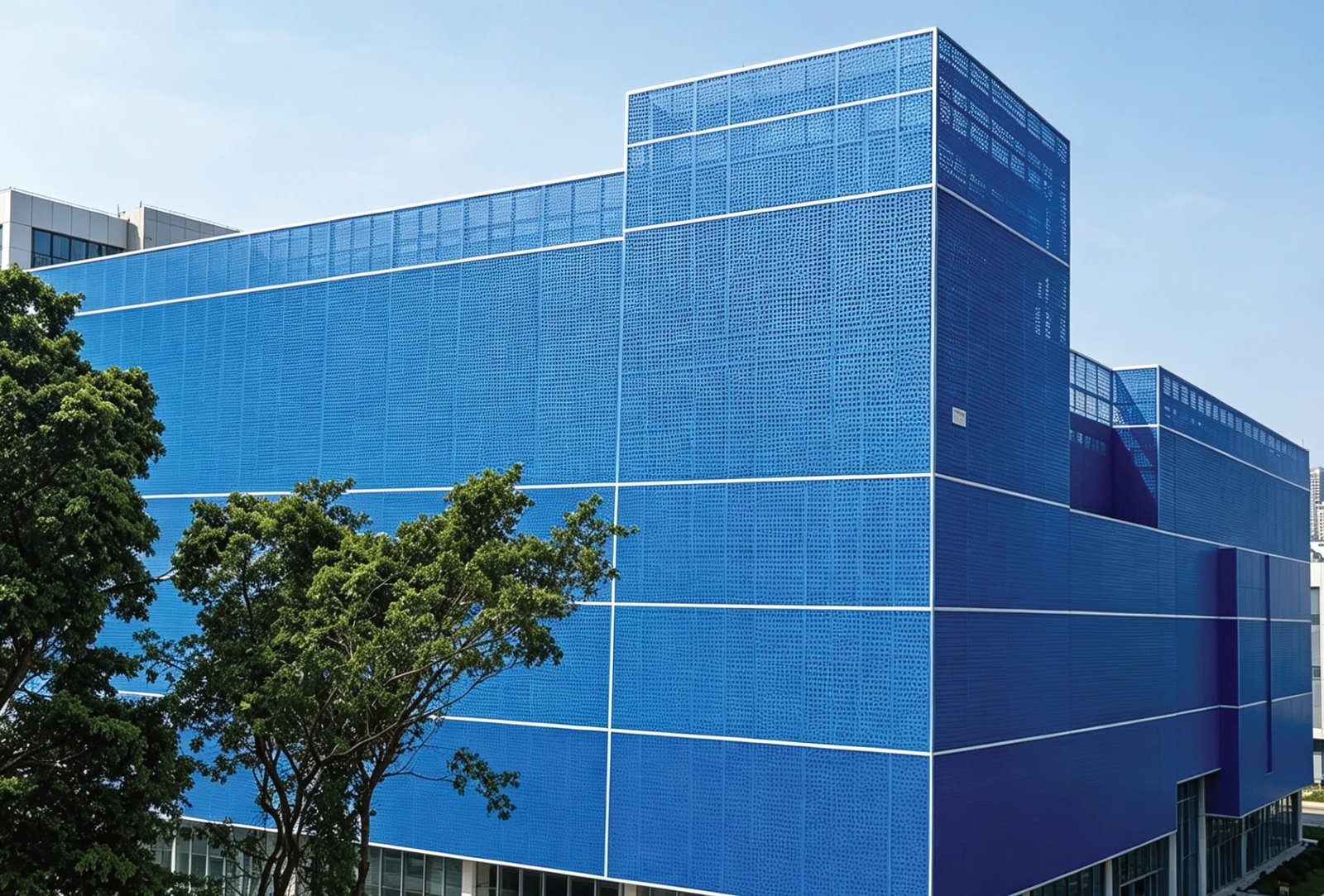
Yes. LINDELACR matches a luxury flagship’s metal to a frozen brand color and a manufacturable form: typically 3003-H14 solid aluminum at 2.0–3.0 mm, PVDF to AAMA 2605 with dry film ≥ 30 μm, CNC-cut, then folded as numbered cassettes. A 1:1 coated sample locks the look before the coating line runs the elevation.
Luxury look fails at the joint and the coating lot, not at “more CNC”
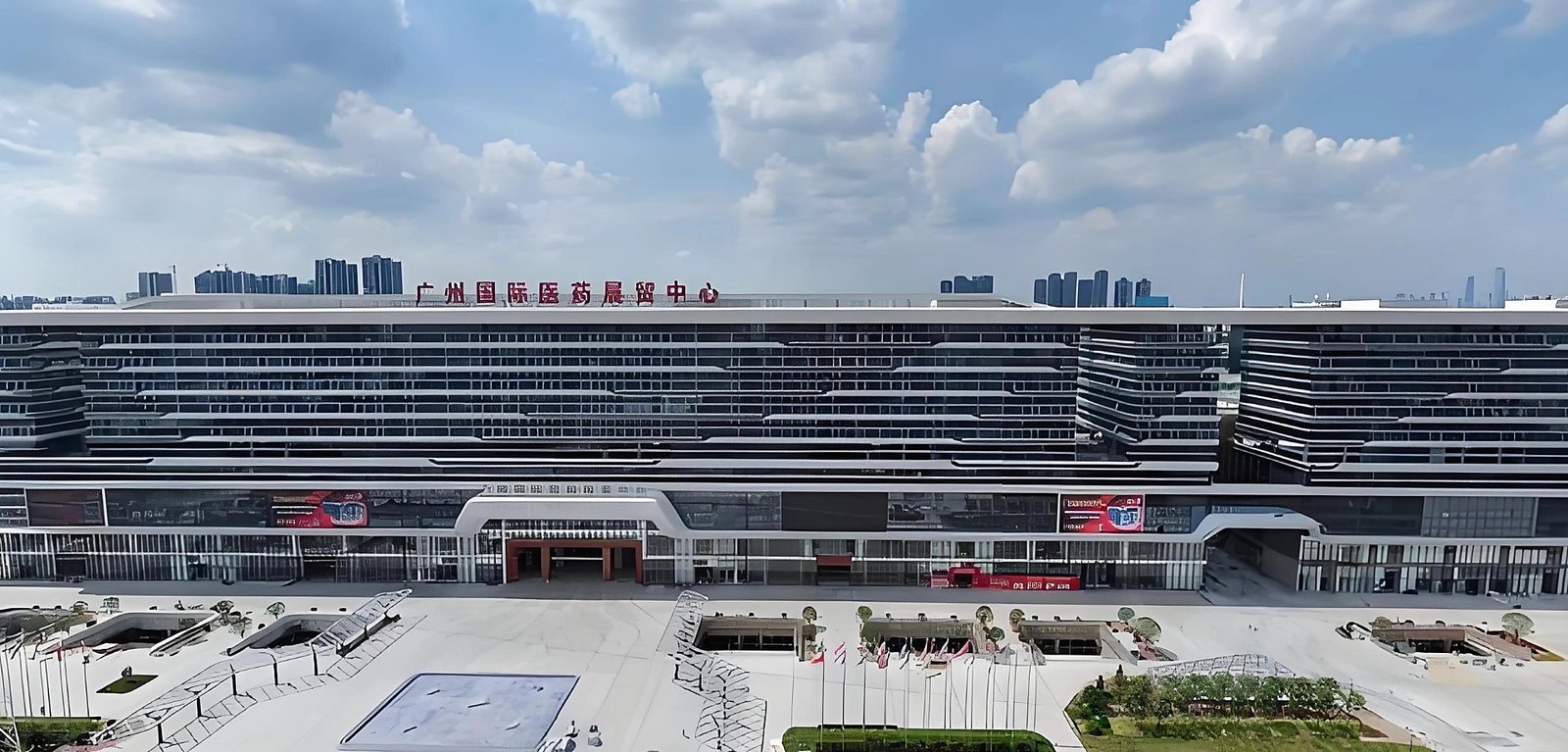
A flagship elevation is judged at three metres and at thirty. At three metres, grain, metallic flake, and a 1 mm step at a cassette joint read as cheap. At thirty metres, a second white or a second bronze reads as two buildings. That is a factory problem, not a rendering problem. LINDELACR treats the street face as one customized-for-you package: freeze color, freeze the unique unfolds, then cut metal.
Competitor copy often lists every finish in one paragraph—PVDF, anodizing, titanium, mirror, iridescent—and calls the result “prestige.” Consultants do not buy a list. They buy a cassette that matches a chip in daylight, a return that closes on the mullion, and a crate that hangs in install order. Titanium plating and stainless sandwich are not LINDELACR’s default envelope. The default is solid architectural aluminum with a specified coating class.
| What “match” means | What the plant actually freezes | What fails if you skip it |
|---|---|---|
| Brand color | Physical chip or nominated PVDF formula; one coating lot | Adjacent bays split hue under downlights |
| Module / joint | Unique unfold, fold order, typically 20–25 mm return | Steps at the joint; remakes on the street |
| Texture / carve | CNC nest after the fold is locked; die only where stamped | Pattern walks across a joint; die cost on every bay |
| Light | 1:1 sample viewed dry and wet, interior and street | Wood-grain or metallic that only worked in the CGI |
Flagship spec LINDELACR will put on the ticket
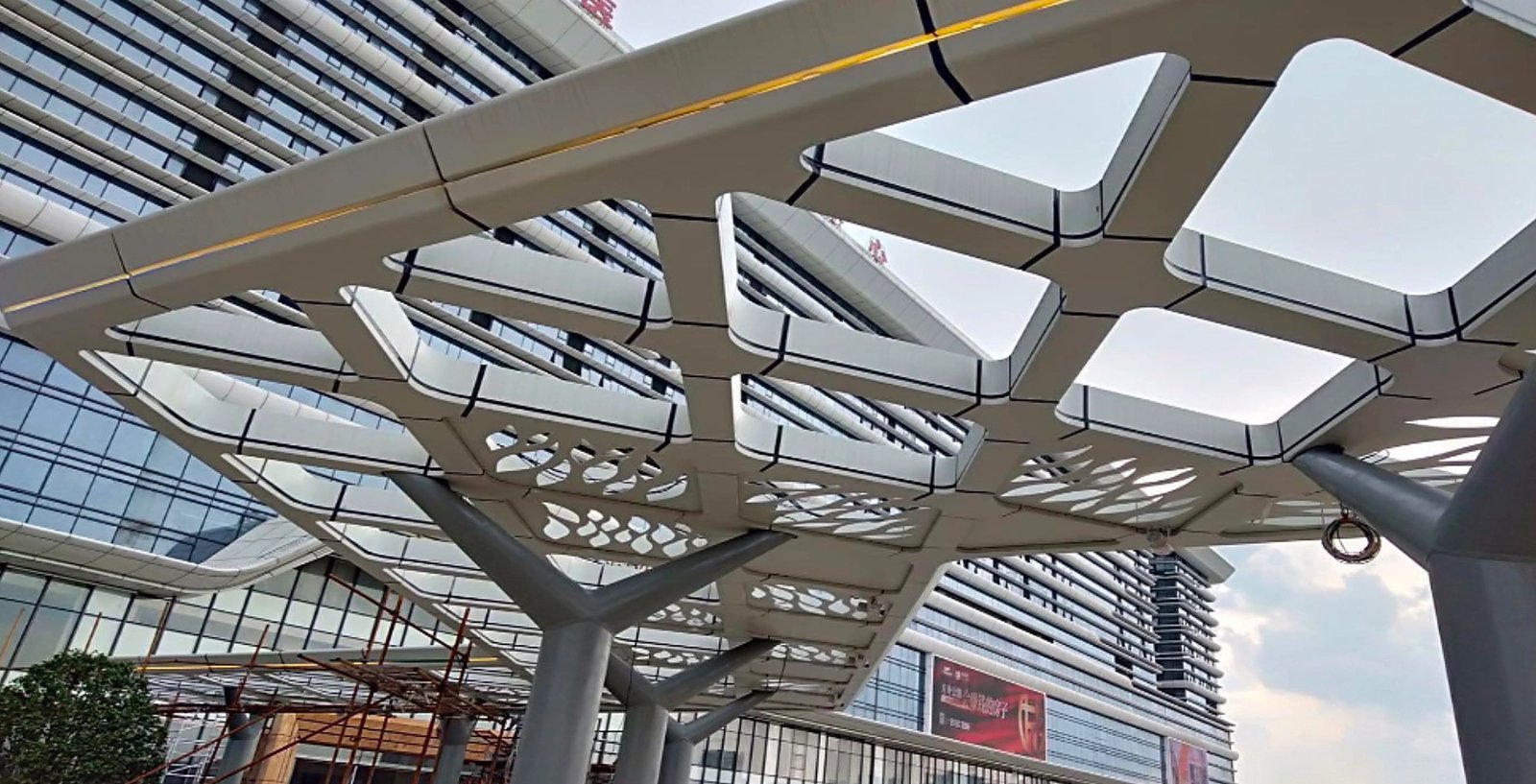
Street-facing rainscreen is not ACP with a 0.5 mm skin. Exterior work is solid plate. Alloy 3003-H14 is the usual exterior coil. Alloy 1100 stays on simple, low-wind interior planes. Thickness follows span and return: 2.0–3.0 mm on commercial and retail facades is the working range, not a brochure default copied onto every soffit.
| Item | LINDELACR flagship default |
|---|---|
| Alloy | 3003-H14 exterior; 1100 only for simple low-wind interiors |
| Thickness | Typically 2.0–3.0 mm solid aluminum |
| Coating | PVDF to AAMA 2605; dry film ≥ 30 μm |
| Sheltered / interior | Powder to AAMA 2604 class where specified |
| Cassette return | Typically 20–25 mm; deeper where the bay needs stiffness |
| Plant | Foshan 20,000 m²; 1,000+ engineering projects |
PVDF is the exterior language because a flagship on a polluted street needs a fluorocarbon film that holds color, not a powder that chalks. Powder is fine on a sheltered lobby plane if the consultant wrote AAMA 2604. Mixing both on one elevation is allowed only when the two lots are specified as two lots—not when the renderer used one hex code.
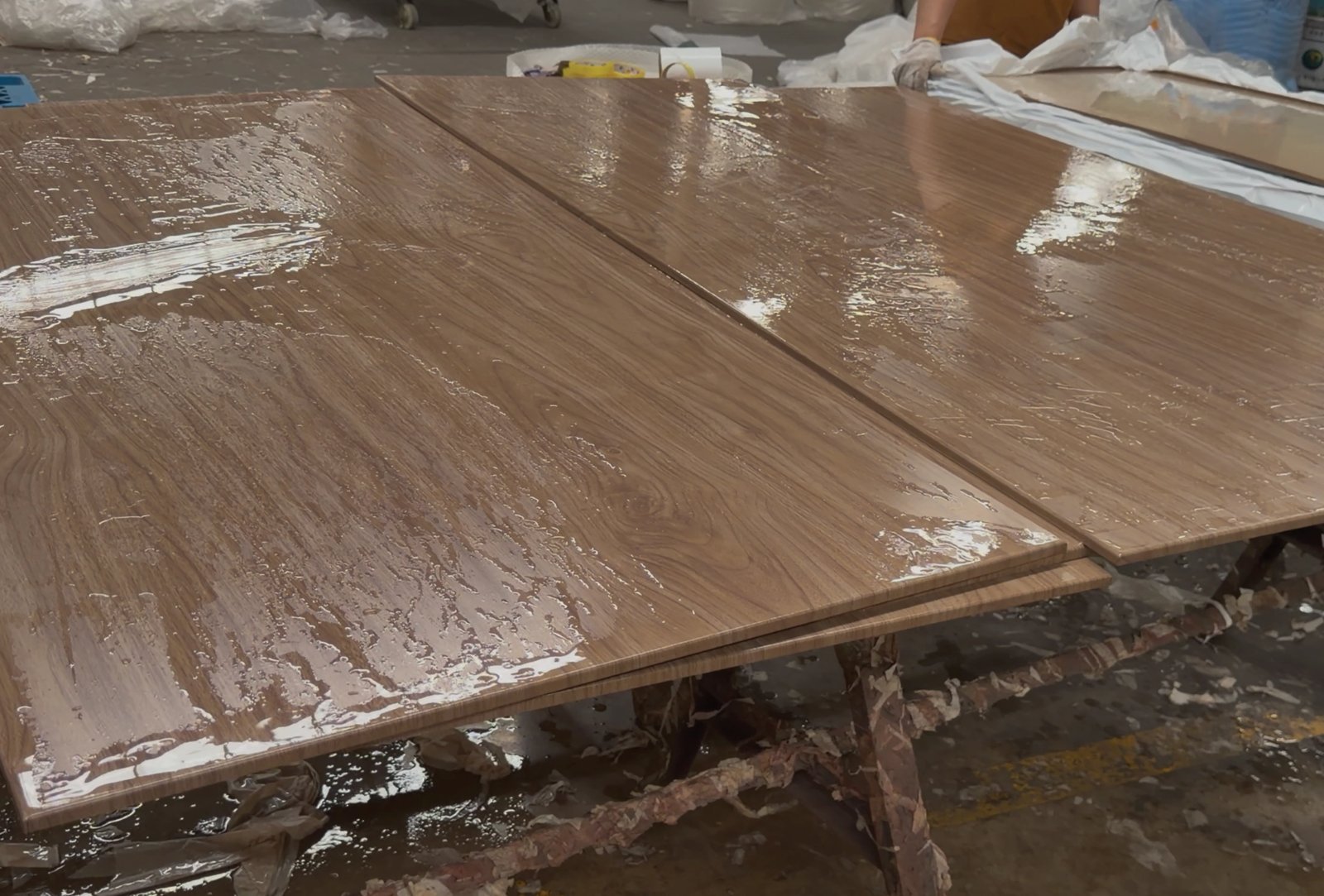
Wood-grain, stone-grain, and metallic PVDF are still PVDF. They are not a printed wrap. The Foshan line checks a wood-look plate wet: water must bead, not soak, and the grain direction must survive the fold. That is how a luxury timber language stays metal on a rainscreen.
How the look is manufactured: scan or model → ticket → CNC → fold → one PVDF lot
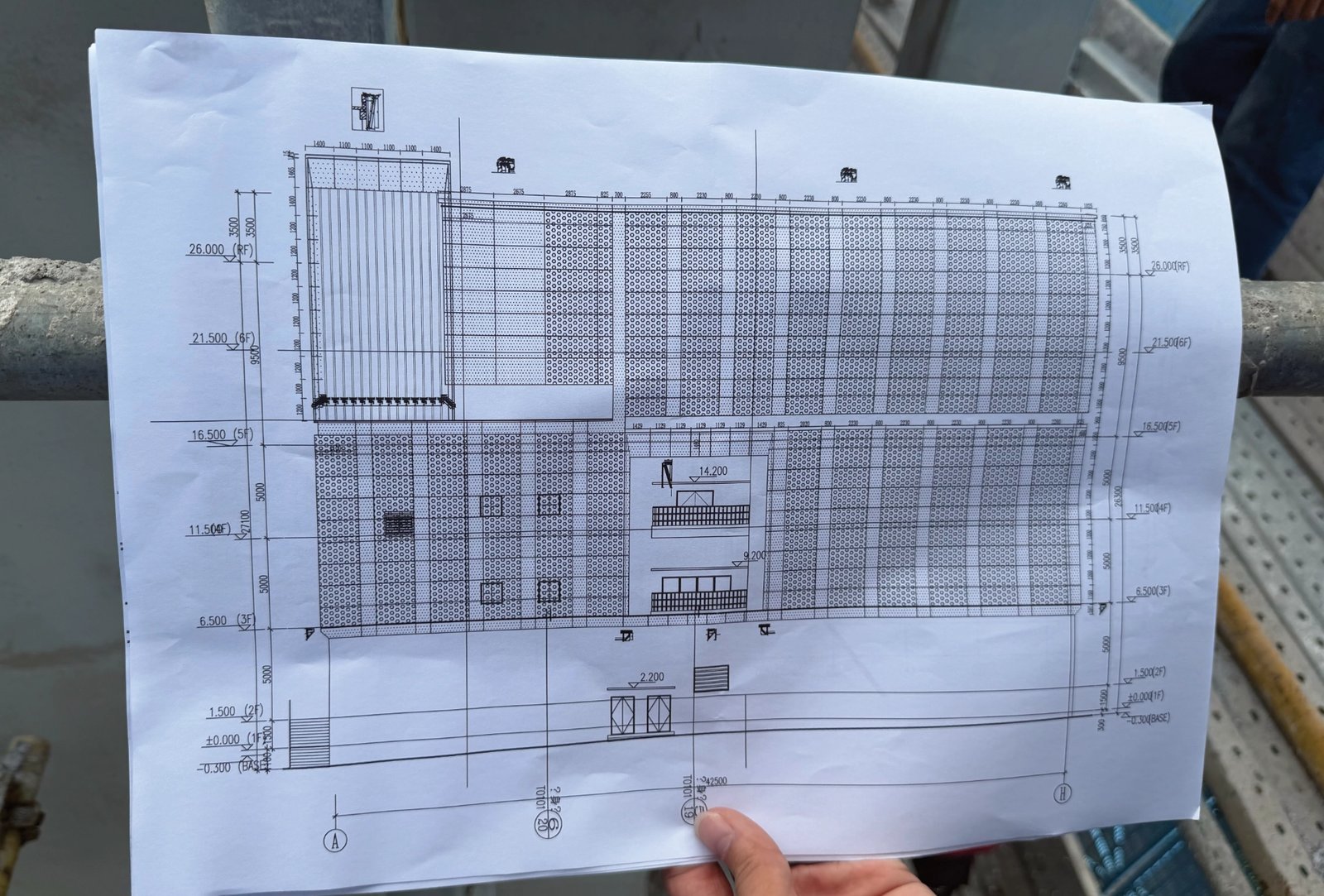
1. Lock the elevation as trays. The drawing is not a mood board. It is a split: which bays are flat flat metal panel cassettes, which are carved or perforated fields, which are single-curved. A physical elevation held against the grid—floor marks, perforated vs solid, window openings—is the hold point before coil is allocated.
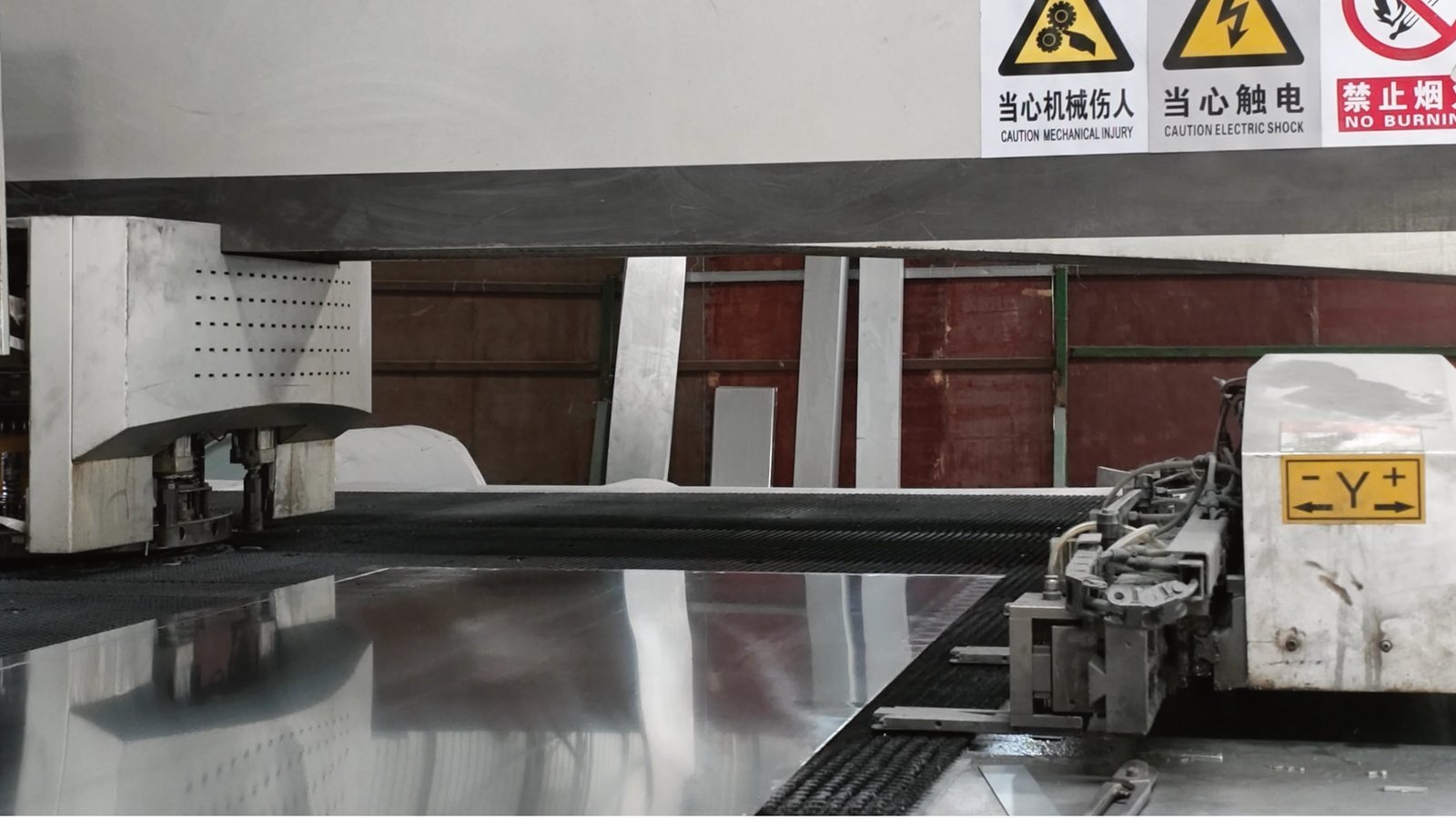
2. Unfold each unique cassette. CNC does not read a pretty Rhino screenshot. It reads a blank size, hole coordinates, and a coating face. Routing and turret punching cut that nest. Deep embossed “3D prestige” patterns need a die and a tryout; they are not free CNC minutes.
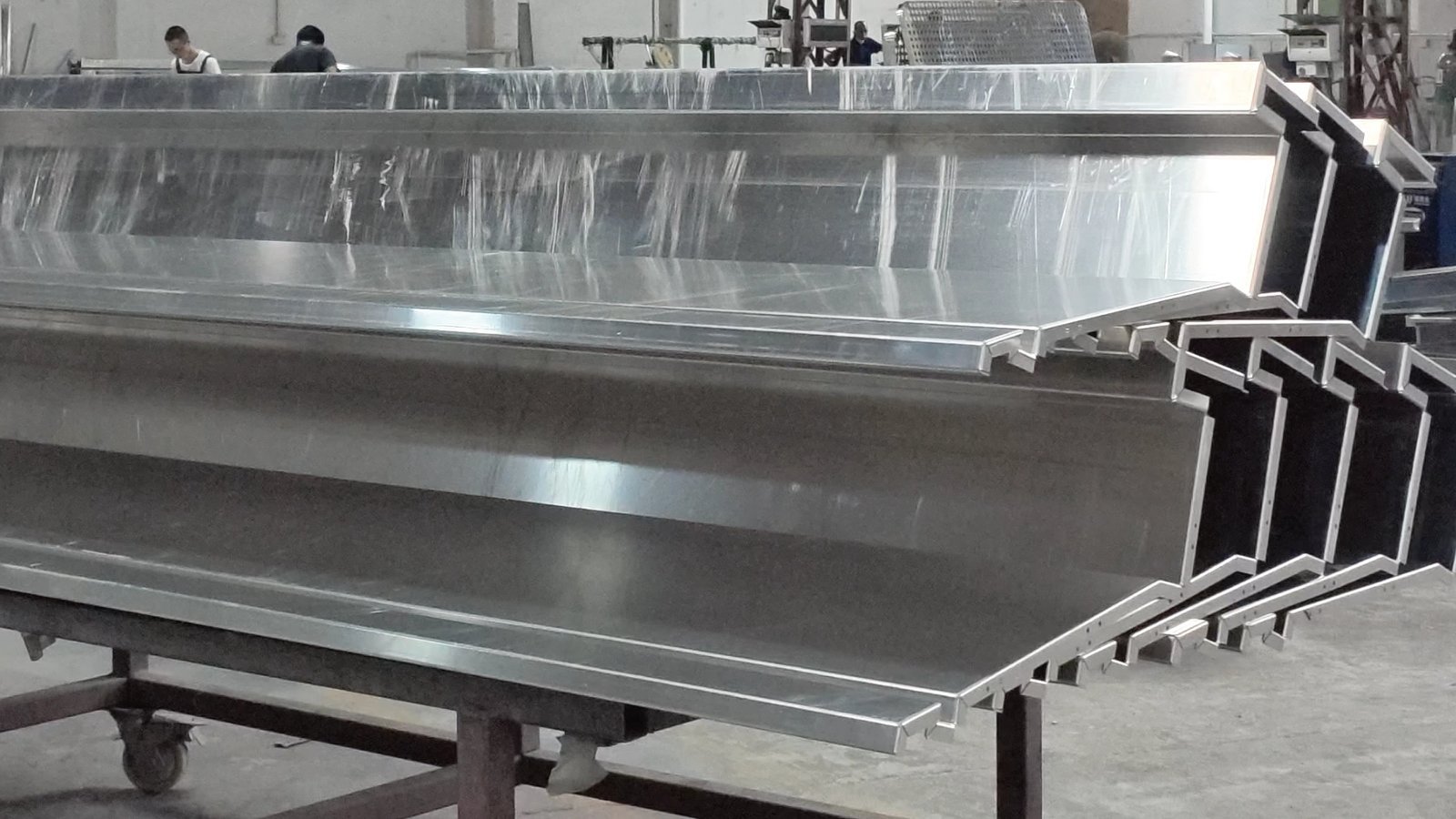
3. Fold and first-article. The brake makes the cassette. A 20–25 mm return is typical; the joint is what the street sees. One tray is checked on the drawing before the rest of the unique run. If the return collides or the grain wraps the wrong face, the file changes. The floor does not “make it work.”
4. Coat as one lot. The signed 1:1 sample is the color. PVDF to AAMA 2605, ≥ 30 μm, runs the elevation together so a corner fin and a soffit tray do not read as two golds. MOQ follows that coating batch, not a retail carton.
Named check: CTS Baichen Yunqi is the luxury-metal version of the same ticket
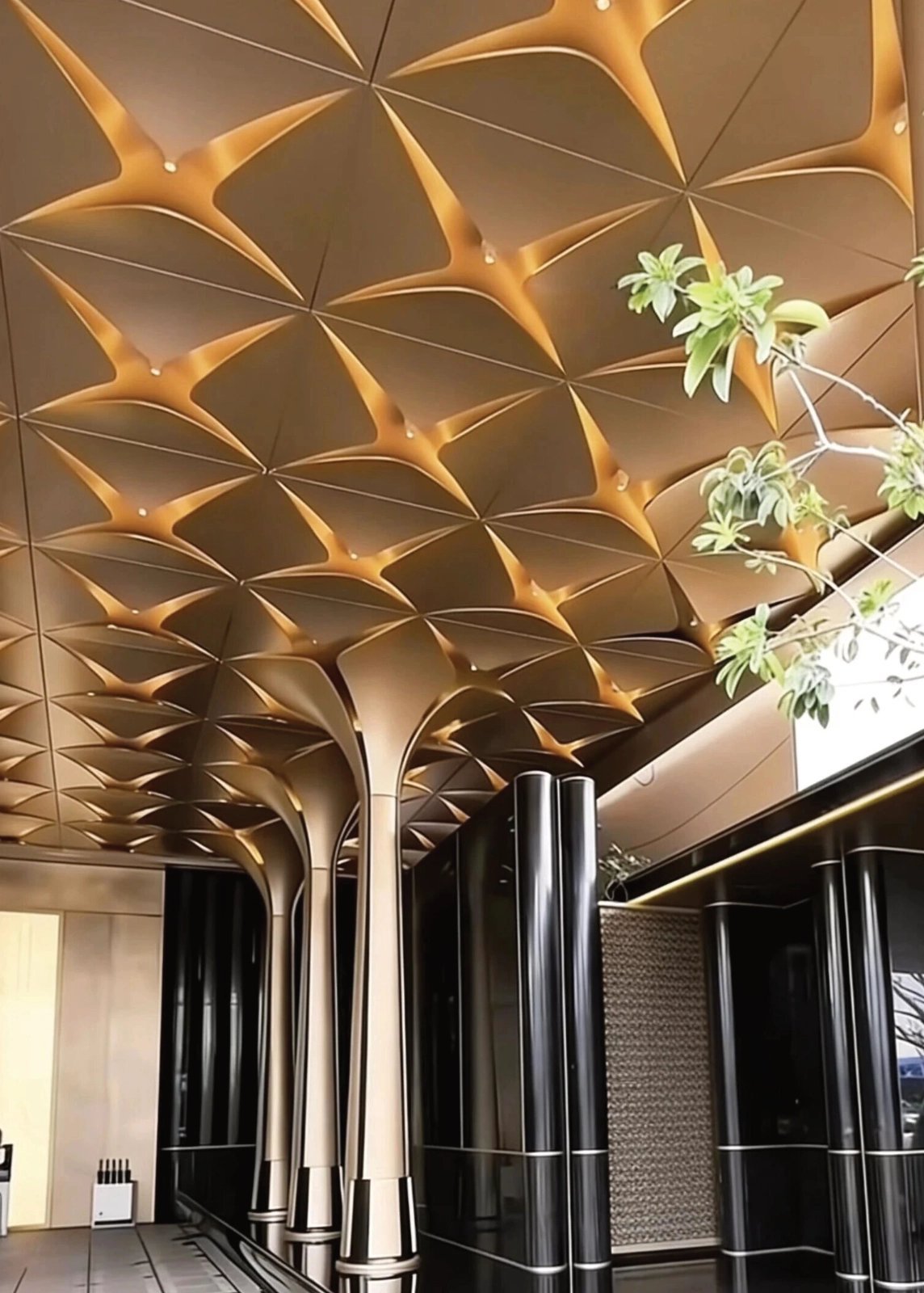
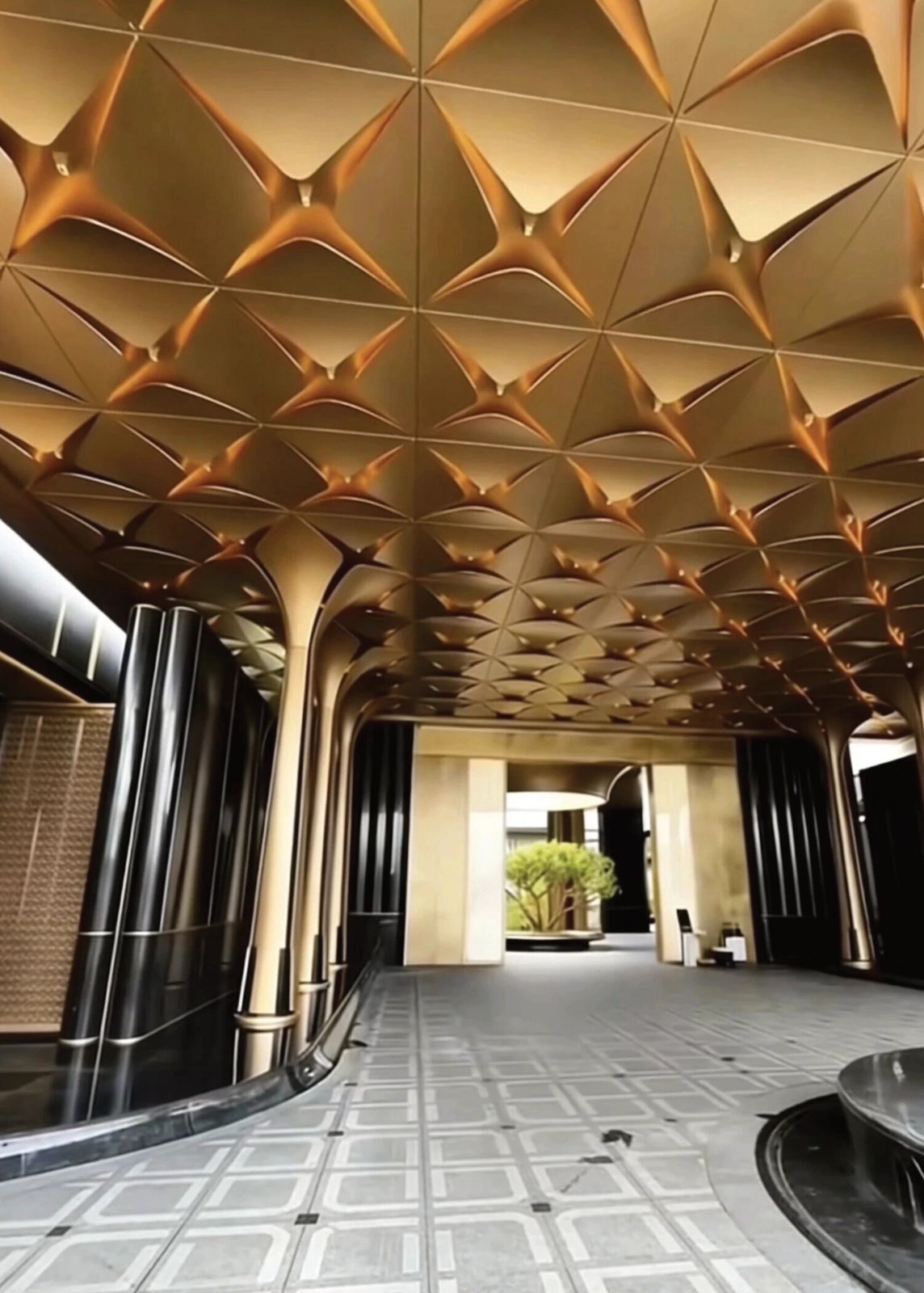
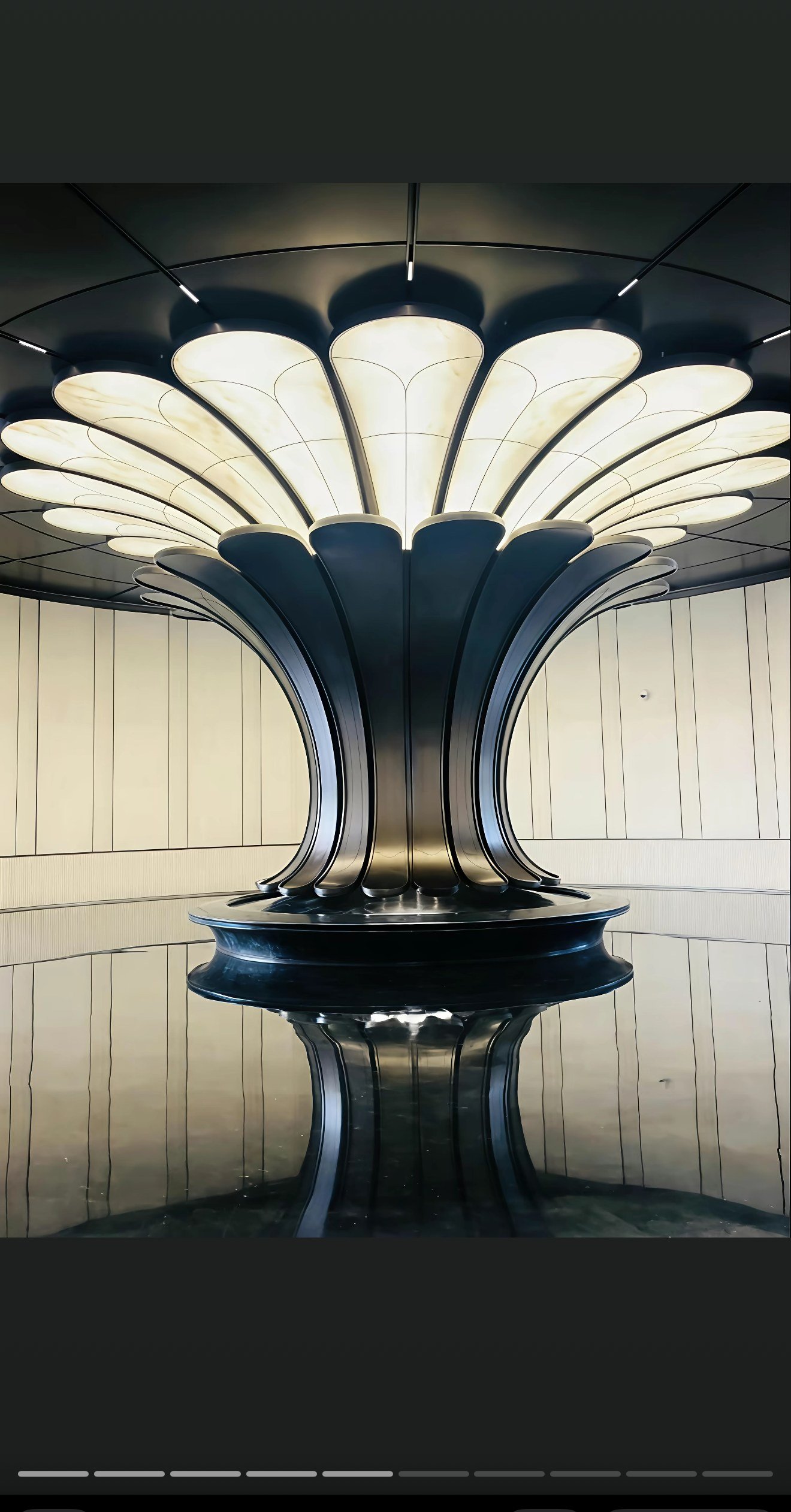
CTS Baichen Yunqi (CTS Grand Horizon) is a China Travel Service luxury residence, not a high-street boutique, but the metal problem is the same as a flagship lobby: a brand image that must survive as plate. LINDELACR fabricated the exhibition-pavilion flower column as 16 hyperbolic aluminum petals—3D-fit, CNC, compound-bent, die-aligned, one coating batch—so adjacent ribs do not shift hue under downlights. A retail flagship that needs a carved portal or a custom column cover is the same sequence at street scale: freeze form, freeze color, then hang numbered skins.
Wind on a flagship rainscreen is not a catalog kPa stamped on every fin. Resistance comes from plate thickness, return depth, hanger spacing, and how the perimeter closes. LINDELACR sizes those from the measured bay. Do not copy a tower load table onto a two-storey boutique soffit.
Frequently asked questions
Can PVDF match a luxury brand’s custom color?
Yes, against a physical chip or a nominated PPG / AkzoNobel / Beckers formula, not a screen JPEG. LINDELACR runs the flagship elevation as one PVDF lot to AAMA 2605, dry film ≥ 30 μm. A 1:1 coated sample is signed before the line coats the rest.
Do luxury flagship panels need CNC routing or stamping?
CNC routing and punching cut the unique unfold: holes, slots, carved fields, and blank outline. Embossed or deep 3D stamps need a die and a 1:1 tryout. LINDELACR does not stamp a catalog texture onto every bay “for prestige.”
Is wood-look aluminum acceptable on a flagship facade?
Yes, as PVDF wood-grain on 3003-H14 solid plate, typically 2.0–3.0 mm, not a printed film on ACP. The grain direction, joint, and coating lot must be frozen. Interior 1100 is only for simple low-wind planes.
What should a brand send so LINDELACR can start a flagship sample?
Send the elevation or 3D, a brand color chip or formula, which bays are flat, carved, or curved, and whether the street face is rainscreen. LINDELACR returns a cassette split, a thickness note, and a 1:1 coated sample from Foshan.
Send the chip and the elevation. Get a 1:1 sample from Foshan.
If the next flagship needs metal that matches a brand book—not a stock RAL from a catalog—send the chip, the typical bay, and the 3D. LINDELACR will return a tray split, a 2.0 or 3.0 mm note, and a coated sample from the 20,000 m² plant.