What Changes the Cost of a Drop Ceiling Alternative?
The cheap tile is not the cheap ceiling. A drop-ceiling quote moves with the module, the powder lot, and whether the lights are frozen before the nest is cut. LINDELACR does not publish a rate per square foot. Indoor aluminum tile is 0.6–0.8 mm.
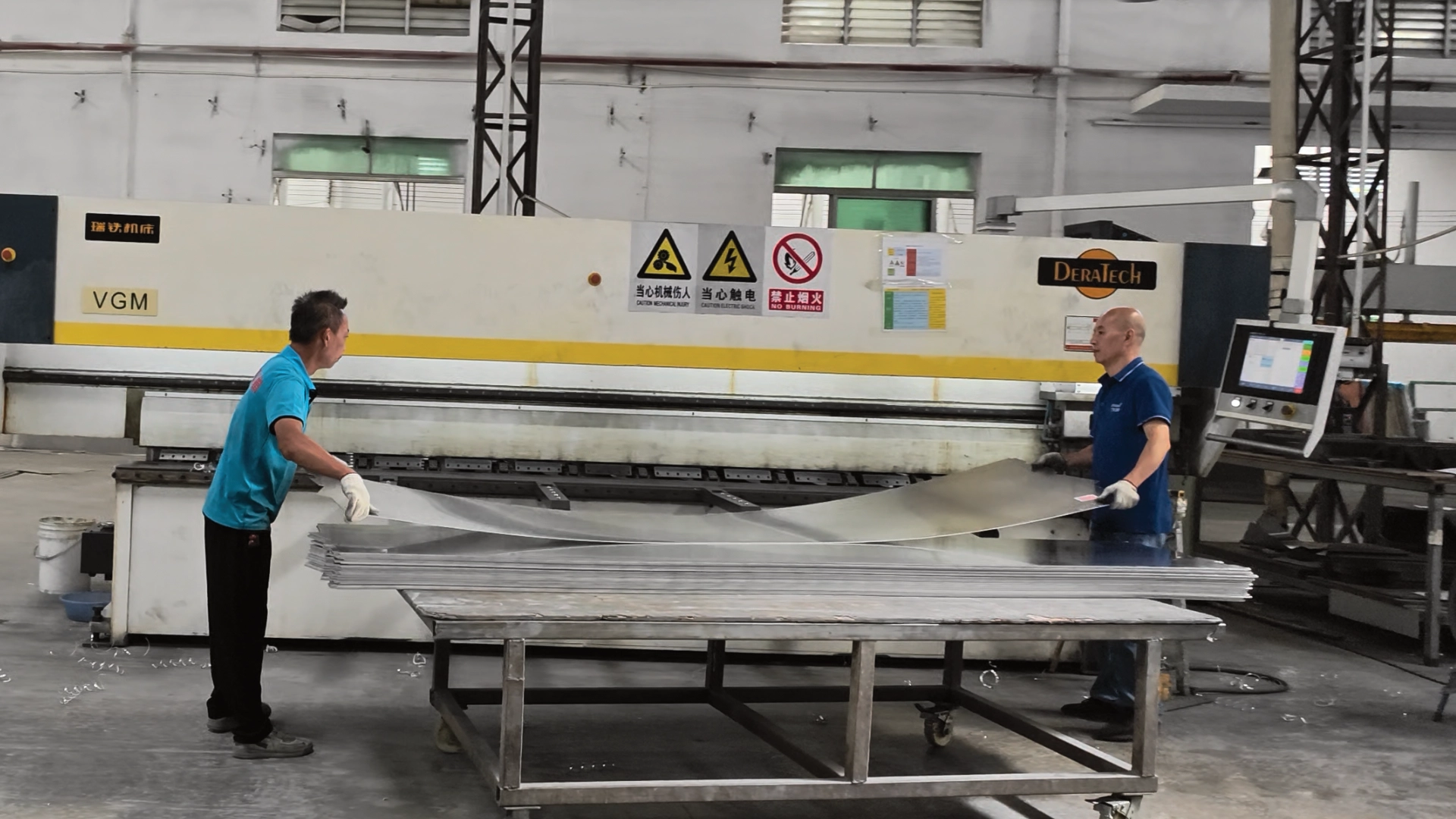
This is the fold. Two people feed a mill-finish sheet into the brake in Foshan. The return is formed here, once, before powder and before the panel sees a scaffold. The bill moves when this step is redone on site with a saw. LINDELACR will not quote a universal rate. The number depends on how many sizes you ask for, whether the coat is one lot, and how often the ceiling will be opened after handover.
Plant area is 20,000 m². The path is scan → CAD → CNC → fold, then one powder lot. Indoor tile stays 0.6–0.8 mm. Alloy 1100 is enough on a simple dry room. 3003-H14 is the step up when the module is 600 × 1200 mm or the return has to stay flat. Powder indoors is AAMA 2604. Copying a 2.0–3.0 mm facade plate onto a 600 mm tile is how a ceiling quote leaves the ceiling range. The tee is the contractor’s. LINDELACR does not roll it.
Five things that move the bill
| What moves the bill | Raises it | Holds it |
|---|---|---|
| Module | A new size every bay | 600 × 600 or 600 × 1200 mm, repeated |
| Coat | A second powder lot, or wood grain on top of powder | One AAMA 2604 lot indoors |
| Penetrations | Lights moved after the nest | RCP frozen before CNC |
| Gauge | Facade plate, 2.0–3.0 mm, on an indoor tile | Indoor 0.6–0.8 mm, 1100 or 3003-H14 |
| Later access | Cut, patch, and paint a gypsum lid | Lift one tile |
Published ranges from other markets mix material, retail, and installed cost in one column. They are not a quotation, and they are not this shop’s number. Use the table as the questions to answer before anyone prices the job. A mineral-fiber tile in a tee can win the first line and lose the second year: it sags in humidity, stains from a leak, and crumbles after a few lifts. Taking it out is dust and haul-off. An aluminum module comes down as one piece and goes back.
Gypsum is often the lower first install and the higher repair. A valve means a cut, a patch, and paint. If the plenum will be opened, that is the comparison in metal ceiling versus a drop ceiling, not a percentage someone printed for a different city. A dry room that nobody opens can keep the cheaper lid. A corridor that gets filters changed should not.
Freeze the drawing before the nest
The punch is the cut you do not repeat on site
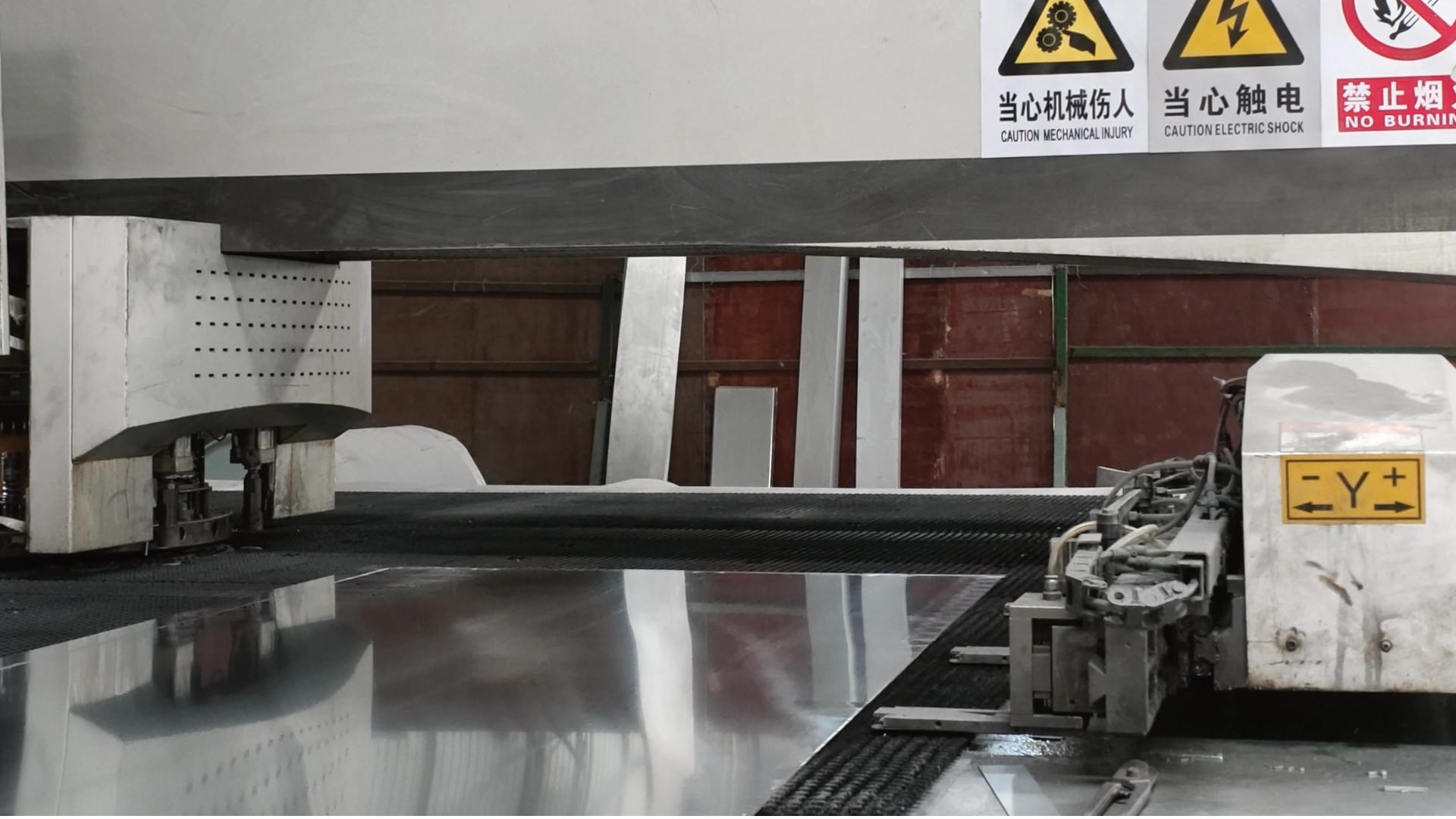
The turret punch is cutting the sheet in the shop. Holes for lights, sprinklers, and diffusers belong on this nest, taken from a reflected ceiling plan that is already frozen. A penetration added after powder is a site cut, a touch-up, and a panel that no longer matches the lot. That is the overrun. It is not a property of aluminum.
Wood grain and micro-perforation are extra operations on the same 0.6–0.8 mm coil, not a different metal. Ask for them where the drawing needs them. Do not put them on every bay because a finish sample looked better in the meeting. Spare tiles come from the same powder lot. A later lot will show against a white field before anyone argues about the module.
Repeat one section
The return is already folded
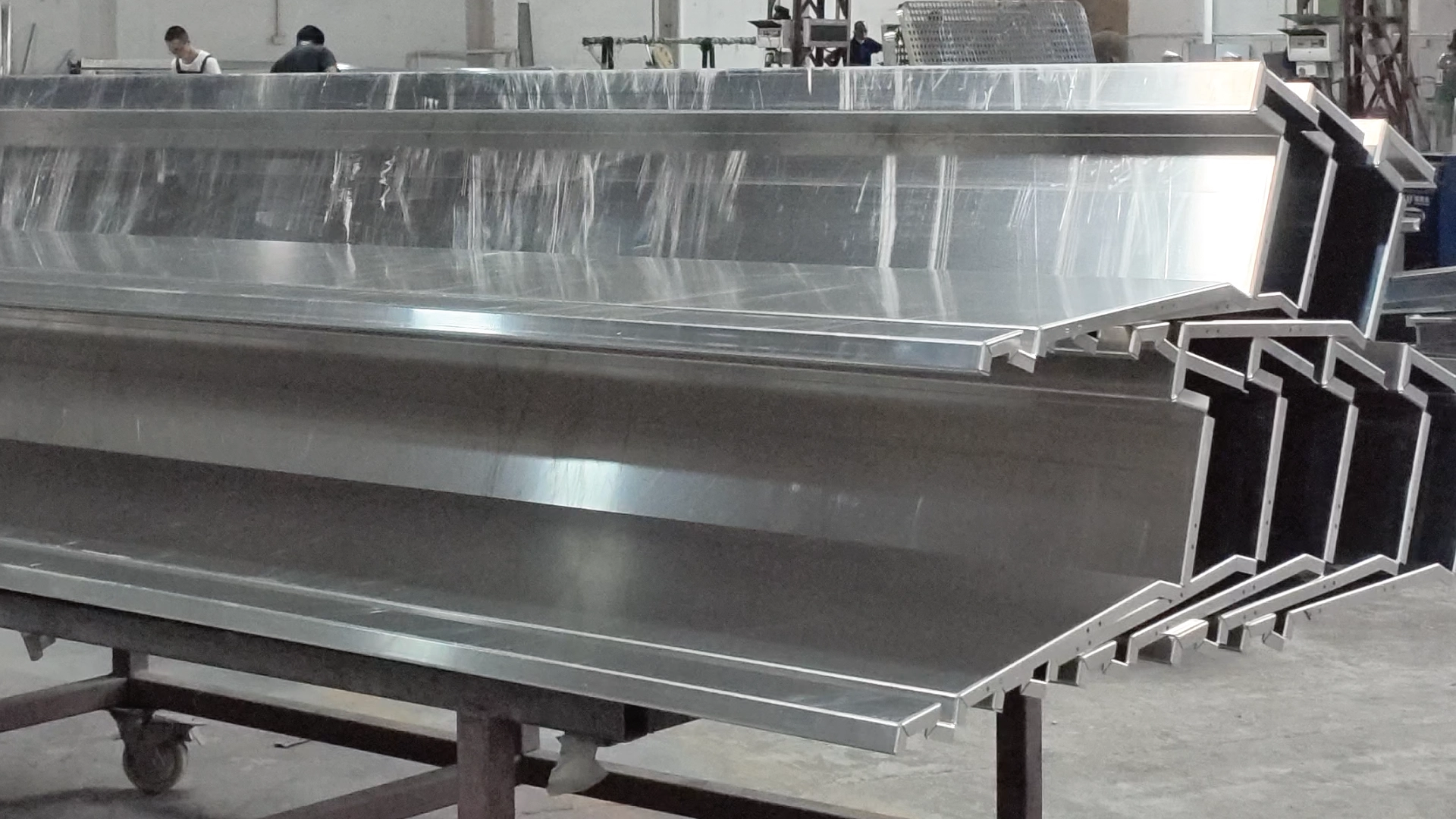
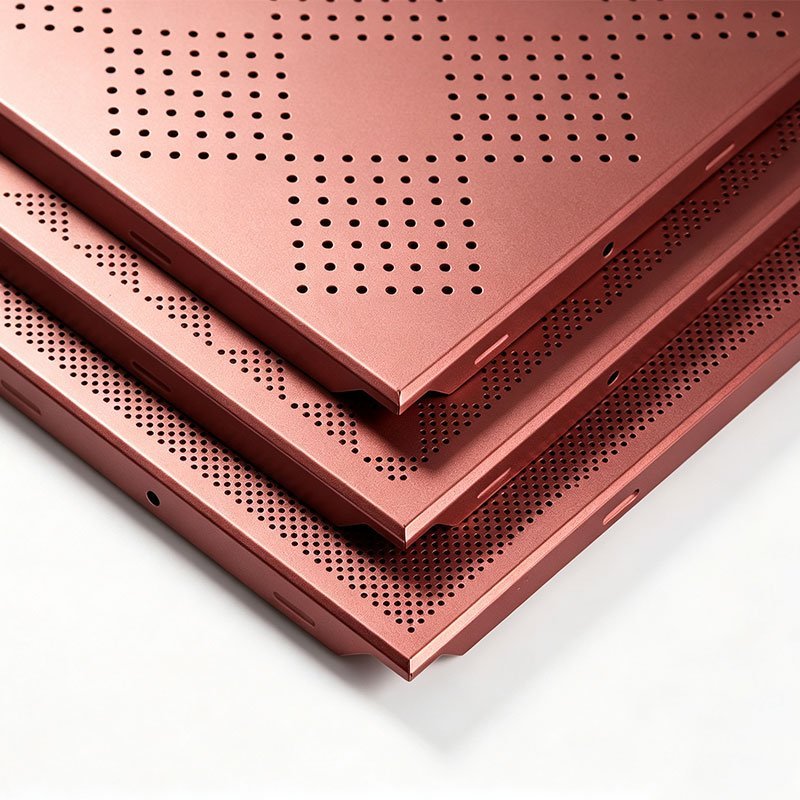
These panels are still mill finish, film on, return already folded, stacked as one section. They are not a 600 mm ceiling tile, and they are not coated yet. The lesson is the repeat. One profile, many pieces, no unique offcut. A ceiling does the same thing at tile gauge: 600 × 600 mm or 600 × 1200 mm, the same edge, the same punch, one powder lot. A new size every bay is a new nest, a new setup, and a spare you cannot use next door.
The edge still has to seat. A square edge and a tegular edge are not interchangeable, and a 24 mm tee is not a 14 mm tee. That match is in ceiling tiles for a T-bar grid. Buying the tile before the tee face is known is how a cheap panel becomes a second order.
Access is the cost after year one
One module comes down
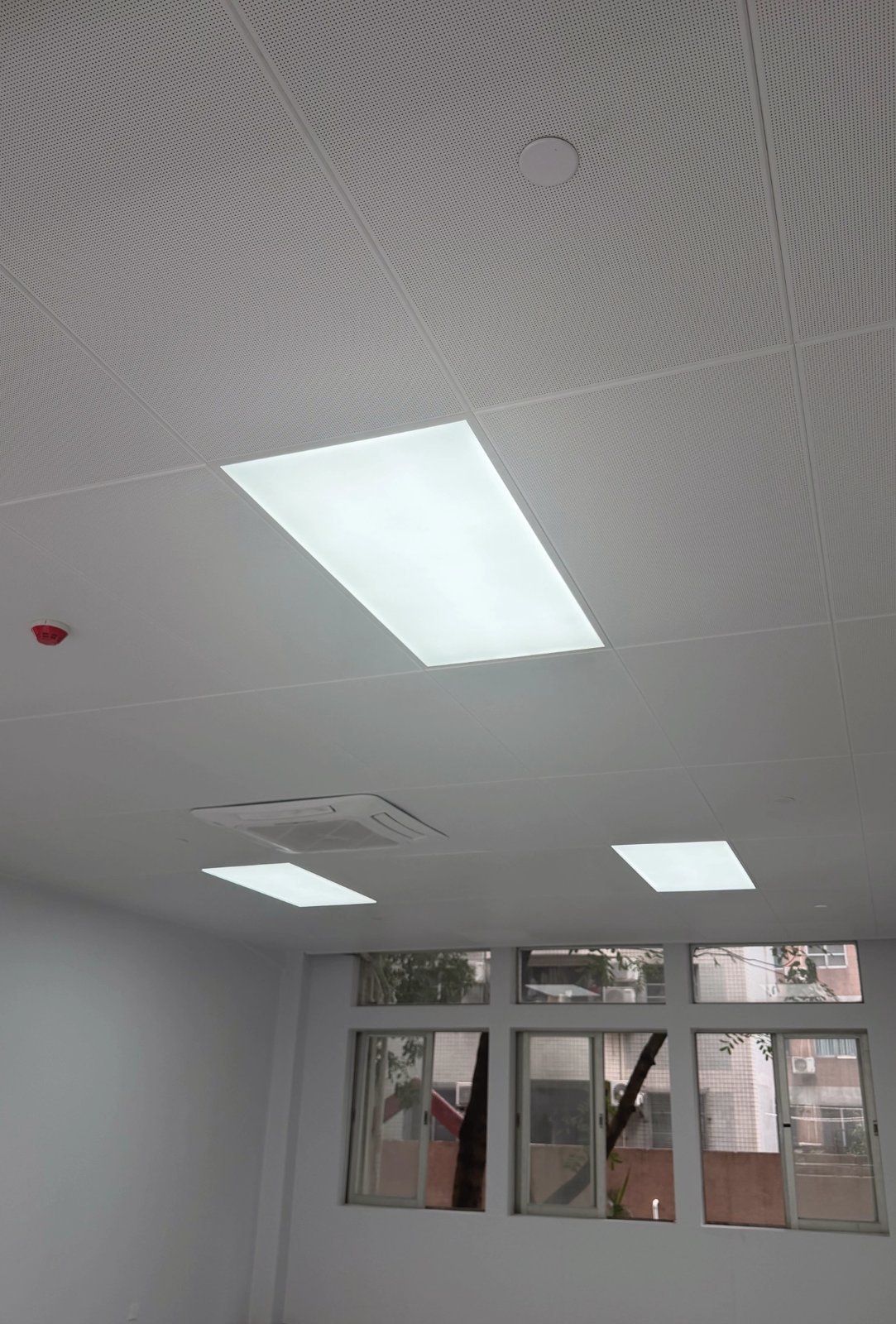
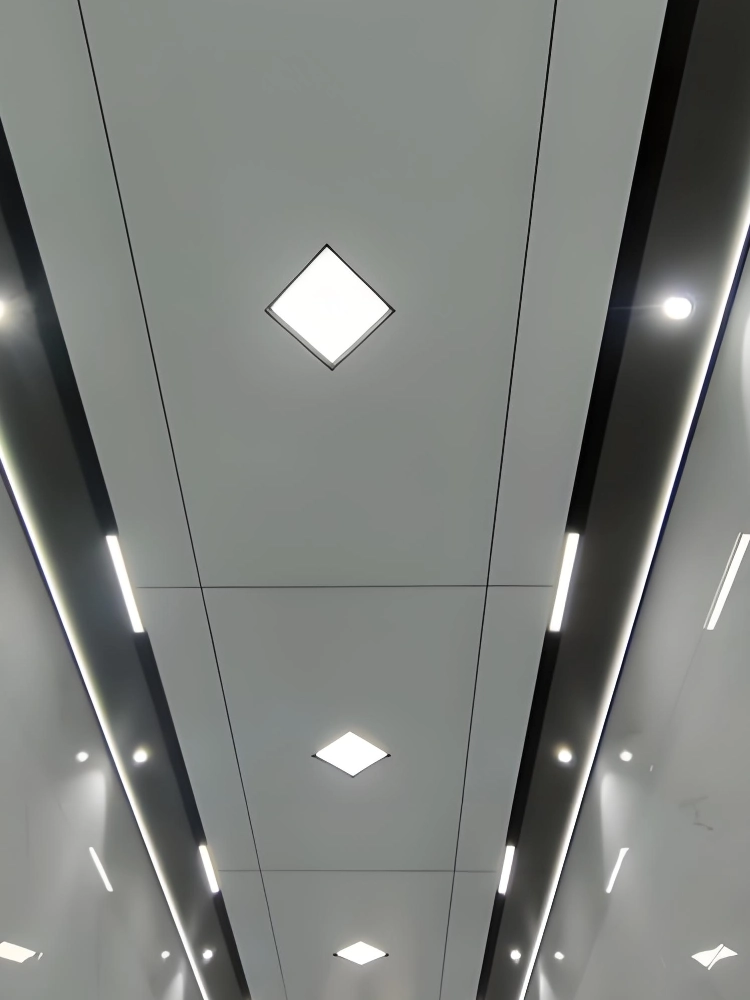
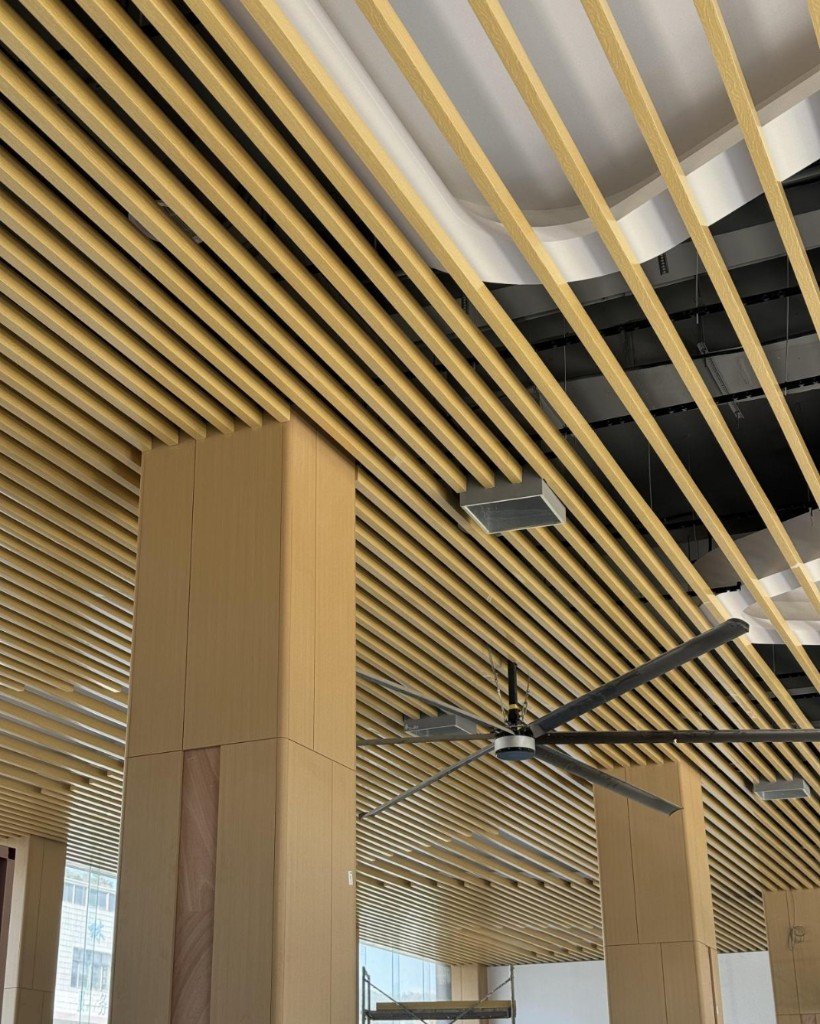
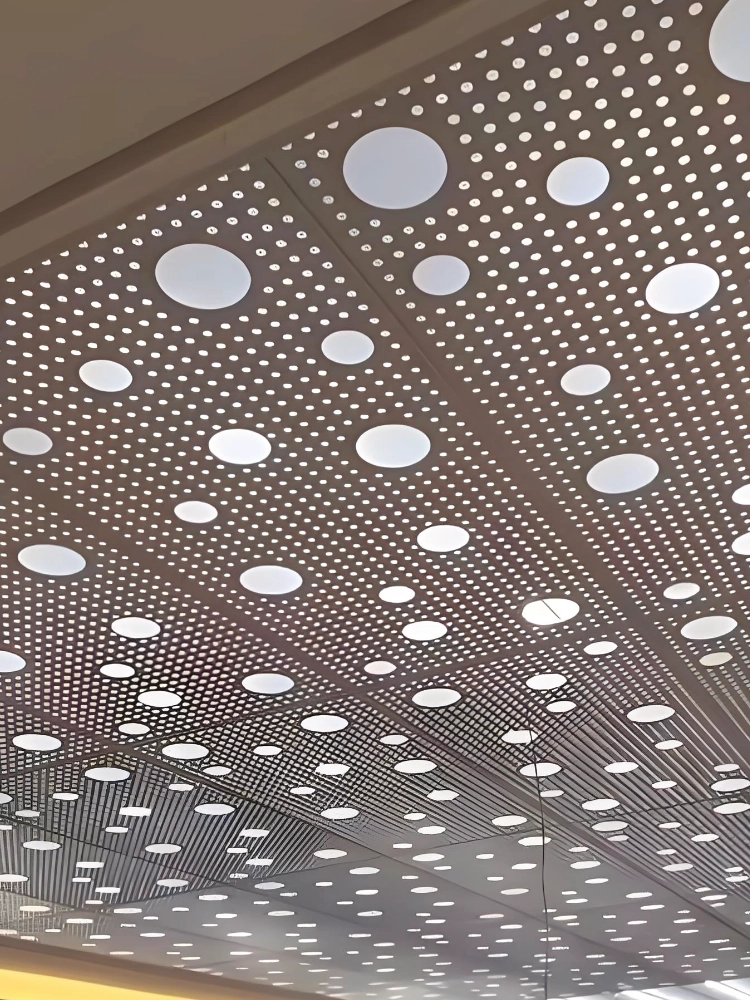
This office at Guangzhou Baiyun University is a repeated module. Micro-perforated aluminum tiles sit in a visible grid. Lights and a cassette occupy the same module, so a driver comes out with the tile. Teaching-building corridors on the same campus are powder-coated U-baffles. Those blades are a different system and a different price. Do not average them into one rate for the building.
Price the bays that will be opened as a lay-in. Price a lobby that almost never opens as the joint you actually want there. Leave acoustic backing off a room that only needed a washable lid. The contractor hangs the tee and carries the lights. Send the module, the tee face, and which bays get opened. A square-foot number without those three lines is not a quote.
Frequently asked questions
What is the cheapest drop ceiling?
The lowest first install is often gypsum, or mineral fiber in a tee, in a dry room nobody will open. It becomes the expensive ceiling the first time a valve has to come out.
How much more is a metal ceiling than gypsum?
There is no single percentage. Metal costs more as a material. Gypsum costs more every time it is cut and patched. A rate without the area and the access count is a guess.
What raises an aluminum ceiling quote?
A new size every bay, a second powder lot, wood grain or micro-perforation, and lights moved after the nest is cut. A repeated 600 mm module in one AAMA 2604 lot stays on the first number.
Does factory folding lower the site bill?
It cuts the recuts. The return is folded in Foshan to the drawing. A panel sawn on site to miss a sprinkler is a new panel, not a saving.
Send the module before anyone invents a rate
Mark 600 × 600 or 600 × 1200, square or tegular, and which bays must open by hand. LINDELACR will return a 0.6–0.8 mm tile, one powder lot, folded in Foshan. If the drawing still says only “drop ceiling,” keep the coil off the PO.