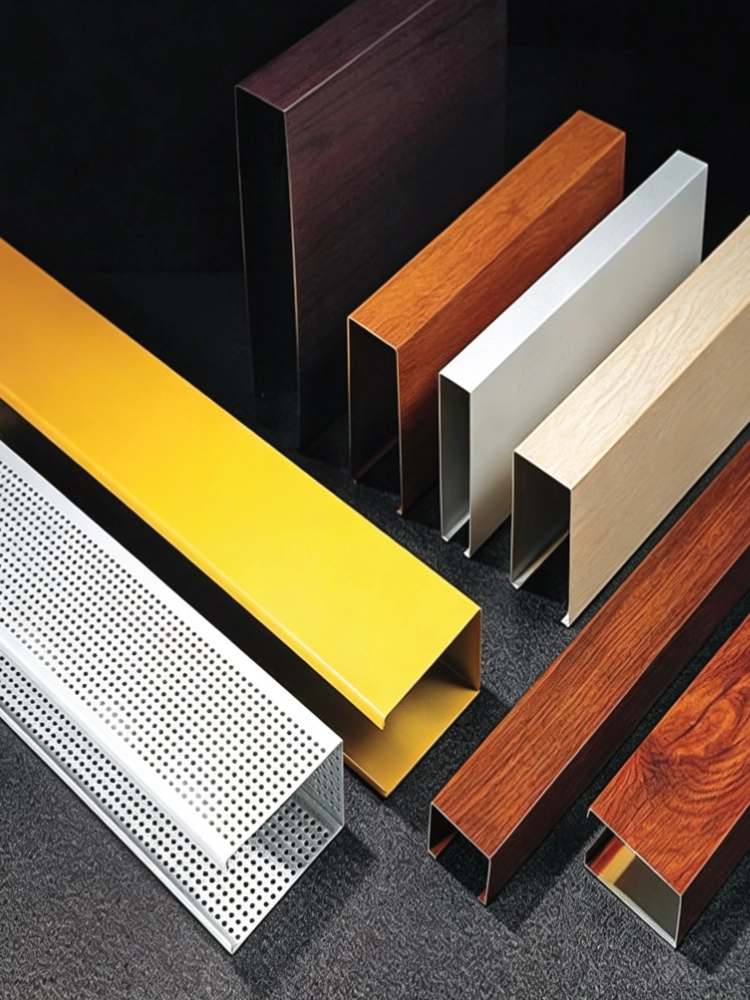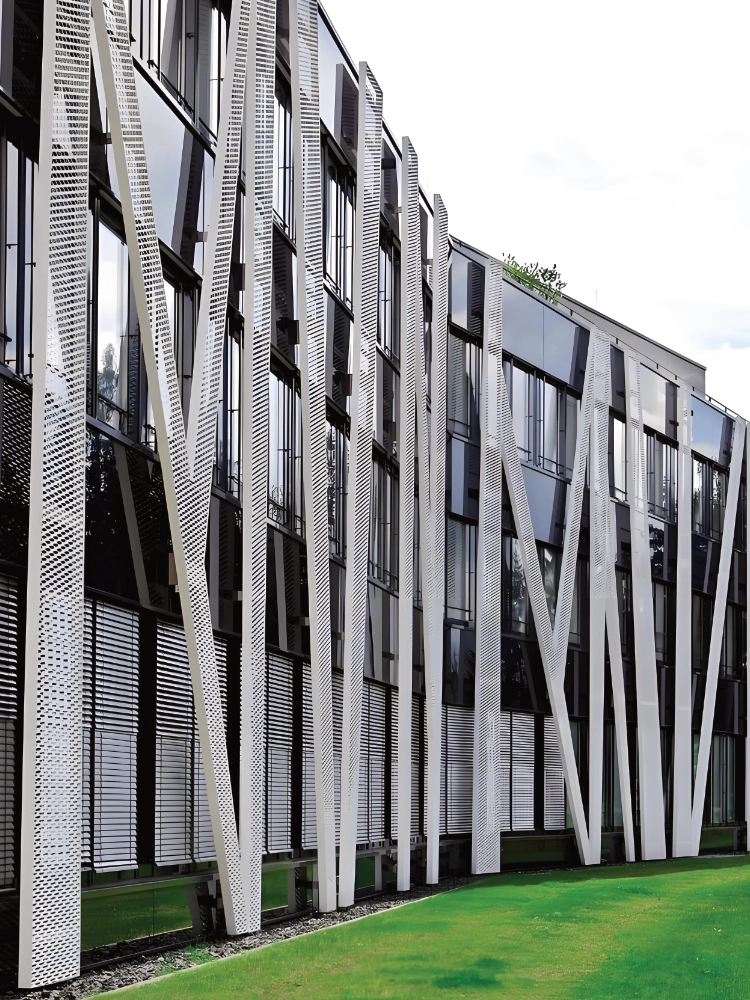
What Should a Corrosion-Resistant T-Bar Ceiling Be Made Of?
A corrosion-resistant T-bar ceiling matches the metal to the room. A dry office can keep a powder-coated steel tee. A pool, a kitchen, or salt air fails at the cut edge. LINDELACR’s indoor tile is 0.6–0.8 mm aluminum, powder to AAMA 2604.
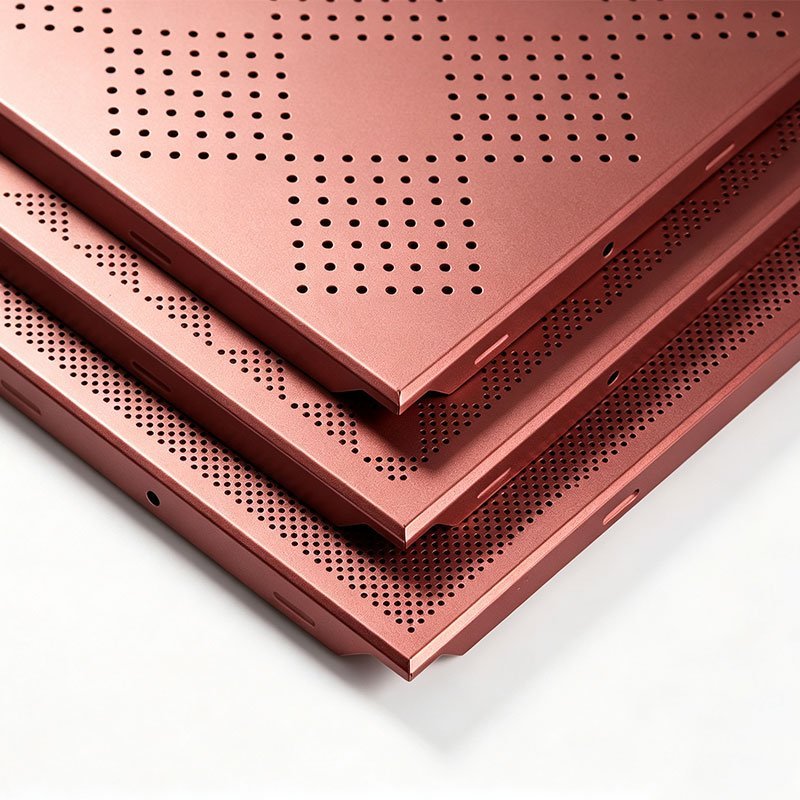
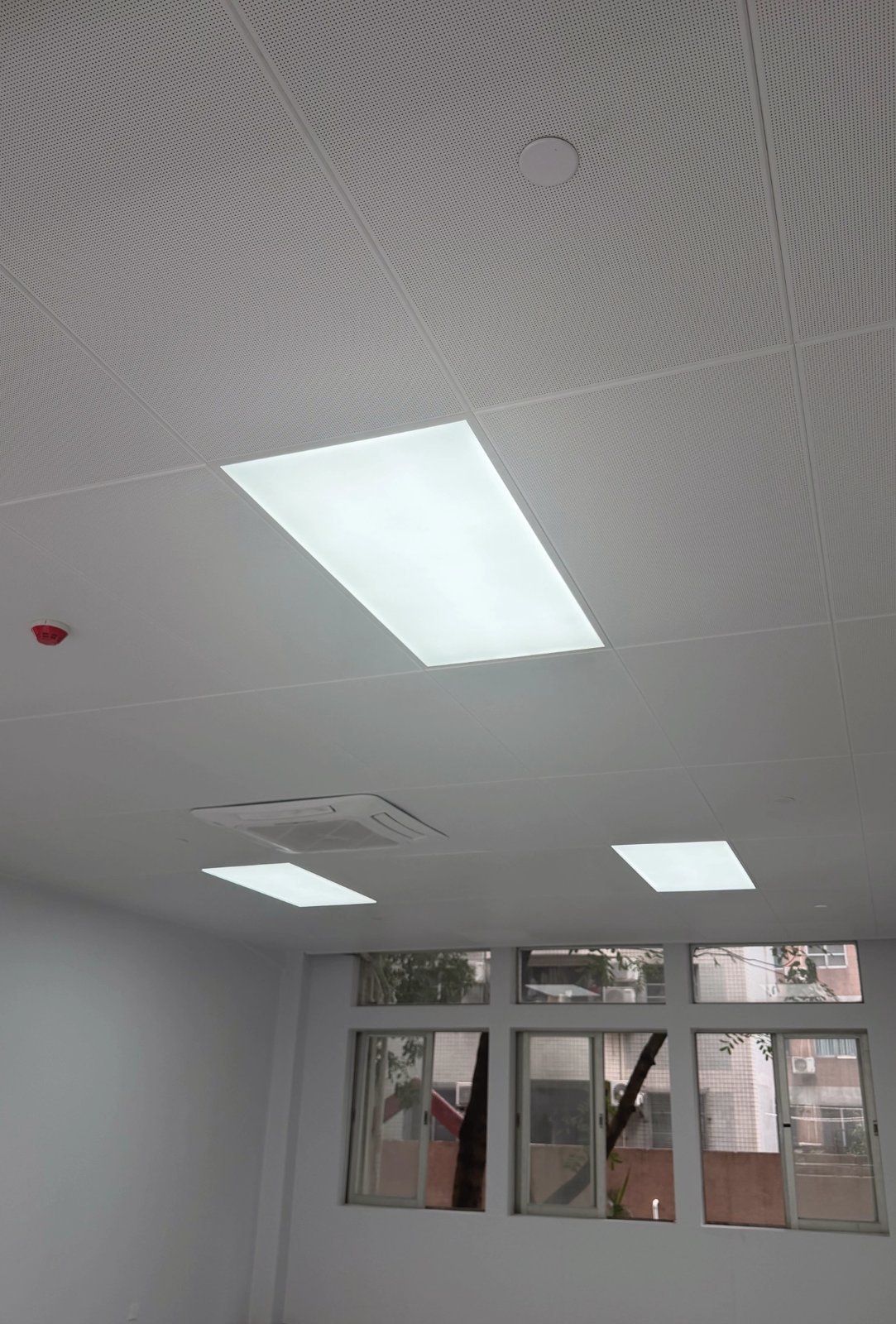
These tiles are coated aluminum. The return is folded, so the edge is metal under the finish, not a fiber board and not a site-cut steel end. The holes are punched before the coat. A galvanized tee in a dry office can carry a tile like this for the life of the fitout. In a pool hall, a commercial kitchen, or air that carries salt, the tee, the hanger, and the screw are the parts that rust.
LINDELACR fabricates the aluminum in Foshan. Plant area is 20,000 m². The path is scan → CAD → CNC → fold, then one coating lot. Indoor trays stay 0.6–0.8 mm. Alloy 1100 is enough on a simple dry room. 3003-H14 is the step up when the module is larger or the return has to stay flat. LINDELACR does not roll the steel tee. The tee the contractor buys has to be named for the same room as the tile, or the ceiling looks new while the grid stains at every cut.
Name the room before the color
| Room | What fails first | Aluminum tile | Coating |
|---|---|---|---|
| Dry office | Little, if the tee stays dry | 0.6–0.8 mm, 1100 or 3003-H14 | Powder AAMA 2604 |
| Kitchen, damp interior | Steel cut edge; fiber board sags | Same gauge, washable face | Powder AAMA 2604, one lot |
| Pool, salt air, weather soffit | Bare steel at every cut and screw | Aluminum, not mineral fiber | PVDF AAMA 2605, ≥ 30 μm; soffit 2.0–3.0 mm |
ISO 12944 is a label for the air, not a paint name. C1 and C2 are heated, dry interiors. C3 is a moderate urban interior. C4 and above is where pools, constant steam, industrial humidity, and coastal salt usually land. LINDELACR does not print a C5 certificate on a ceiling from a photograph. Write the exposure on the RCP, then match the metal and the coat. A color chart opened first is how a dry-office tee ends up in a pool hall.
Aluminum forms an oxide that stays put when the surface is scratched. Steel does not. Zinc on a galvanized tee protects the face, and it offers some help at a fresh cut, until the room stays wet or chlorides arrive. Then the rust starts at the trim, the hanger hole, and the screw, and it walks under the coat. A thicker film on the uncut face does not close those openings.
If the engineer writes a marine alloy, put that grade on the drawing and send it with the RCP. The indoor default LINDELACR runs is 1100 or 3003-H14 at 0.6–0.8 mm. Do not invent a pool alloy in the purchase order and hope the coil matches. Fixings belong on the same line. If the hanger is stainless in a chloride room, write 316, not 304. A coated tile on a pitting screw still fails at the point that carries it.
Where the grid actually opens
A site cut is bare metal
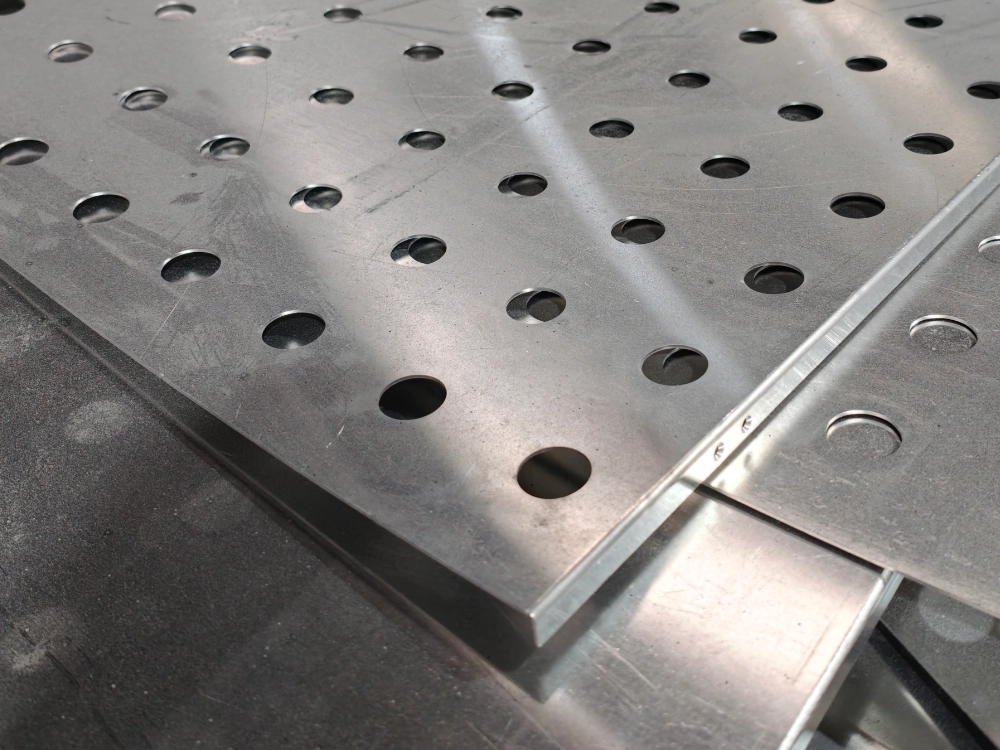
This return is still mill finish. On aluminum, the bare edge grows an oxide and stops. On a galvanized steel tee, the same cut is bare steel. Folding the ceiling tile in Foshan, then coating the whole part, is how the return stays covered. A tee cut on site to close the last bay does not get that sequence unless the specification says the ends are treated, or the tee is aluminum to begin with.
Check the load while you change the metal. An aluminum tee is lighter than steel and it is not the same section. The tile, the lights, and any backing still have to sit inside the load class on the drawing. A 24 mm tee and a 14 mm tee are not the same seat. Confirm the edge before the first row is hung.
Match the coat to the exposure
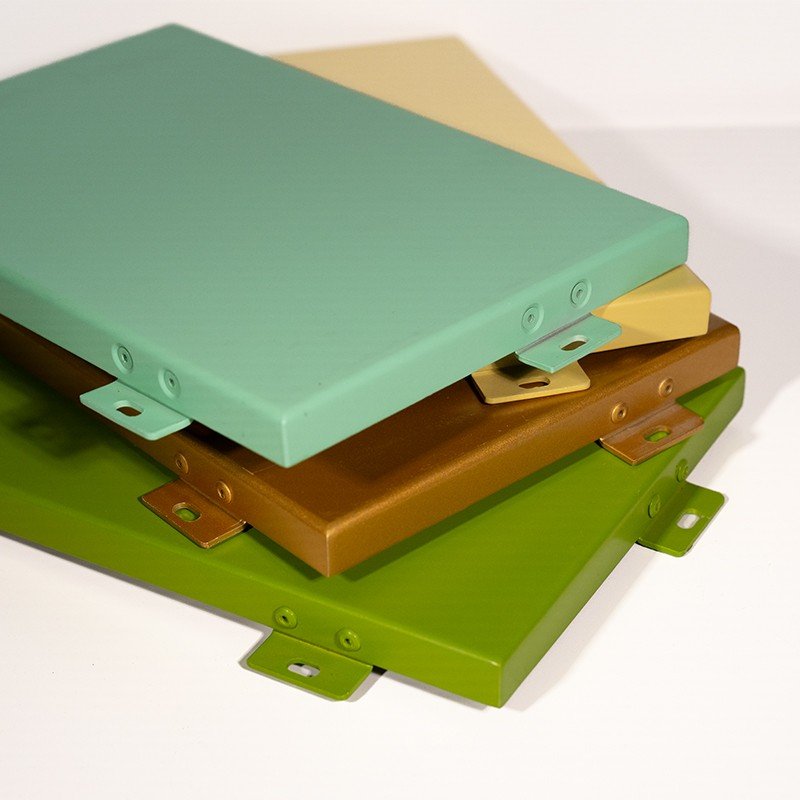
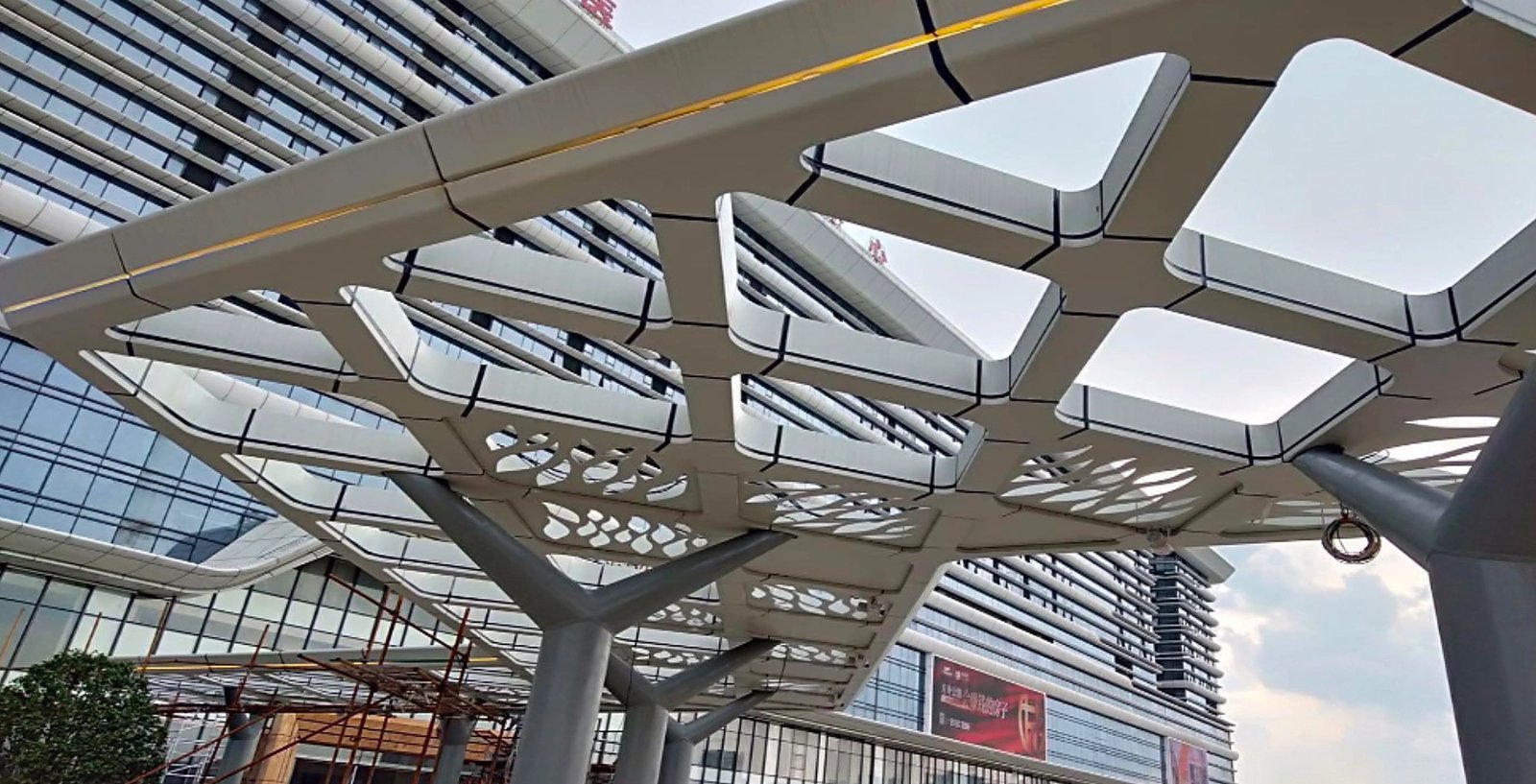
These cassettes are the coat and the bracket in one lot. The face, the return, and the fixing tab are the same finish. That is the rule for a ceiling tile as well. Indoors, powder to AAMA 2604 is the coat. Sun, rain, and a coastal soffit take PVDF to AAMA 2605, dry film at least 30 μm. The comparison is in PVDF versus powder coat for exterior aluminum. A dry office does not need the exterior film. A weather soffit is not an indoor tray: thickness steps to 2.0–3.0 mm.
Do not keep a mineral-fiber board because the tee was upgraded. The board sags and stains when the room stays damp, which is the same limit set out in metal ceiling versus a drop ceiling. The washable face is the aluminum tile. Cleaning is a damp cloth, not a new board after every leak. Record the powder or PVDF code. A later reorder without that code will not disappear into the field, and a touched-up screw head in a different white will show before the corrosion does.
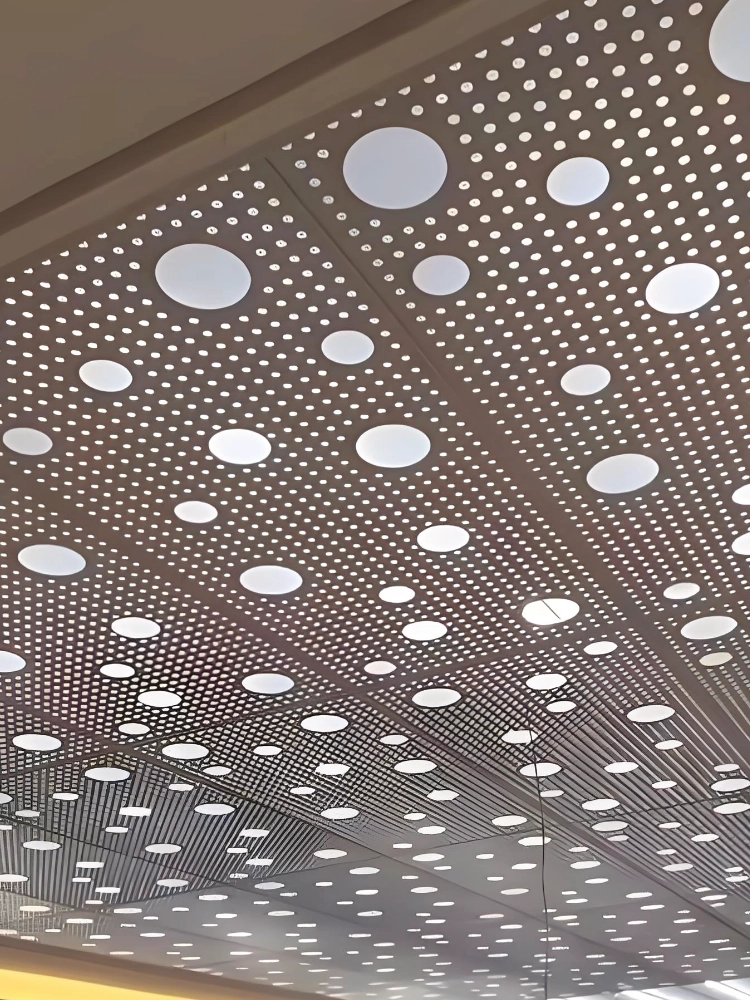
Fire listings name the assembly that was tested. Swapping a steel tee for aluminum, or a fiber tile for a coated metal tile, can walk out of that listing. Where both corrosion and a fire rating apply, resolve the tested build before coil is cut. Guangzhou Baiyun University is not this case: those corridors are powder-coated U-baffles in a teaching building, and the office field is a micro-perforated tile. Neither is a pool hall. Copy the alloy and the coat from the room you actually have.
Frequently asked questions
Will a standard steel T-bar rust in a pool hall?
Usually at the cut ends and the screws. Chlorides and constant humidity reach any steel the site cut opened. Specify an aluminum tile, and specify the tee and the fixings for the same room. Do not leave the grid as standard galvanized.
Is an aluminum ceiling always better than a galvanized tee?
No. A dry office can keep a powder-coated steel tee and a 0.6–0.8 mm aluminum tile. Aluminum earns the change when the room is steamed, wet, or salty. A clip-in leaves the tee entirely when the joint has to stay closed.
Does a thicker coating stop a steel grid from rusting?
Not at the cut. More film helps the face that was never trimmed. Every site cut and every screw hole opens the steel. When the exposure is the problem, change the metal, not only the microns.
Can mineral fiber stay if the grid is upgraded?
No. The board sags and stains in sustained humidity even on a new tee. The washable face is an aluminum tile, 0.6–0.8 mm, powder to AAMA 2604 indoors. A weather soffit is a different build: 2.0–3.0 mm and PVDF to AAMA 2605.
Write the exposure on the RCP
Mark dry office, kitchen, pool, or coastal soffit before anyone picks a color. LINDELACR will return a 0.6–0.8 mm aluminum tile, a powder or PVDF lot, and a note on whether the tee can stay. A weather soffit comes back at 2.0–3.0 mm. If the drawing still says only “corrosion-resistant ceiling,” keep the coil off the PO.