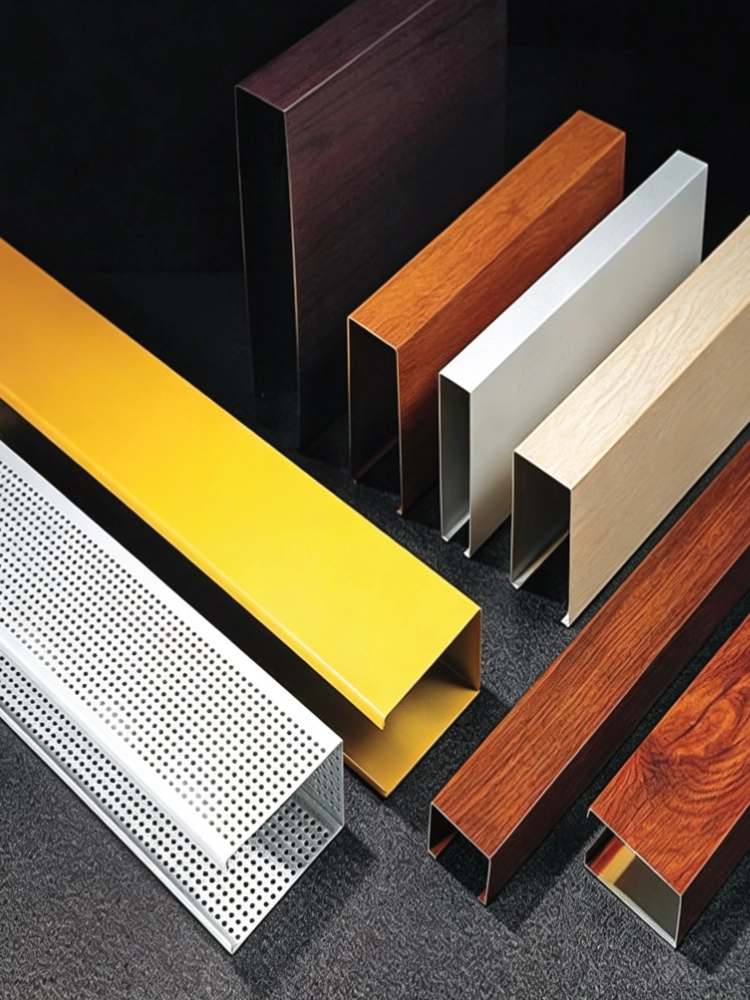
Exposed or Concealed Grid: Which Ceiling Should You Specify?
An exposed grid shows the tee and lifts by hand. A concealed grid hides the carrier and reads as one plane, and it takes a tool to open. LINDELACR makes both in 0.6–0.8 mm aluminum. How often the ceiling opens decides which one.
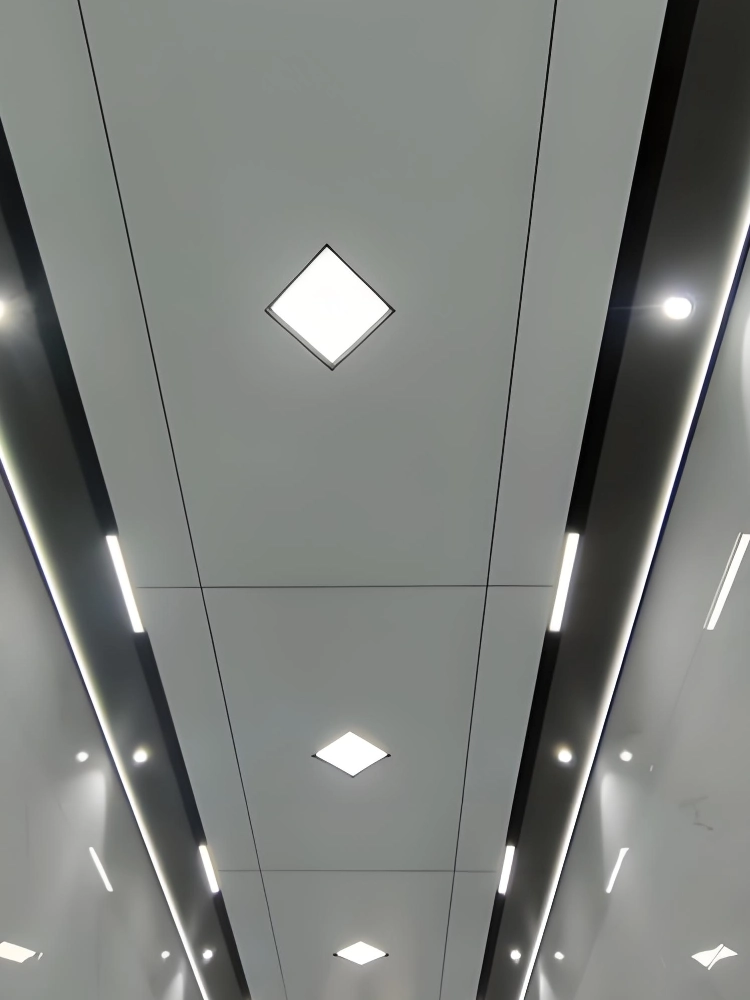
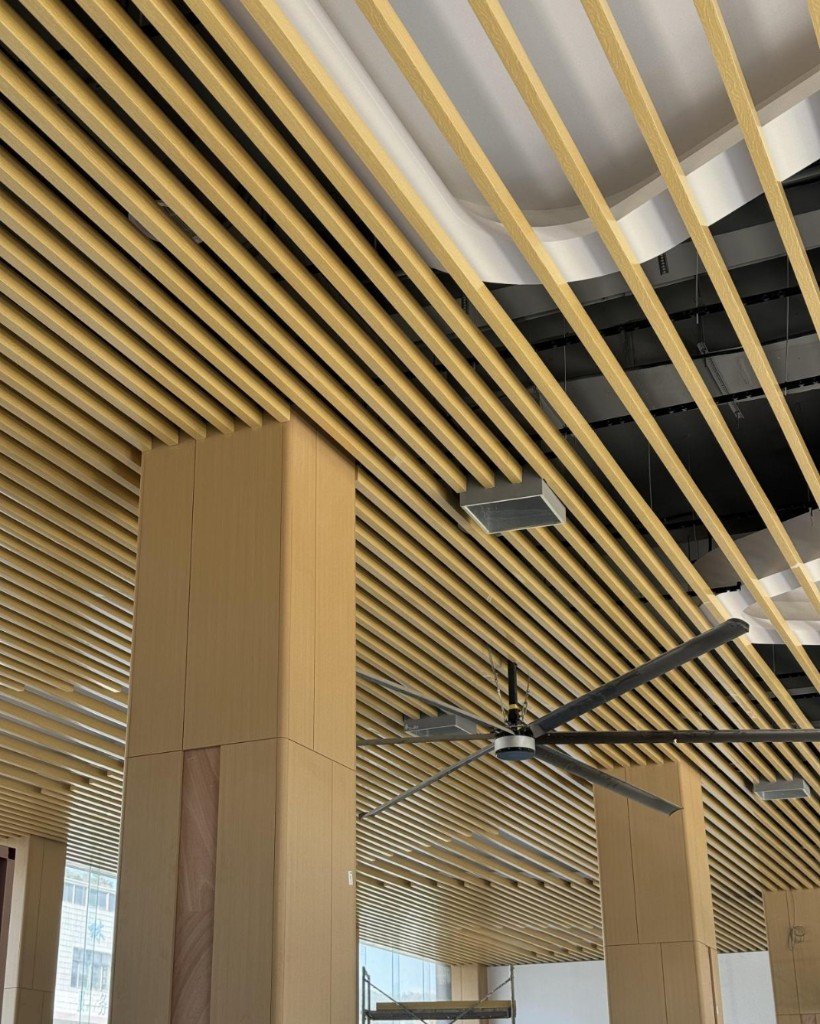
The white field in this corridor is the concealed case. The joint is a hairline, and the diamond lights are cut into the panel. The dark lines beside it are linear baffles, not a 24 mm lay-in tee. A working floor that opens a valve every month still wants that tee, not this joint.
LINDELACR fabricates both systems in Foshan. Plant area is 20,000 m². The path is scan → CAD → CNC → fold, then one powder lot. Indoor tiles stay 0.6–0.8 mm. Alloy 1100 is enough on a simple dry room. 3003-H14 is the step up when the module is larger or the return has to stay flat. Do not pick the system from a finish chip. Pick it from how often the plenum will be opened, and from how much drift the services drawings can tolerate.
Access first, then the line you see
| Decision | Exposed tee | Concealed clip-in |
|---|---|---|
| What you see | A 24 mm or 14 mm tee | A hairline joint |
| How it opens | Lift one tile, no tool | Release the clip |
| Setting-out drift | A few millimeters disappear into the tee | The joint shows it |
| Metal | Indoor 0.6–0.8 mm, 1100 or 3003-H14 | Same gauge; return typically 20–25 mm |
| Coat | Powder AAMA 2604 indoors | Same lot |
| Best bay | Offices, schools, corridors that get opened | Lobby, board room, a short feature |
A ceiling is hung once and opened for years. Drivers, valves, dampers, and leaks all sit above the tile. An exposed tee lets any module come down by hand, from below, and go back without a new edge. A concealed clip holds a cleaner plane and asks for a tool. Over a building life, the bays that are opened often pay for that tool in marked edges. The bays people photograph almost never open, and they can carry the hairline.
Coordination is the quieter cost. A 24 mm tee swallows a few millimeters of setting-out drift, and the ceiling still reads straight. A 14 mm narrow tee swallows less. A concealed joint has nothing to hide the error, so a sprinkler or a luminaire that misses the drawing stays visible. Resolve those positions on the RCP before a concealed panel is cut. On an exposed grid, the same miss is often only a tile that still sits.
Keep the tee where the ceiling will be opened
The frame is the access
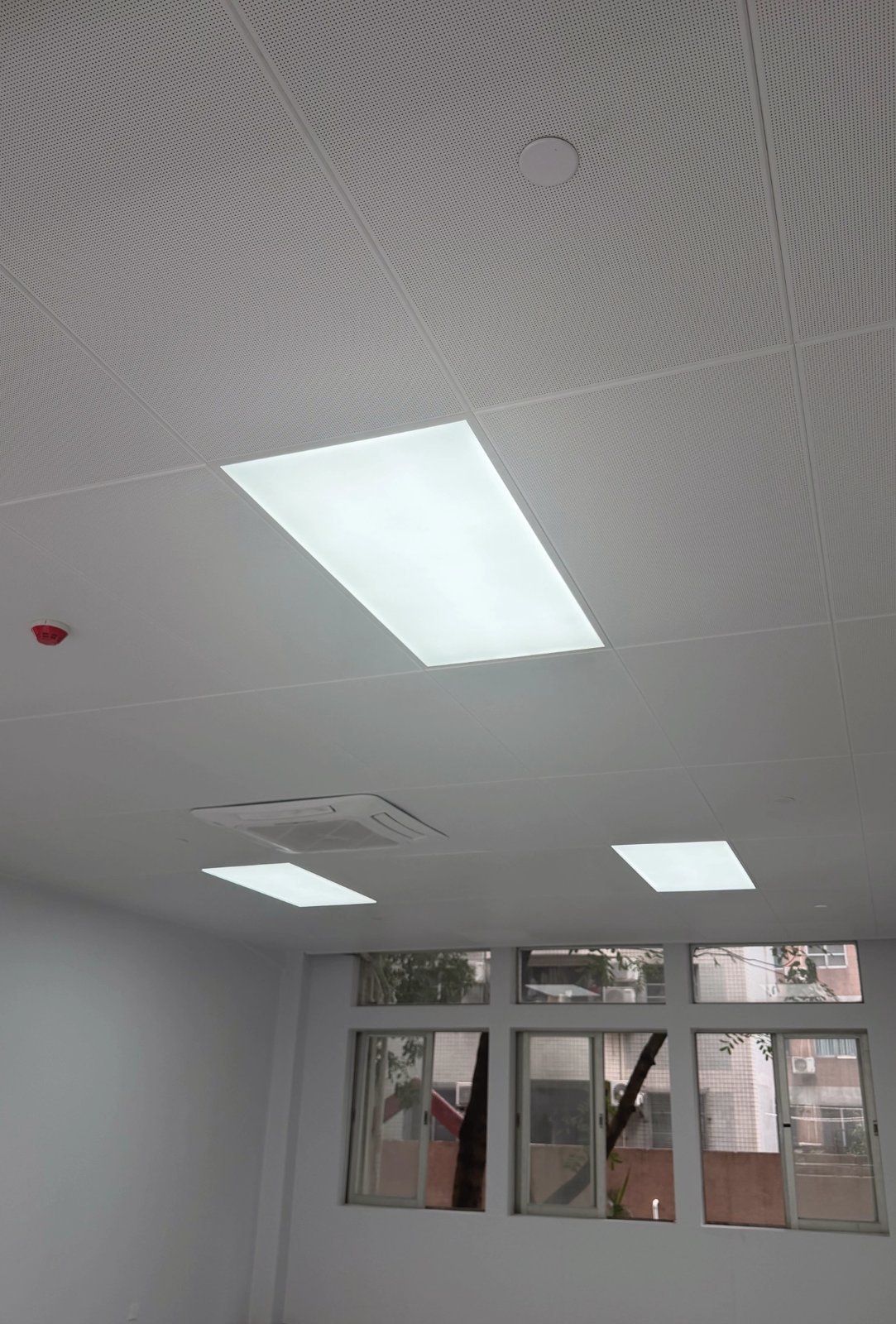
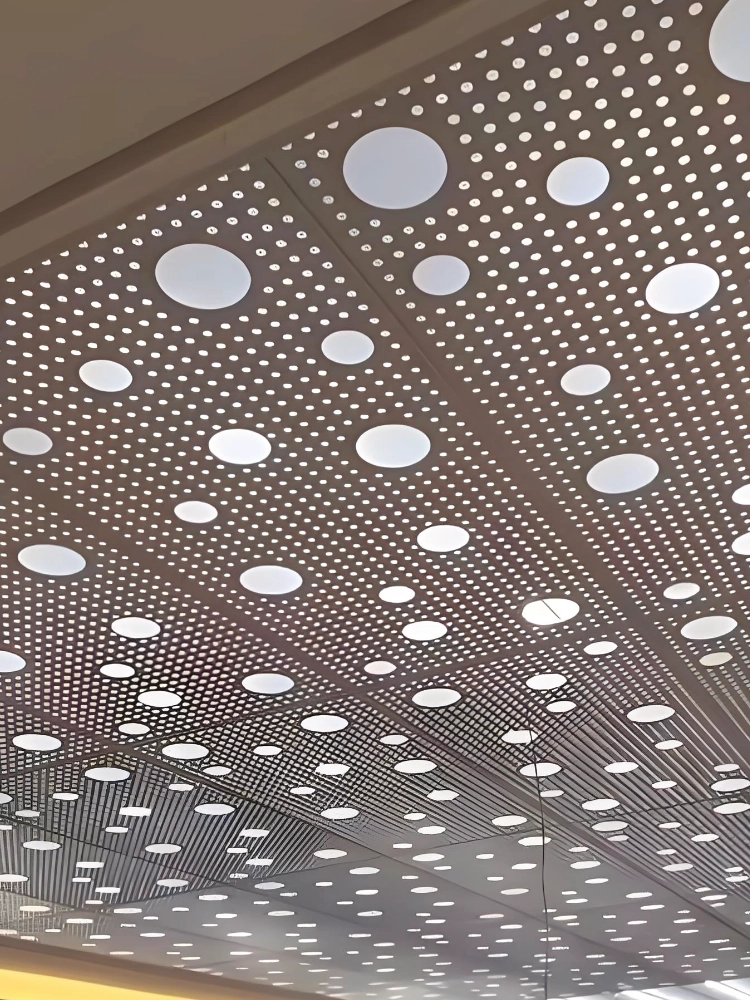
This office at Guangzhou Baiyun University is a visible grid. Micro-perforated aluminum tiles sit in the frame, with lights and a cassette in the module. A driver comes out with the tile. Teaching-building corridors on the same campus use powder-coated U-baffles, so the plenum stays readable between blades. That is a third system, not a clip-in lid. The office is the exposed-grid case.
For a 600 mm module, mains are commonly set at 1200 mm, with cross tees between them and a wall angle at the perimeter. The tile sits on the tee under its own weight. Nothing is screwed through the face, which is why the edge survives repeated lifts. Powder indoors is AAMA 2604. Record the code. A spare from a later lot will show against this white field before anyone notices the grid.
Schools, wards, open offices, and back-of-house corridors belong here. The ceiling will be opened. Installing a concealed joint and then cutting hatches into it is how a premium bay becomes a patchwork. If the room is damp, the tile is still aluminum, not mineral fiber. The tee itself, if it is galvanized steel, has to suit that room. A dry office can keep it. A pool cannot.
Hide the carrier only where the plane matters
The return is the clip
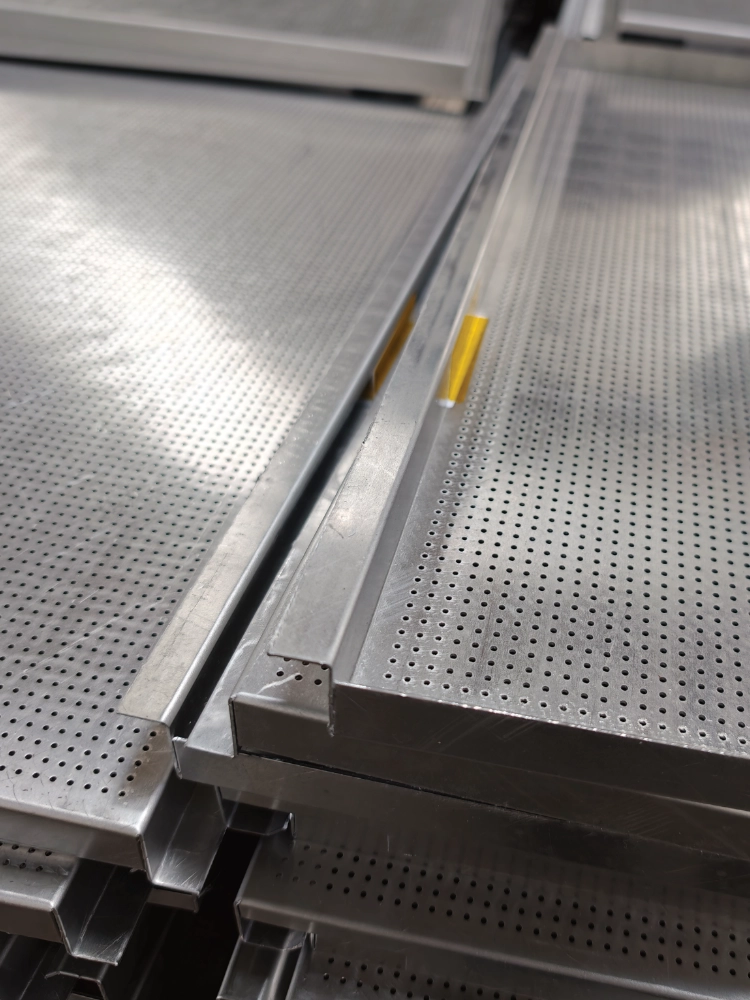
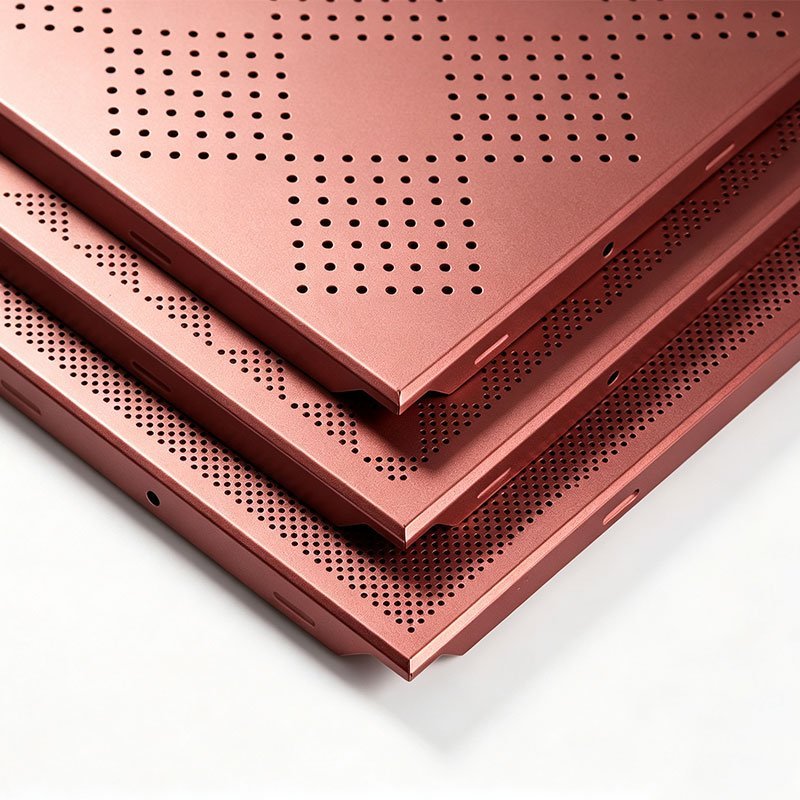
The face here is a dense micro-perforation. The side is a folded return and a clip slot, typically 20–25 mm on an indoor tray. From below you see a joint, not a tee. A clip-in metal ceiling is that joint. Opening it is planned: a tool releases the clip, the panel comes down, and it goes back. Do that every week and the edge takes wear a lay-in never sees. The carrier is above the panel line. Budget that carrier. It is not the tee you already own.
Use it on a lobby, a board room, or a short feature where people look up and almost nothing above the ceiling will move. Keep the area small enough that the slower set-out is a finish decision, not a floor-plate decision. Lights, diffusers, and sprinklers go on the RCP before the nest is cut, the way the diamond lights in the corridor above were cut into the panel instead of sawn on site. A panel that cannot pass a door is not removable on the day you need it.
Absorption, if the brief asks for it, comes from the tile and the backing, not from whether the tee shows. That check is in acoustic ceiling tiles for a T-bar grid. A solid clip-in is a washable lid, not an absorber. Say which one the room needs before the punch pattern is locked. Guangzhou Baiyun already splits one campus across two carriers. Circle the photographed bays for the clip-in, and leave the tee on the floors that will be opened.
Frequently asked questions
Is a concealed grid better than an exposed one?
Only where the ceiling plane matters and the plenum is opened rarely. A lobby or a board room can take the hairline joint. Working floors, wards, and corridors that get opened should keep the tee.
Can a concealed ceiling still be opened?
Yes, from below, by releasing the clip. It is slower than lifting a lay-in, and repeated openings mark the edge. Use it where access is planned, not daily.
Which ceiling hides a setting-out error?
The exposed tee. A 24 mm face absorbs a few millimeters. A 14 mm narrow tee hides less. A hairline joint shows the drift for the life of the ceiling. Resolve the RCP before a concealed panel is cut.
Can both systems sit in one building?
Yes. Concealed on the lobby and the board room. Exposed on the working floors. Detail the transition before coil is cut, and keep one powder lot where the two fields meet.
Circle the bays that must open by hand
Mark the lobby and the board room if the plane has to disappear. Leave the tee on the working floors. LINDELACR will return a 0.6–0.8 mm lay-in or clip-in, a powder lot, and a 1:1 joint from Foshan. If the drawing still says only “grid ceiling,” keep the coil off the PO.