Is a Metal Ceiling the Same Thing as a Drop Ceiling?
A metal ceiling and a drop ceiling are not opposites. Drop ceiling names the suspension. Mineral fiber is the usual tile in that tee. Aluminum can replace the tile, or it can leave the tee for a clip-in, a baffle, or an open cell.
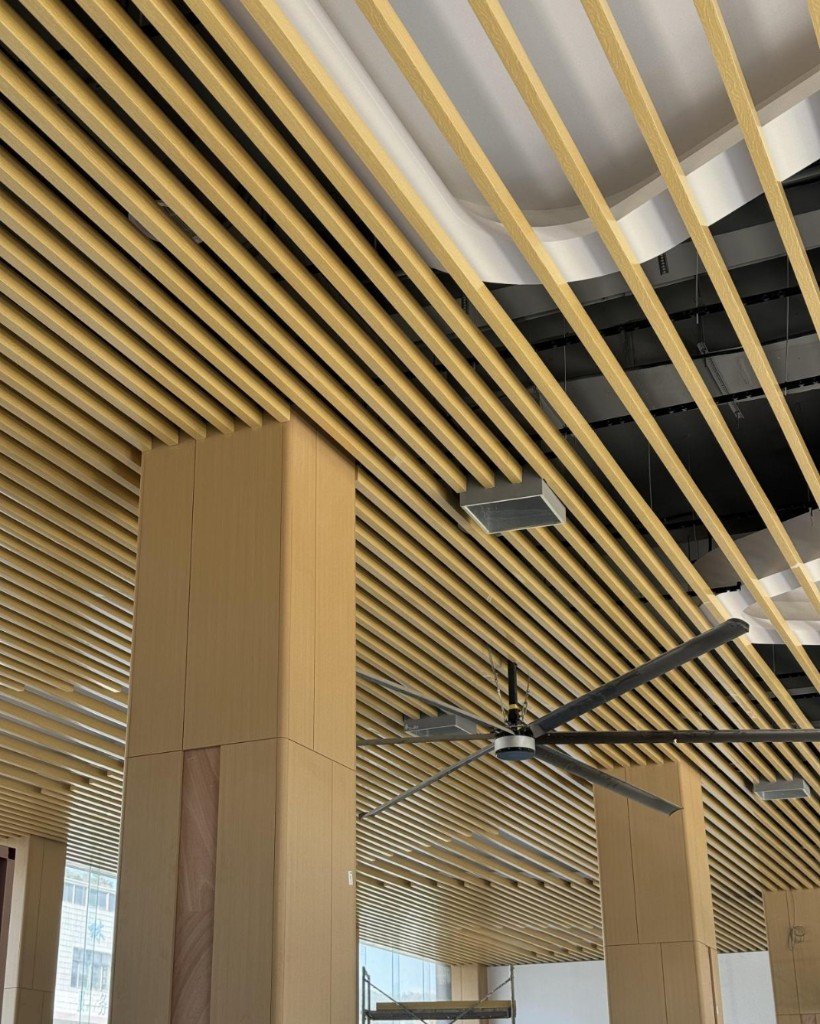
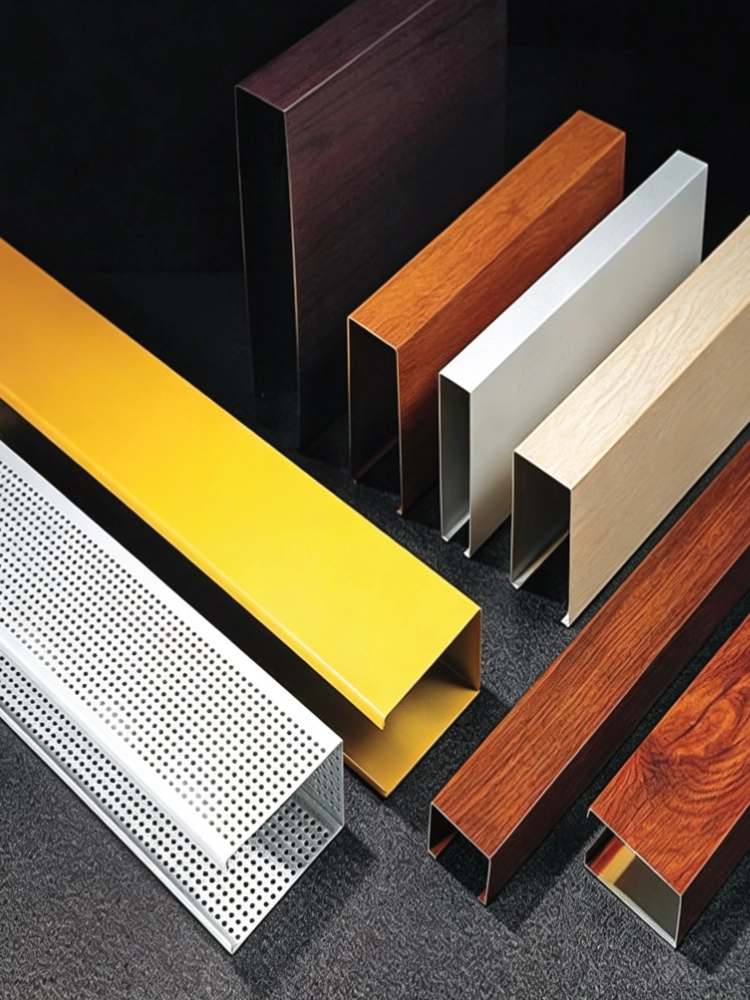
These wood-grain linear baffles are the case for leaving the tile grid. A fan, the ducts, and the lights sit in the open plenum. The columns are clad. The ceiling is a set of blades, not a mineral-fiber board on a tee. It is still a suspended ceiling. It is not the drop ceiling most specifications mean when they write “acoustic tile.”
LINDELACR fabricates that metal in Foshan. Plant area is 20,000 m². The path is scan → CAD → CNC → fold, then one powder lot. Indoor trays and baffles stay 0.6–0.8 mm. Alloy 1100 is enough on a simple dry room. 3003-H14 is the step up when the module is larger or the face has to stay flat. Do not price this from a dollar-per-square-foot table. The number moves with the system, the perforation, and whether the tee stays.
Keep the tee, or take it out
| Choice | Mineral-fiber drop ceiling | Metal lay-in in the same tee | Clip-in, baffle, or open cell |
|---|---|---|---|
| What it is | A board in a tee | Still a drop ceiling | A metal ceiling on a new carrier |
| Grid | Keep the tee | Keep the tee if the load class allows | Tee comes out |
| Metal | None | 0.6–0.8 mm, 1100 or 3003-H14 | Same indoor gauge |
| Humidity | Can sag and stain | Stays flat | Stays flat |
| Access | Lift a board; edges crumble | Lift one tile | Clip-in is planned; baffle and cell stay open |
| Coat | Factory paint on the board | Powder AAMA 2604, one lot | Same indoor powder lot |
People mix the two names because a metal lay-in is both. It is a metal ceiling, and it is a drop ceiling. The board it replaces is usually mineral fiber: cheap on the first quote, porous, and unhappy in a damp room. The aluminum tile is heavier. The tee’s load class has to carry the metal, the lights, and any backing, not the weight of the board that came out. If the tee is bent, rusted, or too narrow for the new edge, keeping it is not a saving.
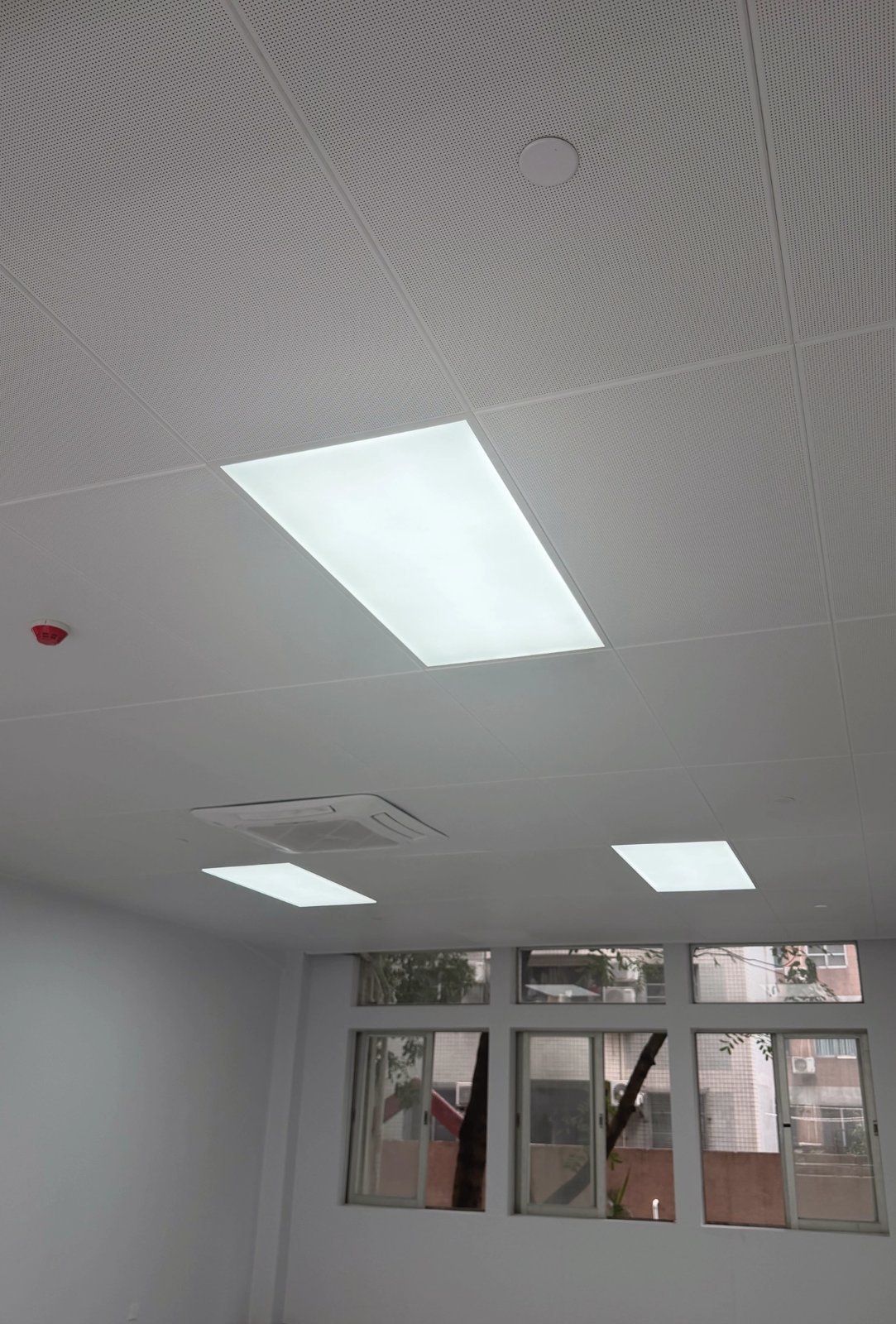
A perforated lay-in is an acoustic product only when the backing and the plenum match the lab report. That check is the subject of acoustic ceiling tiles for a T-bar grid. A solid lay-in in the same tee is a washable lid, not an absorber. Say which one the room needs before the punch pattern is locked. Powder indoors is AAMA 2604. PVDF to AAMA 2605 at ≥ 30 μm, and a 2.0–3.0 mm plate, belong on a facade or a weather soffit.
Guangzhou Baiyun University already splits the choice on one campus. Teaching-building corridors carry powder-coated U-baffles, so the plenum stays readable. An office field uses micro-perforated tiles in a suspended grid. Neither ceiling is mineral fiber. They are not the same system, and they were not hung on the same carrier.
Three ways to leave the mineral-fiber board
Stay in the grid only when the tee still fits
This is the smallest change. Lift the mineral-fiber board. Seat a square-edge or tegular aluminum tile on the same tee, if the face width matches: a 24 mm tee and a 14 mm tee are not the same seat. One tile up for a valve, the tile back down. The edge does not crumble the way a fiber board does after repeated lifts. Record the powder code. A reorder a year later without that code will not disappear into the field.
Humid rooms in the south are where this swap earns its keep. Mineral fiber sags, stains, and holds a water mark. Coated aluminum does not. Cleaning is a damp cloth on a smooth face, not a new board after every leak. That is maintenance, not a promise that the coating never wears. The lot still has to match.
An open cell is a ceiling you can see through
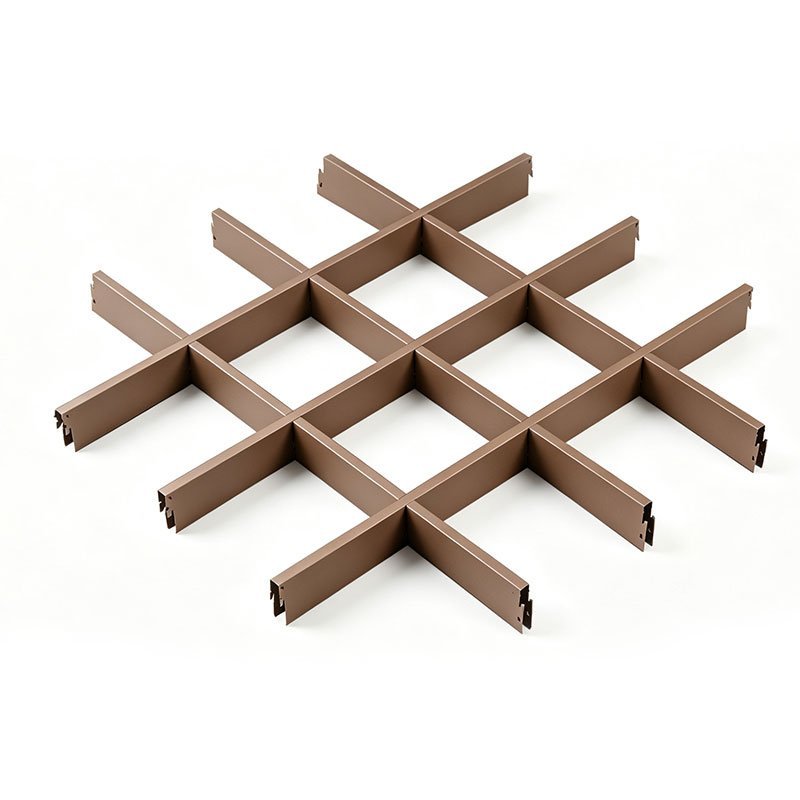
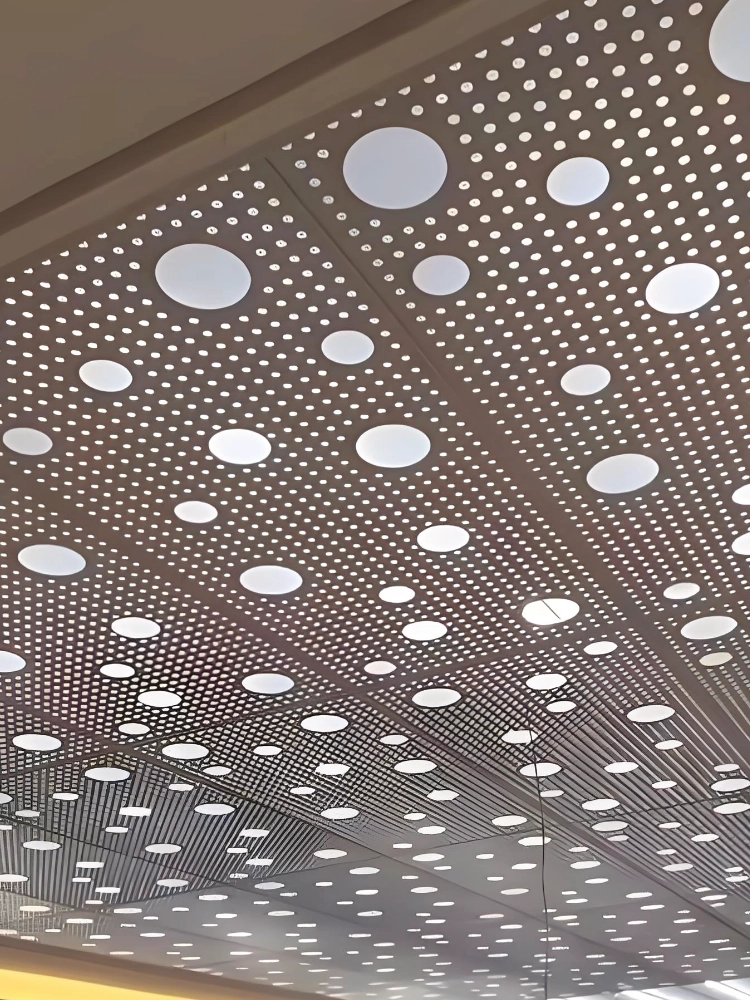
This module is the opposite of a closed tile. The cell is aluminum. The openings are the design, so sprinklers, ducts, and lights can sit above a grid you do not have to dismantle for a look. It will not give you the sealed CAC of a heavy board, and it should not be sold as one. It also will not sag. Cell size and blade height are drawing numbers, cut in Foshan, not a picture chosen after the sample board.
Use it where the plenum is allowed to be visible: a retail hall, a concourse, a cafeteria line. Do not use it where the brief is a quiet closed lid. The carrier is not the old tee. Budget the new hangers with the cell, or the “cheaper than replacing the grid” story is wrong.
A baffle leaves the tile behind
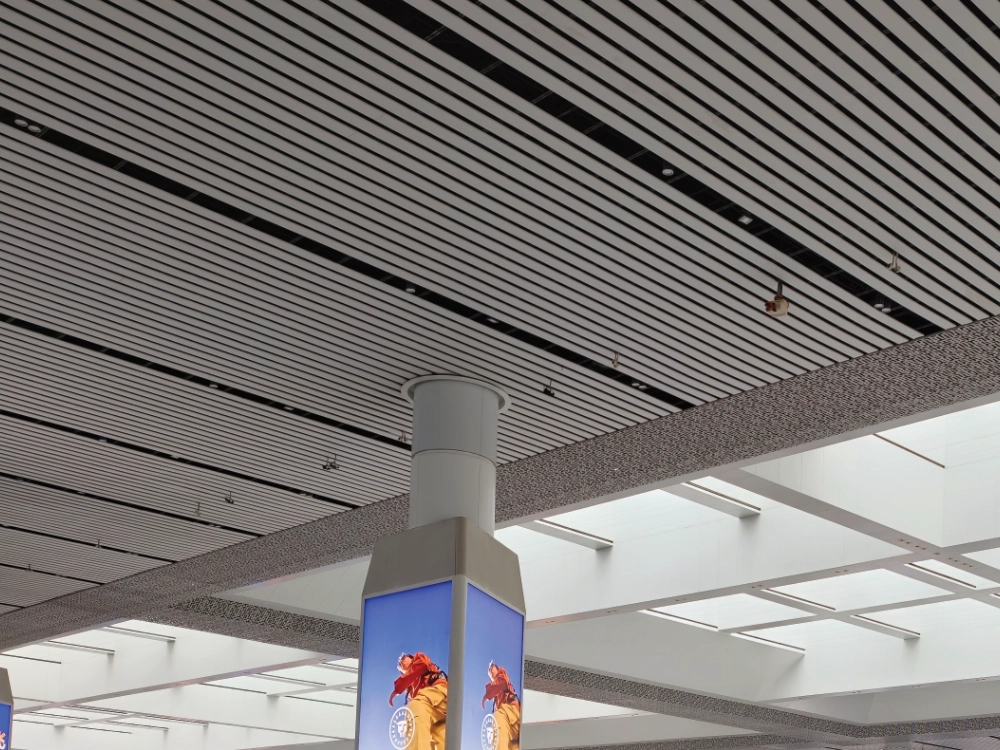
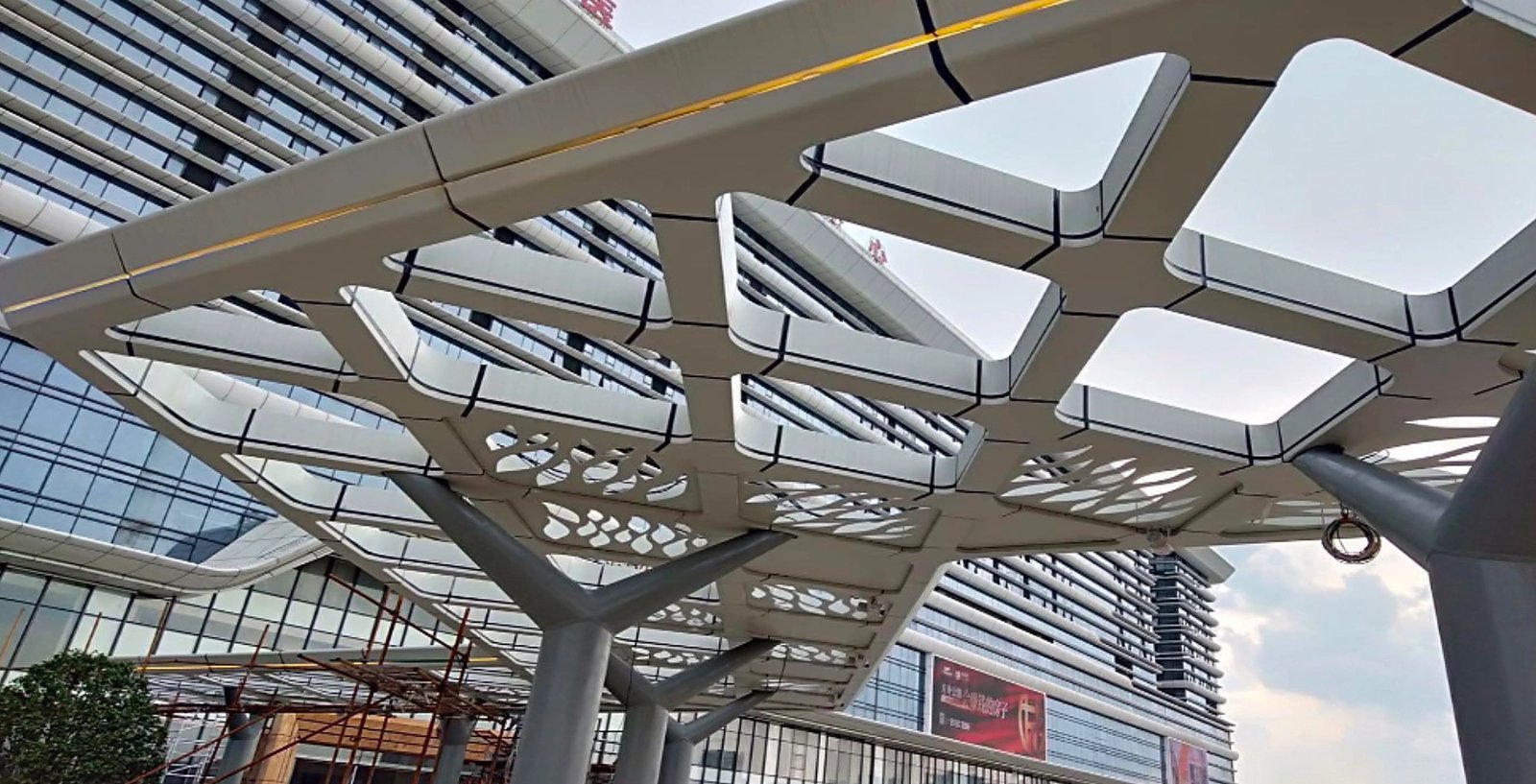
These square tubes are a baffle ceiling over a public hall. The gaps are open. Services and the structure stay in sight. There is no mineral-fiber board to stain, and there is no tee to keep. A U-baffle is the same idea with a different profile: the Baiyun corridors use that profile in white powder. This hall is a tube. Do not give the photograph a station name it does not have.
When the joint itself has to disappear, the move is a clip-in metal ceiling, not another lay-in. The return is typically 20–25 mm. Access is planned: the tile comes down, it does not hinge open every day.
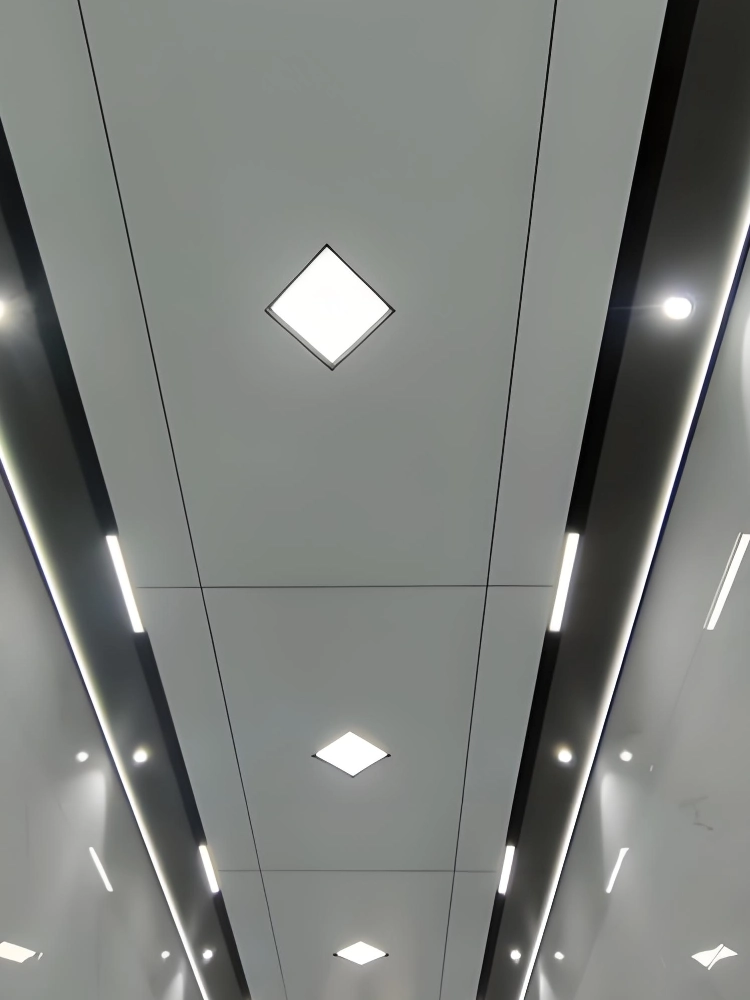
These large flat panels are that family. The joint is a hairline, and the lights are cut into the aluminum. Lights go on the RCP before the nest is cut. A panel that cannot pass a door or clear a luminaire is not removable on the day you need it. The wood-grain blades at the top of this page are the open version of the same decision: the face can read as timber, and the plenum stays reachable.
Frequently asked questions
Can a metal ceiling replace a drop ceiling?
Yes, in two different ways. A metal lay-in can sit in the tee you already have. Clip-in, baffle, and open cell leave that tee. Only the lay-in is still a drop ceiling. The others are metal ceilings on their own carriers.
Is a metal ceiling more expensive than a mineral-fiber drop ceiling?
The first quote for mineral fiber is often lower. A 0.6–0.8 mm aluminum system costs more up front and less each time a board would have been replaced for sag, stain, or a crumbled edge. Price the system and the spare. Do not take a yuan-per-square-meter figure from a catalog as a LINDELACR price.
Which metal ceiling suits a humid room?
Coated aluminum: lay-in, clip-in, or baffle. Mineral fiber swells and stains when the room stays damp. Indoor powder is AAMA 2604. Thickness stays 0.6–0.8 mm. A 2.0–3.0 mm PVDF lid is for weather, not for this interior grid.
Do you have to remove the T-bar to switch to metal?
Not always. If the tee and its load class can carry the heavier tile, a solid or perforated aluminum lay-in replaces the mineral-fiber board. If the joint, the module, or the look has to change, the tee comes out. Decide that on the RCP before demolition.
Mark what stays and what goes
On the RCP, circle the bays that keep the tee and the bays that lose it. LINDELACR will return a 0.6–0.8 mm lay-in, clip-in, baffle, or open cell, a powder lot, and a 1:1 joint from Foshan. If the drawing still says only “metal ceiling,” keep the coil off the PO.