Stretch Ceiling vs Drop Ceiling: Which Is Better for a Commercial Building?
A stretch ceiling is a PVC or fabric membrane on a perimeter track. A commercial drop ceiling is modular aluminum—lay-in, clip-in, or square-tube baffles—hung below the slab. If HVAC and lights must open often, specify 0.6–0.8 mm aluminum you can unclip. Use a membrane only where access is planned as hatches.
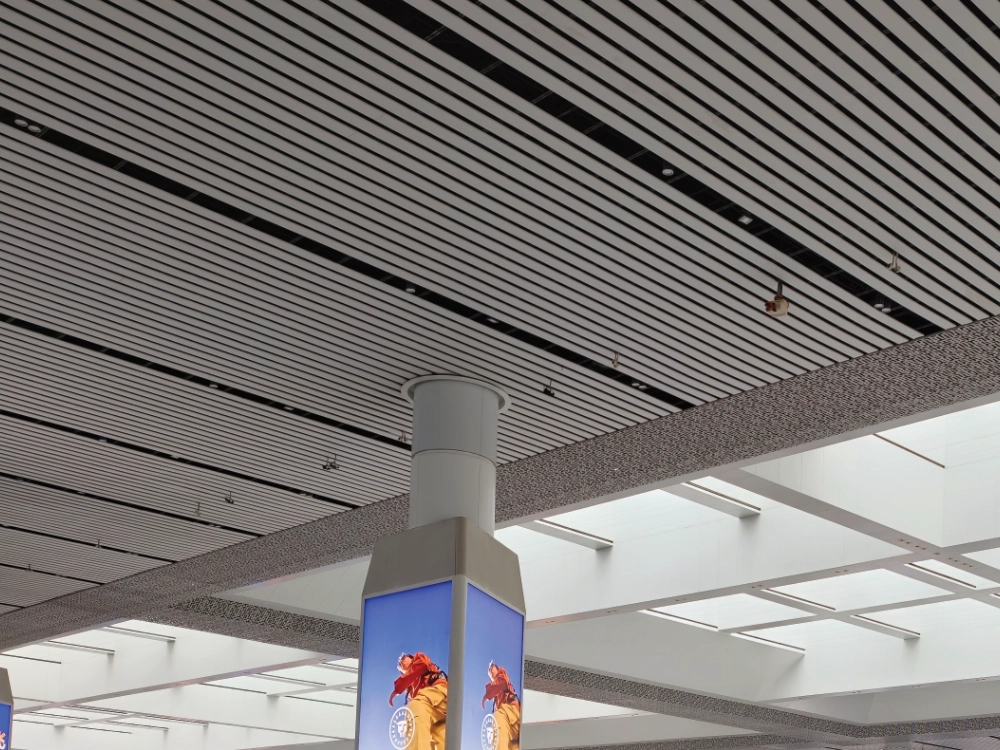
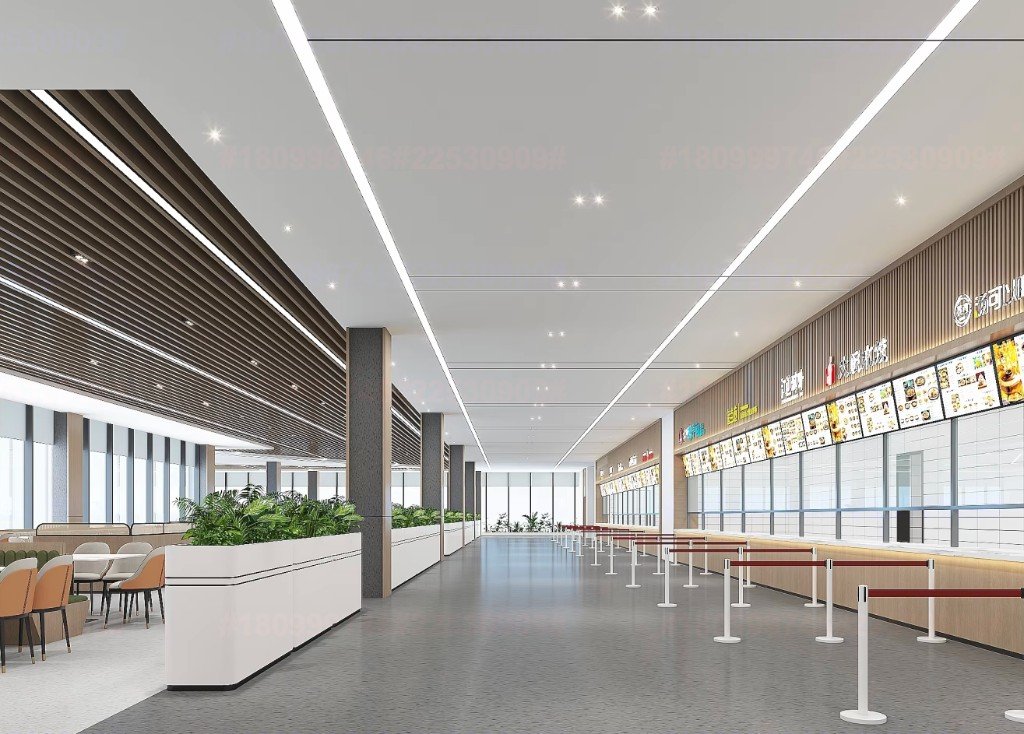
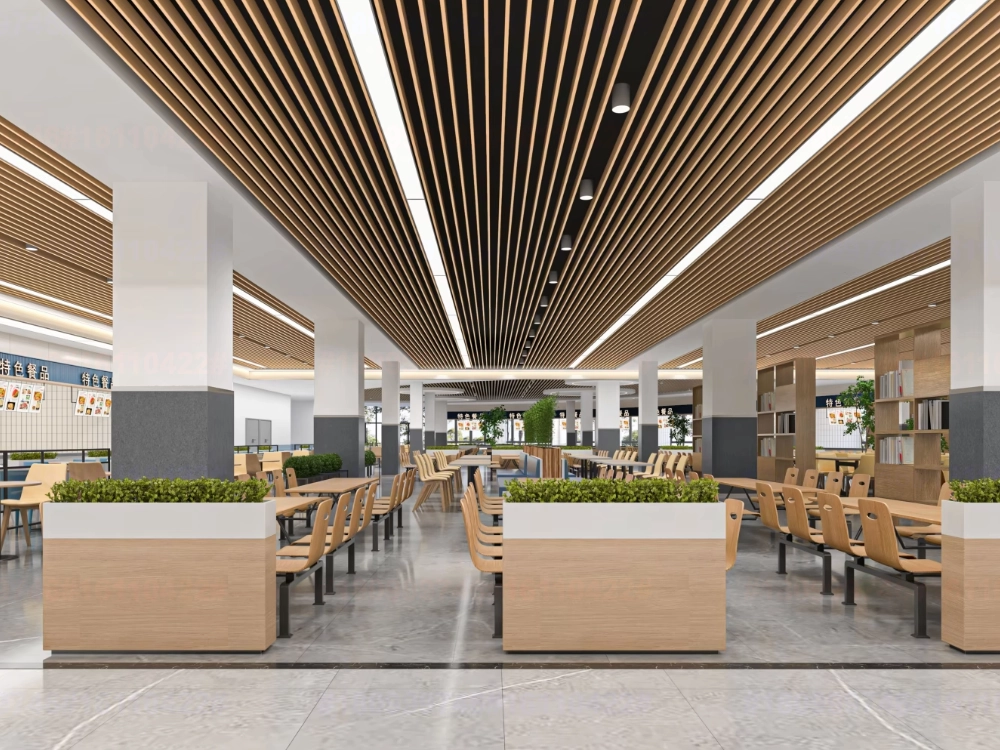
The usual argument is appearance versus price. That is the wrong ticket. Ask how often someone has to reach a damper, a driver, or a sprinkler after handover. LINDELACR makes the metal side of that split—not the film. The hall above is a square-tube baffle drop: slats you can work between, a column wrap, and a lay-in tray field in the next bay. Sprinklers and cameras sit in the gaps. A membrane over that same plenum would need a hatch schedule the FM will actually use.
That is the same customized-for-you hold we use on facades: RCP first, then a nest, not a catalog finish glued over live services. On Guangzhou Baiyun University the teaching rooms took micro-perforated aluminum with factory light trays and cassette-AC openings nested in Foshan. You cannot drop that stack onto a tensioned film without cutting the graphic and calling the membrane crew back.
Stretch ceiling vs drop ceiling: the numbers
| Item | Stretch ceiling | Metal drop ceiling |
|---|---|---|
| Face | PVC or fabric membrane, typically 0.17–0.20 mm | Aluminum coil 0.6–0.8 mm interior; 1100 or 3003-H14 |
| How it hangs | Perimeter track; film heated and tensioned | T-bar, concealed clip carrier, or baffle hangers |
| Height below slab | Often 30–50 mm if the void is empty | Services set the drop; T-bar rooms often 150–300 mm |
| Access | Hatches or specialist re-tension | One tray or one baffle bay at a time |
| Lights | Rings and holes locked before stretch | CNC apertures nested with the panel in Foshan |
| Acoustics | Depends on film, backing, cavity | Micro-perforation + fleece; NRC 0.60–0.85 on a tested ASTM C423 assembly |
| Coating | Printed or translucent film | Interior powder AAMA 2604; weather soffits step to PVDF AAMA 2605 ≥ 30 μm |
A stretch film can sit close to the slab when the void is empty. The moment ducts and cans occupy that void, both systems spend the same millimetres. What changes is whether the face comes down without a specialist. Stretch installers heat the membrane (often around 40–50 °C at the film) and lock it into the track. That is fast on a clean rectangle. It is slow when every downlight ring, speaker, and sprinkler collar has to be located before tension, and slower still when the first as-built duct sits 20 mm off the drawing.
Metal drop is slower in the shop and faster in year three. Lay-in 600 × 600 mm or 600 × 1200 mm on a 24 mm T-bar is the office default. Clip-in hides the grid. Square-tube and U-baffle leave the plenum readable. Pick the joint from the access frequency, not from a rendering of a seamless sky.
What a commercial drop ceiling actually is
Clip-in trays you can take down
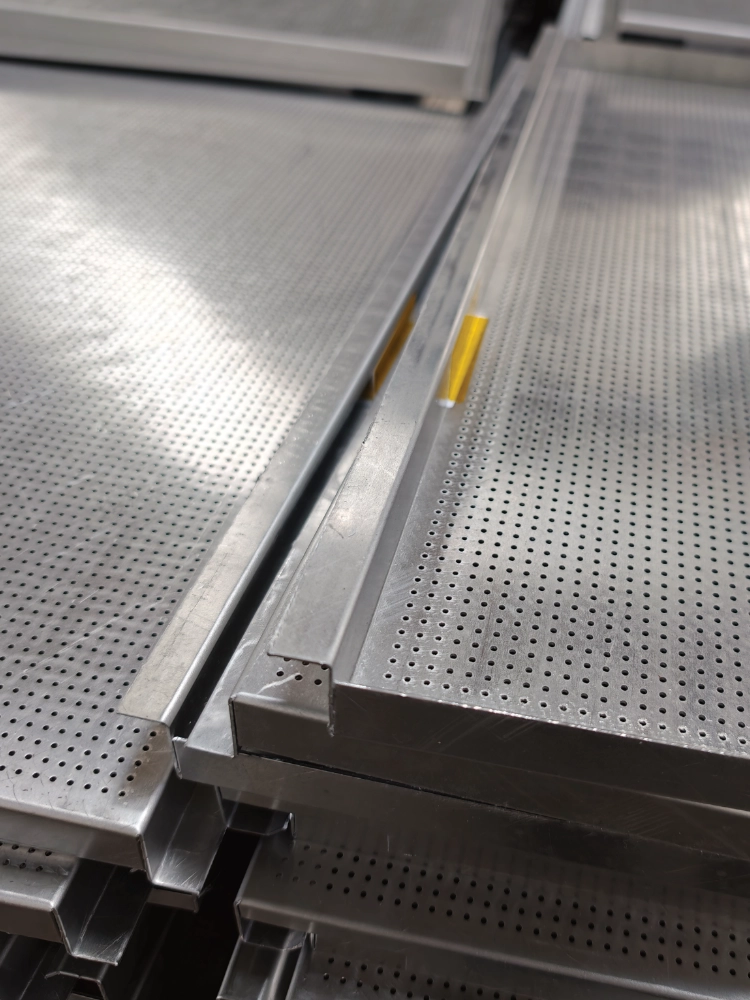
Clip-in is the metal answer when the drawing wants a tight joint and the FM still has to open a tile. The mill-finish trays above are LINDELACR clip-in metal ceiling stock: micro-perforated face, hemmed return, clip on the long edge. Interior faces are 0.6–0.8 mm coil, not 2.0–3.0 mm exterior veneer. Alloy 1100 is enough on a dry room; 3003-H14 is the step-up for humidity and handling. Powder to AAMA 2604. Common modules are 300 × 300 mm and 600 × 600 mm; other sizes are a factory nest.
A stretch membrane does not have that joint. You either leave a hatch in the drawing or you call the installer back to unclip and re-heat the film. If the room is a clinic corridor with valves on a 3 m grid, that call-back cost belongs on the comparison sheet next to the film price.
Factory lights in perforated aluminum, not a glowing film
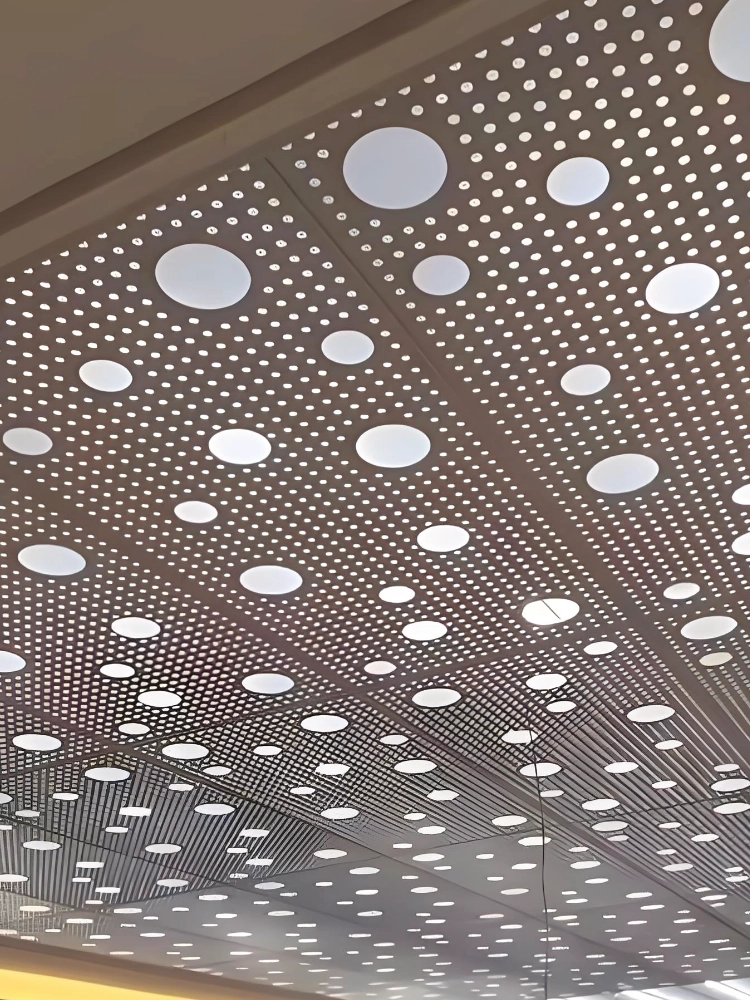
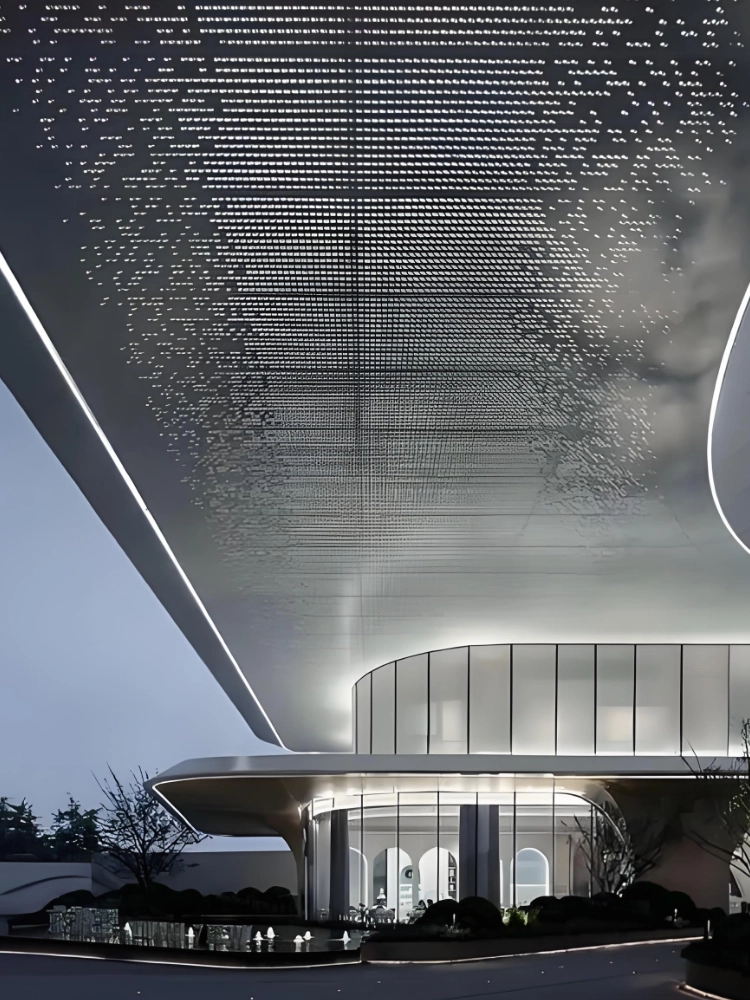
Buyers who type “stretch ceiling lighting” often want a luminous plane. That can be a translucent film with a cavity of LEDs. It can also be perforated aluminum with the downlight holes CNC’d in Foshan, as on the ceiling above: small-hole field, larger circular apertures, one powder lot. The holes are coordinated on the RCP with the fixture housing. If a driver fails in year four, that tray still comes down. Do not site-cut a 0.6 mm face around a can after the film or the tile is already up.
Cut-out frames when the drawing is the finish
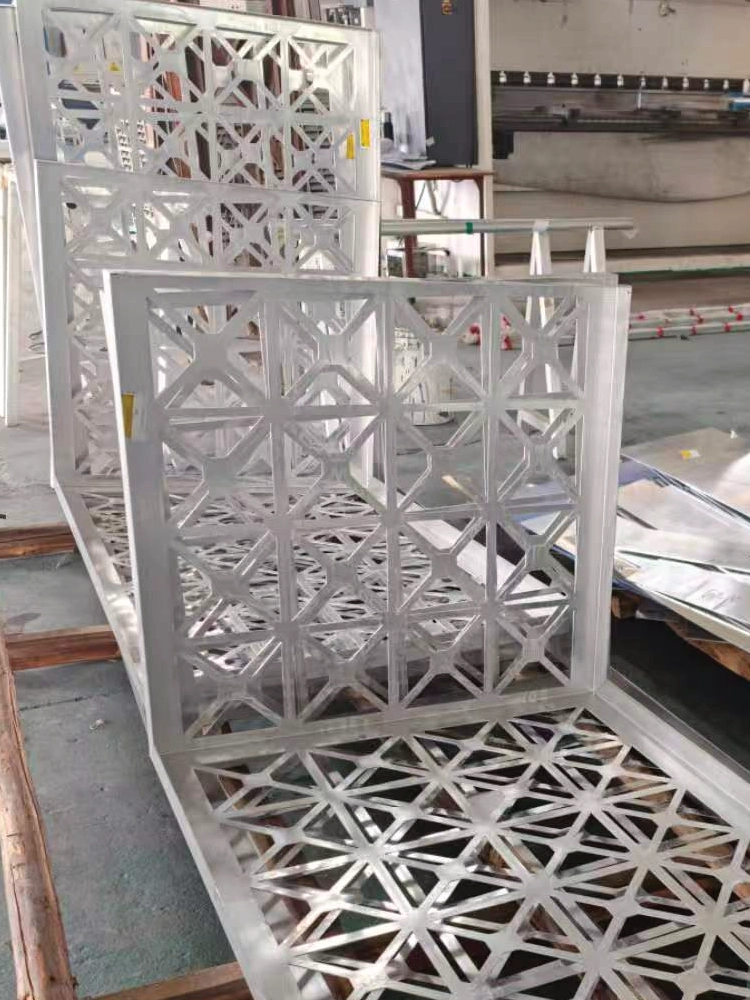
A stretch print can carry a graphic. A metal ceiling can carry the graphic as geometry. These white frames were CNC-cut in the Foshan shop, powder-coated, and stood beside the brake before packing. Open area, fleece, and cavity still set NRC—typical interior assemblies land 0.60–0.85 to ASTM C423 when those three are specified together. A mill sheet has no NRC. LINDELACR quotes the assembly on the shop drawing.
The fold that lets a tray come off later
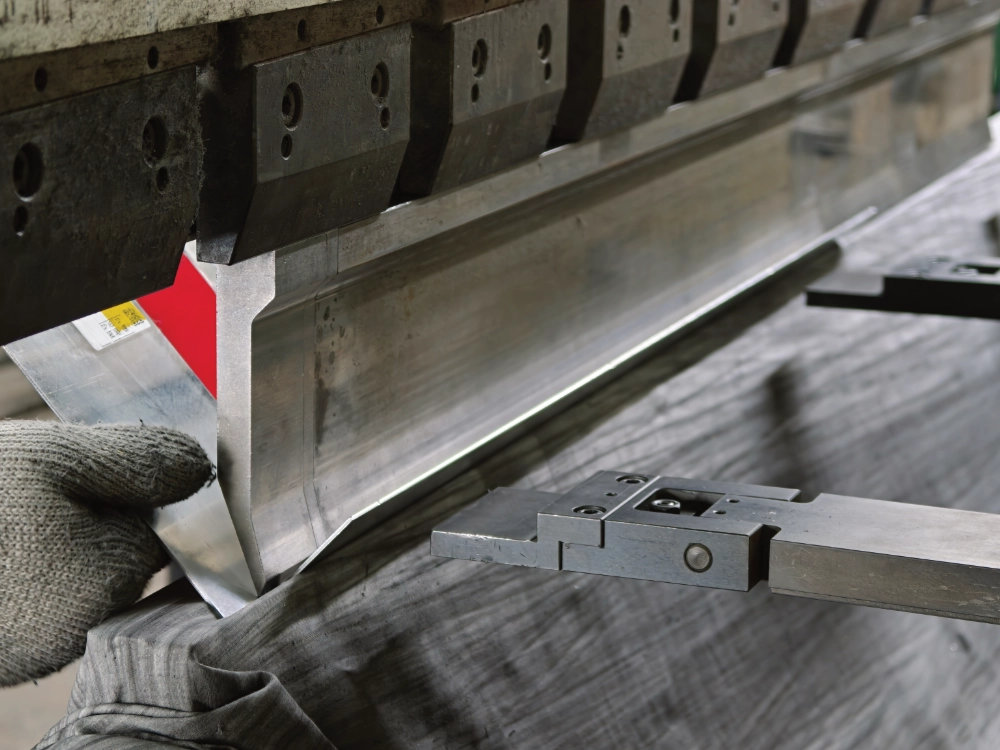
Membrane systems live on a perimeter track. Metal drop systems live on a return. The brake above is folding that return on ceiling coil: gloved feed, die, then the flange that takes the clip or the T-bar. Sequence in Foshan: scan or RCP → unfold → CNC (lights, sprinklers, speakers) → brake, typically 20–25 mm on cassettes → hangers → one powder lot. Plant area is 20,000 m². Do not invent a kPa on an interior ceiling; the loads that matter are flatness and the apertures.
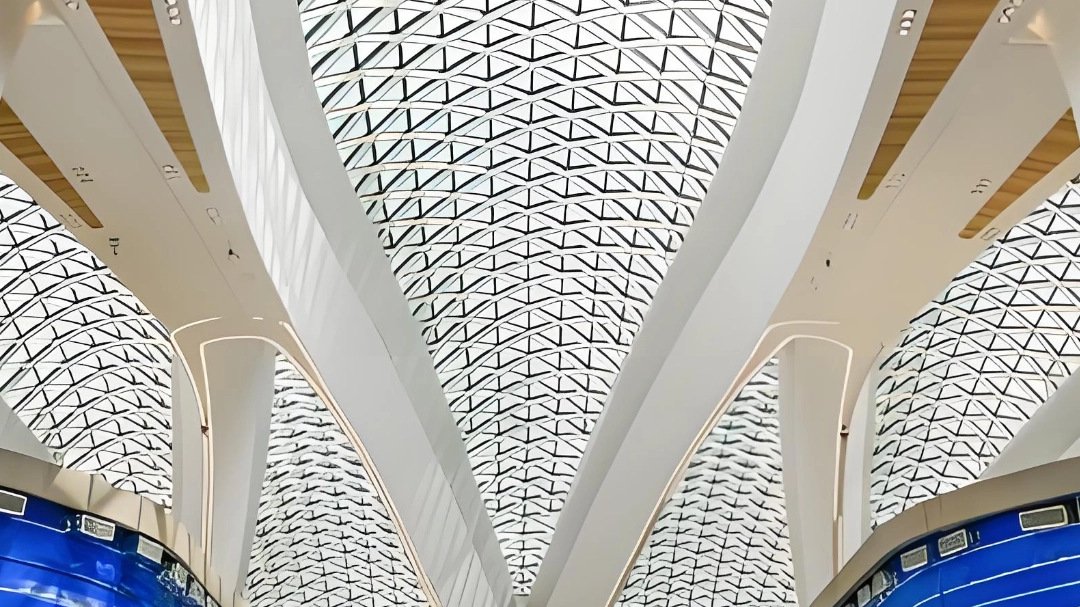
Where the plenum should stay readable, specify a U-baffle ceiling or the square-tube field in the hero: services stay in view, access is the gap, and you still get a metal line—not a gypsum lid.
Frequently asked questions
Which is easier to maintain, a stretch ceiling or a drop ceiling?
A metal drop ceiling is easier to maintain on commercial MEP. Lay-in and clip-in aluminum trays come down one module at a time over a valve or a driver. A stretch membrane needs a planned hatch or a specialist to unclip and re-tension the film.
Is a stretch ceiling suitable for a shopping mall?
Use a membrane in a branded entry or a backlit feature where access is rare and drawn as hatches. Mall corridors, food courts, and plant-heavy public halls take modular aluminum—lay-in, clip-in, or square-tube baffles—so lights and ducts can open without calling a stretch crew.
Can lights be installed in a stretch ceiling?
Yes if the holes, rings, and loads are fixed before the membrane is tensioned. LINDELACR does not sell the film. For a luminous metal plane we CNC the downlight openings into 0.6–0.8 mm perforated aluminum and nest the cut-outs in Foshan, so a tray can still come down later.
Is a drop ceiling cheaper than a stretch ceiling?
A basic mineral T-bar is usually cheaper on day one. Custom aluminum—perforated NRC, factory lights, powder to AAMA 2604—can cost more than a plain PVC film. Compare installed stack plus ten years of access, not a film price against a catalog tile.
Send the RCP, not a finish name
Mark hatches, lights, and the rooms that must open every month. LINDELACR will return a clip-in, lay-in, or baffle split, a powder class, and a 1:1 joint from Foshan. If a room still wants a membrane, keep it on the feature bay and put metal on the services.