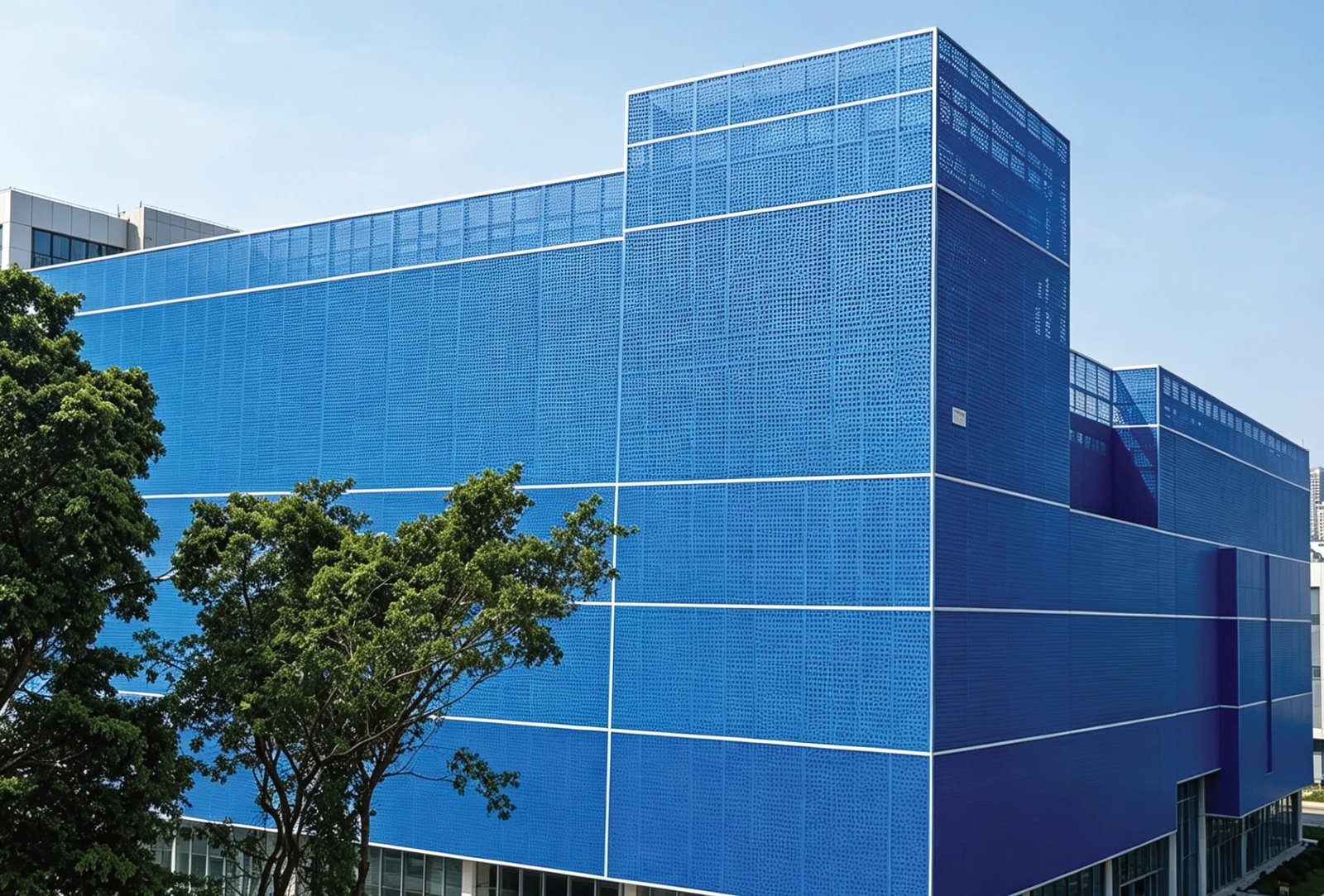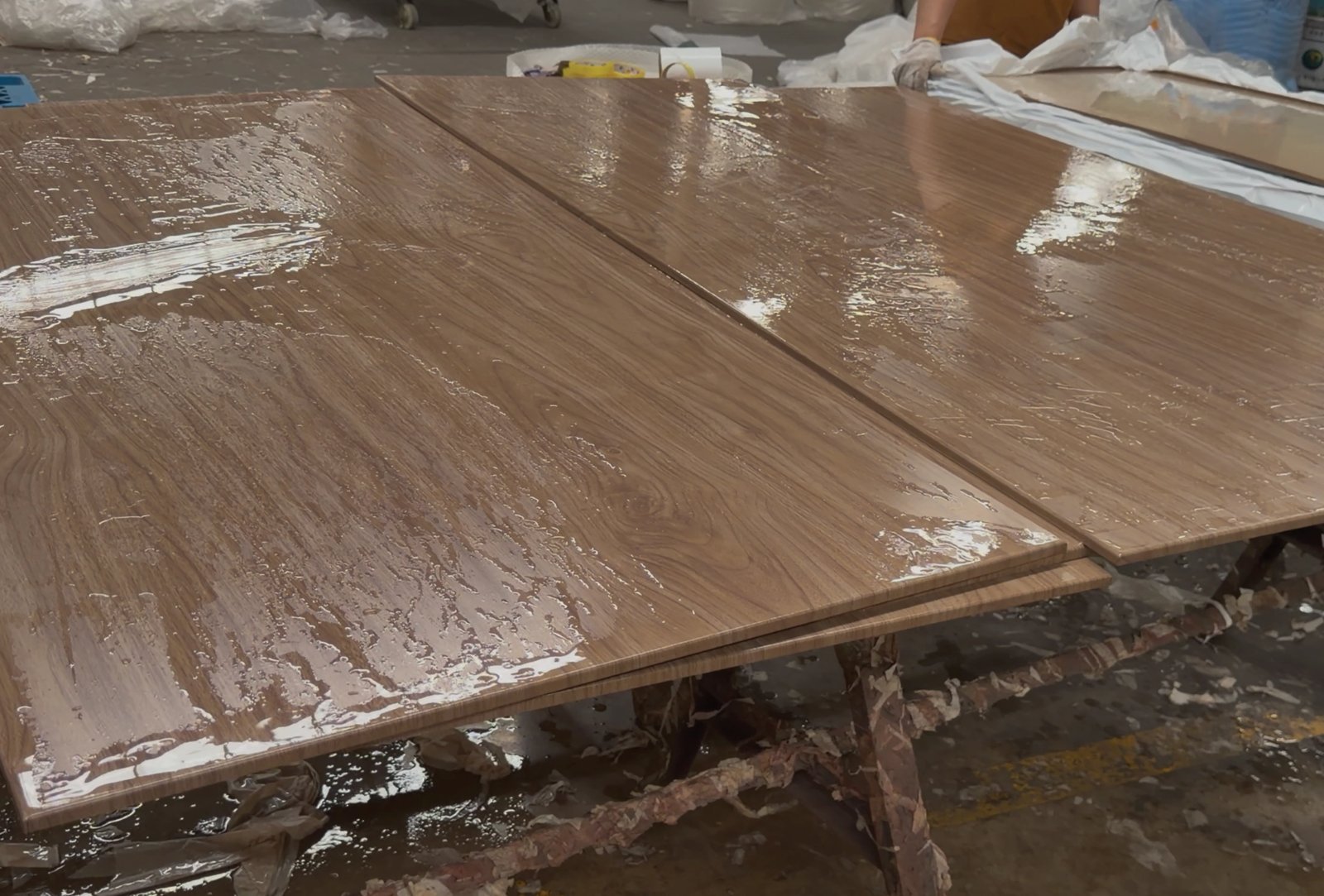
Hyperbolic aluminum costs more than single-curved plate because every blank is unique. A single-curved cassette repeats on the brake. A hyperbolic petal needs its own CNC unfold, a compound bend, and often a first-article fit, then one PVDF lot. LINDELACR runs both as 3003-H14 solid aluminum, typically 2.0–3.0 mm, to AAMA 2605.
The price gap is uniqueness, not a thicker catalog sheet
Buyers searching “hyperbolic aluminum panel vs single curved panel cost” often expect a unit-rate table. LINDELACR will not invent a dollar per square metre. The gap is shop time. A single-curved tray shares one unfold and one brake program. A hyperbolic panel is a compound surface: two curvatures in one blank. That blank cannot ride the same nest as its neighbour.
| What the drawing says | What the plant actually does | What you pay for |
|---|---|---|
| Single-curved cassette or column arc | One unfold, repeating brake or roll | Setup once; then length |
| Hyperbolic / compound petal | Unique CNC nest, compound bend or die tryout, first article | Each unique blank + fit-up |
| Same coating class | PVDF AAMA 2605, dry film ≥ 30 μm, one lot | Batch, not a retail carton |
| Same alloy / thickness | 3003-H14 typical exterior; 1100 only on simple low-wind interiors | Plate, not ACP 0.5 mm skins |
Both options sit on a customized-for-you ticket: freeze the split, then cut metal. Mixing hyperbolic petals and single-curved arcs on one shaft is allowed only when the drawing names two families—not when the renderer used one highlight.
Spec LINDELACR will put on either ticket
| Item | LINDELACR default |
|---|---|
| Alloy | 3003-H14 exterior; 1100 only for simple low-wind interiors |
| Thickness | Typically 2.0–3.0 mm solid aluminum |
| Exterior coating | PVDF to AAMA 2605; dry film ≥ 30 μm |
| Sheltered / lobby | Powder to AAMA 2604 class where specified |
| Cassette return | Typically 20–25 mm; deeper where the bay needs stiffness |
| Plant | Foshan 20,000 m²; 1,000+ engineering projects |
Wind is not a catalog kPa stamped on every petal. Resistance comes from remaining plate, return depth, and how the skins close on the shaft. LINDELACR sizes those from the measured bay.
Named hyperbolic check: CTS Baichen Yunqi, CAD to lobby
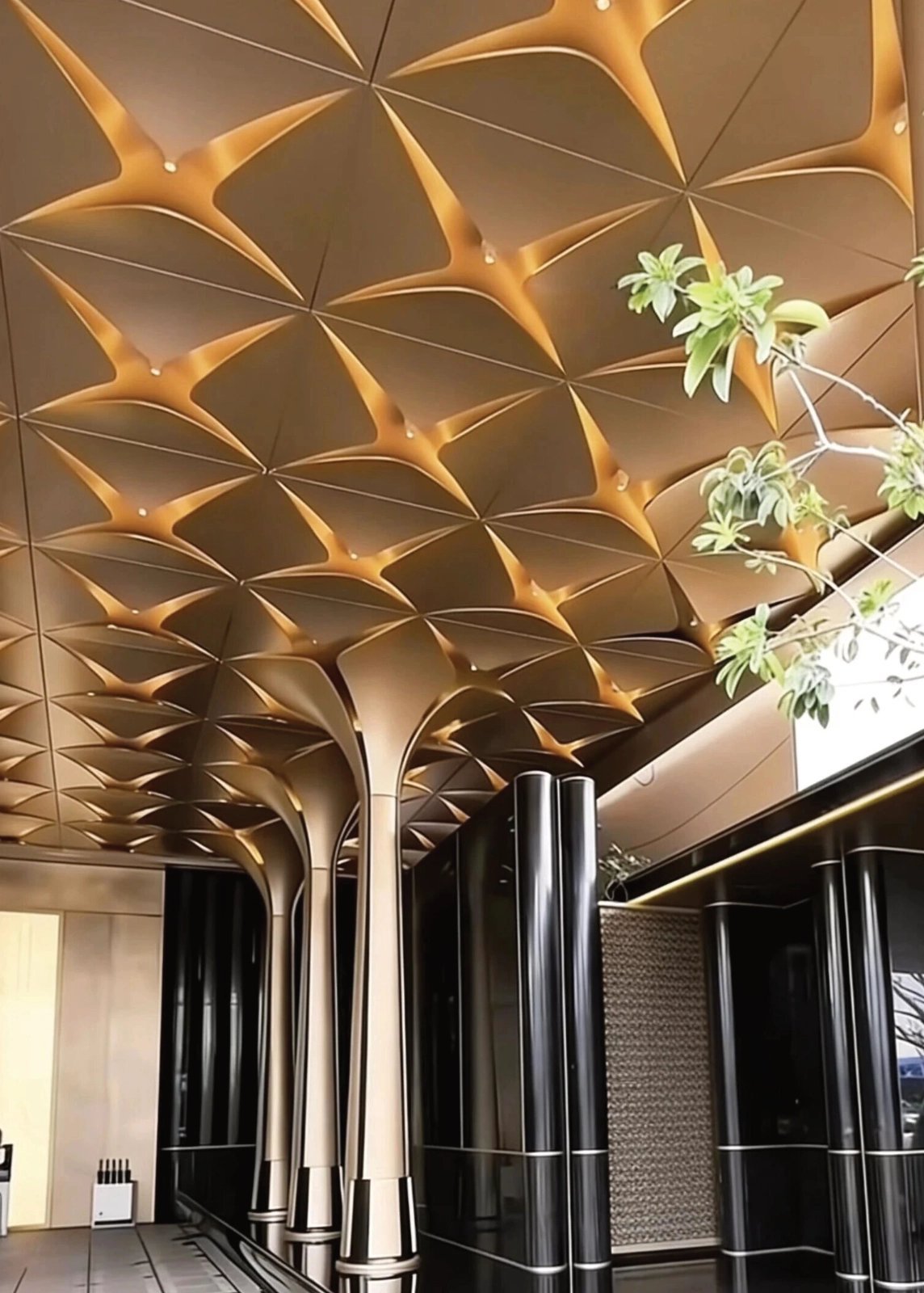
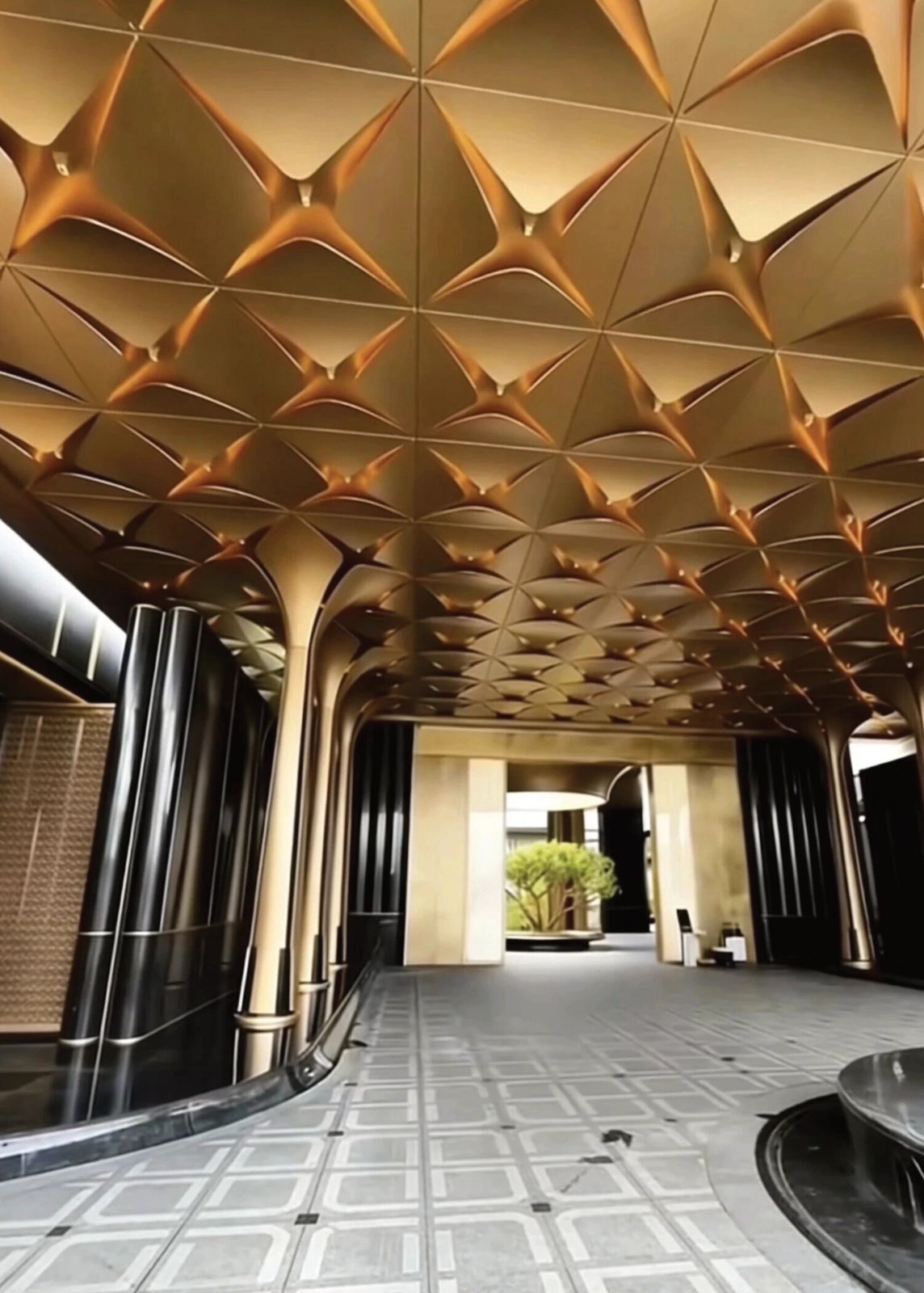
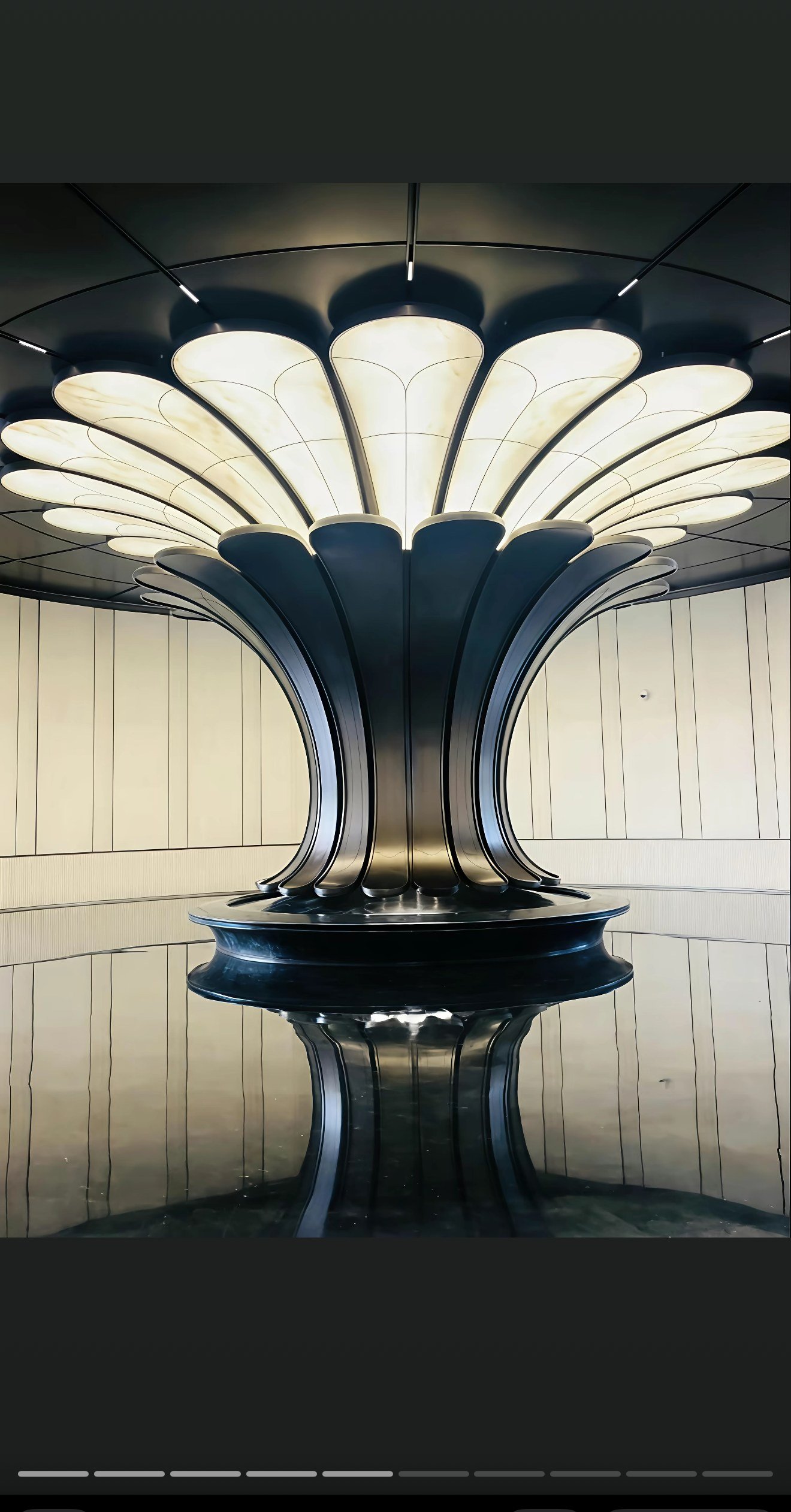
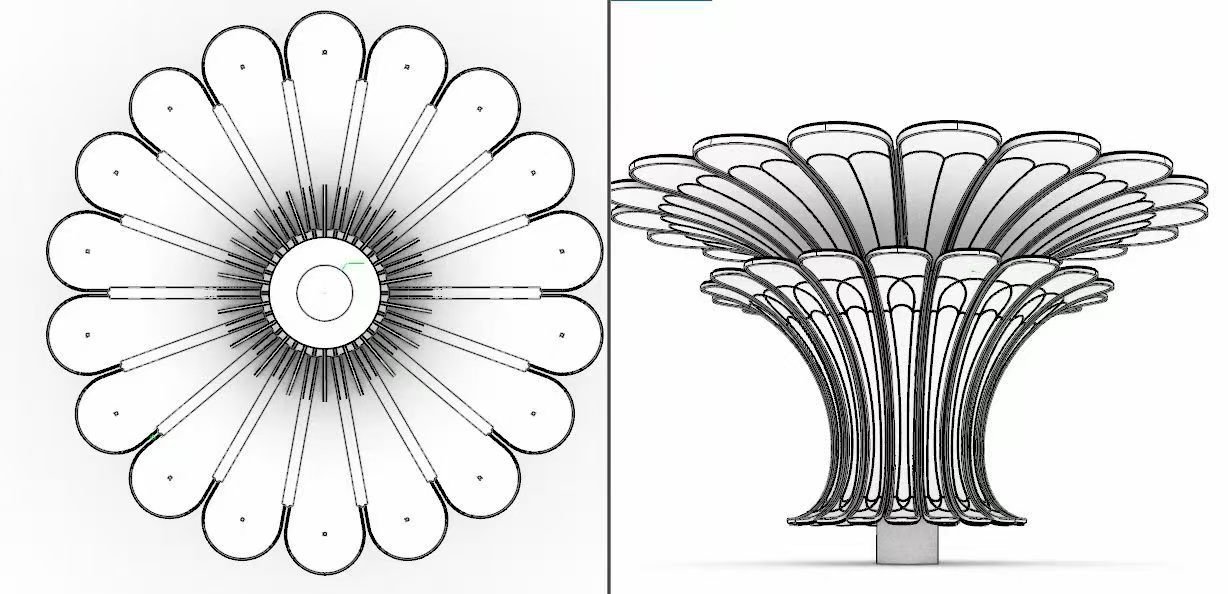
CTS Baichen Yunqi (CTS Grand Horizon) is a China Travel Service luxury residence. The exhibition-pavilion column is sixteen hyperbolic aluminum petals, not a rolled pipe. The shop file is a 16-lobe plan plus a flared elevation: stem, waist, two-tier canopy. That drawing is the unfold. Each petal is a unique nest.
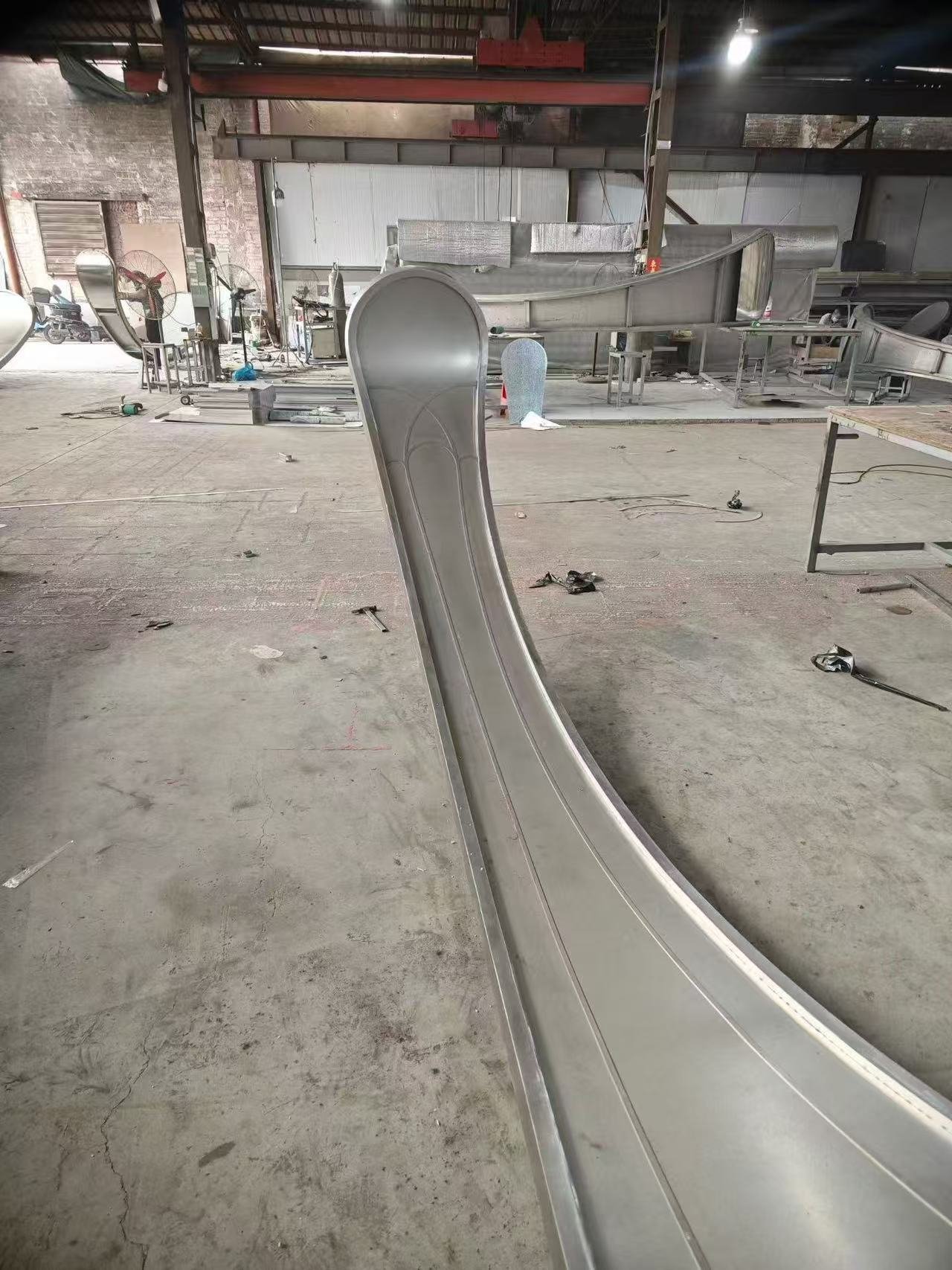
On the Foshan floor a single petal stands as a long silver skin: wide foot, vertical body, paddle head, longitudinal grooves following the CAD veins. Compound forming happens here. Adjacent ribs are checked so the canopy does not walk. One coating batch keeps neighbouring petals from shifting hue under lobby downlights.
Installed, the same set reads as a flower: dark ribs, backlit inserts, reflection on stone. That is hyperbolic work at project scale. You cannot price it as sixteen copies of one rolled cover. You price sixteen unique unfolds plus the first-article close.
Single-curved is the repeating brake (and most column covers)
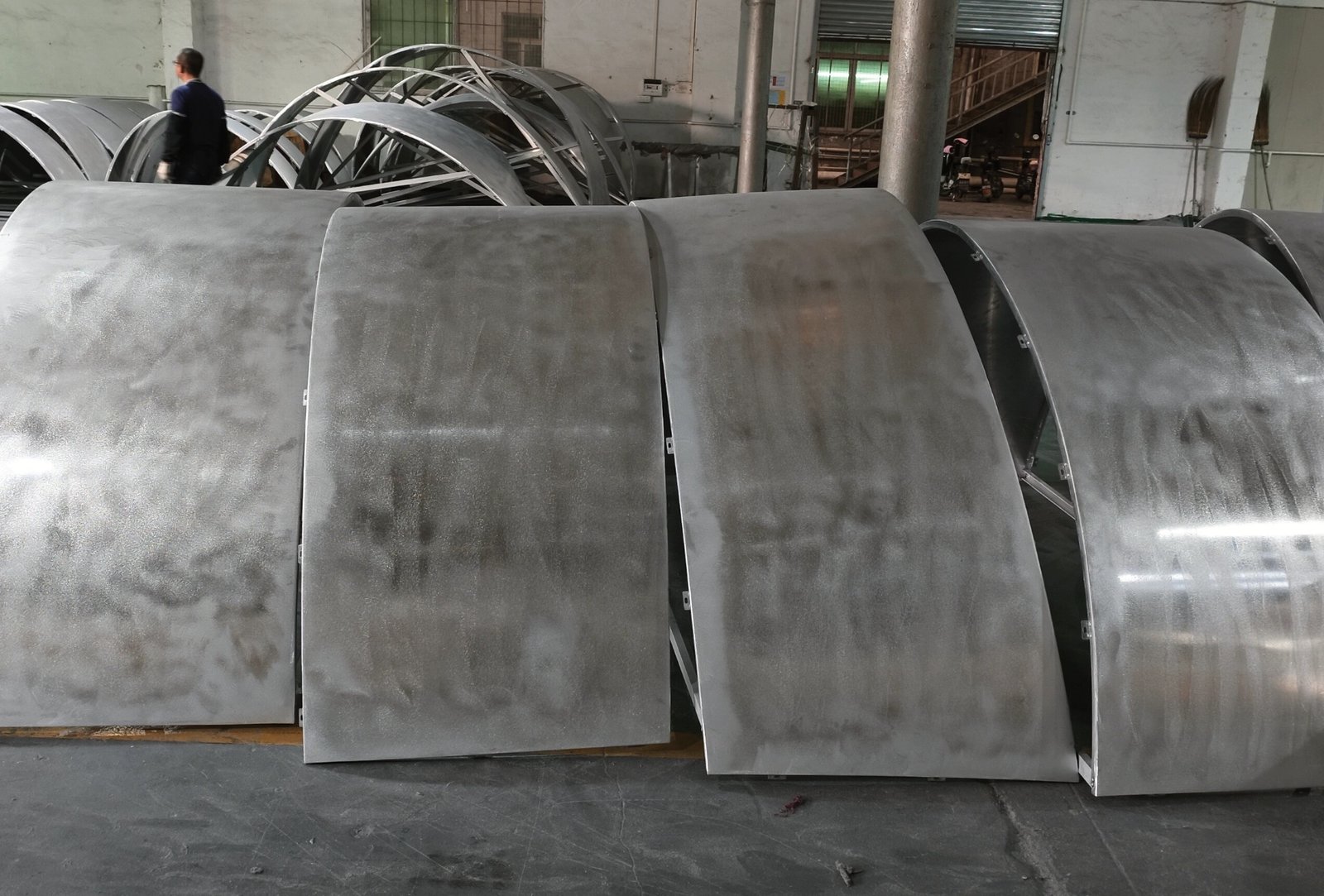
A true cylinder does not need hyperbolic petals. LINDELACR metal column covers for a round shaft are single-curved arcs—two-piece or multi-arc—closed on a vertical seam. The shop photo of silver half-shells standing on the concrete is that family: one radius, repeating blanks, mounting tabs already punched.
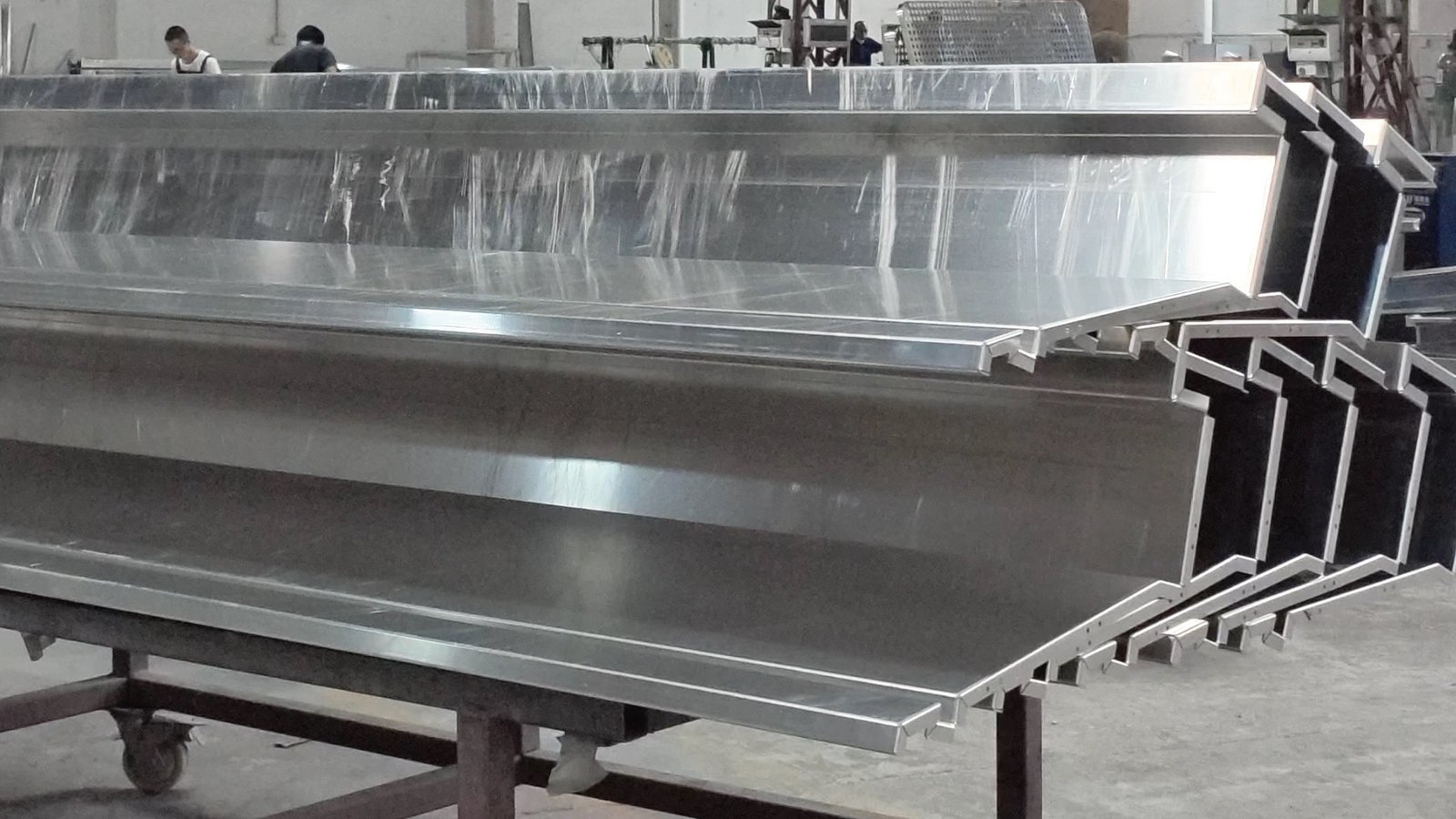
Wall cassettes follow the same logic. After the brake, numbered trays stack on the cart: one unfold, one return, typically 20–25 mm. That stack is why single-curved cladding undercuts hyperbolic on a bid—the program is written once. Stainless steel is not required to “upgrade” a column. LINDELACR’s default cover is aluminum. Stainless is another alloy, weld, and finish ticket.
Factory sequence: nest → punch → bend → one coating lot
1. Split the model. Mark which faces are single-curved and which are hyperbolic. A flare or waist that changes radius along the height is hyperbolic. A constant-radius column arc is not.
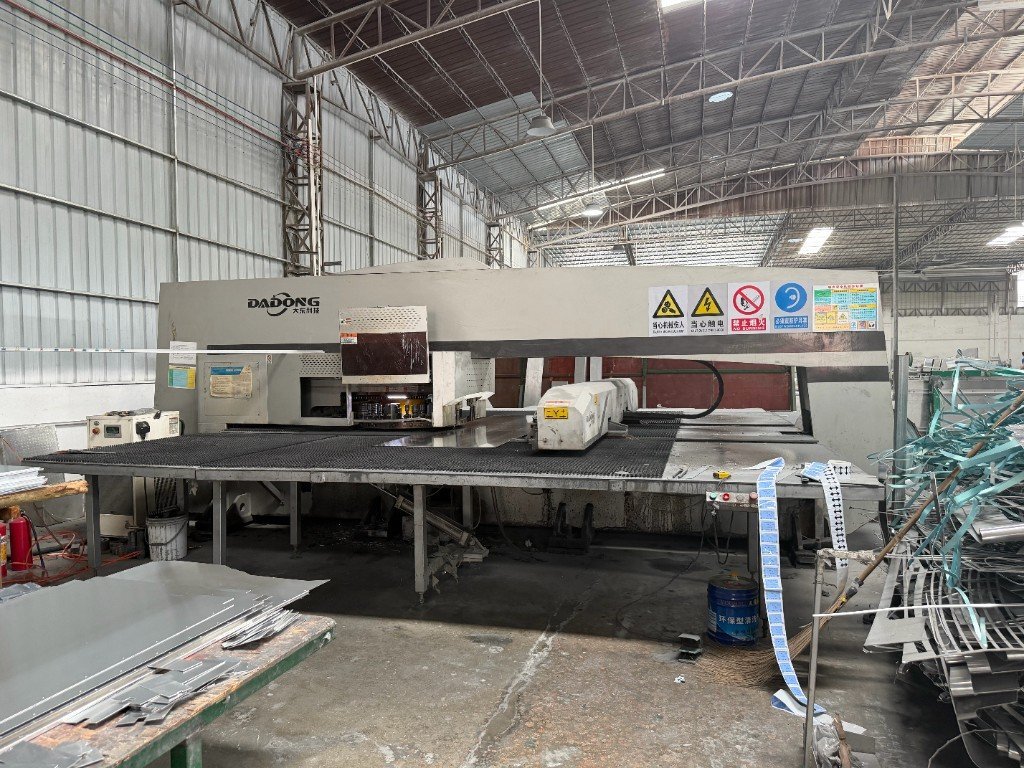
2. Unfold and punch. The Dadong turret punch nests 3003 sheet. Repeating single-curve blanks share a nest. Each hyperbolic petal gets its own coordinates. Holes, slots, and blank outline come off this bed before anyone touches the brake.
3. Bend or compound-form. Single-curved trays go to the brake. Hyperbolic petals go to compound forming or a die tryout. First article is checked on the CAD before the rest of the unique set.
4. Coat as one lot. PVDF to AAMA 2605, ≥ 30 μm, or powder AAMA 2604 on a sheltered lobby. Unique petals and repeating arcs can share a colour only when they share that lot.
Frequently asked questions
Why do hyperbolic aluminum panels cost more than single-curved ones?
A single-curved cassette repeats on the brake. A hyperbolic petal is a unique unfold: its own CNC nest, a compound bend or die tryout, and first-article fit before the rest of the set. Coating still runs as one PVDF lot to AAMA 2605. You pay for uniqueness and fit-up, not for a thicker catalog sheet.
Can a column use single-curved covers instead of hyperbolic petals?
Yes, when the shaft is a true cylinder. LINDELACR two-piece or multi-arc metal column covers are single-curved 3003-H14, typically 2.0–3.0 mm, closed on a vertical seam. Hyperbolic petals are only required when the designer wrote a flare, waist, or compound surface that a rolling mill cannot make in one radius.
Is stainless steel required for column cladding?
No. LINDELACR’s default column cover is solid aluminum, not stainless. Alloy 3003-H14, typically 2.0–3.0 mm, PVDF to AAMA 2605 outdoors or powder to AAMA 2604 on a sheltered lobby. Stainless is a different ticket—alloy, weld, and finish—and is not the Foshan default envelope.
What should be sent so LINDELACR can price both options?
Send the 3D or elevation, shaft diameter or petal count, which faces are single-curved versus hyperbolic, and a coating chip. LINDELACR returns a tray split: repeating brake cassettes versus unique hyperbolic blanks, a 2.0 or 3.0 mm note, and a 1:1 coated sample from Foshan.
Send the 3D. Get a hyperbolic versus single-curve split from Foshan.
If the bid still treats every curved face as one rate, send the model and mark the compound surfaces. LINDELACR will return which bays are repeating brake work, which petals are unique hyperbolic blanks, a 2.0 or 3.0 mm note, and a coated sample from the 20,000 m² plant.