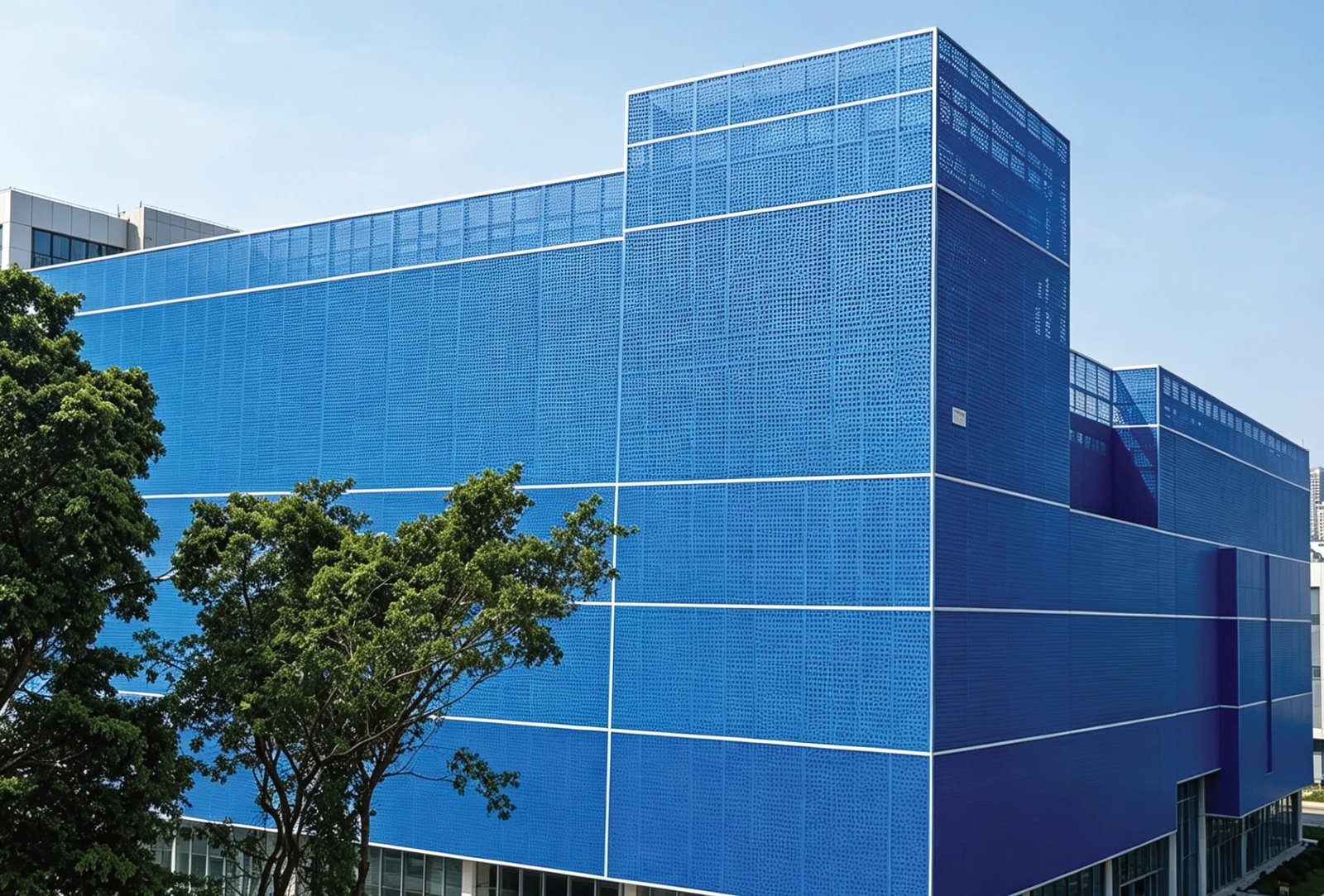
The efficient set is a locked 3D split plus one unfold per unique cassette, checked on a first article before CNC. LINDELACR issues that as a fabrication ticket: panel ID, blank size, fold order, coating face, and crate position—not a pile of unreviewed Revit elevations.
Efficient does not mean “export every sheet from BIM”
A complex facade wastes time in two places: redrawing the same tray in 2D, and cutting metal from a pretty model that nobody unfolded. Dumping hundreds of elevations from Revit or Rhino looks fast. It is not. The brake still needs a blank size, a fold sequence, and a face that takes PVDF. If those three lines are missing, the shop redraws the part on the floor. That is slower than issuing fewer, complete tickets.
LINDELACR starts from the same customized-for-you path used on other envelopes: translate the design into manufacturable trays, then freeze paper. BIM is the input. The shop drawing is the hold point before coil is allocated.
| Method | What you get | Where it breaks |
|---|---|---|
| 2D only | Elevations and typical details | Unique trays drift; no unfold; remakes on site |
| BIM export, no unfold | Many sheets, one model | Brake has no blank; coating face flips; crate order random |
| 3D split + unfold + first article | One ticket per unique cassette | Slow only if the architect keeps moving the joint |
A tower with 2,000 panels is rarely 2,000 drawings. It is often 40–80 unique unfolds, then repeats. Efficiency is finding those uniques early, not plotting every repeat as a new sheet.
What a LINDELACR shop drawing has to carry
If a sheet cannot run CNC and the brake without a phone call, it is not a shop drawing. It is a presentation. The same coil logic applies to a flat metal panel and to a formed cassette. Geometry changes. The ticket fields do not.
| Field | Why it is on the sheet |
|---|---|
| Panel ID / unique mark | Matches nest, sticker, and crate |
| Alloy and thickness | Exterior typically 3003-H14 at 2.0–3.0 mm; 1100 only for simple low-wind interiors |
| Unfold (blank) size | What the router or punch actually cuts |
| Fold sequence and return | Cassette return typically 20–25 mm; deeper where the bay needs stiffness |
| Coating face and spec | Exposed work: PVDF to AAMA 2605, dry film ≥ 30 μm |
| Hole / slot positions | Locked after the fold, so perforation does not walk across a joint |
| Crate / install order | Hang sequence, not revision-letter order |
Wind pressure stays on the consultant note. LINDELACR does not invent a kPa number to decorate the title block. Thickness follows span and return: a short, well-folded bay can stay at 2.0 mm; a long, weakly returned tray on a high elevation needs 3.0 mm plus a deeper fold.
Sequence that actually shortens engineering time
1. Lock the 3D split. Joint language, module, and returns go on the model first. If the core is already poured, overlay a scan so the tray follows steel that exists, not a grid that never did.
2. Unfold every unique cassette. One blank, one fold order, one coating face. Repeats inherit the same ticket. This is the step BIM “automation” usually skips.
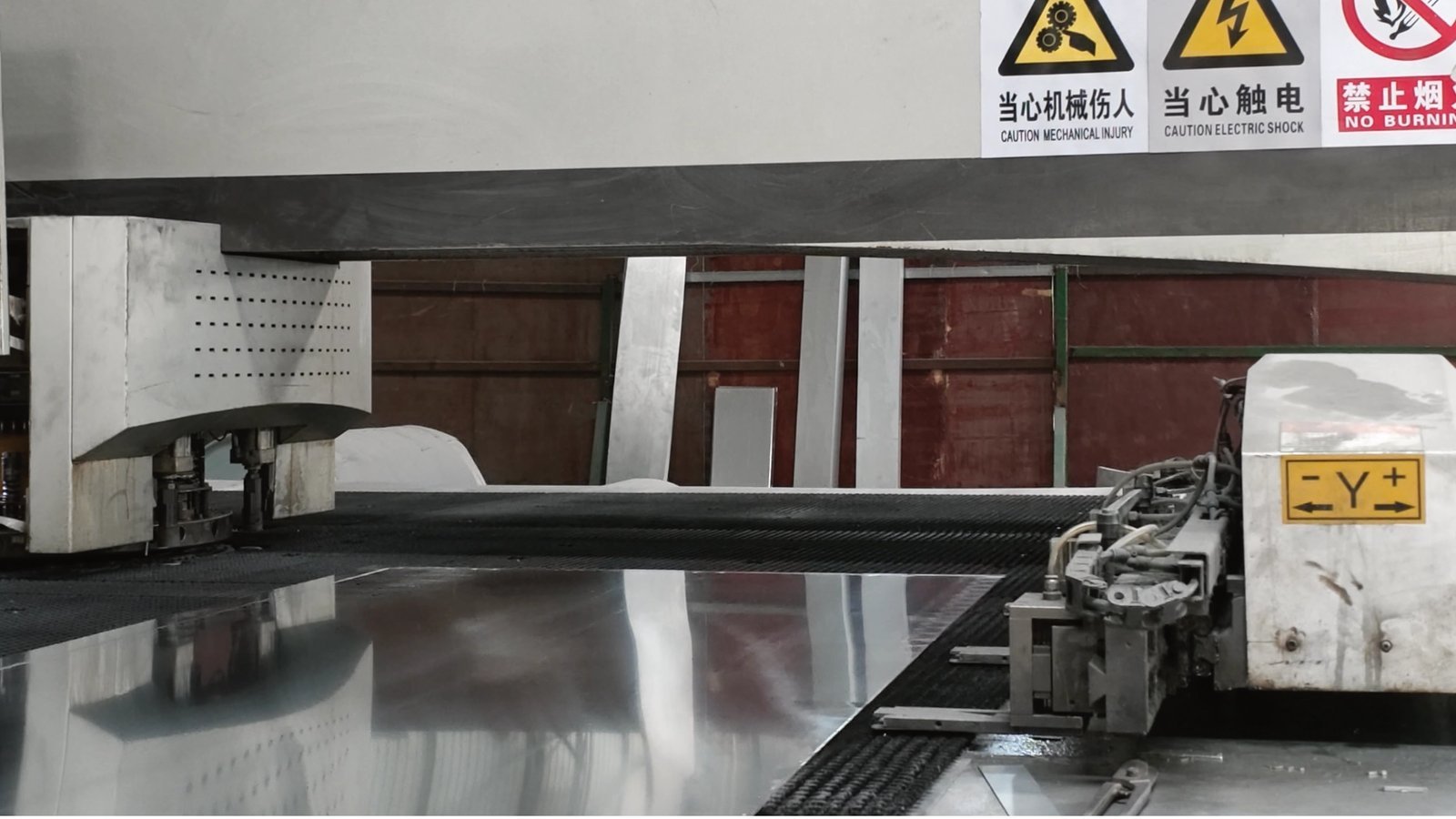
3. Issue the first article. Cut and fold one tray from the ticket. Put the metal on the drawing. If the return collides or the blank is short, fix the file—do not “adjust on the brake” for the rest of the lot.
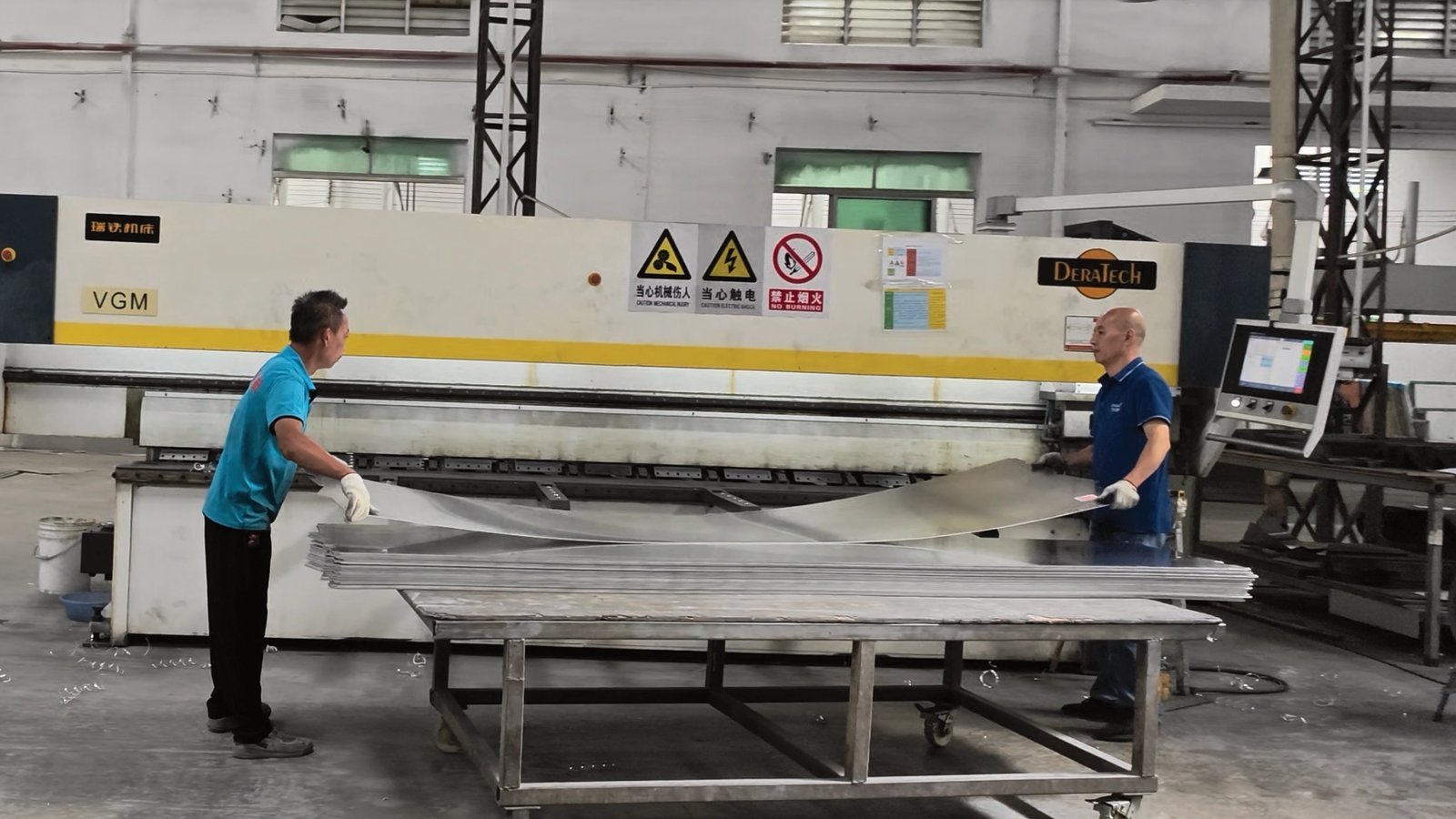
4. Then nest. CNC reads the locked unfold. Powder or PVDF runs in one batch so adjacent elevations do not split color. Crates follow install order.
That is why a complete ticket set is faster than a large sheet count. The plant is not waiting on more PDFs. It is waiting on one unfold that survived a first article.
Where BIM helps — and where it costs a week
Revit or Rhino is useful for clash against structure, for counting uniques, and for keeping a joint change in one place. It is a poor substitute for a brake ticket. A dynamically linked elevation that never lists fold order will still produce a wrong blank.
What usually burns a week at the Foshan plant is not the mill. It is a late metallic PVDF change, a radius drawn as single-curved that arrives as a compound surface, or a unitized module whose glass was never coordinated with the mullion. Send the model (or the scan), a typical bay, and the finish. The plant will tell you how many unique unfolds you actually have.
Factory check: CTS Baichen Yunqi and the daily cassette line
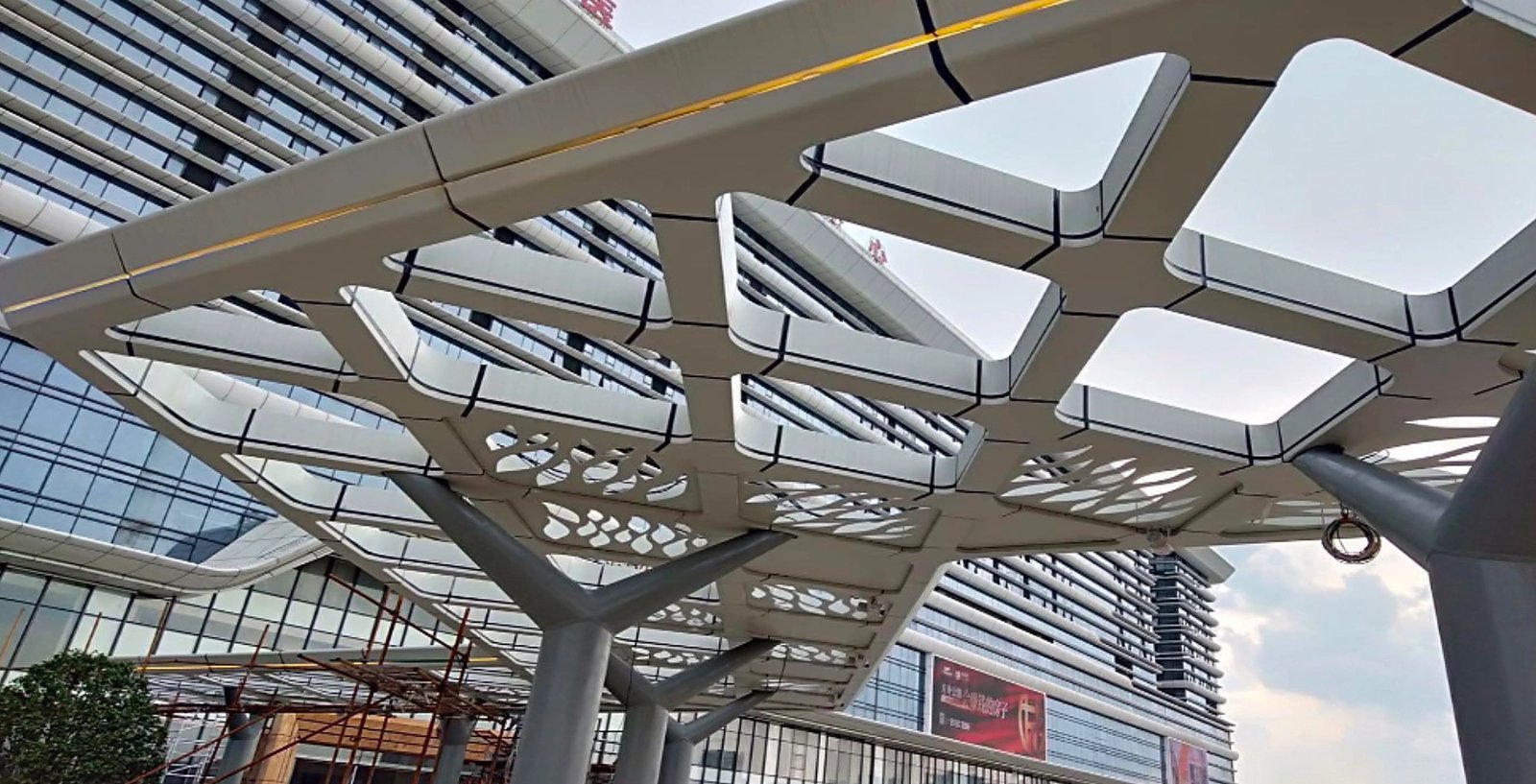
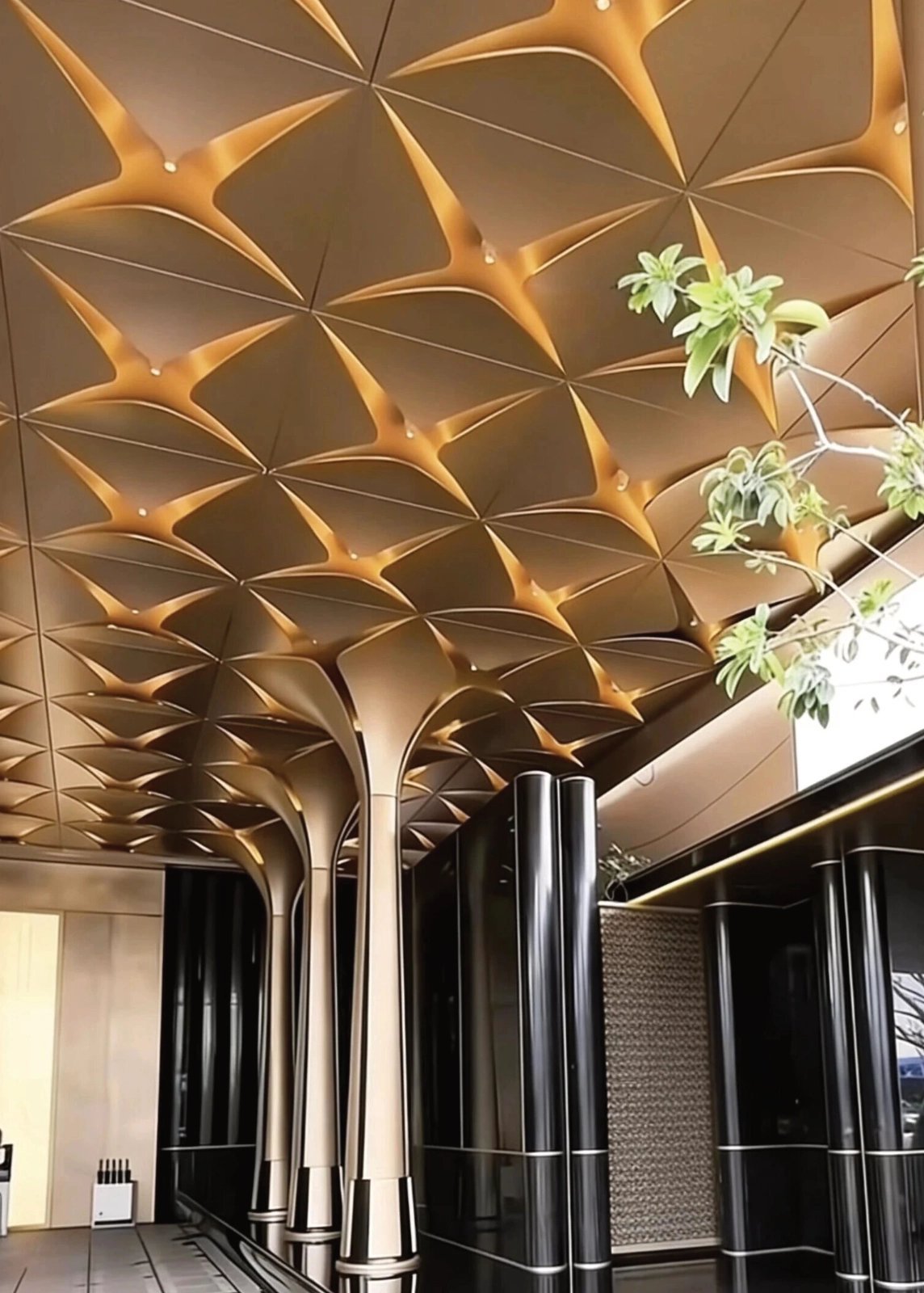
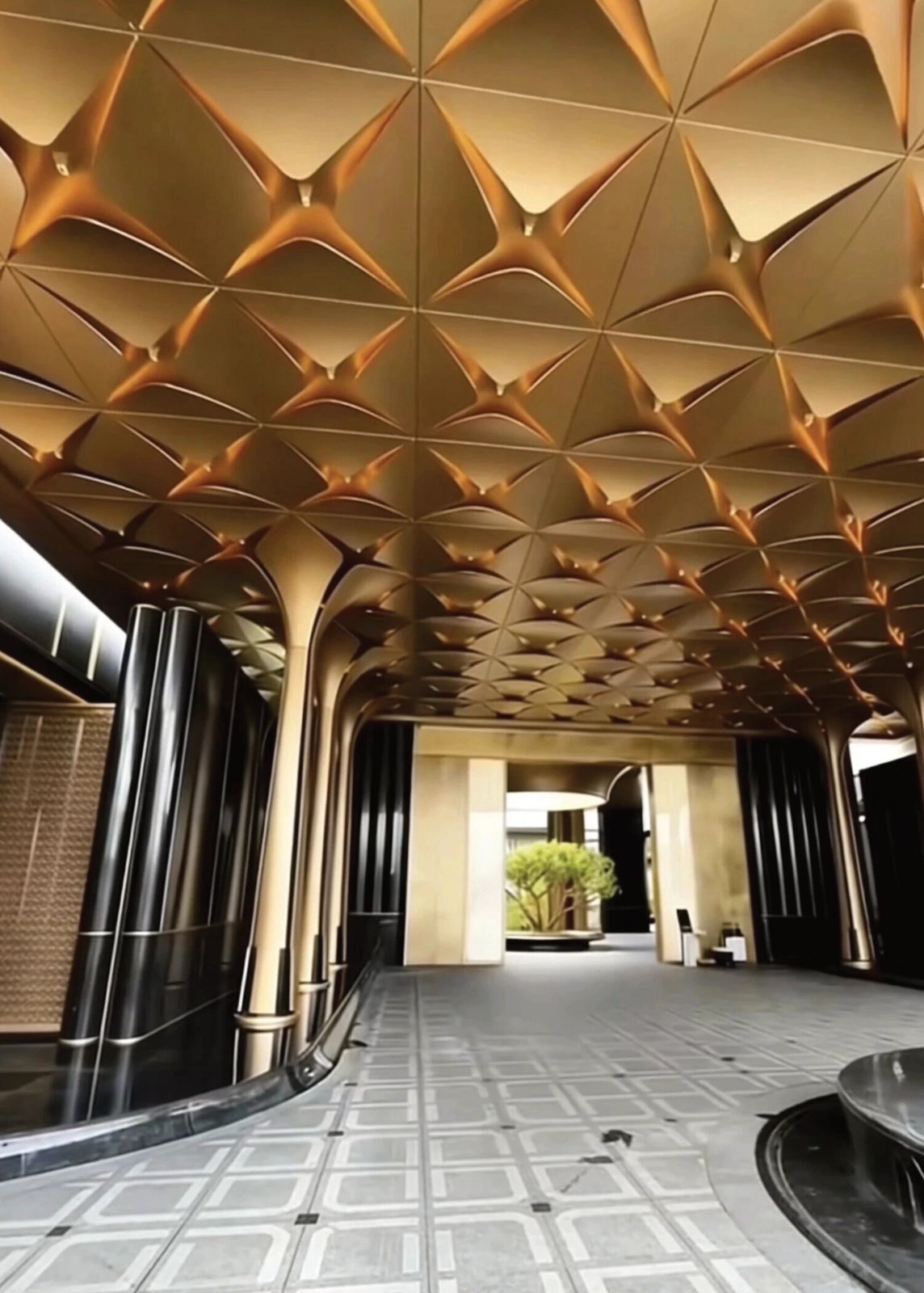
On CTS Baichen Yunqi the petal and column pieces were not issued as a gallery of pretty elevations. The 3D split came first; plan and elevation CAD froze the petal count and the flare; then the shop formed the trays. That is the same hold-point used on ordinary rainscreen cassettes in the 20,000 m² Foshan plant: the person who signed the unfold is in the same building as the brake.
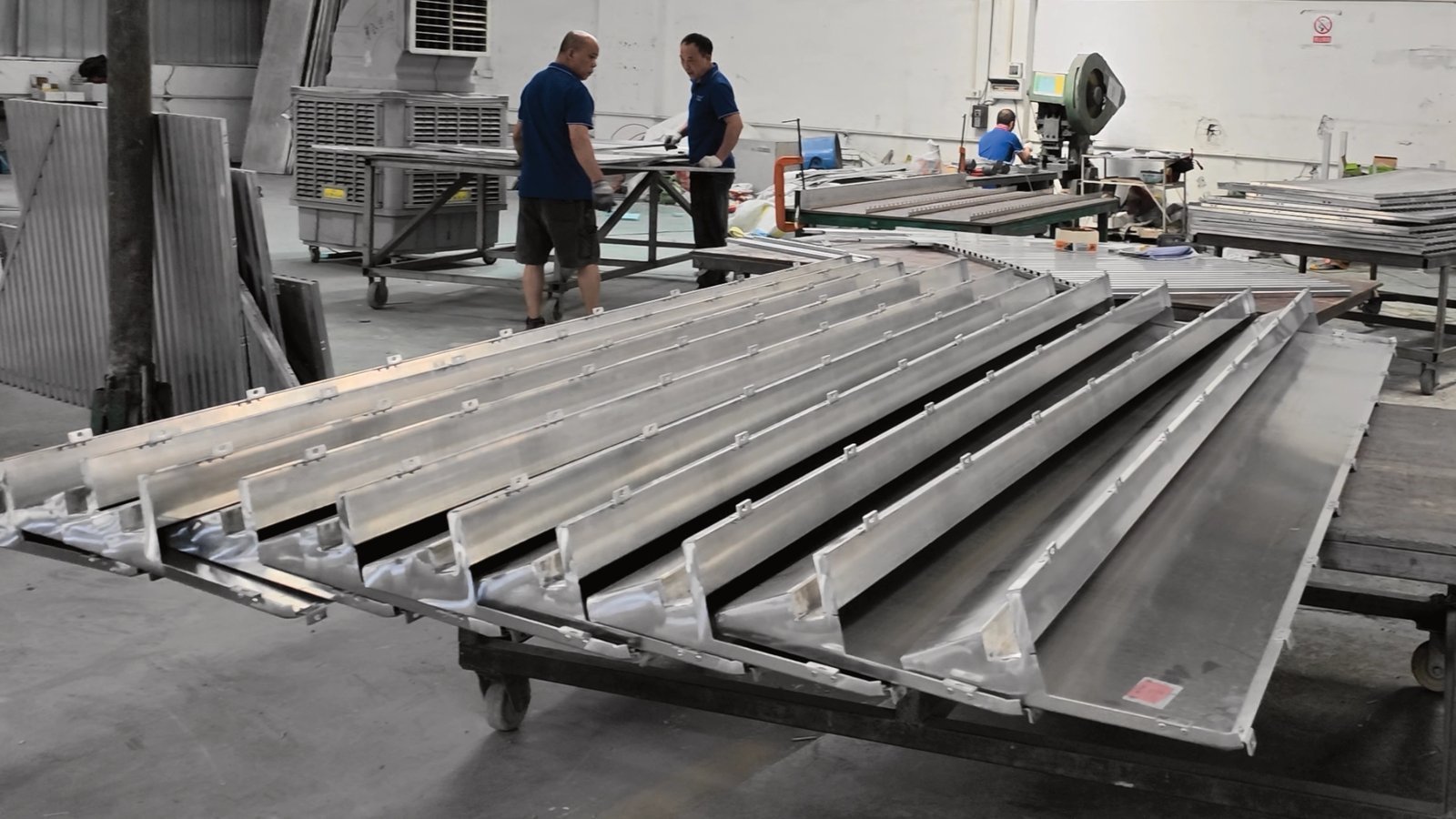
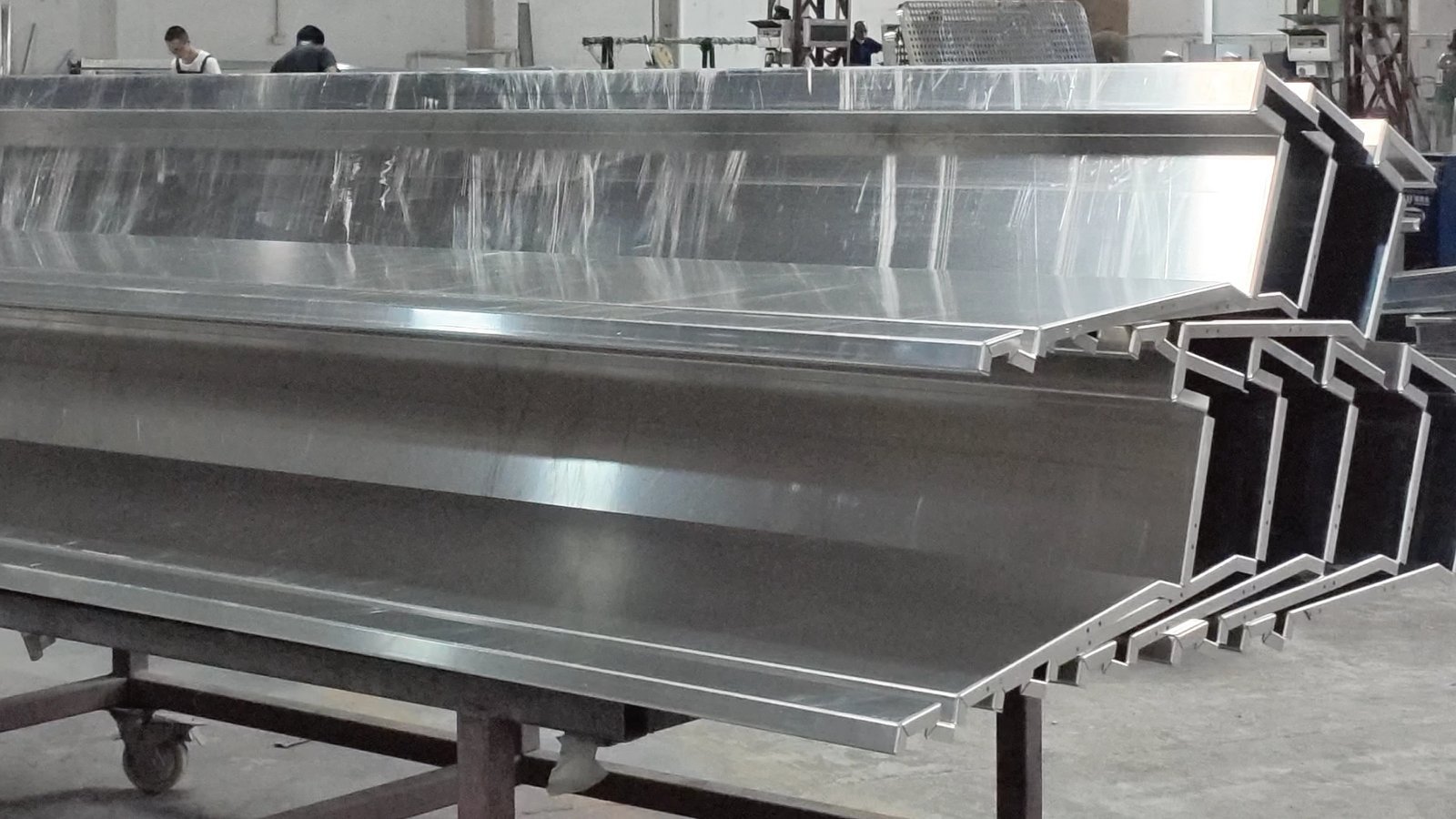
Today’s line shows L-returns with mounting tabs staged on a cart—the crate side of the ticket. MOQ follows coating batch and unique dies, not a retail carton. A facade with three hole patterns and one curved crown is still one PVDF lot if color is frozen before nest.
Typical clock after the first article is signed: coil allocation, CNC nest, brake or stretch form, corner close where the geometry needs it, PVDF in one batch. Lead time then follows the coating queue and the crate plan—not the date the consultant’s CAD group promised “automated shop drawings.”
Frequently asked questions
Can shop drawings be automated from Revit or Rhino?
Sheets can. Tickets cannot. LINDELACR still unfolds each unique cassette and checks a first article. A linked elevation that omits blank size and fold order is not issued to CNC.
How many shop drawings does a complex facade need?
Count unique unfolds, not panel quantity. A 2,000-panel elevation may be 40–80 tickets plus repeats. More sheets without more uniques only slow review.
What alloy and thickness go on the drawing title block?
Exterior work is typically 3003-H14 solid aluminum at 2.0–3.0 mm with PVDF to AAMA 2605 and dry film ≥ 30 μm. Alloy 1100 is for simple low-wind interiors. Thickness follows span and return, not a catalog default.
What should the consultant send so LINDELACR can start shop drawings?
Send the 3D model or a site scan, a typical bay, target finish, and whether the grid is stick or unitized. LINDELACR returns a unique-count, an unfold sample, and a first-article plan from the Foshan plant.
Send the model. Get tickets the brake can run.
If the split is already in BIM, send it. If the core is already up, send the scan. LINDELACR will mark how many unique unfolds you have and which trays need 2.0 mm versus 3.0 mm before any coil is cut.