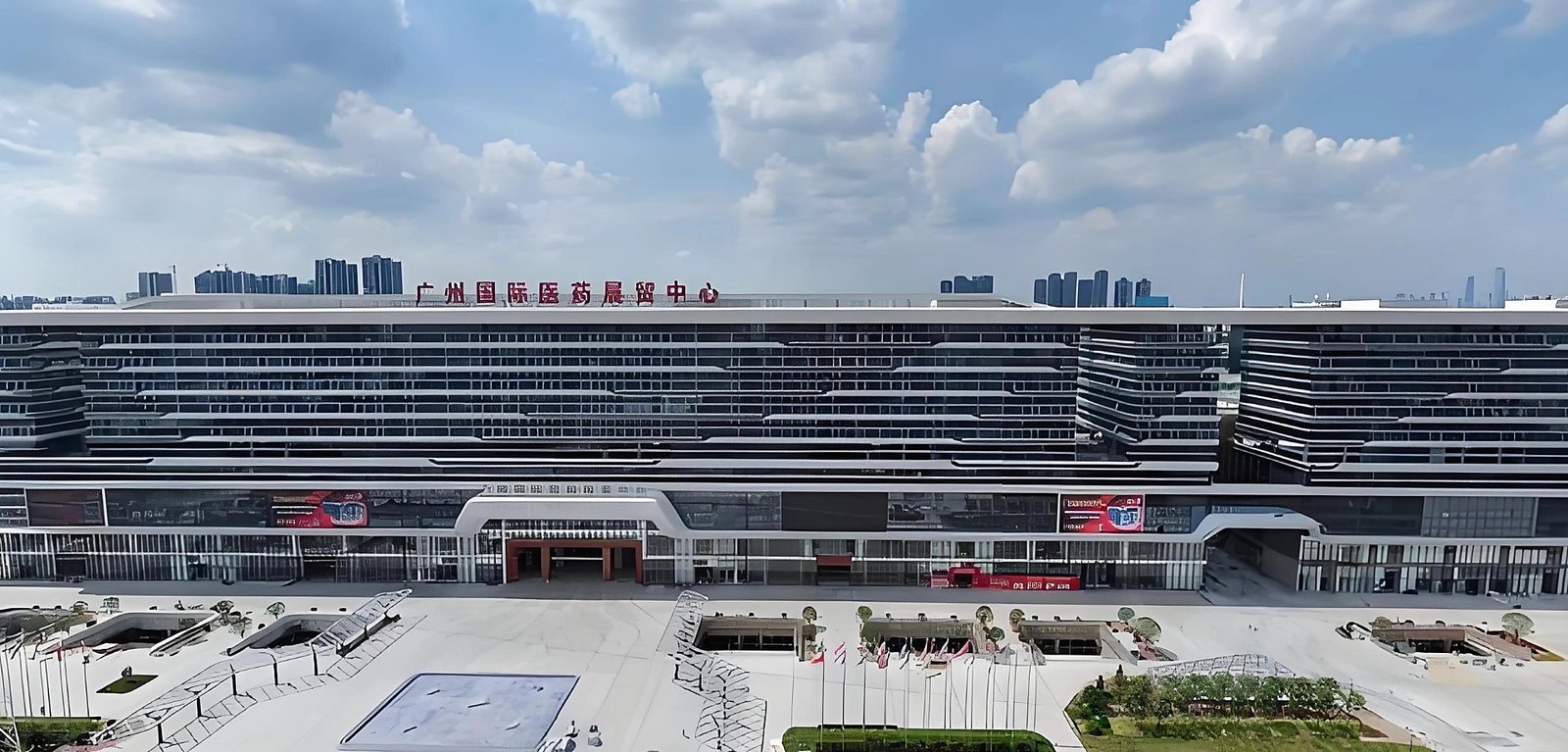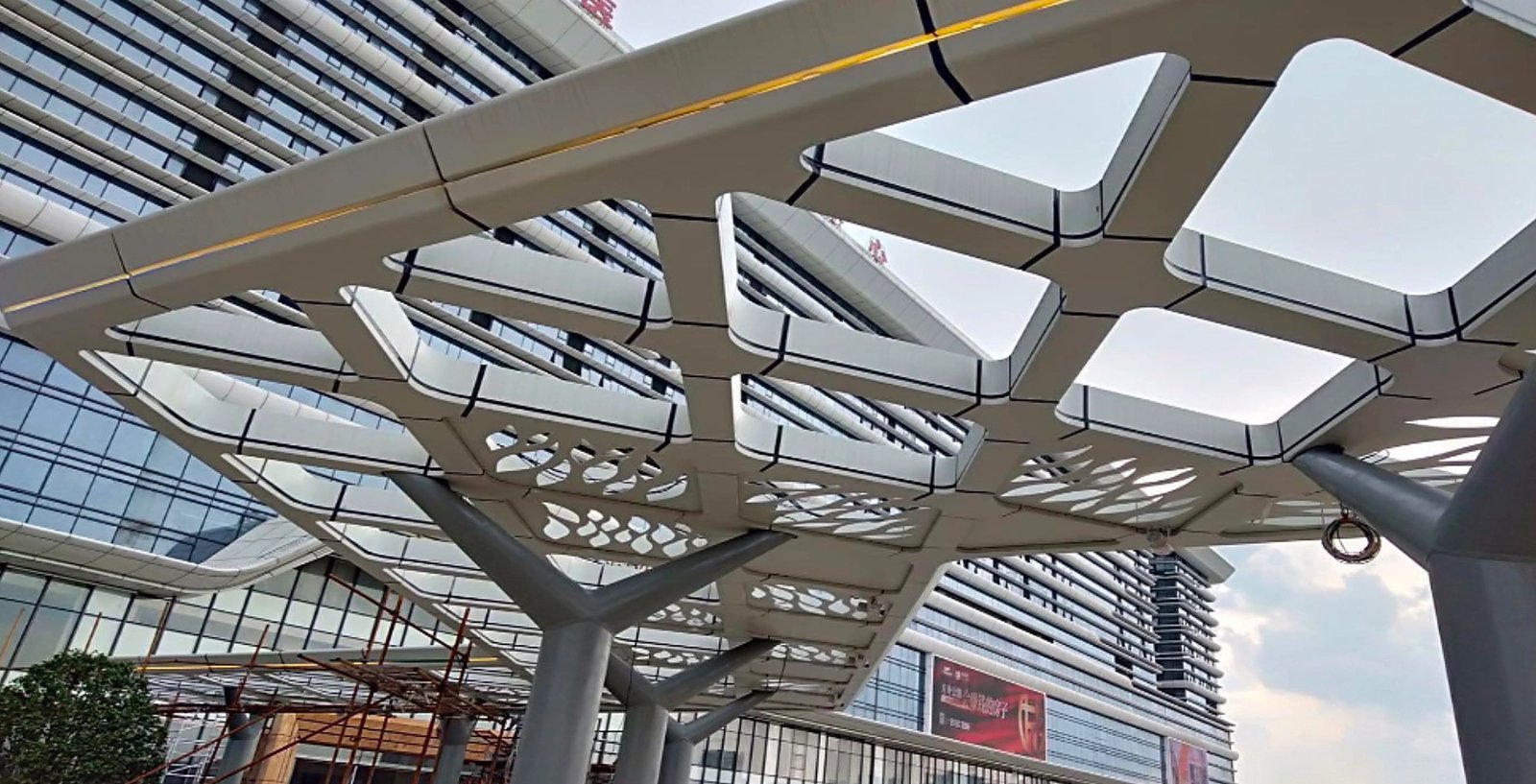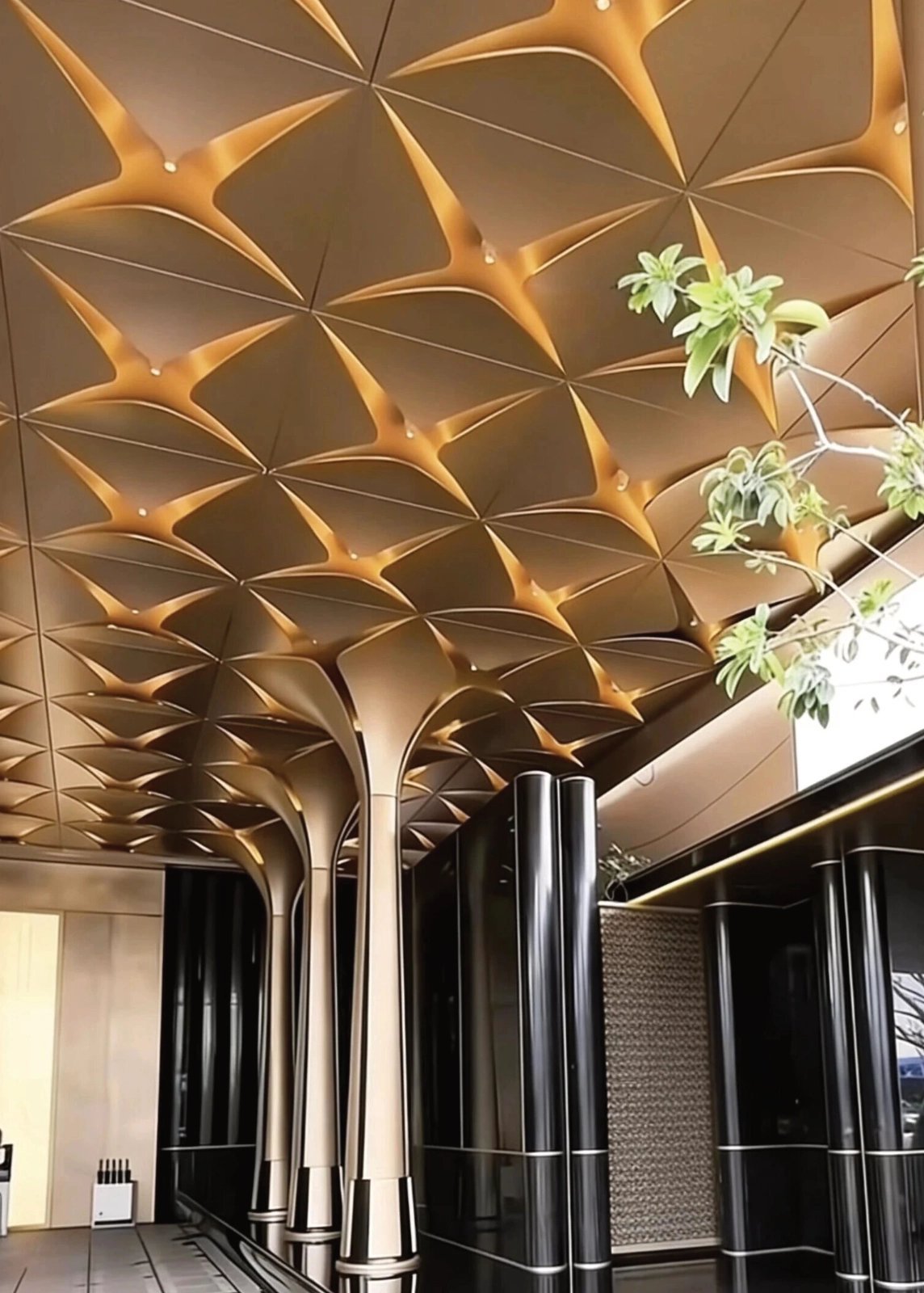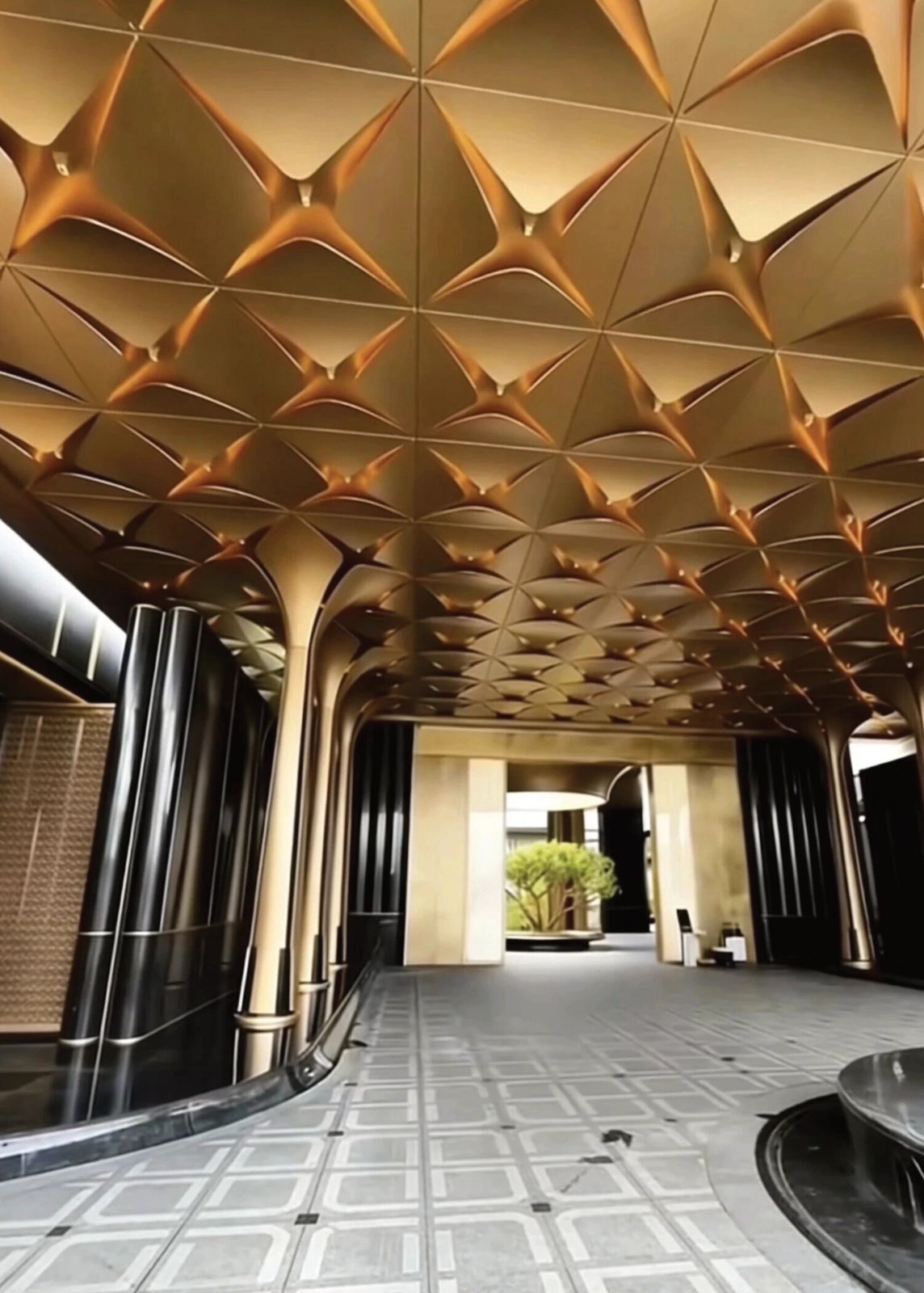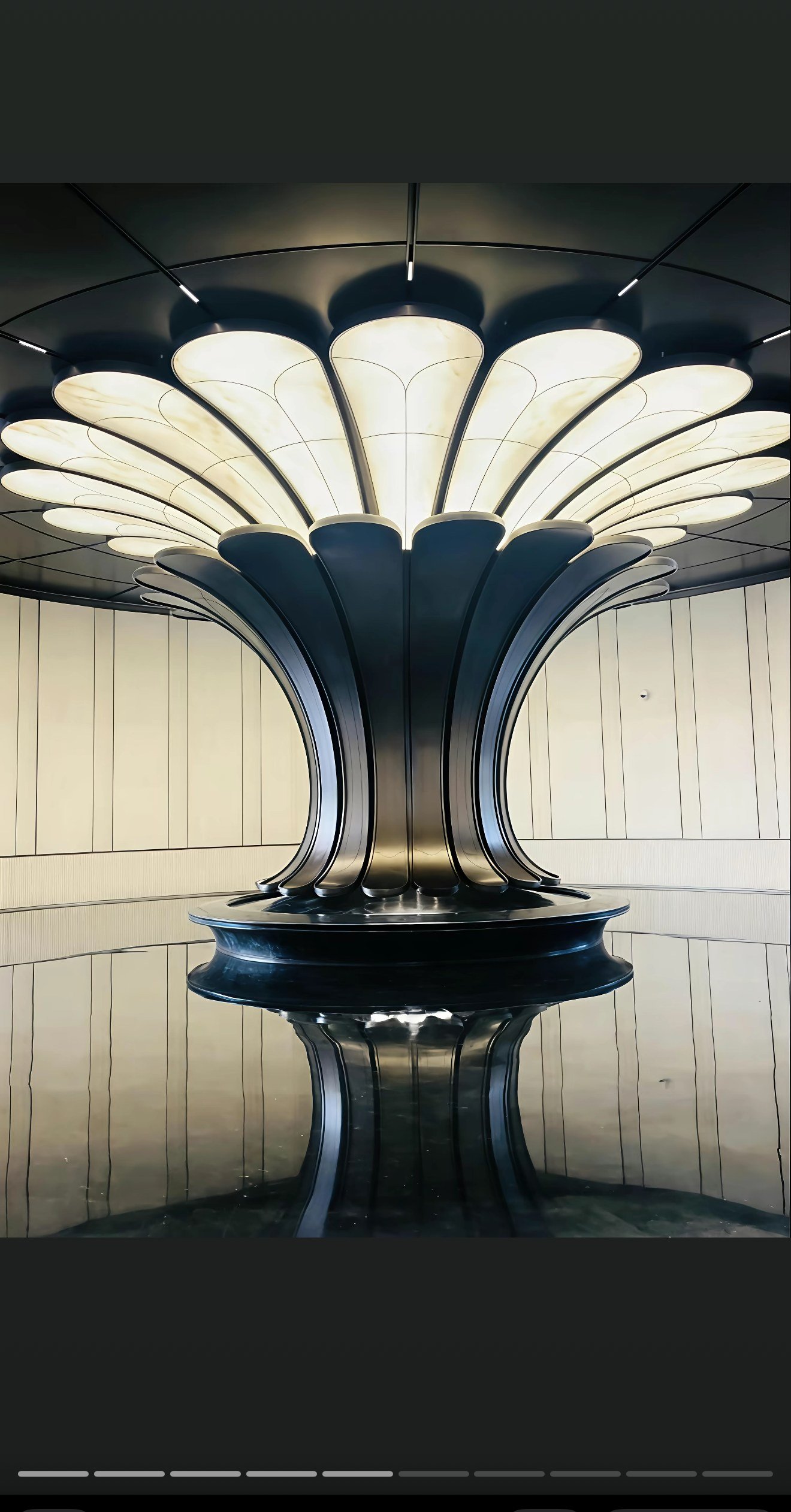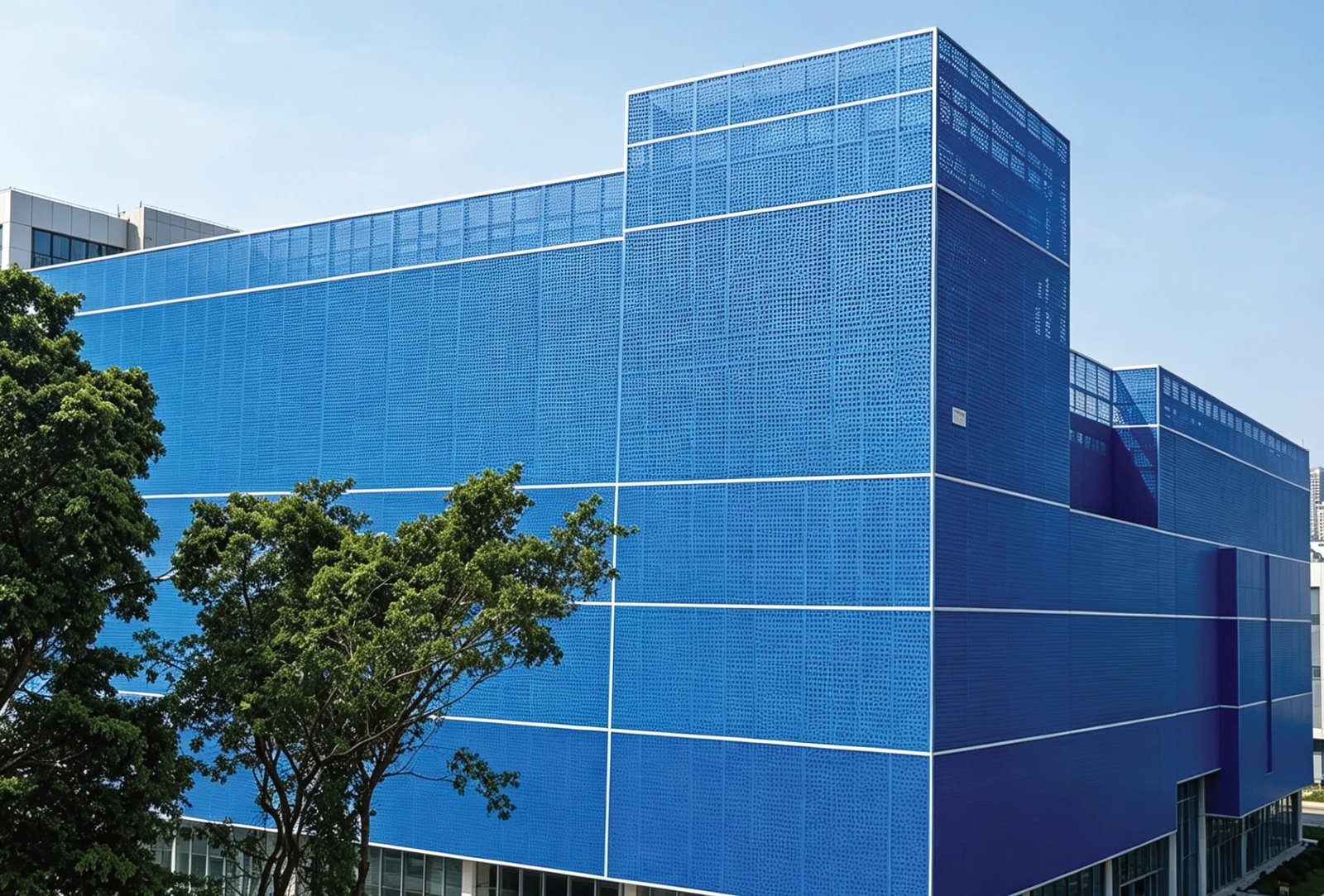
A solid aluminum panel is a single alloy plate—typically 3003-H14 at 2.0–3.0 mm—formed to the drawing. An aluminum composite panel (ACP) is two thin skins bonded to a plastic or mineral core. For exterior cladding that must hold wind, fire class, and custom geometry, LINDELACR specifies solid aluminum, not ACP.
Solid aluminum panel vs ACP: what actually differs
The names sound similar because both show an aluminum face. The construction is not similar. ACP (also called ACM) sandwiches a polyethylene or mineral-filled core between two coil-coated skins, often about 0.5 mm each. A solid aluminum panel—architectural veneer—is one plate of alloy, brake-formed or CNC-formed, with returns that become the cassette.
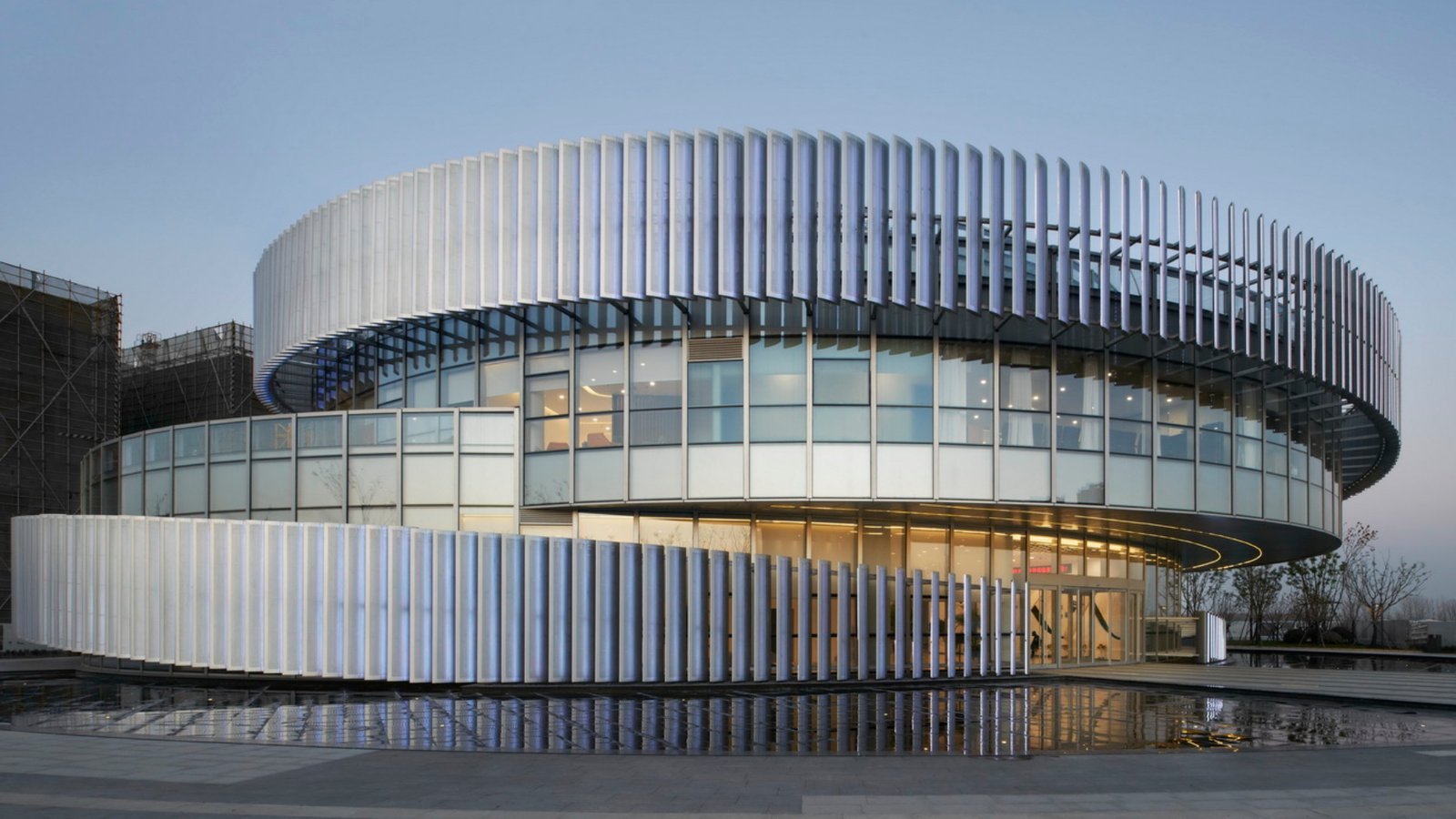
That single-plate build is why a landmark sketch can become a high-precision metal facade. The engineer is working the alloy itself, not a bonded core that limits fold radius, perforation, and fire classification.
| Parameter | Solid aluminum panel (veneer) | ACP / ACM |
|---|---|---|
| Construction | Single plate, typically Alloy 3003-H14 | Two skins + PE or mineral core |
| Typical exterior thickness | 2.0–3.0 mm plate | 3–6 mm total sandwich; skins ~0.5 mm |
| Forming | Deep returns, hyperbolics, CNC, laser, perforation | Limited bend radius; core crush at tight folds |
| Fire / core | Solid metal plate; coating class on the alloy | Core type controls fire; PE cores restricted on many facades |
| Wind / spanning | Plate + folds + bracket; engineered per zone | Depends on tray size and core stiffness |
| Coating | AAMA 2605 PVDF or AAMA 2604 powder on the same coil | Pre-coated coil; repair and batch matching harder on custom geometry |
| Best use | Exposed exterior, custom landmark envelopes | Interiors, signage, low-risk infill where codes allow |
ISO 9001 factory control does not turn ACP into veneer. If the specification says “aluminum cladding” without “solid” or a plate thickness, bidders will substitute ACP. Write the alloy, thickness, and AAMA class on the drawing, not only a product nickname.
Why exterior walls should not treat ACP as a catalogue stand-in
ACP is efficient where the elevation is flat, the fire authority accepts the core, and modules come from a standard tray. Landmark work fails those three tests at once: geometry is irregular, the envelope is occupied construction, and the architect’s sketch is not a stock cassette.
Solid aluminum takes wind as a plate with designed returns. ACP takes wind as a sandwich whose skins are too thin to form the same cassette without the core. On a coastal or high-rise zone, that difference shows up as oil-canning, edge peel, or a core that is no longer legal after a code revision.
LINDELACR therefore does not sell ACP as exterior solid cladding. The 20,000 m² Foshan plant runs metal ceilings and solid aluminum veneer on one process: same coil, same coating line, same inspection file. More than a thousand engineering projects have used that package. Substituting ACP mid-bid to hit a unit rate is how facades lose both warranty and appearance.
From architectural sketch to a high-precision solid aluminum facade
Turning a conceptual sketch into cladding is a fabrication problem, not a rendering problem. LINDELACR rebuilds the sketch as a coordinated 3D model in CAD/BIM so the team can check module size, wind zones, thermal movement, and coating faces before any sheet is nested.
Complex curves are not forced into a catalogue tray. Parametric splits break the surface into panels that a press brake and CNC router can actually cut from 3003-H14. Laser cutting and folding hold the edges that the architect drew; sub-millimeter shop tolerance is only useful if the bracket also absorbs the building’s real deviation.
The fixing system is part of the same drawing set. A robust substructure lets the solid plate sit true while the concrete or steel behind it is out of plumb. Shop drawings, 1:1 samples, and batch-matched PVDF or powder on the same coil keep adjacent fins from drifting in color. That is the path from sketch to install—not a bonded ACP sheet cut to a rectangle.
For a factory-built envelope instead of a catalogue swap, review LINDELACR custom aluminum facade cladding with elevations, location, and the target coating class.
How to specify the right system (industry practice)
- Name the product class. Write “solid aluminum veneer, Alloy 3003-H14, 2.5 mm” (or the thickness your wind study requires). Do not write “aluminum composite or equivalent.”
- Lock coating to an AAMA class. Exposed facades usually need PVDF to AAMA 2605. Powder to AAMA 2604 belongs on interiors or sheltered metal. The class sits on the solid plate, not on an ACP skin.
- Engineer wind and fixing together. Panel width, return depth, and bracket spacing come from the same calculation. ASTM E330-style structural tests on a mock-up beat a generic span chart copied from an ACP brochure.
- Confirm fire as a metal plate. Solid aluminum has no PE core. If a jurisdiction still asks for A2/A1 or ASTM E84 data, supply the coating and the alloy—not a composite core certificate.
- Approve geometry on a sample. Hyperbolic or spiral fins need a 1:1 mock-up. ACP cannot hold the same fold without crushing the core.
Send CAD or BIM of the elevation. LINDELACR returns fabrication drawings, packing by zone, and an inspection record with each list. Lead time after drawing approval is typically 3–6 weeks, plus coating queue for special PVDF colors.
Factory notes: MOQ, drawings, and when ACP still appears
Custom solid veneer is quoted as a project lot. There is no carton MOQ; the constraint is coating-line minimums for a unique color. Small feature walls are still produced. What we will not do is swap ACP into an exterior solid-aluminum schedule to reduce kilograms.
ACP can remain on interior feature walls, signage, or back-of-house infill where the core is accepted and the geometry is flat. Keep that split on the cover sheet so procurement does not issue one material for the whole envelope.
Match ceilings and walls from one plant when the visual language is the same. Browse aluminum facade and ceiling systems if baffles, perforated screens, or curved veneer must share one coil batch.
Frequently asked questions
Can ACP replace a solid aluminum panel on an exterior facade?
Not for most exposed landmark envelopes. ACP is a bonded sandwich with thin skins. Solid aluminum veneer is a single 3003-H14 plate, typically 2.0–3.0 mm, that can be CNC-formed, warranted to AAMA coating classes, and detailed for wind and fire as a metal plate—not as a composite core.
What thickness of solid aluminum veneer is used for exterior walls?
LINDELACR typically fabricates exterior solid aluminum cladding at 2.0–3.0 mm in alloy 3003-H14. Thinner 1100 sheet is for simple, low-wind panels. Thickness is set by module size, wind zone, and fold depth—not by ACP catalog gauges.
Does solid aluminum cladding need a polyethylene core for stiffness?
No. Stiffness comes from plate thickness, return folds, and the substructure. A PE or mineral core is how ACP gets rigidity from 0.5 mm skins. Solid veneer does not use that sandwich; the alloy plate and bracket logic carry the load.
How does LINDELACR turn an architectural sketch into solid aluminum cladding?
The sketch is modeled in CAD/BIM, split into manufacturable panels, then cut and folded on CNC from 3003-H14 coil. Shop drawings, 1:1 samples, and a fixing system that absorbs building tolerance complete the path from concept to install.
Request a solid-aluminum specification and factory quote
If your package still says “aluminum panel” without solid versus ACP, send LINDELACR the sketch or BIM, the site location, and the fire/wind notes. We will recommend alloy, thickness, and AAMA class, then issue samples from the same coil that will be fabricated. Contact the project team with drawings.
{“@context”:”https://schema.org”,”@type”:”FAQPage”,”mainEntity”:[{“@type”:”Question”,”name”:”Can ACP replace a solid aluminum panel on an exterior facade?”,”acceptedAnswer”:{“@type”:”Answer”,”text”:”Not for most exposed landmark envelopes. ACP is a bonded sandwich with thin skins. Solid aluminum veneer is a single 3003-H14 plate, typically 2.0–3.0 mm, that can be CNC-formed, warranted to AAMA coating classes, and detailed for wind and fire as a metal plate—not as a composite core.”}},{“@type”:”Question”,”name”:”What thickness of solid aluminum veneer is used for exterior walls?”,”acceptedAnswer”:{“@type”:”Answer”,”text”:”LINDELACR typically fabricates exterior solid aluminum cladding at 2.0–3.0 mm in alloy 3003-H14. Thinner 1100 sheet is for simple, low-wind panels. Thickness is set by module size, wind zone, and fold depth—not by ACP catalog gauges.”}},{“@type”:”Question”,”name”:”Does solid aluminum cladding need a polyethylene core for stiffness?”,”acceptedAnswer”:{“@type”:”Answer”,”text”:”No. Stiffness comes from plate thickness, return folds, and the substructure. A PE or mineral core is how ACP gets rigidity from 0.5 mm skins. Solid veneer does not use that sandwich; the alloy plate and bracket logic carry the load.”}},{“@type”:”Question”,”name”:”How does LINDELACR turn an architectural sketch into solid aluminum cladding?”,”acceptedAnswer”:{“@type”:”Answer”,”text”:”The sketch is modeled in CAD/BIM, split into manufacturable panels, then cut and folded on CNC from 3003-H14 coil. Shop drawings, 1:1 samples, and a fixing system that absorbs building tolerance complete the path from concept to install.”}}]}