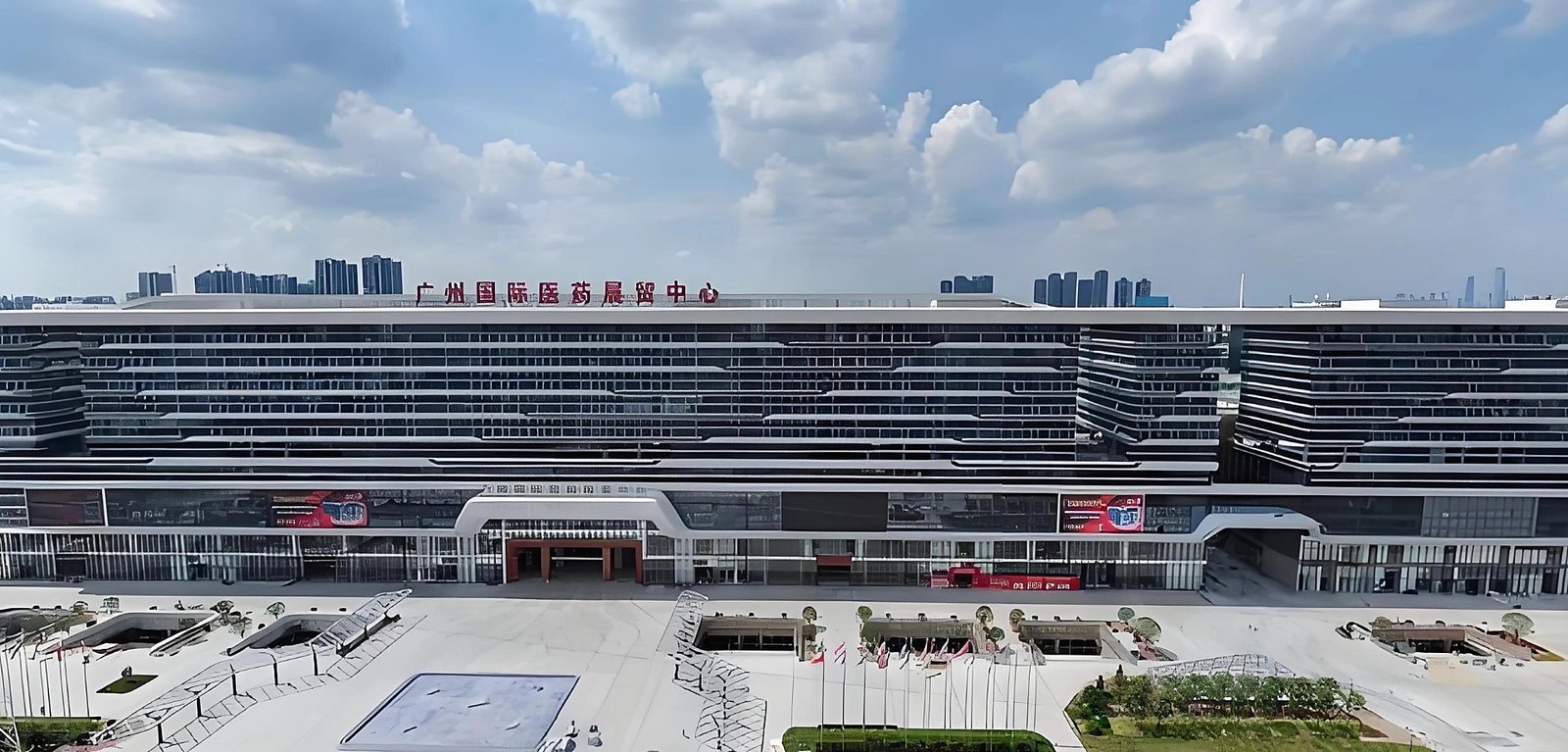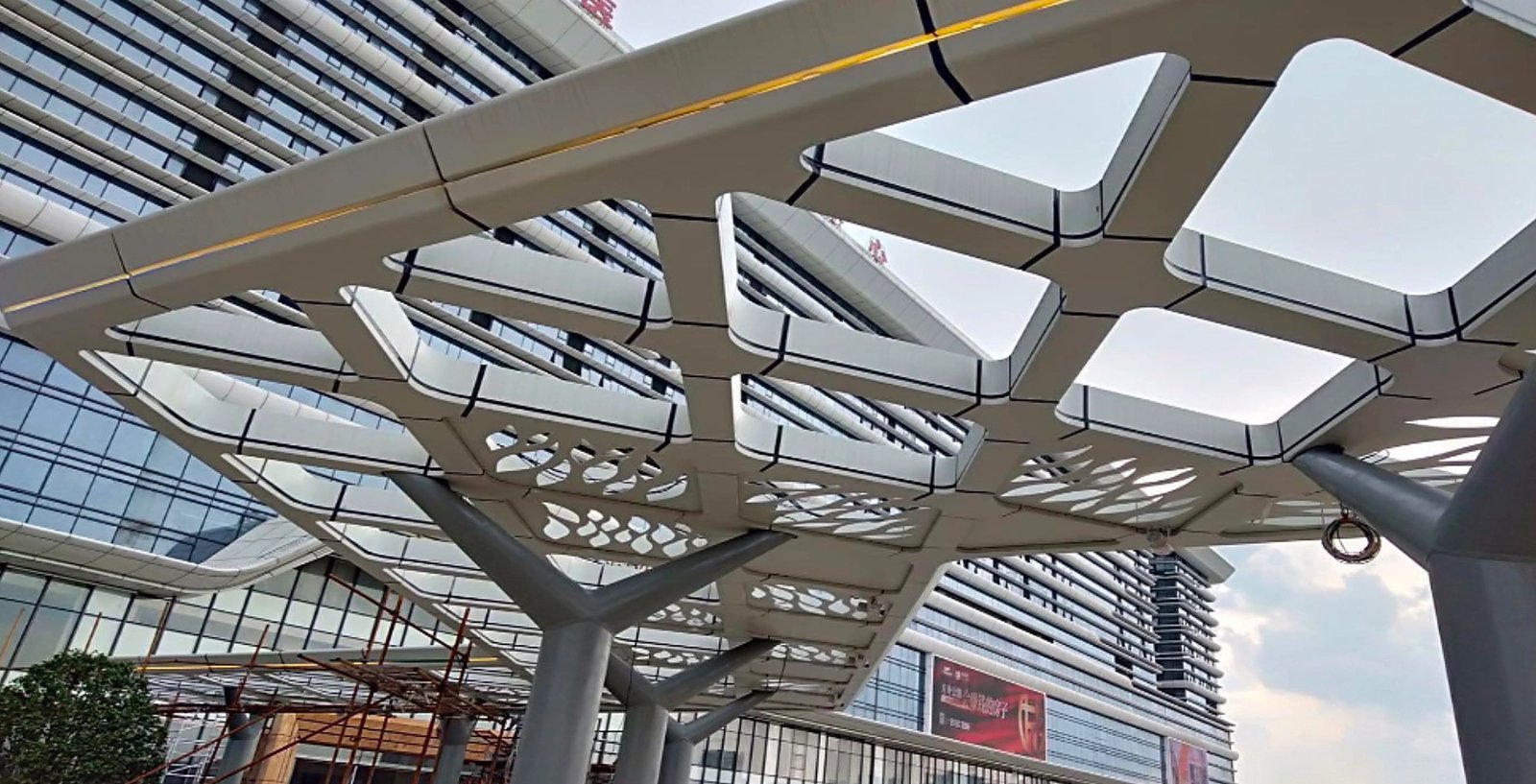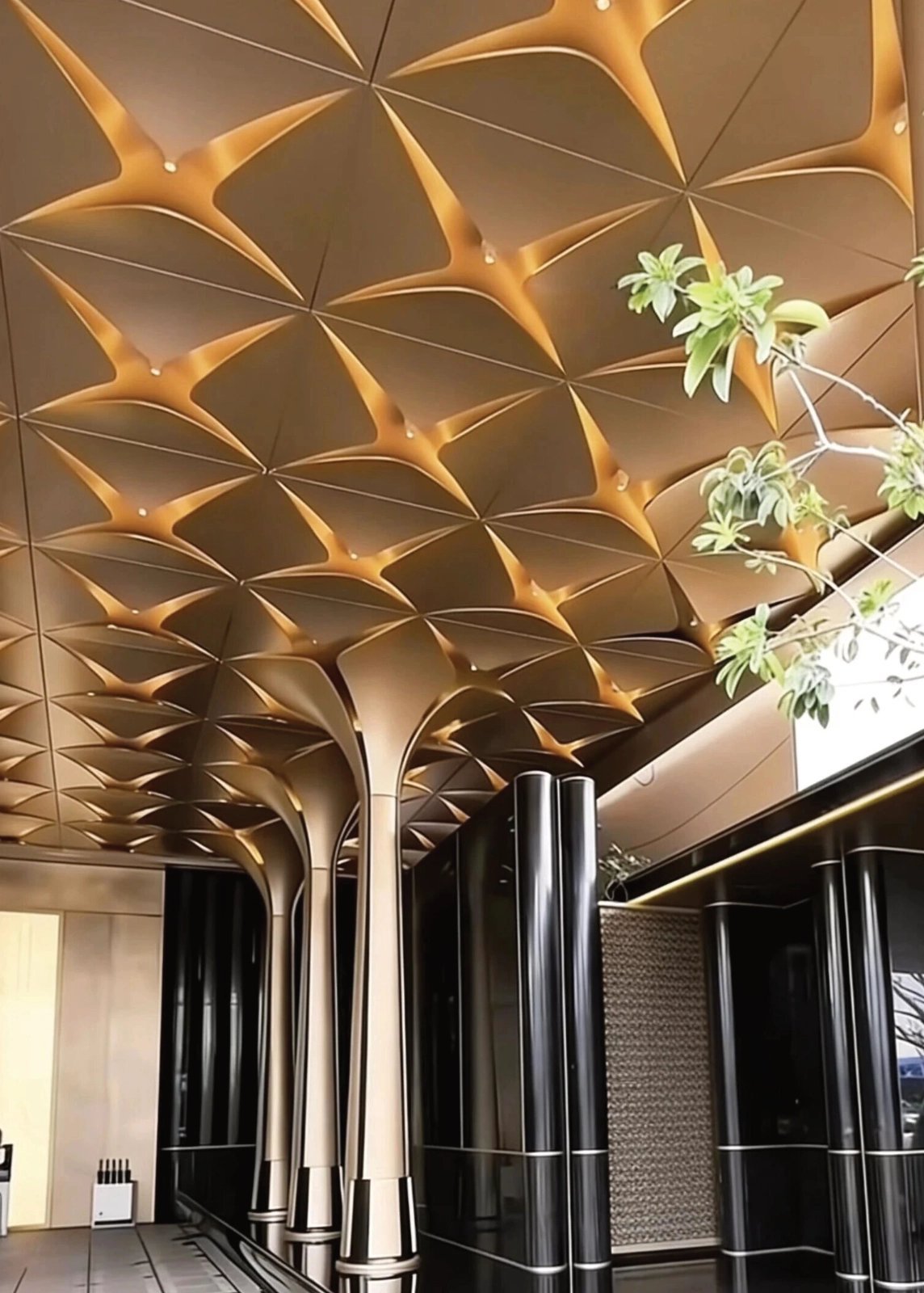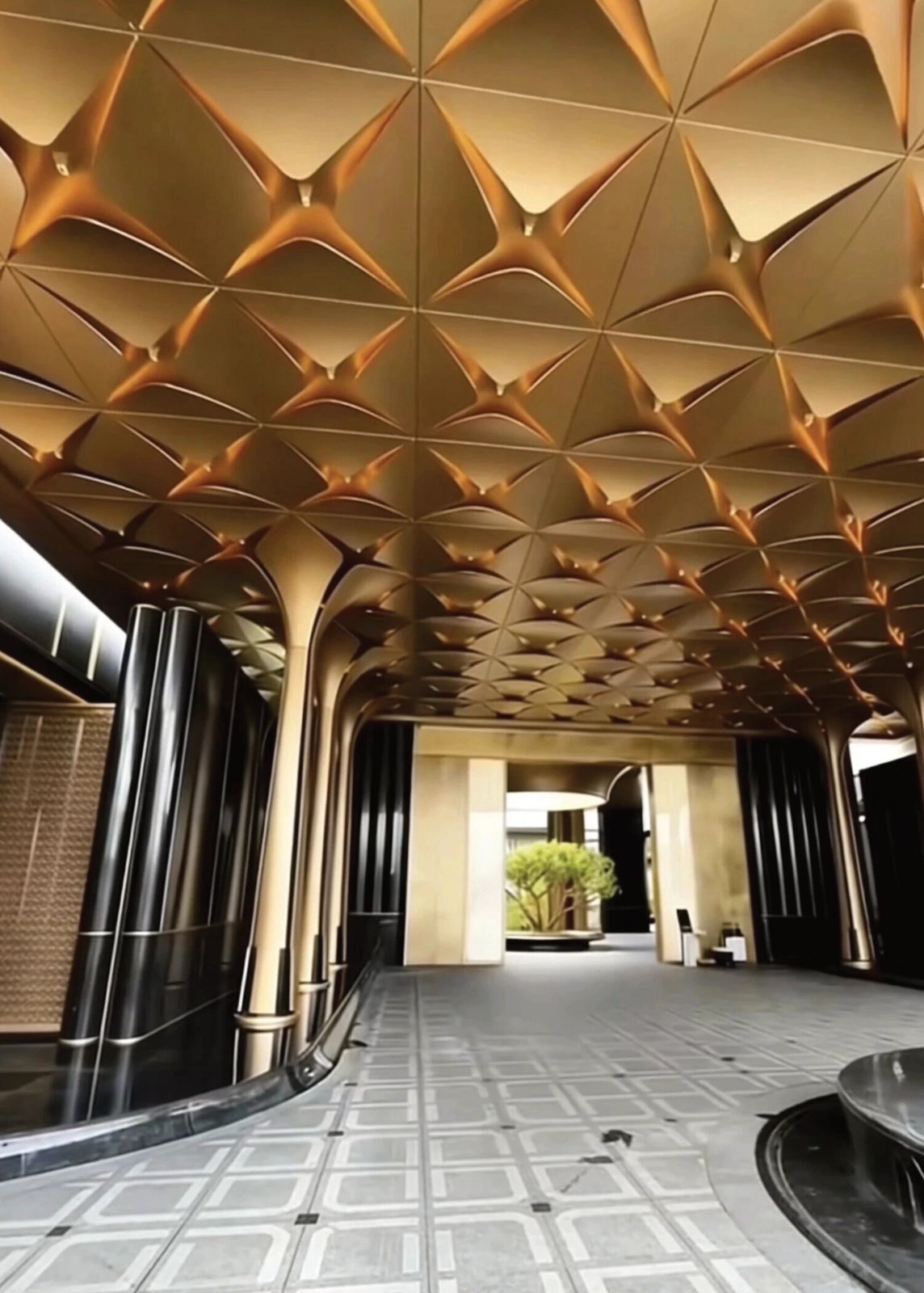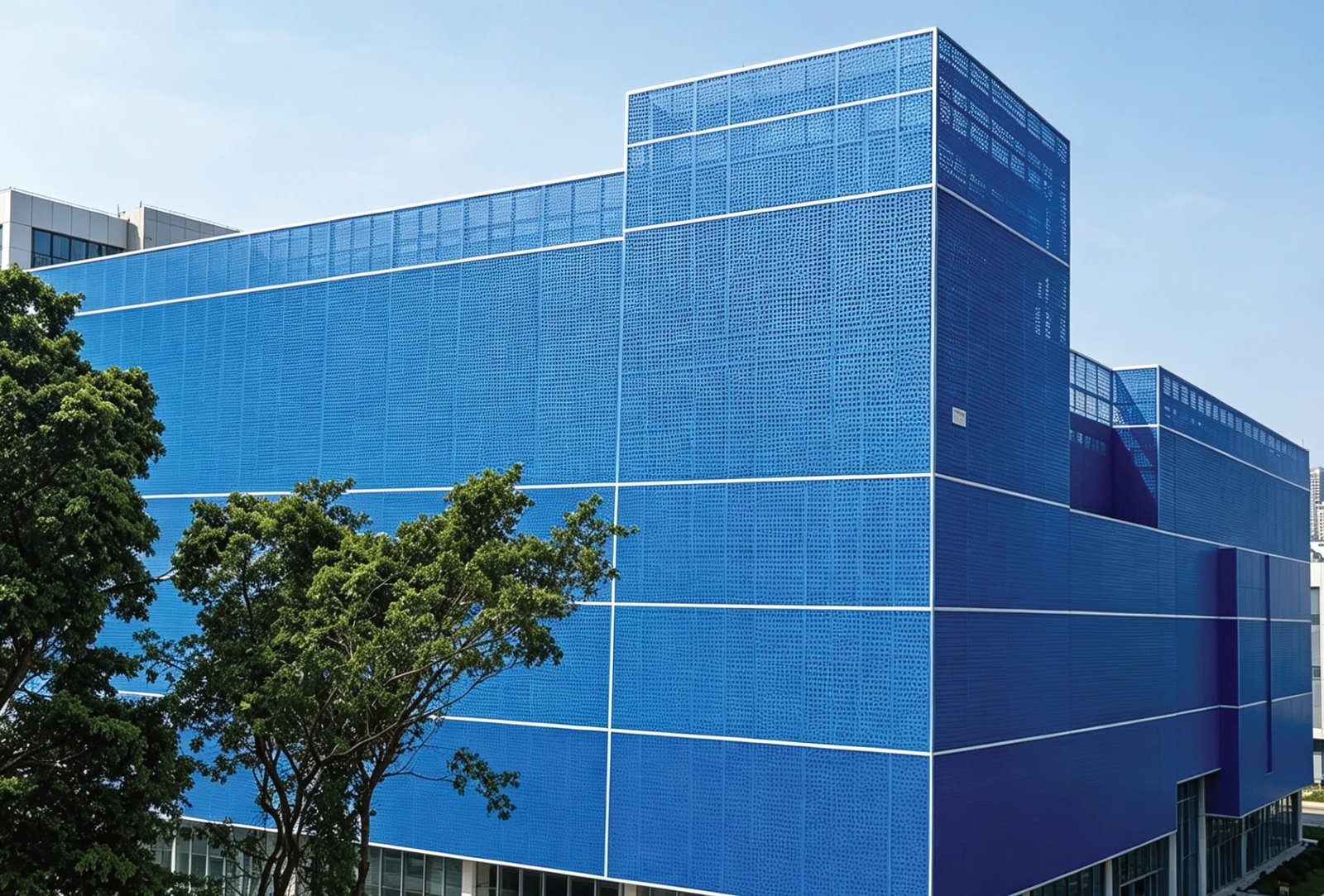
The Zhaoqing Southern Power Grid campus—China Southern Power Grid Zhaoqing—is clad in solid 3003-H14 perforated aluminum, typically 2.0–3.0 mm, punched as a repeating circular field and coated PVDF to AAMA 2605 at ≥ 30 μm. LINDELACR nested the elevation, formed cassettes, and shipped a rainscreen that reads as one cobalt-blue utility landmark.
Project: China Southern Power Grid Zhaoqing
Zhaoqing Southern Power Grid is a utility campus, not a glass office tower with a decorative screen tacked on. The brief was a durable exterior identity: a saturated blue skin, a readable joint grid, and enough open area to shade and vent without looking like construction mesh. LINDELACR treated that as a customized-for-you rainscreen package—shop elevation first, then punch, fold, coat, and crate—rather than a catalog hole plate shipped as flat sheet.
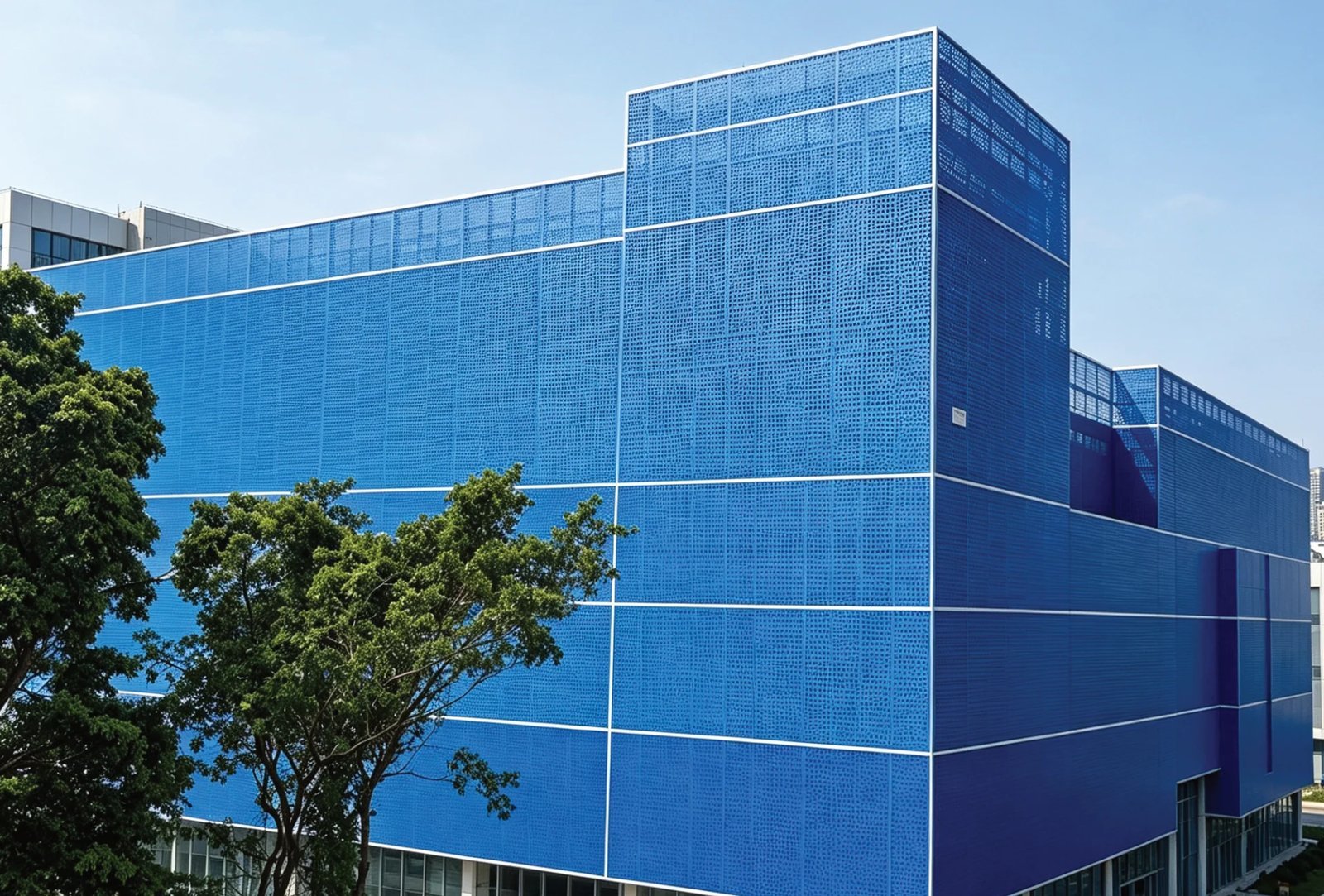
The finished photograph is the bid language in color. Stepped volumes share one cobalt field. White or light-grey joints mark cassette edges so the elevation keeps scale. The ground floor stays glass; the metal starts where a utility building needs a wipeable, non-combustible skin instead of a painted render. That is solid plate, not an ACP face with holes printed on a 0.5 mm skin.
What the elevation drawing actually locks
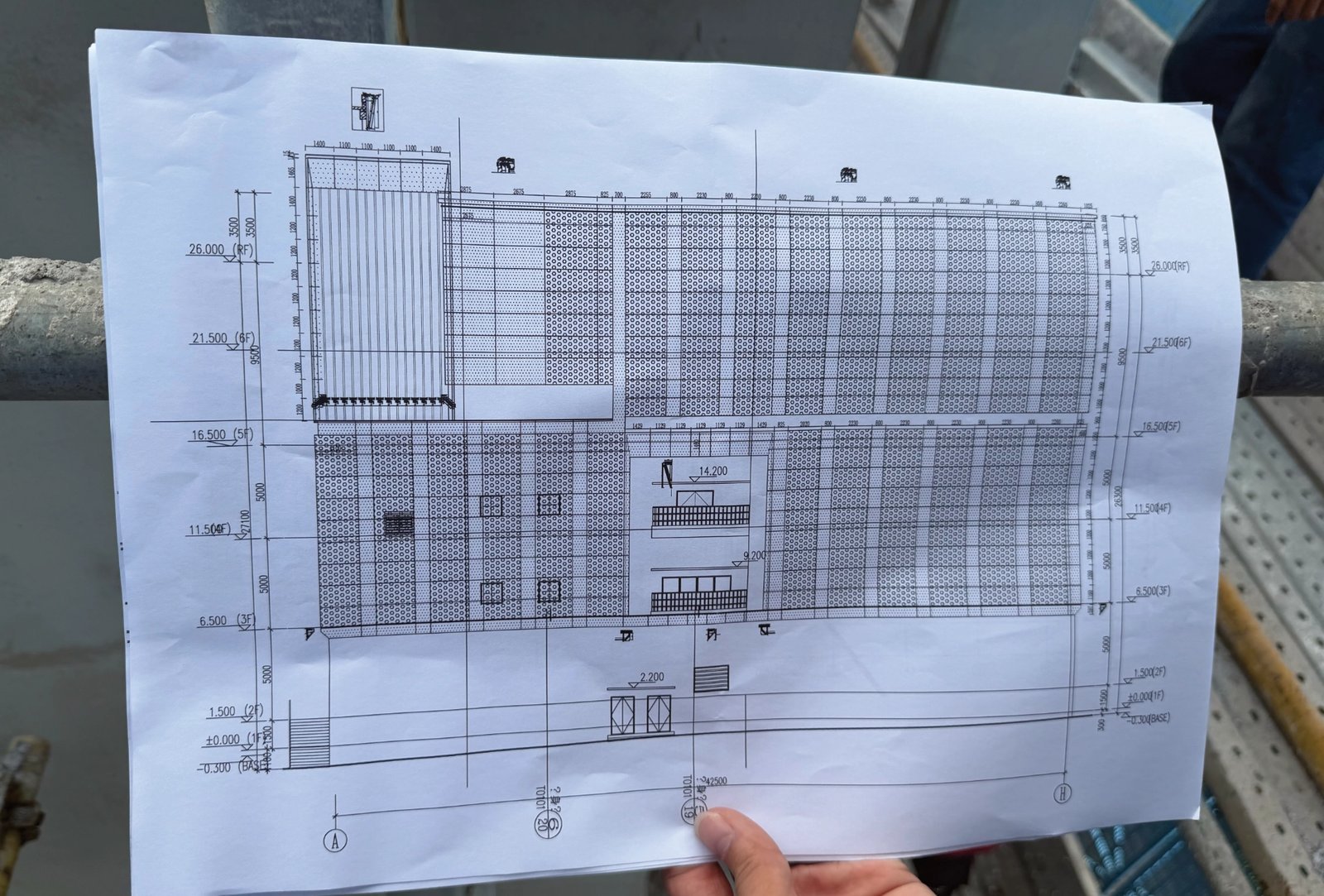
The sheet held on site is an elevation, not a mood board. Floor datums run from −0.300 (base) through ±0.000 (1F) to 26.000 m at roof level (RF), with intermediate marks through 21.500 m (6F). Axis letters and numbers locate recesses and the plant-room silhouette. The hatch is a circular perforation field whose density changes by zone. That is the file LINDELACR nests against: height, module, and hole language in one drawing.
| Item | Zhaoqing Southern Power Grid / LINDELACR typical |
|---|---|
| Client / campus | China Southern Power Grid — Zhaoqing (肇庆南方电网) |
| System | Perforated aluminum rainscreen cassettes on a welded steel subframe |
| Elevation height | RF 26.000 m on the site drawing (±0.000 = 1F) |
| Exterior alloy | 3003-H14 solid aluminum plate |
| Exterior thickness | Typically 2.0–3.0 mm (not ACP 0.5 mm skins) |
| Hole field | Repeating circular punch, staggered; solid ligaments at folds |
| Open area | Set by diameter + pitch on the elevation; factory checks remaining section |
| Exposed coating | PVDF to AAMA 2605; dry film ≥ 30 μm (holes and returns pretreated) |
| Finish intent | Saturated cobalt blue; light joint grid for module scale |
| Wind / suction | From remaining section, cassette size, return depth, brackets—no catalog kPa |
| Fire note | Aluminum substrate is non-combustible; system class follows the tested assembly |
| Plant | LINDELACR Foshan, 20,000 m²; 1,000+ engineering projects; ISO 9001 plant QA |
A 26 m utility elevation is not a balcony screen. Punching removes metal. If the architect wants more light through the podium, the factory still has to leave ligaments that carry suction at the corners. Increasing open area without changing thickness or return depth is how a pretty blue field oil-cans after the first typhoon season.
Punch the field, then fold the cassette
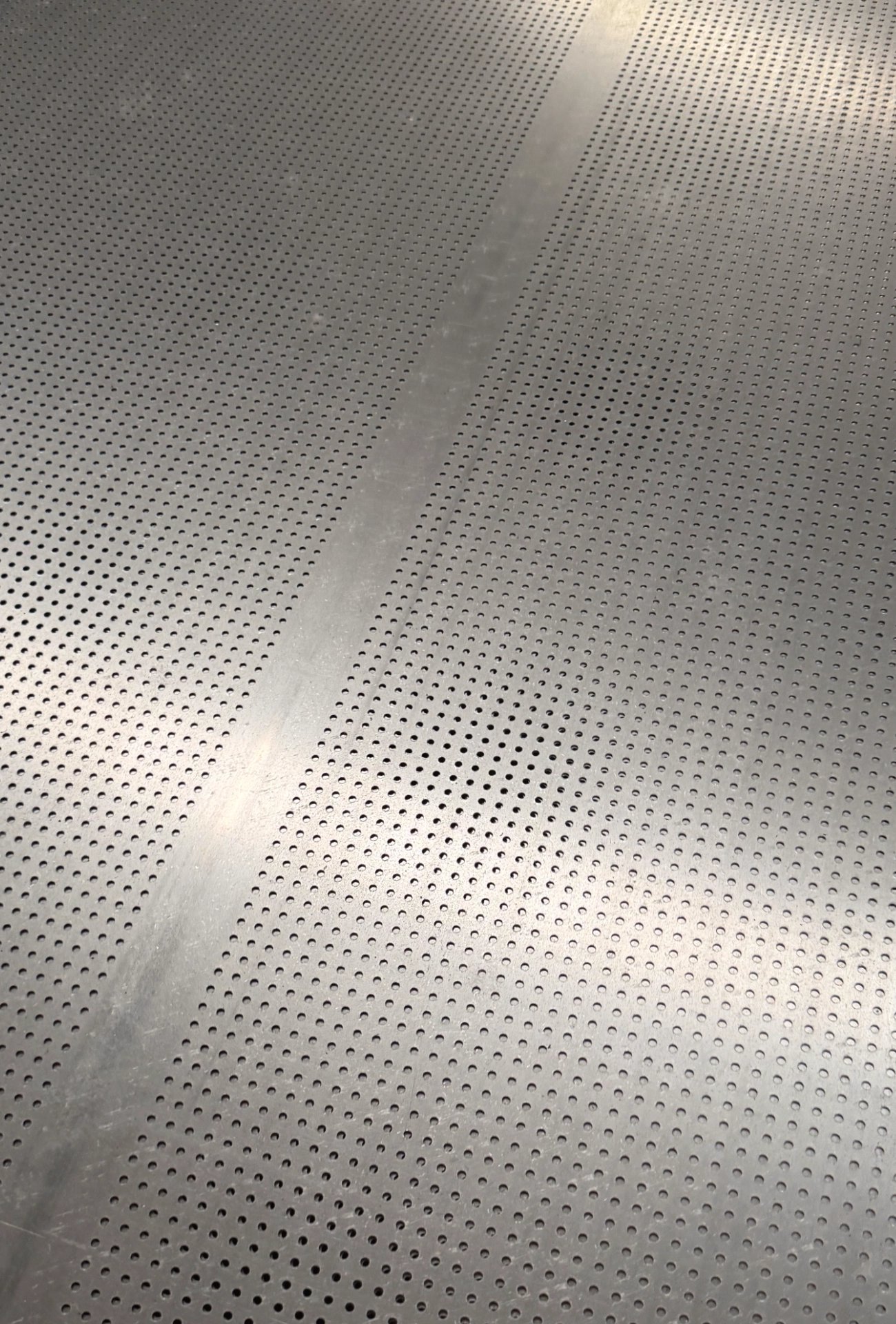
Shop sheets show the truth of the standard perforated panel: a staggered circular field and a wide unpunched strip. That strip is not leftover metal. It is the fold, the joint, and the fastener zone. Punching through a return is how holes ovalize and how coating fails first at the hem.
Sequence on this campus is the same as other LINDELACR exterior screens. Nest the elevation. Punch the repeating tool. Brake the returns into a tray. Pretreat the hole walls. Coat PVDF as one color lot so adjacent cassettes do not shift hue in Guangdong sun. Crate in install order around the stepped volumes. A 1:1 cassette—not only a RAL chip—is the hold point before the line runs the remaining elevation.
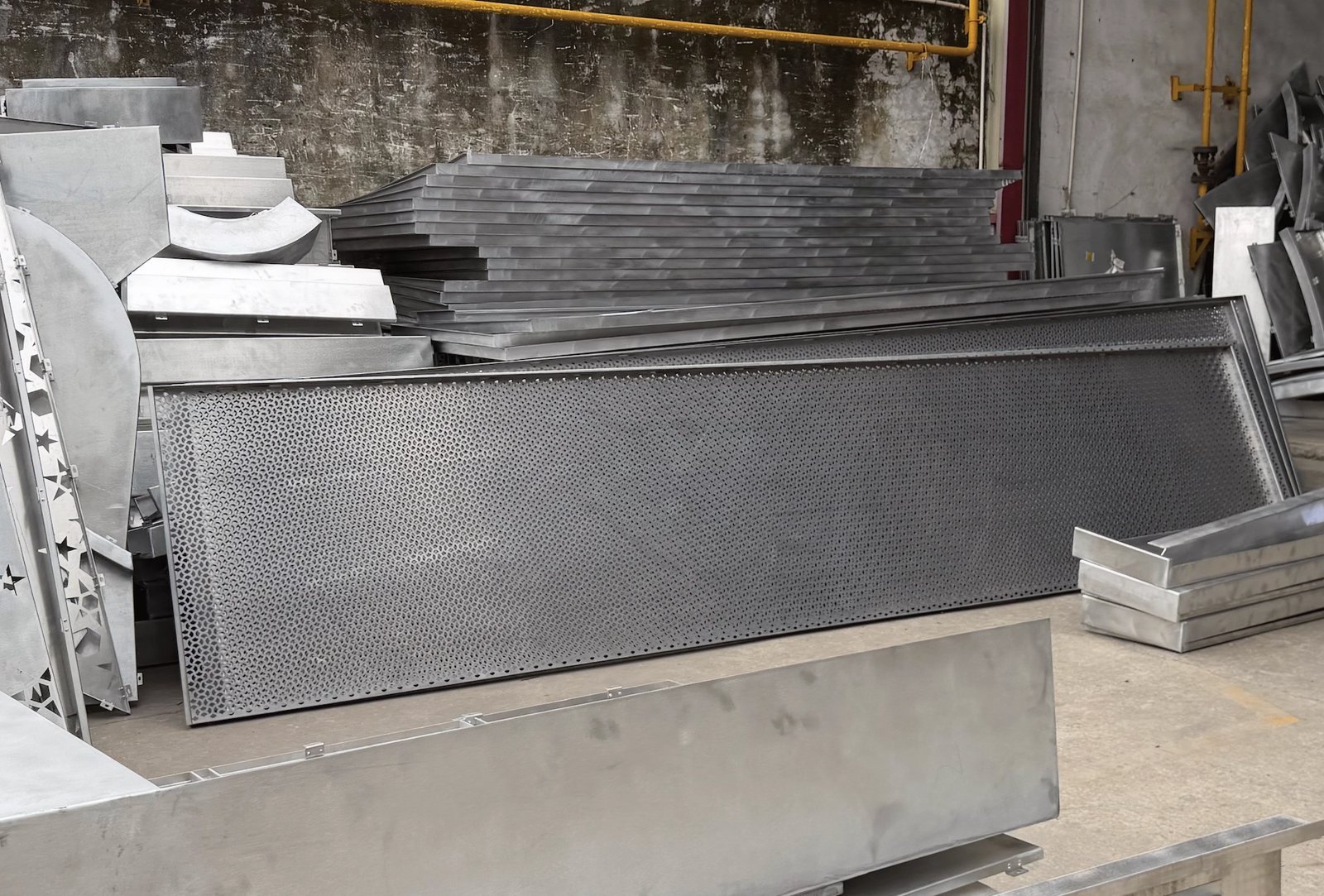
The silver tray on the Foshan floor is the cassette before color. Returns are already folded; the field is already punched. Coating happens after that geometry exists, so film builds on the hem and inside the holes. The filename on the set is the spray line; the photograph is the part waiting for it. Specifiers who only approve a blue chip never see this stage—and then wonder why a site-folded sheet does not match the sample.
Subframe first: welded steel, then aluminum
Aluminum cassettes do not hang on raw concrete. On Zhaoqing Southern Power Grid the site welded a galvanized grid: vertical rectangular hollow sections and horizontal square tubes, brackets and bolts at the nodes, window openings left in the field. Weld bloom and light rust at joints are install-phase metal, not the finished blue skin. The grid is surveyed before the first crate is opened.
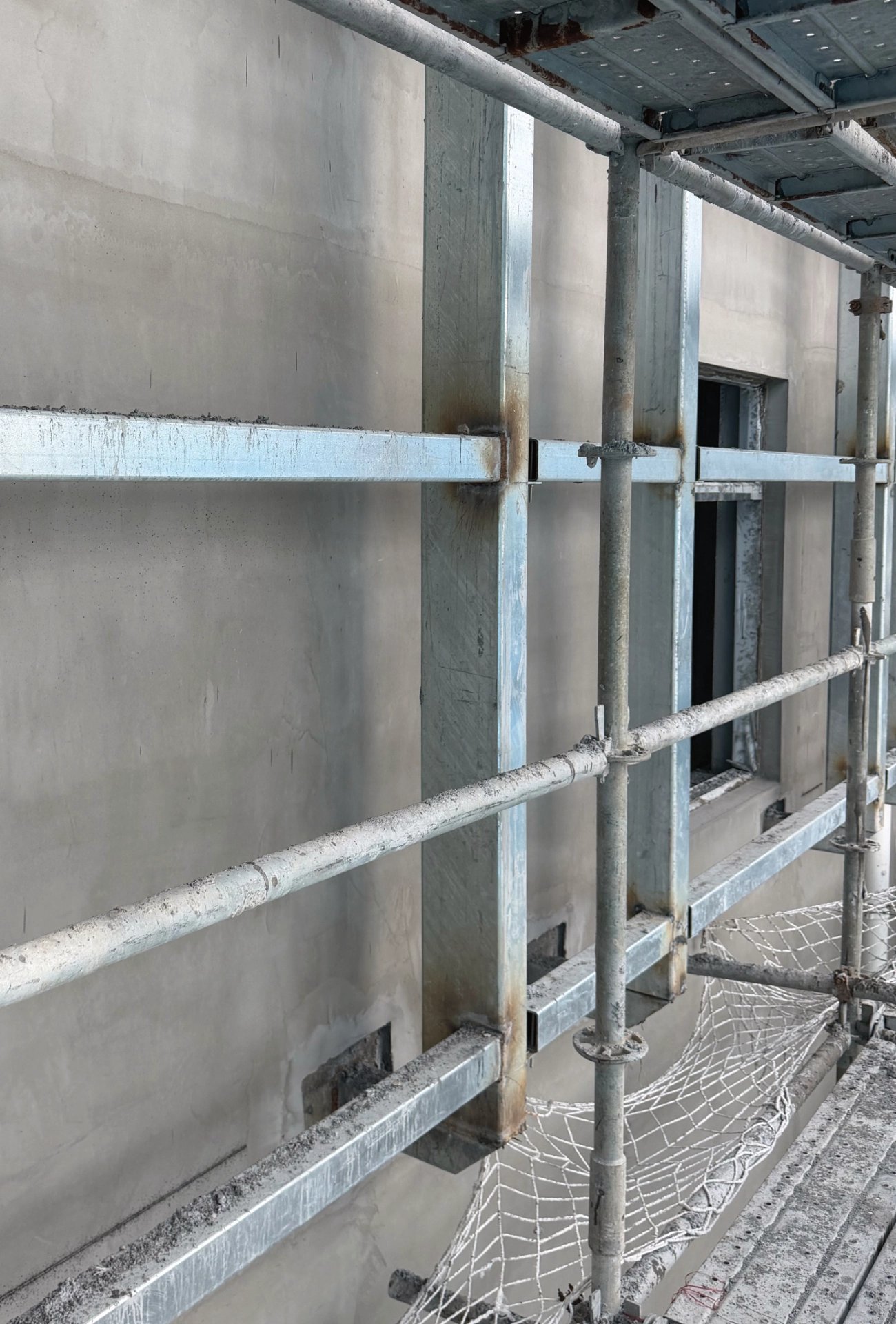
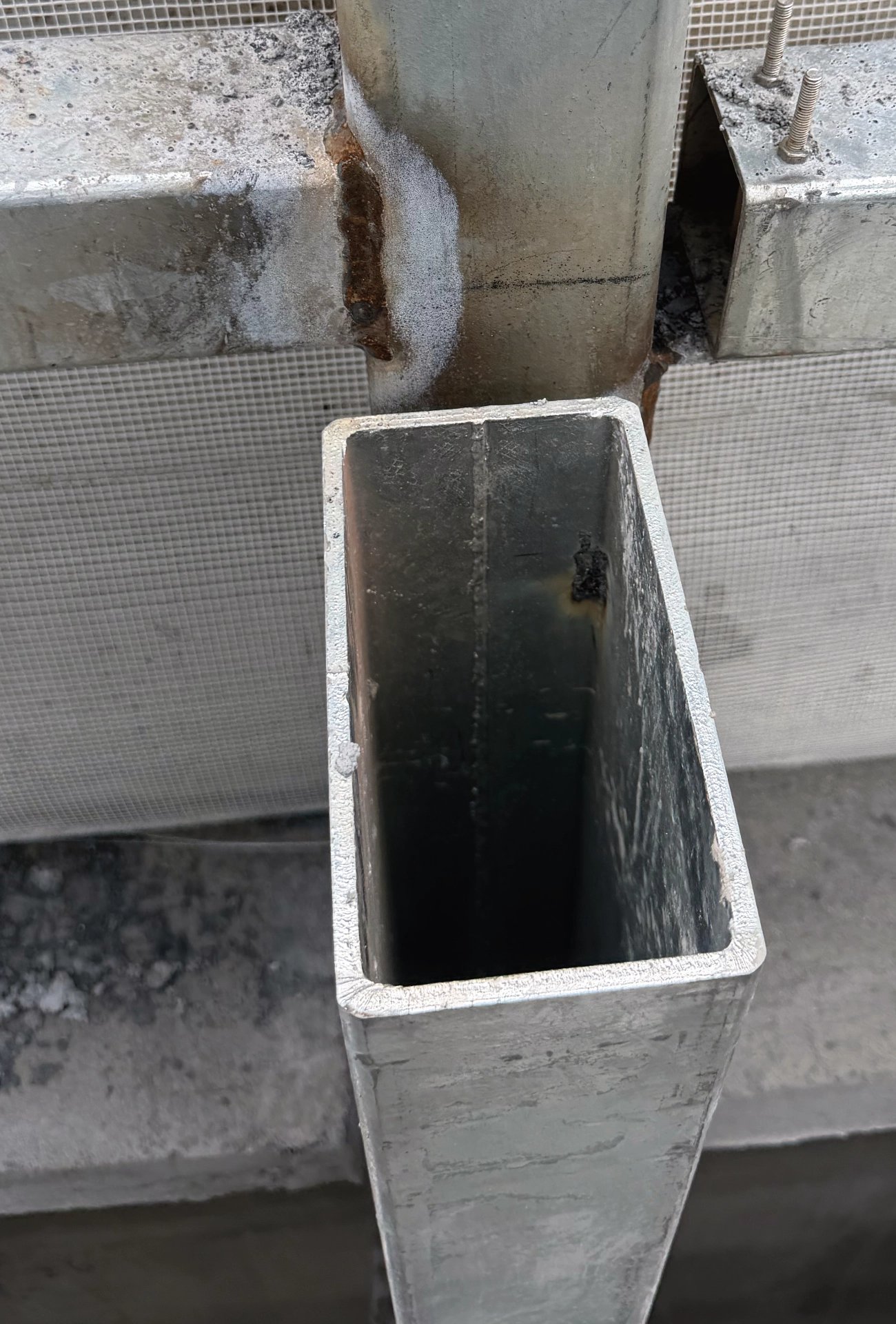
That order matters for wind. Remaining section is the perforated plate. The subframe is the span. If the steel bays are wide and the plate is 2.0 mm with a hungry hole field, the cassette reads soft. Tighten the grid, deepen the return, or step thickness at corners. LINDELACR will not stamp a generic kPa on a render of this campus; the calculation follows the drawing height and the ligaments you can still see in the shop close-up.
Site install is not the finished photograph
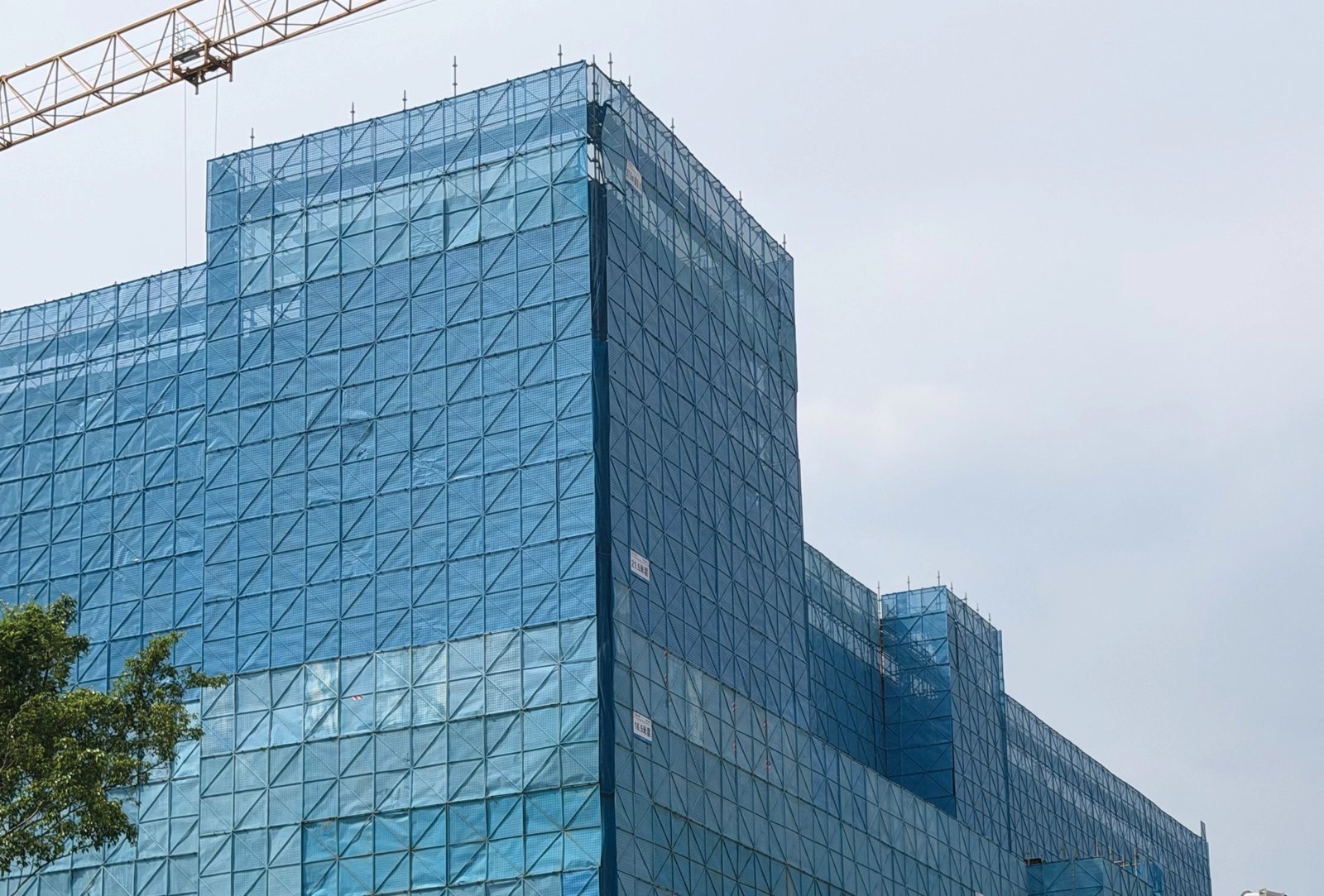
The blue mesh-and-scaffold shot is the same stepped massing as the finished campus—crane, safety net, labels on the wrap. It is not the rainscreen. Contractors who confuse construction netting with perforated aluminum order the wrong product. LINDELACR ships coated cassettes; the site hangs them after the welded grid is true. Until then the photograph is logistics, not the elevation the owner will occupy.
Factory insight: what actually delayed a utility facade
Punch cost drops when one circular tool repeats across 26 m of elevation. Color cost does not. A saturated cobalt PVDF is a coating-batch problem: enough area to fill the line, one lot so the joint grid stays even. A late change to hole pitch after the nest is signed is what slips a utility handover, not “CNC minutes.”
Send diameter + pitch, or an open-area target with a minimum ligament. Send the elevation that already has RF 26.000 m on it. LINDELACR keeps punch, brake, pretreatment, and the PVDF line in one 20,000 m² Foshan plant so the team that nested Zhaoqing Southern Power Grid is the team that checks the first crate. MOQ follows the color lot more than the hole count.
Frequently asked questions
What cladding did LINDELACR supply for Zhaoqing Southern Power Grid?
A solid perforated aluminum rainscreen—typically 3003-H14 plate, 2.0–3.0 mm—punched as a repeating circular field, folded into cassettes, and coated PVDF to AAMA 2605 at ≥ 30 μm. The finished elevation is the cobalt-blue utility campus with a white joint grid.
How tall is the Zhaoqing Southern Power Grid perforated facade?
The site elevation drawing marks roof level (RF) at 26.000 m above ±0.000 (1F), with intermediate floors through 21.500 m (6F). Wind and cassette size are calculated from remaining section and that height—not from a catalog kPa.
Is the blue mesh on the construction photo the finished aluminum skin?
No. That photo is the install phase: safety netting and scaffold over the concrete frame. The finished skin is coated perforated aluminum cassettes on a welded steel subframe. LINDELACR forms and coats the cassettes in Foshan; the site hangs them after the grid is surveyed.
What should a specifier send to price a similar CSG-style perforated facade?
Send the elevation, hole diameter and pitch or open-area target, finish (PVDF color), and whether the screen is exterior. LINDELACR returns a punch nest, remaining-section note, 1:1 cassette sample, and lead time from the 20,000 m² Foshan plant.
Request the Zhaoqing nest—or your next utility elevation
If the next campus needs a punched, coated rainscreen rather than a printed ACP wrap, send the elevation to LINDELACR. We will return alloy, thickness, hole field, and a Foshan sample window—the same path used on Zhaoqing Southern Power Grid.