What Should You Check Before Approving a Sustainable Acoustic Ceiling Tile?
Approve a sustainable acoustic ceiling tile by the document that matches that tile, not by a family claim. LINDELACR does not publish an EPD, a recycled-content percentage, or an emissions certificate. Indoor aluminum is 0.6–0.8 mm, with a 20–25 mm return and powder to AAMA 2604.

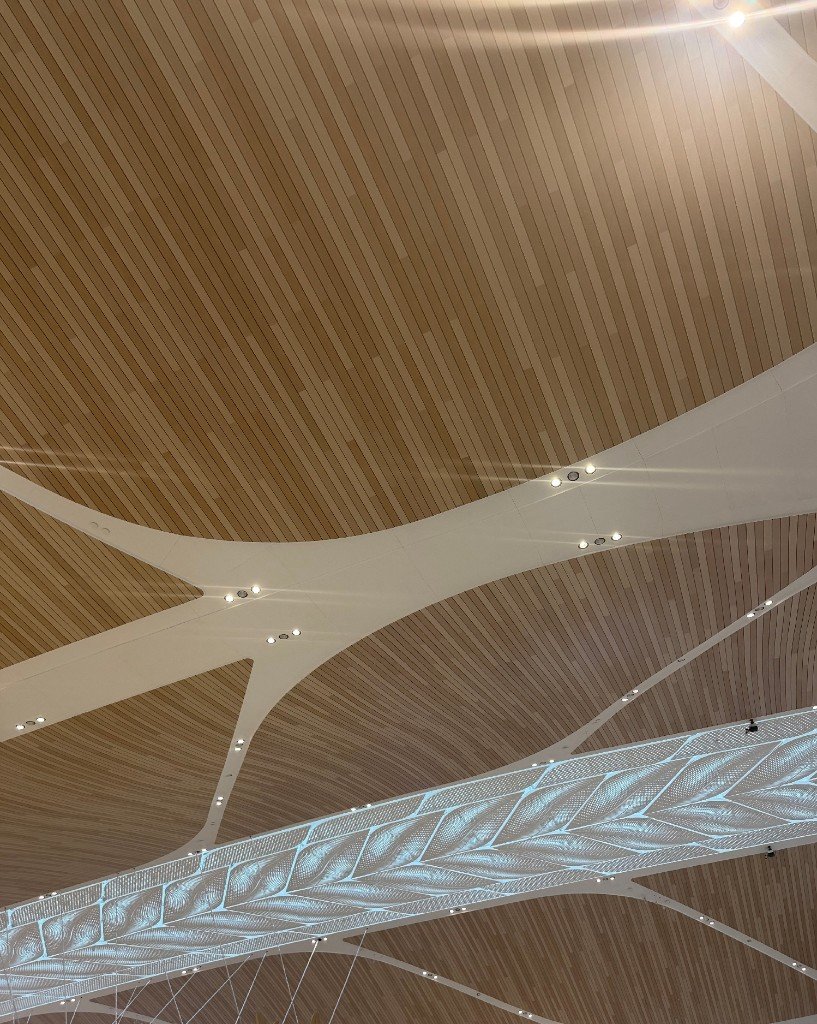
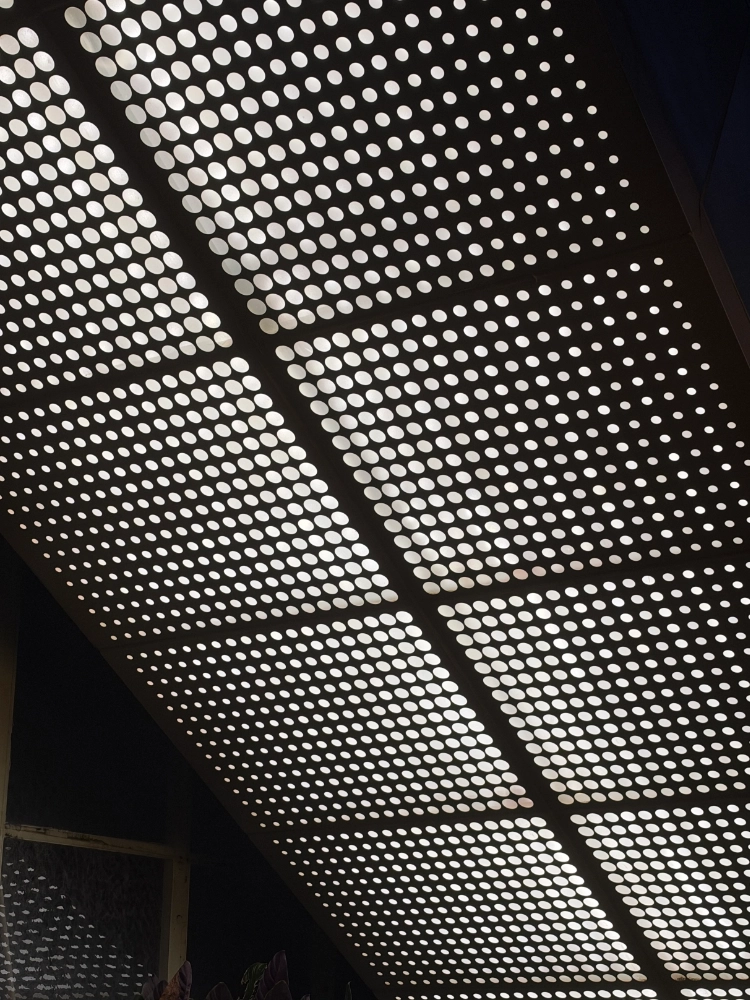
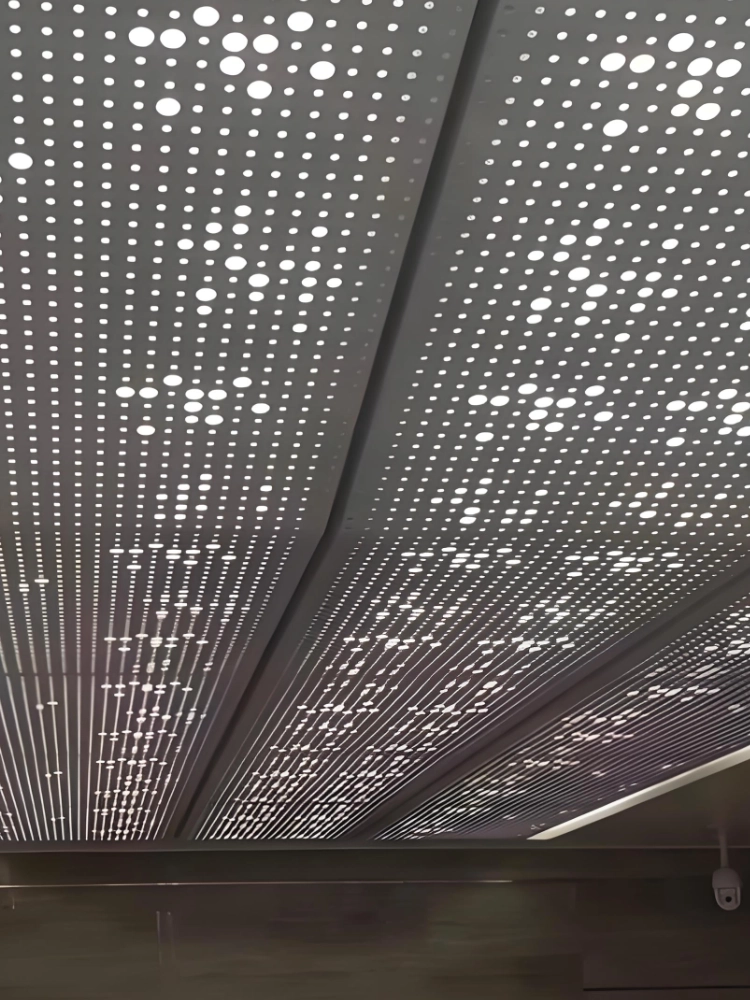
Two perforated aluminum ceilings sit in this one interior. The upper panel uses larger round holes. The lower field is a tighter pattern. The building is not named. A shortlist note that says “perforated aluminum” does not say which of these faces was reviewed, and the photograph is not an environmental declaration.
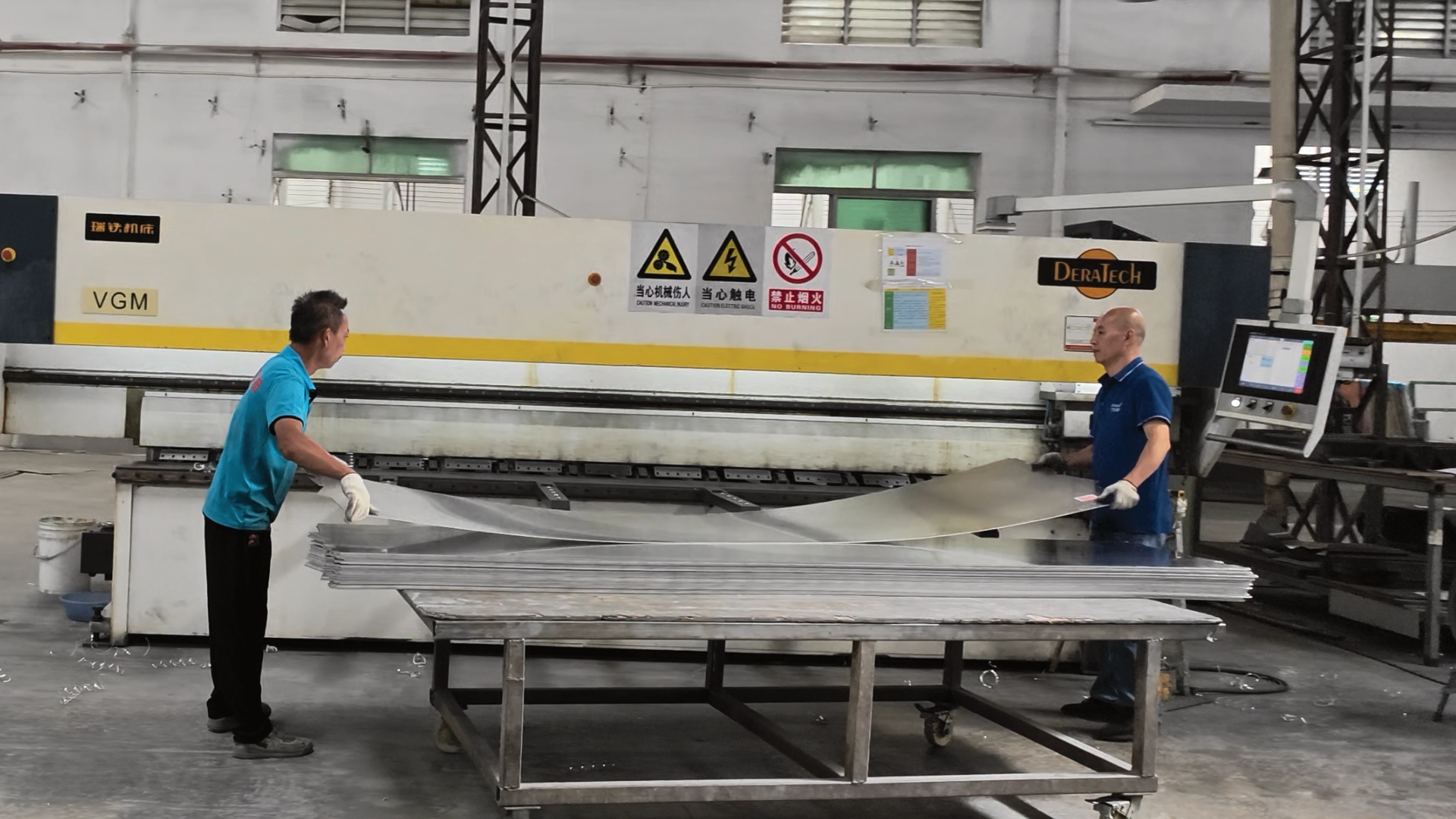
Approval fails when the paper and the tile diverge. The declaration covers a product family. The recycled figure covers only the sheet. The emissions certificate covers a different backing. LINDELACR folds the indoor tile at 0.6–0.8 mm in a 20,000 m² Foshan plant. The path is scan, CAD, CNC, then the brake. Alloy 1100 is the simple dry room. 3003-H14 is the step when a return of 20–25 mm has to stay flat. Powder on that interior is AAMA 2604, one lot. None of those shop facts is an EPD, a recycled-content percentage, or an emissions certificate.
Match the paper to the tile in front of you
| Document | It can support | It does not support |
|---|---|---|
| EPD | Impacts for the named product and the stages listed | A different gauge, backing, or a per-kilogram figure ranked against a per-square-metre figure |
| Recycled content | The part and the type the declaration names | An “up to” maximum treated as the minimum on every order |
| Emissions test | What the finished configuration released in that test | VOC content of one coating, or a fleece that was not in the sample |
| LINDELACR indoor tile | 0.6–0.8 mm, return 20–25 mm, powder to AAMA 2604 | An EPD, a recycled-content percentage, an emissions certificate, or an NRC |
Read the last row before you borrow a number from another supplier’s declaration. LINDELACR does not publish an EPD, a recycled share, or an NRC. A perforated face is still not a sound rating until the hole pattern, the open area, and any backing are on the drawing. That check is the same one in acoustic ceiling tiles for a T-bar grid.
Two carbon figures are comparable only on the same unit and the same life-cycle stages. A result per kilogram is not a result per square metre. A1 to A3 is raw material, transport to the plant, and production. It is not installation, use, or end of life. A thinner tile with a different hole pattern is not approved because its production figure looks smaller.
One room is one configuration
The teaching room is not the corridor
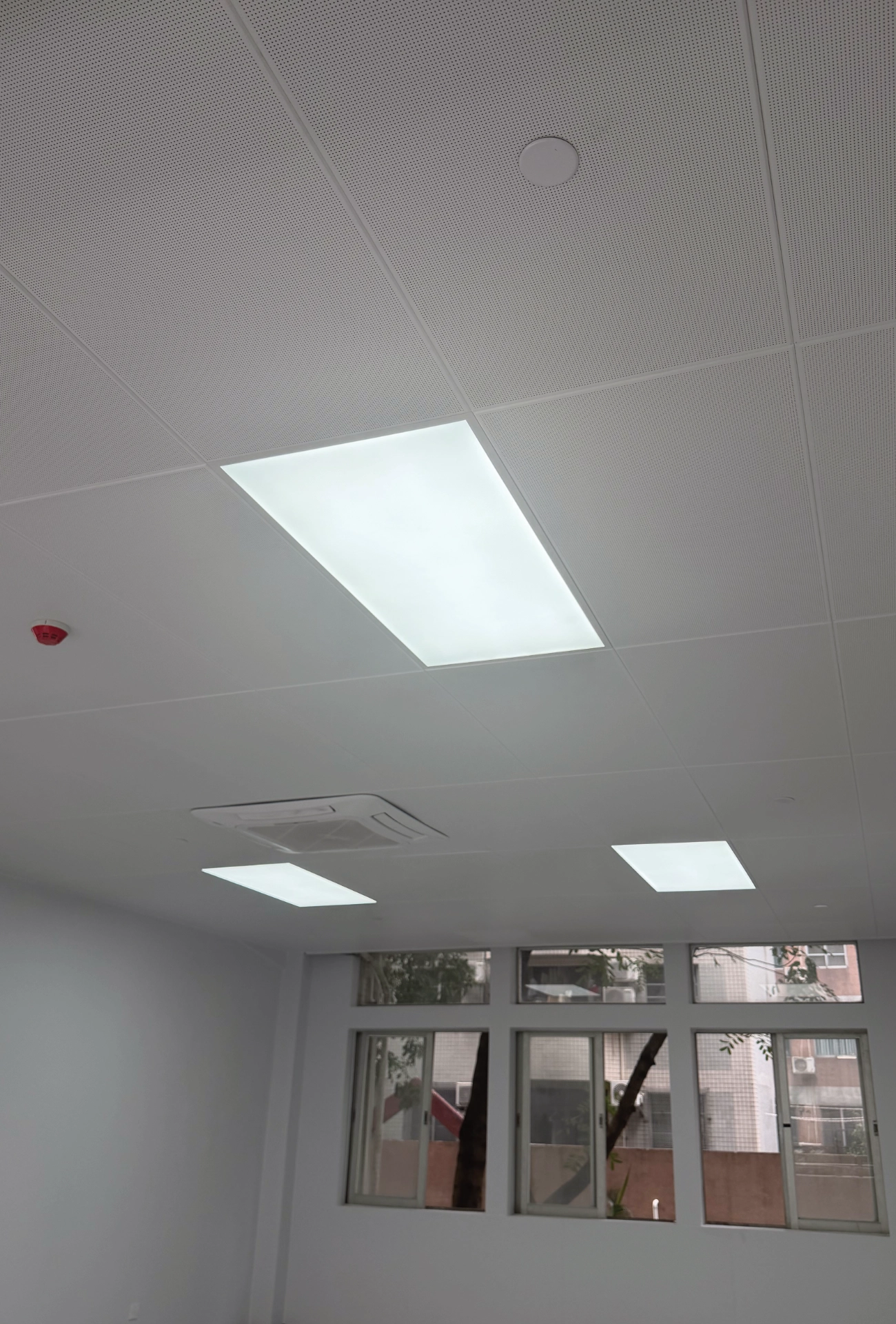
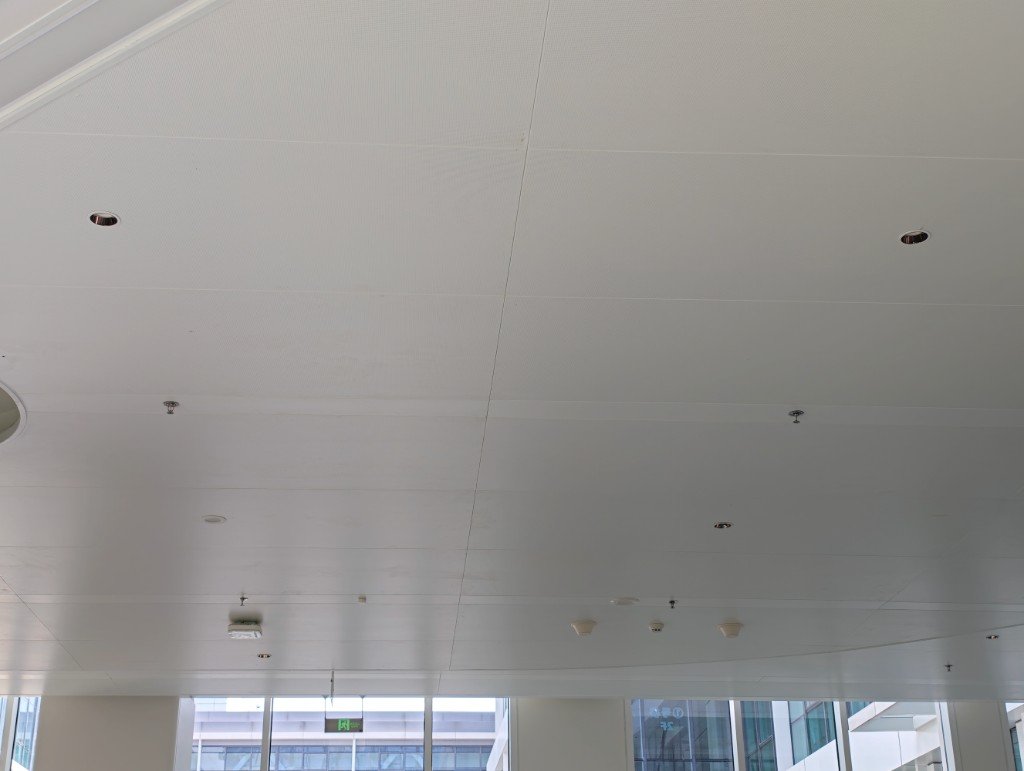
This teaching room at Guangzhou Baiyun University is one configuration. Micro-perforated aluminum fills the bays. Lights and a detector sit in the same grid. The corridors of that building are powder-coated U-baffles, not this lay-in. A document written for the room does not approve the corridor, and a family name does not approve either one.
If the project asks for an EPD, ask which product, which plant scope, and which components are inside it. A metal face without the acoustic fleece is a different product from the face plus the fleece. The registration, the verifier, and the expiry date have to match the listing. The name on the quotation has to match the name on the declaration. LINDELACR does not publish that declaration. The gauge, the return, and the powder lot are what the shop drawing does name. How those three are specified is in what to specify on a high-traffic acoustic ceiling tile.
A percentage has to name the part
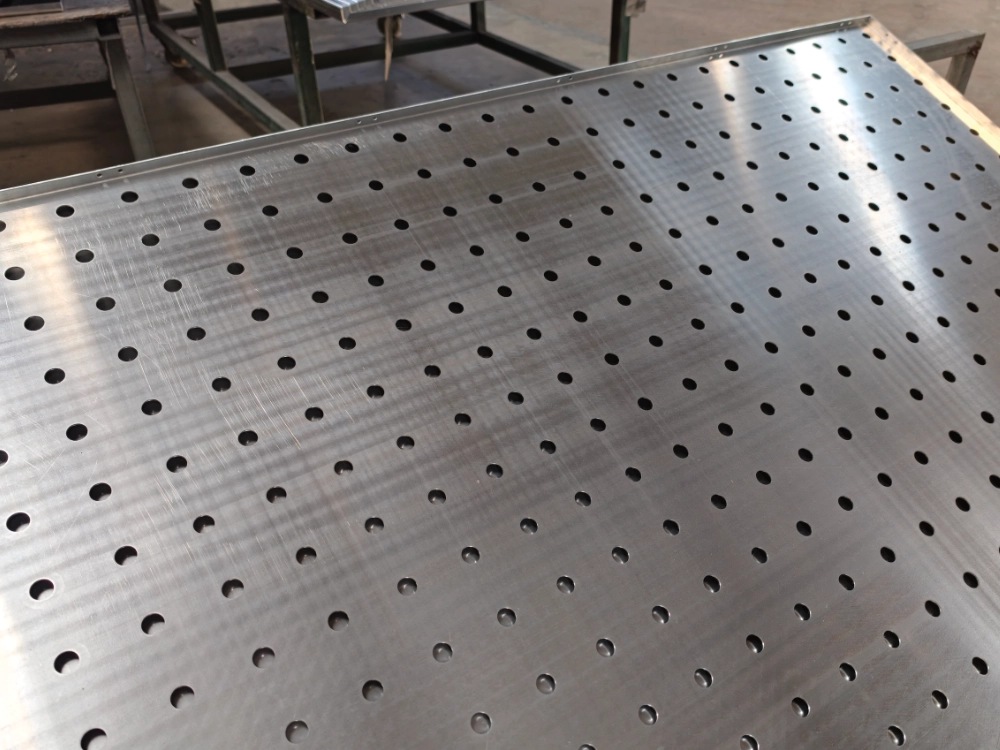
This sheet is mill finish, in Foshan, with a regular hole field. Powder has not been applied. No fleece is in the frame. If a specification asks for recycled content, the declaration has to say whether the figure is the sheet, the coated tile, or a backing that is not this panel. Pre-consumer scrap from the shop and post-consumer metal are different categories. A combined percentage hides that split when the spec asks for them apart.
Wording matters. “Up to” is a ceiling, not the share on the order in front of you. LINDELACR does not publish a recycled-content percentage, so do not invent one from this photograph. The sheet you can specify is 0.6–0.8 mm. The return, once it is formed, is typically 20–25 mm, folded before powder. A claim that stops at the flat sheet does not describe that formed tile.
Emissions are a test of the finished tile
VOC content and VOC emissions are different. Content is what a coating contains. Emissions are what the finished tile releases under the test the project names. A low-content note for one powder is not a certificate for the tile, and it says nothing about a fleece added later. If the backing changes, the earlier approval does not travel with it.
LINDELACR does not publish an emissions certificate. Powder on a dry interior is AAMA 2604, one lot. A later lot shows on a white field. Ask for the test only when the specification requires it, and check that the sample was this gauge, this return, and this finish. A product is not LEED certified. LEED applies to the building. One ceiling tile does not award a credit.
Frequently asked questions
Does an acoustic ceiling tile need an EPD?
Only when the specification asks for one. If it does, the declaration has to name the tile being ordered, not a wider family or a different backing. LINDELACR does not publish an EPD.
Is an EPD the same as an emissions test?
No. An EPD reports calculated environmental impacts for stated life-cycle stages. An emissions test measures what the finished product releases. A recycled-content figure is a third document. None of the three replaces the others.
Can an acoustic ceiling tile be LEED certified?
No. LEED applies to the building project, not to one tile. A tile is not certified because a brochure says sustainable. If a credit needs a document, that document still has to match the registered rating system and the exact tile.
Does LINDELACR publish a recycled-content percentage?
No. Indoor tile is 0.6–0.8 mm aluminum, return typically 20–25 mm, powder to AAMA 2604. Alloy 1100 is the simple dry room. 3003-H14 is the step when the return has to stay flat. A project that needs a minimum recycled share has to ask for that declaration on the sheet it means.
Send the configuration the paper has to match
Mark the module, the edge, whether a fleece is included, and whether the project requires an EPD, a recycled-content split, or an emissions test. LINDELACR folds a 0.6–0.8 mm tile in Foshan to that opening, return 20–25 mm, powder to AAMA 2604. Those shop facts are not a substitute for a document the specification did not receive.