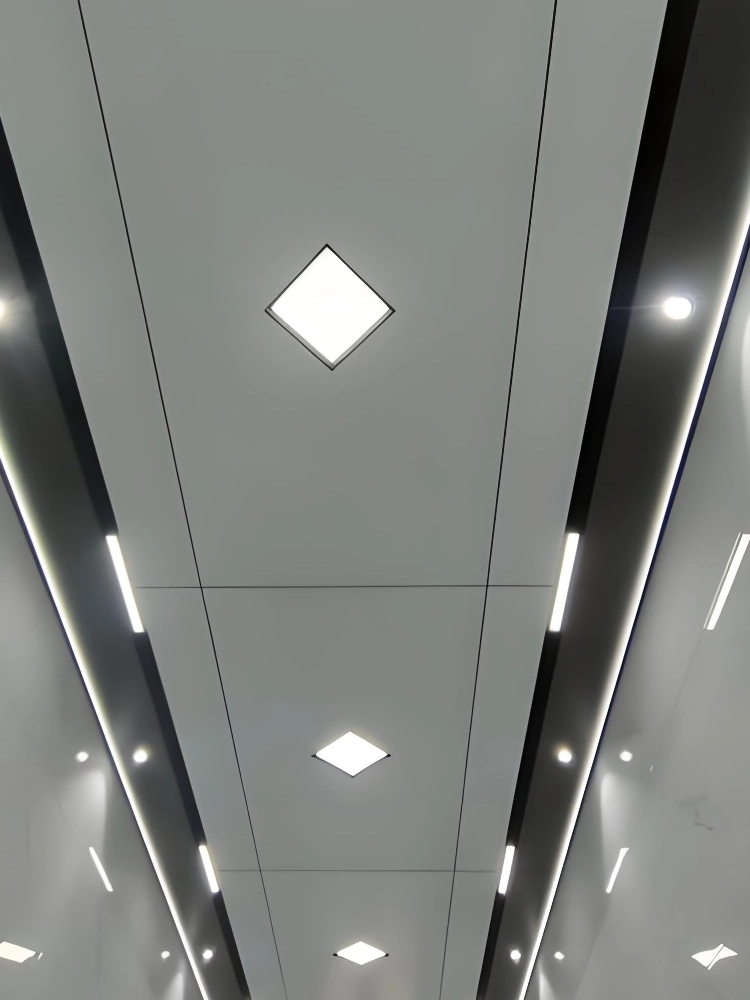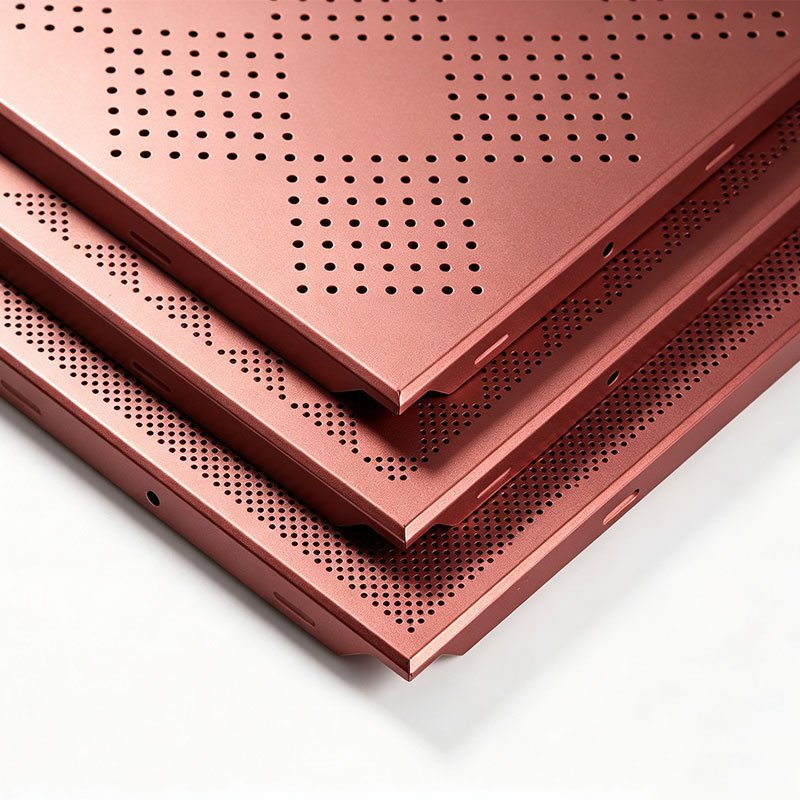
What Has to Match When You Replace an Acoustic Ceiling Tile?
Replacing an acoustic ceiling tile is a match, not a new ceiling. The spare has to repeat the module, the edge, and the powder lot. LINDELACR does not publish an NRC. Indoor aluminum is 0.6–0.8 mm, and one tile comes down as one piece.
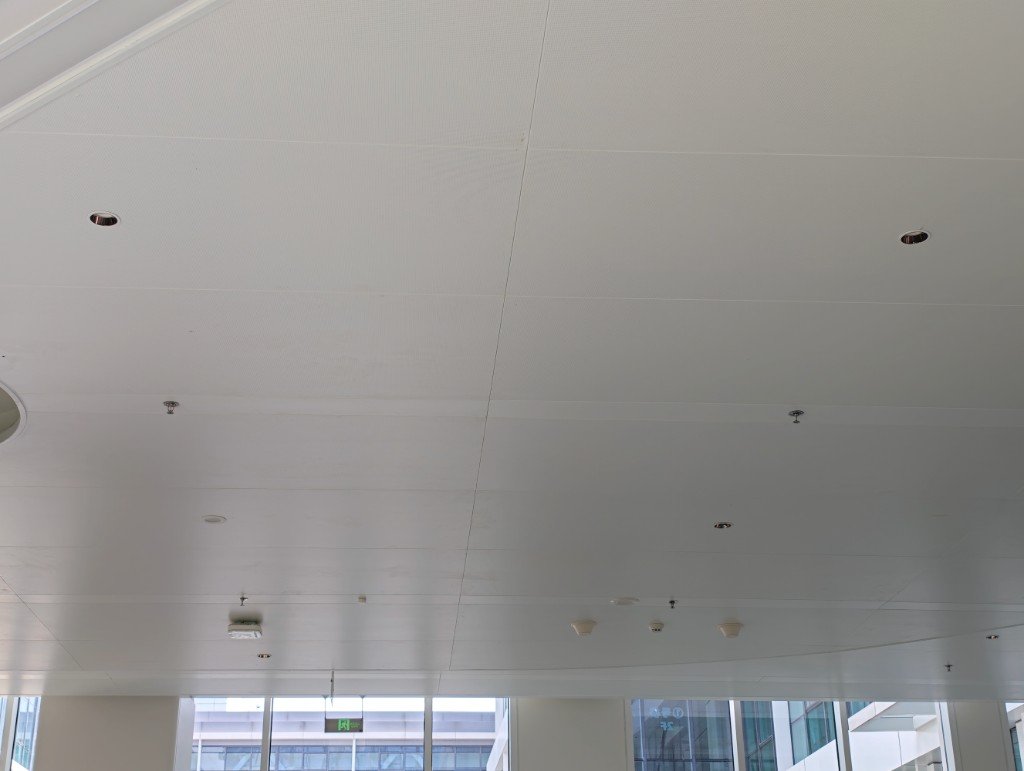
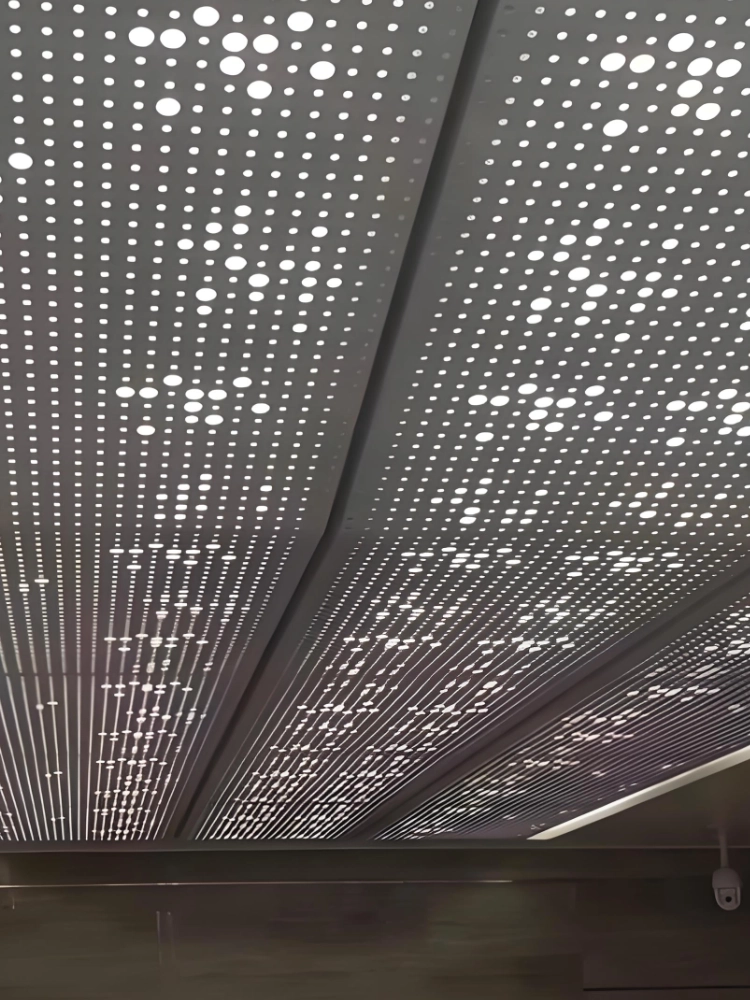
The field is already cut. Downlights and sprinkler heads sit in the modules, and the joints show the size you have to repeat. A stain or a crack in one bay is that bay. It is not a reason to repaint the room or to order a different tile because a carton was on the shelf. This photograph does not show the back of the panel, so it does not show backing, gauge, or who made it. What it does show is the rule for a spare: land on those joints, and keep the openings that are already there.
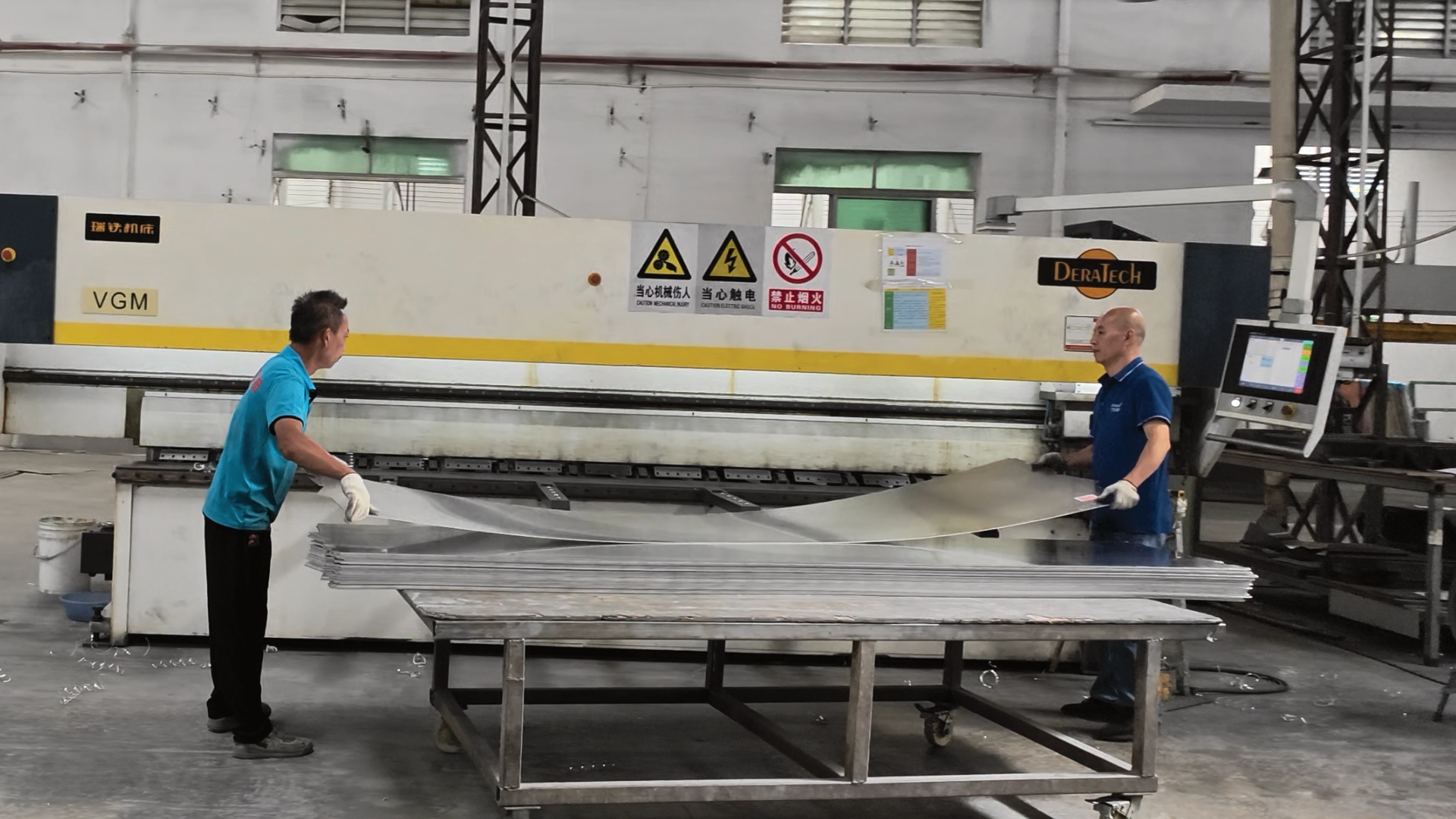
Indoor aluminum tile at LINDELACR is 0.6–0.8 mm. Alloy 1100 is enough on a simple dry room. 3003-H14 is the step up when the module is larger or the return has to stay flat. A typical indoor return is 20–25 mm. Powder is AAMA 2604, one lot. The shop path is scan → CAD → CNC → fold, on a 20,000 m² plant in Foshan. A mineral-fiber board that sagged in humidity, or took a brown stain from a leak, is discarded. It crumbles if you lift it often. An aluminum module comes down whole and goes back, if the spare is actually the same module.
Five things a spare tile has to match
| What the spare must match | If it does not | What holds |
|---|---|---|
| Module | 600 × 600 mm forced into a 600 × 1200 mm bay | The size already in the grid |
| Edge | Square edge in a tegular seat, or 14 mm on a 24 mm tee | The edge and tee face on site |
| Face | Paint over the holes, or a solid tile in a perforated field | The hole pattern on the drawing |
| Lot | A later powder batch on a white field | Spares from the first AAMA 2604 lot |
| System | A lay-in dropped into a baffle run | Lay-in stays lay-in; blades stay blades |
Do not soak a porous tile, and do not paint across the holes to freshen the color. Water warps a mineral-fiber face. A coat seals the openings that were on the drawing. LINDELACR will not quote an NRC for the original or for the repaint, so a brush is not a way to “keep the performance.” If the color has shifted, the spare comes from the first powder lot. A later lot shows on a white field before anyone argues about the size.
The tee is the contractor’s. LINDELACR does not roll it. A square edge and a tegular edge do not share a seat, and a 24 mm tee face is not a 14 mm tee face. That match is in ceiling tiles for a T-bar grid. Clip-in is a third system: the return hooks a carrier, and a lay-in spare will not do that job. Lights, sprinklers, and detectors that were cut in the shop stay on the nest. A hole added after powder is a new panel.
A baffle run is not a tile you lift
Blades are replaced as blades
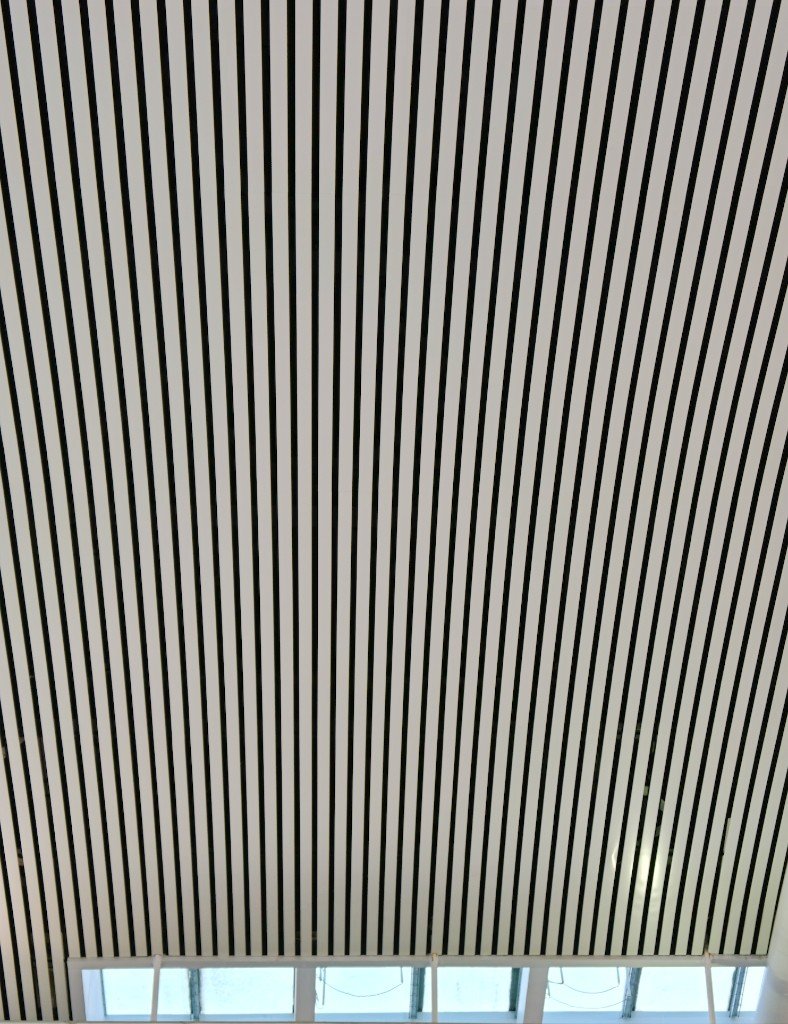
These are linear baffles, black against a white soffit, running the length of the room. There is no 600 mm module to lift out. A damaged blade is that profile, that spacing, and that color. Stocking lay-in tiles for this ceiling does not maintain it. The gap between blades is not a seat.
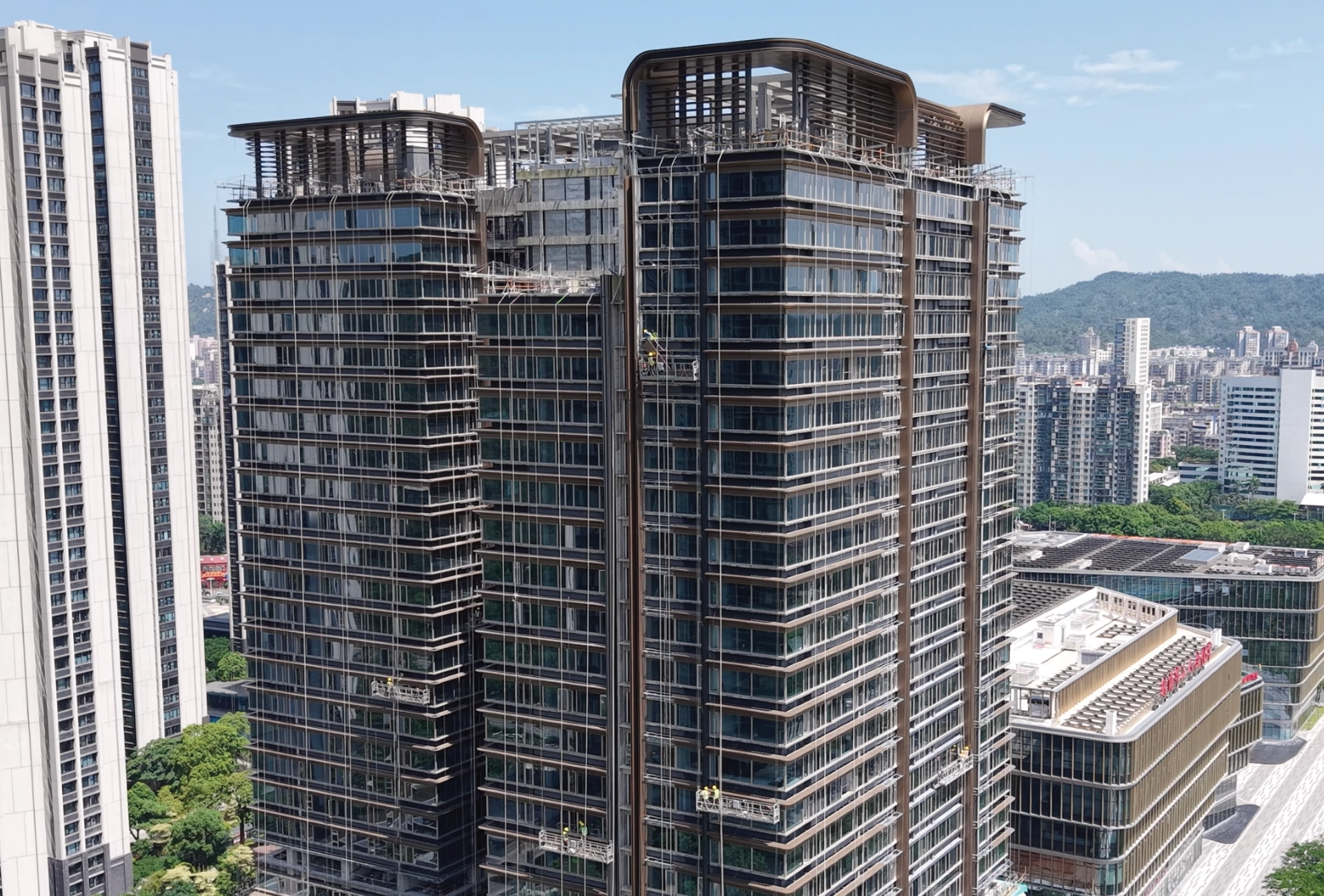
On Guangzhou Baiyun University the teaching-building corridors are powder-coated U-baffles, and the office field is micro-perforated aluminum tile in a visible grid. This photograph is not that campus. The office is the lay-in case: one module comes down, lights and a cassette with it. Why the holes are still not an NRC is in acoustic ceiling tiles for a T-bar grid. Do not average the corridor blades and the office tiles into one spare carton.
A large panel is a different spare
The joint is the module
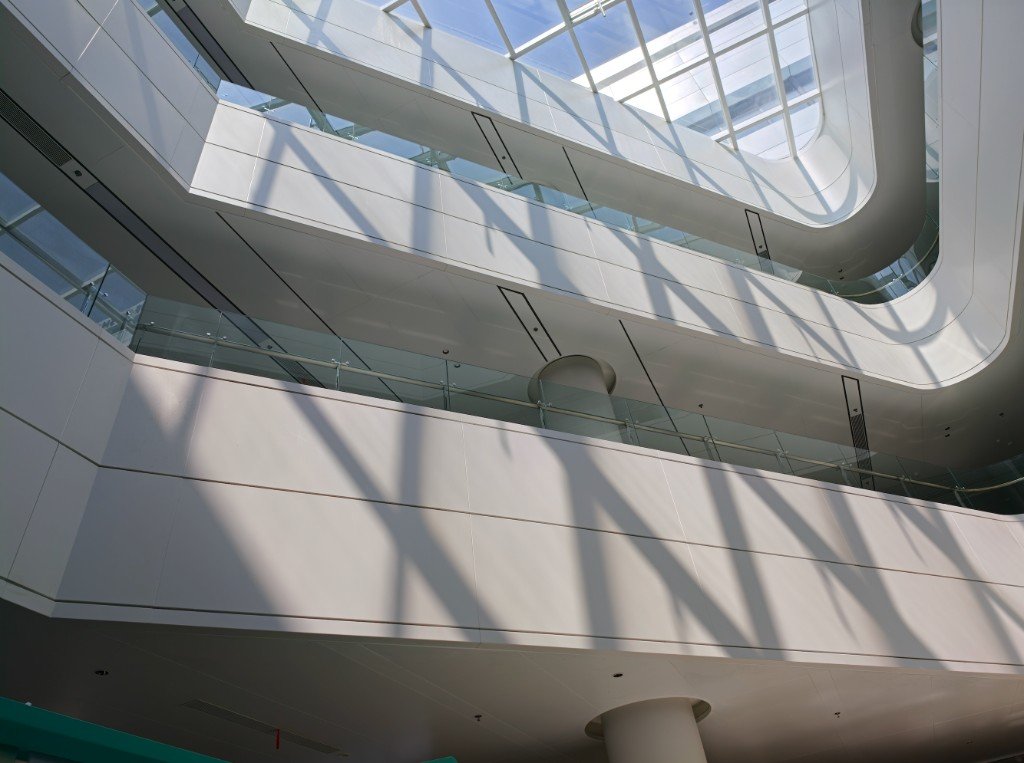
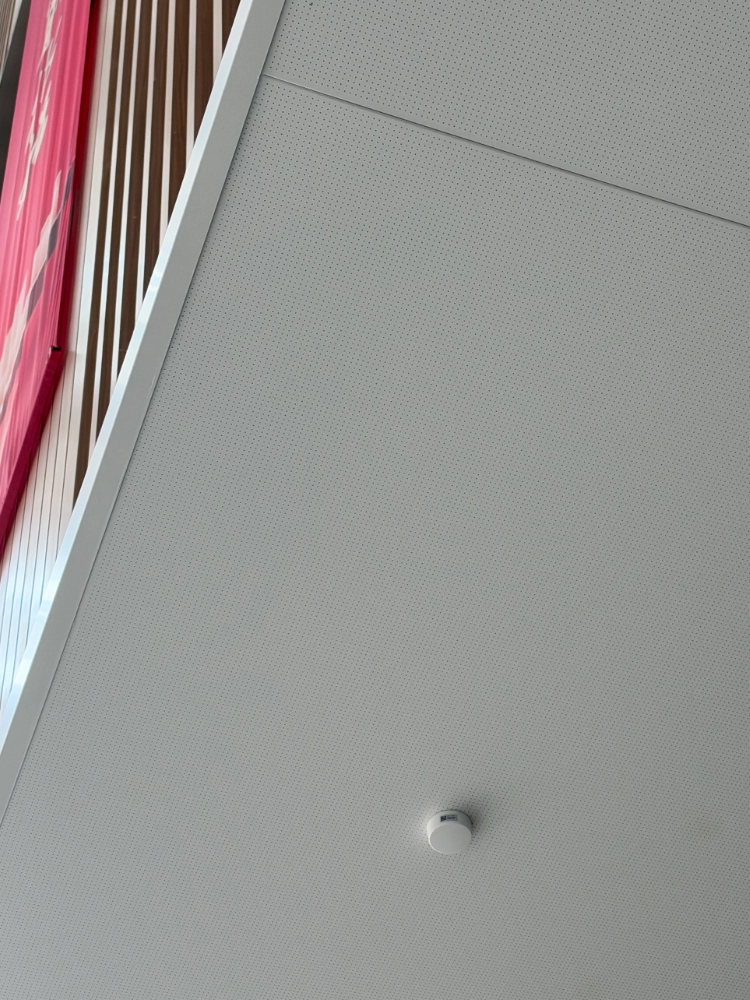
Under this skylight the white face is large panels. The joint runs with the panel, not on a 600 mm grid. Replacing one of them is a panel of that width and that return, folded to the drawing. It is not a carton of ceiling tiles, and it is not a mineral-fiber board cut to fit. The building is not named here. The photograph is only the module.
Order the spare when the first lot is coated, and keep it with the job. A facility that waits until a leak stains one bay will be matching a color the line no longer runs. Send the module, square or tegular, the tee face, and whether the face is perforated. LINDELACR folds a 0.6–0.8 mm tile in Foshan from the same AAMA 2604 lot when the lot is still open. After it is closed, say so on the order. A “similar white” is a second ceiling inside the first one.
Frequently asked questions
How do you replace one acoustic ceiling tile?
If it is a lay-in, lift that module. The spare has to match the size, the edge, and the tee face already on site. A mineral-fiber board that sagged or took a stain is discarded. An aluminum tile comes down as one piece and goes back.
Can you paint an acoustic ceiling tile to refresh the color?
Do not paint over the holes. A site coat changes the face that was specified. Color match is a spare from the same powder lot. LINDELACR does not publish an NRC, so paint is not a way to keep a number.
What if the replacement tile is a different size?
It will not seat. A 600 × 600 mm tile does not fill a 600 × 1200 mm bay. A square edge does not replace a tegular edge. A 24 mm tee face is not a 14 mm tee face.
Are linear baffles replaced like ceiling tiles?
No. Blades on a carrier are not a lay-in. A 600 mm tile does not drop into that gap. Replace a damaged blade with the same profile and the same powder lot.
Send the module that is already in the grid
Mark 600 × 600 or 600 × 1200, the edge, and the tee face. Say whether the face is perforated, and whether a spare from the first powder lot is still on site. LINDELACR will not paint a new number onto an old tile.