2x2 vs 2x4 Acoustic Ceiling Tiles: What Changes the Grid and the Cost?
A 2×2 acoustic ceiling tile covers about 4 square feet. A 2×4 covers about 8. Neither size is a 600 mm module, and neither size sets sag or sound. Start with the grid, the lights, and the edge. Indoor aluminum at LINDELACR is 0.6–0.8 mm.
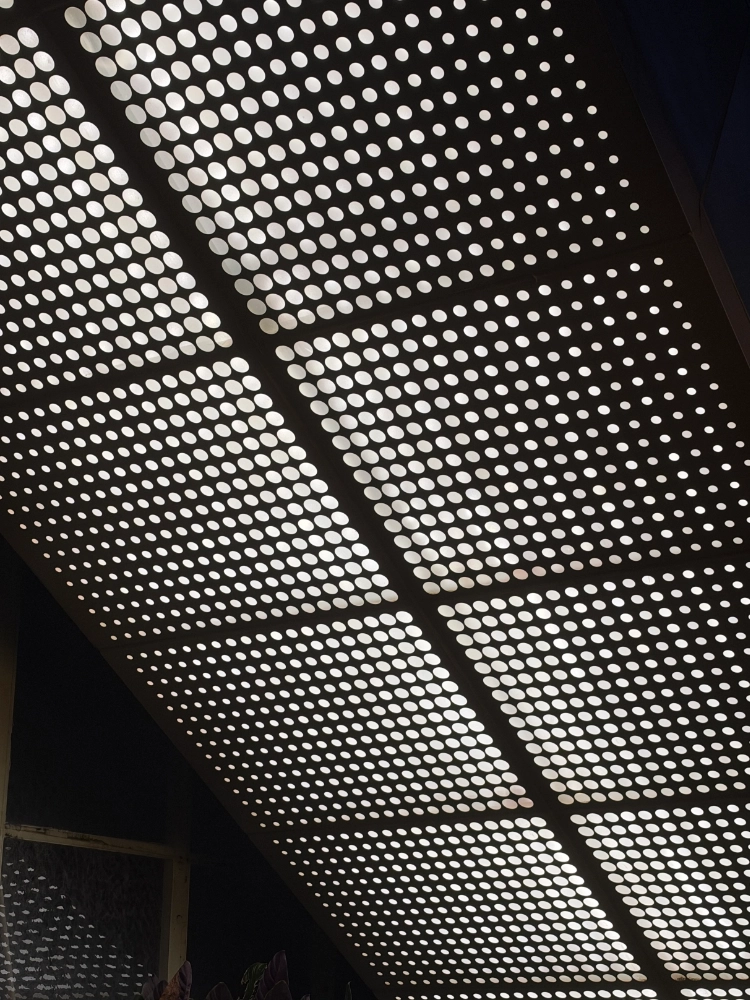
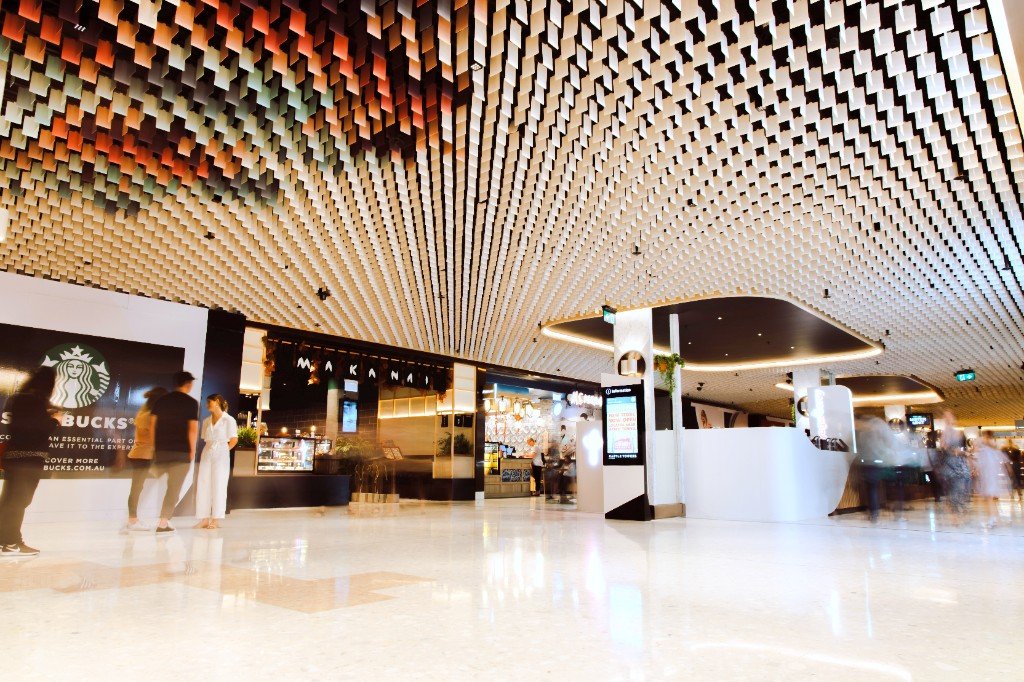
The panels in this photograph run long. The joints follow each perforated sheet, and the holes continue across the face. That is the layout a 2×4 module is after: fewer divisions, and a direction you can see. Module size is a grid decision before it is a carton price.
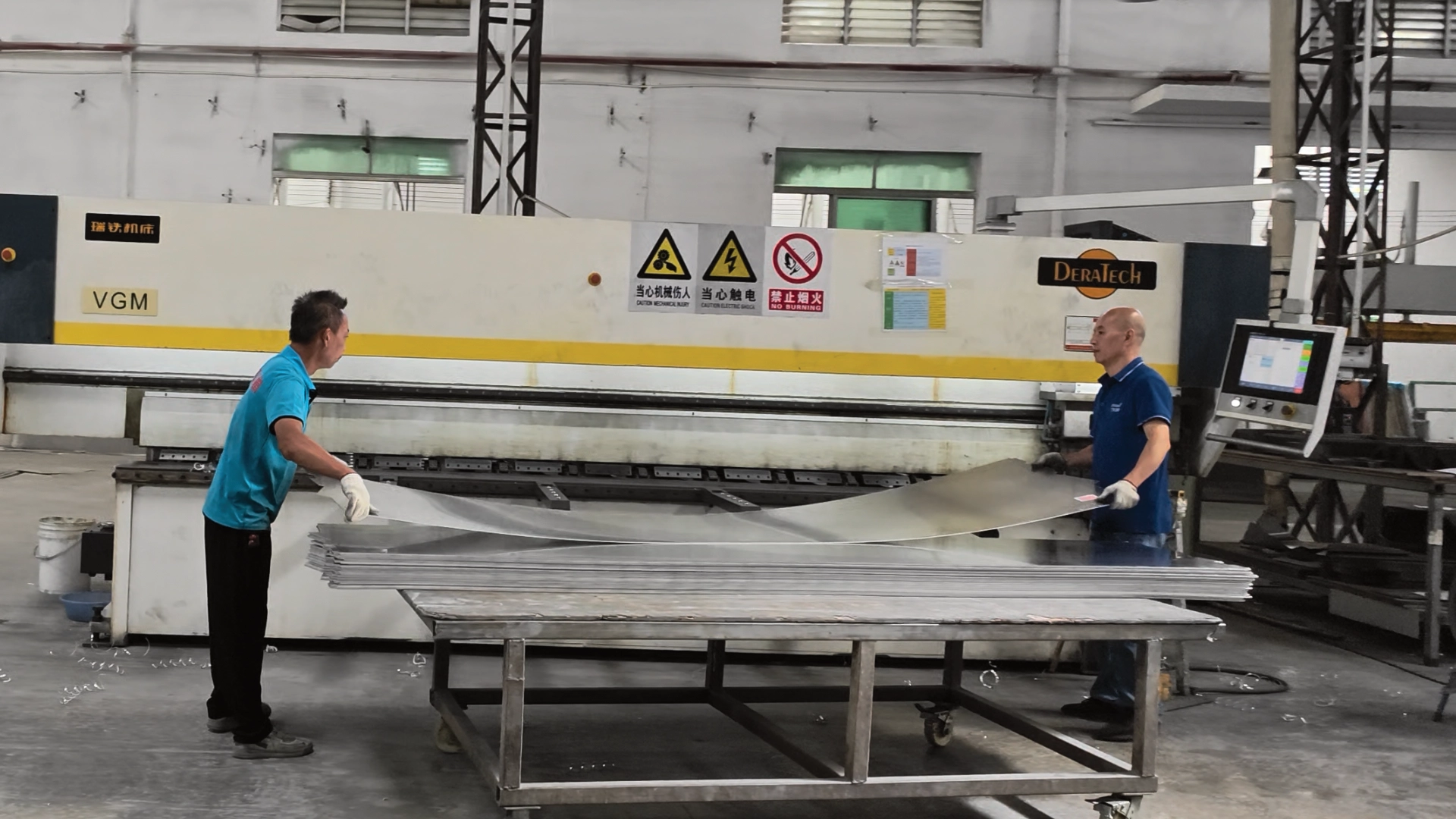
A 2×2 tile and a 2×4 tile are nominal US openings, 24 × 24 inches and 24 × 48 inches. The metal that drops in is slightly smaller, because the tee face takes a bite of the opening. A metric drawing at 600 × 600 mm or 600 × 1200 mm is a different opening. LINDELACR folds the size on the drawing. The Foshan plant is 20,000 m². The path is scan, CAD, CNC, then the brake. Indoor tile is 0.6–0.8 mm. Powder on a dry interior is AAMA 2604, one lot.
2x2 and 2x4 tiles are not the same opening
| What you are comparing | 2x2 | 2x4 |
|---|---|---|
| Nominal module | 24 × 24 in, about 610 × 610 mm | 24 × 48 in, about 610 × 1219 mm |
| Coverage per panel | 4 sq ft | 8 sq ft |
| Positions on 1,000 sq ft of clear modules | About 250 | About 125 |
| Metric module it is not | 600 × 600 mm | 600 × 1200 mm |
| Grid change | A 2 ft cross tee splits the rectangle | Main runners and 4 ft tees stay |
| LINDELACR indoor tile | 0.6–0.8 mm aluminum, return typically 20–25 mm, powder to AAMA 2604. Alloy 1100 on a simple dry room; 3003-H14 when the module is larger or the return has to stay flat. | |
Four square feet against eight means the panel count on a clear field is about half at 2×4. The aluminum area is not half when both tiles are the same sheet, the same holes, and the same return. Thickness, hole pattern, and edge sit outside the module.
About 610 mm is not 600 mm. A 600 × 600 mm tile is short of a 24 inch bay. A 600 × 1200 mm tile is short of a 48 inch bay. How the edge meets the tee is in ceiling tiles for a T-bar grid. A 15/16 inch tee face is not a 9/16 inch face. On metric jobs those are the 24 mm and 14 mm tees. A square edge and a tegular edge do not share a seat.
The grid decides the module
A square module lines up with square lights
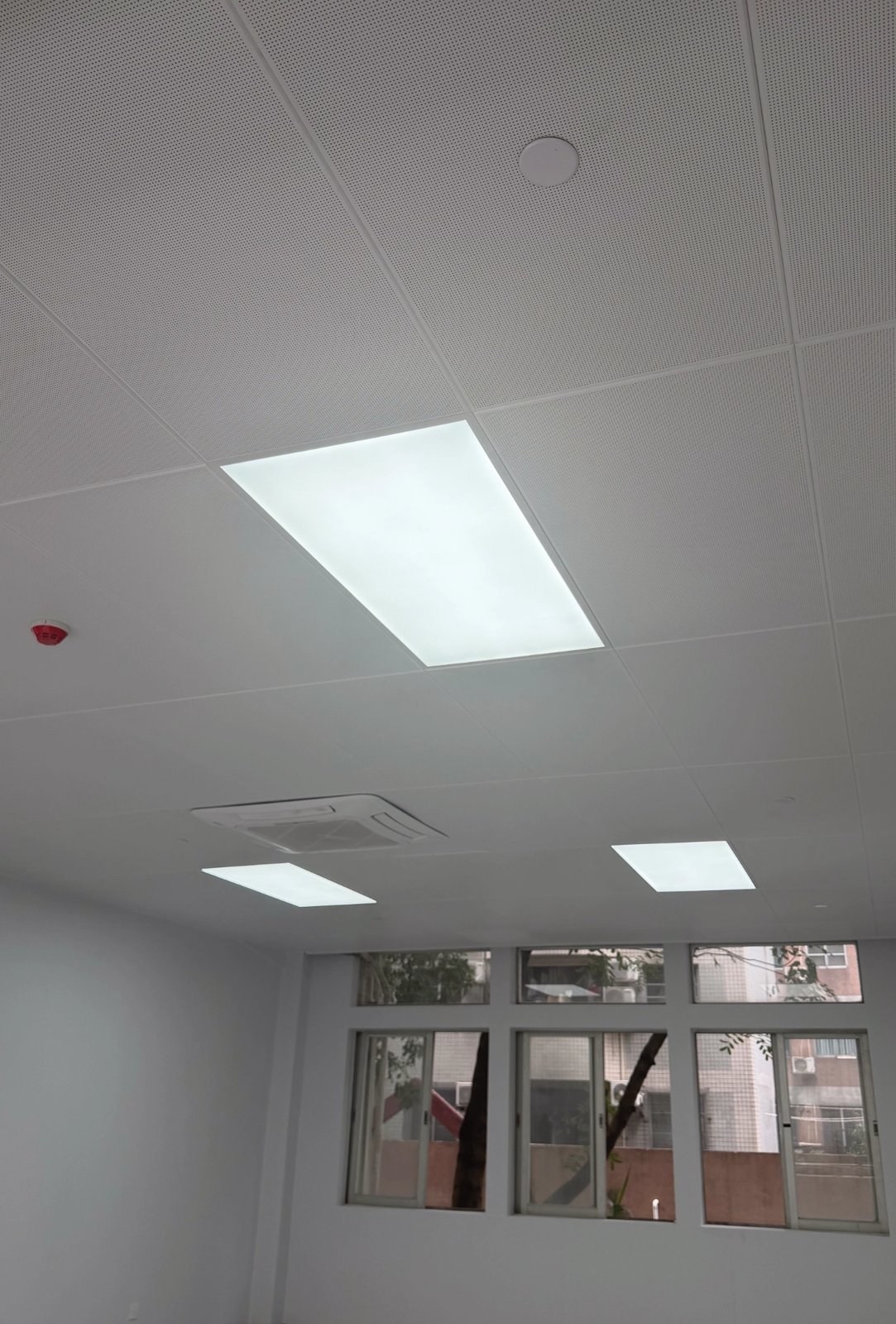
This office ceiling is a square grid. Micro-perforated aluminum fills the bays, and the lights are square, in the same rhythm as the tiles. A round diffuser and a sprinkler sit in the field without turning the module. That is the case for a 2×2 layout: the ceiling reads the same in both directions, and a square fitting has a bay that matches it.
The photograph is the office field at Guangzhou Baiyun University. The corridors there are powder-coated U-baffles, not this grid. Do not order 24 inch tiles for a metric bay because the squares look familiar. LINDELACR does not publish an NRC for the holes. Why a perforated face is still not a rating is in acoustic ceiling tiles for a T-bar grid.
A rectangular bay keeps the long light
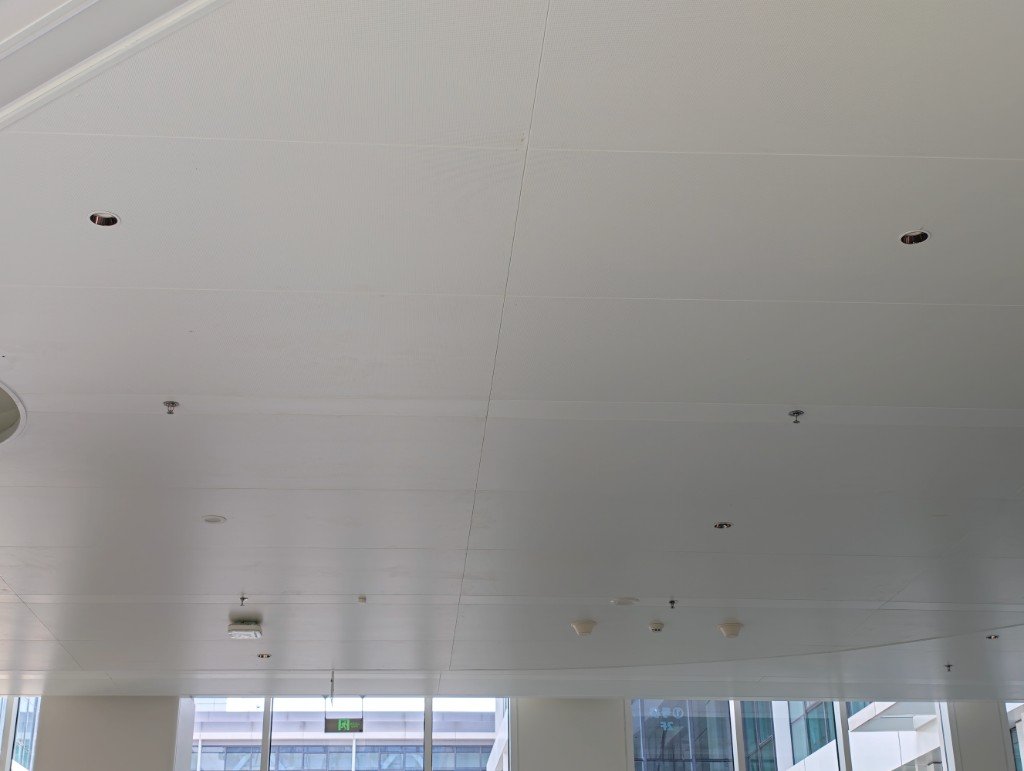
This ceiling already mixes the two ideas. Perforated squares sit beside larger smooth panels. One light is a long rectangle. Others are small squares. You cannot drop a 2 ft cross tee through the long light. The bay that holds it stays rectangular. The bays around it can be squares if the tee slots accept a short cross tee.
A matching tee color is not a matching connector. The face width has to match the grid that is already up. On a new ceiling, fix the direction of the 2×4 before you count border cuts. Turning the rectangles changes every perimeter piece and every light offset. A large room does not require the long module. The lights and the border do.
A lower tile price is not a lower ceiling
On 1,000 square feet of clear modules, before waste and lights, a 2×2 layout is about 250 positions and a 2×4 layout is about 125. Each 2×4 covers what two 2×2 tiles cover. The same sheet and the same coating do not get cheaper because the carton has fewer pieces. Fewer panels, and fewer 2 ft cross tees, is a real labor difference. It is not half the job.
The difference disappears when the lights will not accept the new module, when the border is all cut panels, or when the retained grid is the wrong face. A serviceable 2×4 grid that already holds the lights is often the lower-cost ceiling, because you are not rebuilding the suspension. Price both takeoffs with the same tile spec. Indoor aluminum stays 0.6–0.8 mm either way. Alloy 1100 is the simple dry room. 3003-H14 is the step when the longer module has to hold a flat return of 20–25 mm. Powder is one AAMA 2604 lot.
Do not saw a finished 2×4 aluminum tile into two 2×2 tiles. The return is formed on the brake before powder. A site cut leaves a raw edge and does not create the tegular seat the short tee expects. Order the module.
Size does not set sag or sound
A 2×4 tile is not an unsupported four-foot strip. A lay-in sits on the tee around its perimeter. Sag follows the sheet, the thickness, the return, and the moisture. Mineral fiber can soften in a humid room at either size. Aluminum at 0.6–0.8 mm does not soak that moisture up. It can oil-can if the gauge is light and the return is shallow. The longer module is the one that moves from 1100 to 3003-H14.
Sound follows the product, not the carton size. LINDELACR does not publish an NRC. A larger panel does not absorb more because it covers more ceiling. Compare the hole pattern, the open area, and whether there is backing. Humidity resistance is not resistance to a leak. A stained mineral-fiber tile is discarded. An aluminum module comes down as one piece if the spare matches the opening.
Frequently asked questions
Are 2x2 ceiling tiles the same as 600 × 600 mm tiles?
No. A 2×2 module is nominally 24 × 24 inches, about 610 × 610 mm. A 600 × 600 mm tile is a metric grid. The same gap sits between a 2×4 tile, about 610 × 1219 mm, and a 600 × 1200 mm tile. Check the cut size, the edge, and the tee before you substitute.
Can you cut a 2x4 acoustic ceiling tile into two 2x2 tiles?
Not when the edge is a formed return. A factory fold of 20–25 mm does not appear after a site saw cut. Square-edge mineral fiber is sometimes cut in the field. An aluminum tile from LINDELACR is ordered as the module on the drawing, 0.6–0.8 mm, one piece.
Can you mix 2x2 and 2x4 tiles in one ceiling?
Yes, when the suspension already has both openings. A short cross tee can split selected rectangular bays into squares. Bays that hold a long light stay rectangular. The reflected ceiling plan has to show the lights, the edges, and how a tile comes down.
Are 2x4 ceiling tiles cheaper than 2x2 tiles?
The panel count is about half, and each panel covers about double. On 1,000 sq ft of clear modules that is roughly 125 positions instead of 250. Material area does not halve. Fewer short cross tees can reduce grid parts. Border cuts and a grid change can spend that difference.
Send the opening that is already on the drawing
Mark 24 × 24 or 24 × 48 if the grid is imperial, or 600 × 600 or 600 × 1200 if it is metric. Name the tee face, square or tegular, and whether a long light stays in a rectangular bay. LINDELACR folds a 0.6–0.8 mm tile in Foshan to that opening, powder to AAMA 2604.