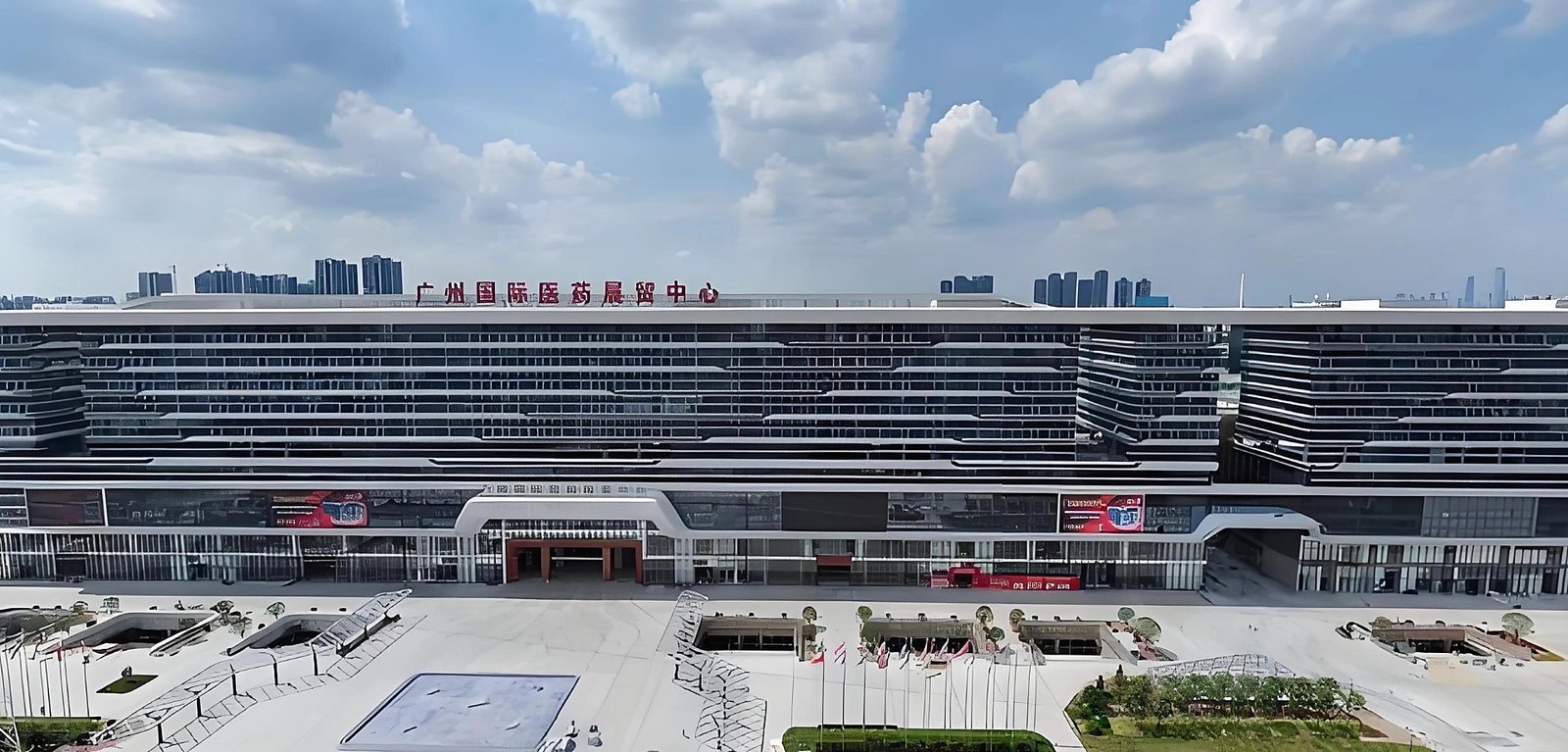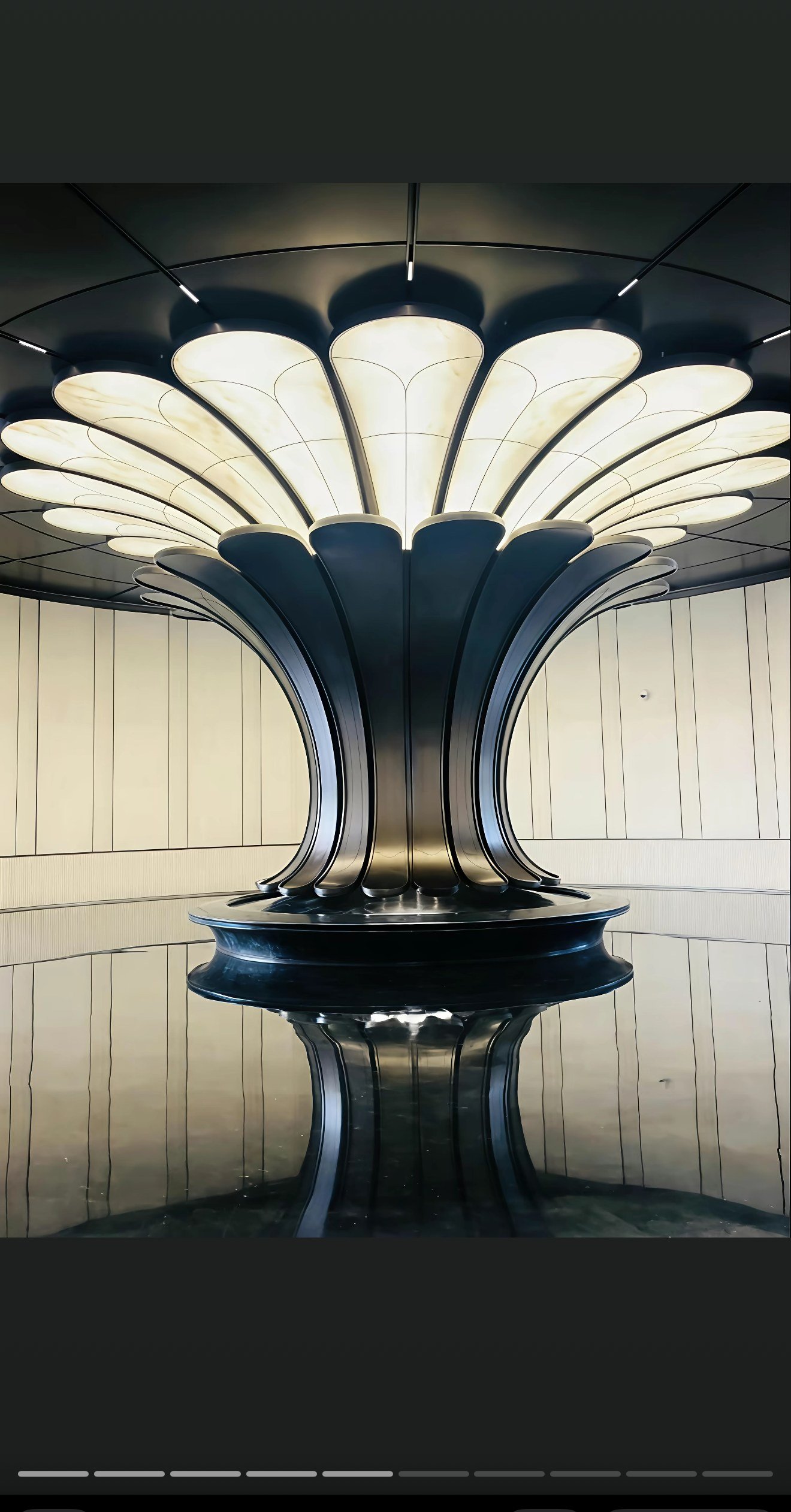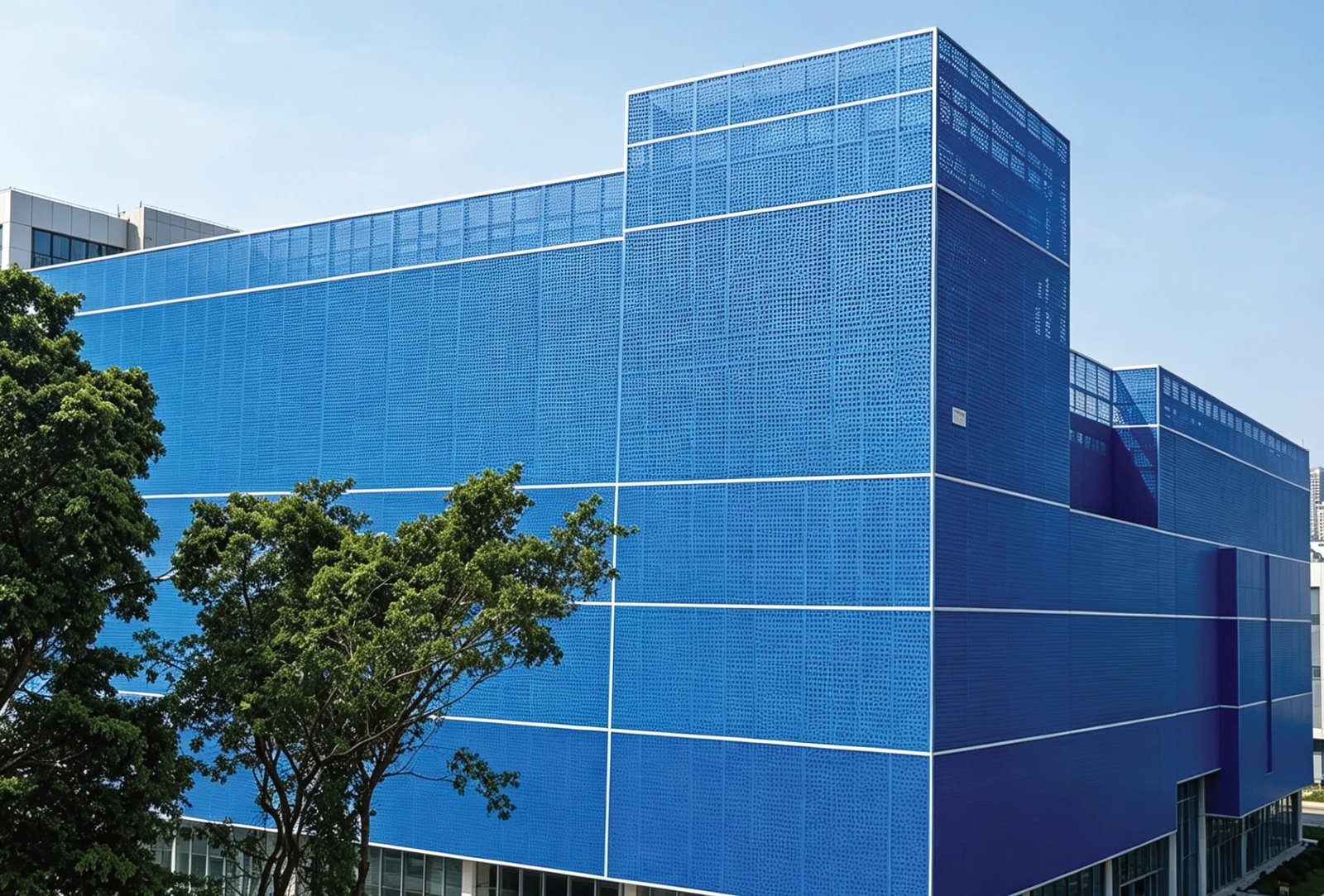
PVDF-coated aluminum veneer is usually better for exterior facades: it meets AAMA 2605, resists UV chalking, and lasts about 20–30 years. Powder coating suits interiors, sheltered walls, or tighter budgets that need a wide color range. LINDELACR selects the finish by climate, warranty, and alloy—not by default.
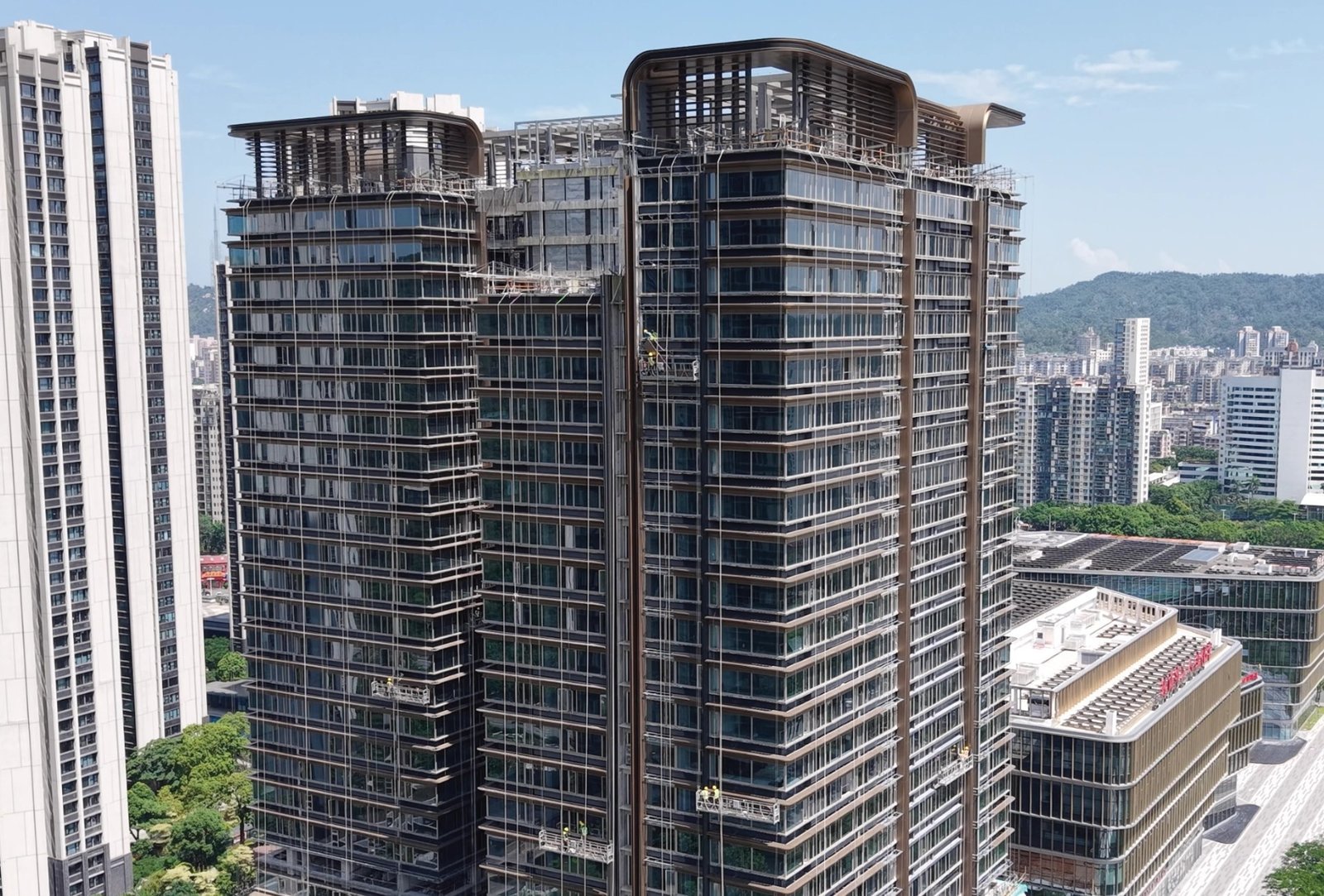
3.0 mm PVDF-coated aluminum veneer for facades, stadiums, and malls
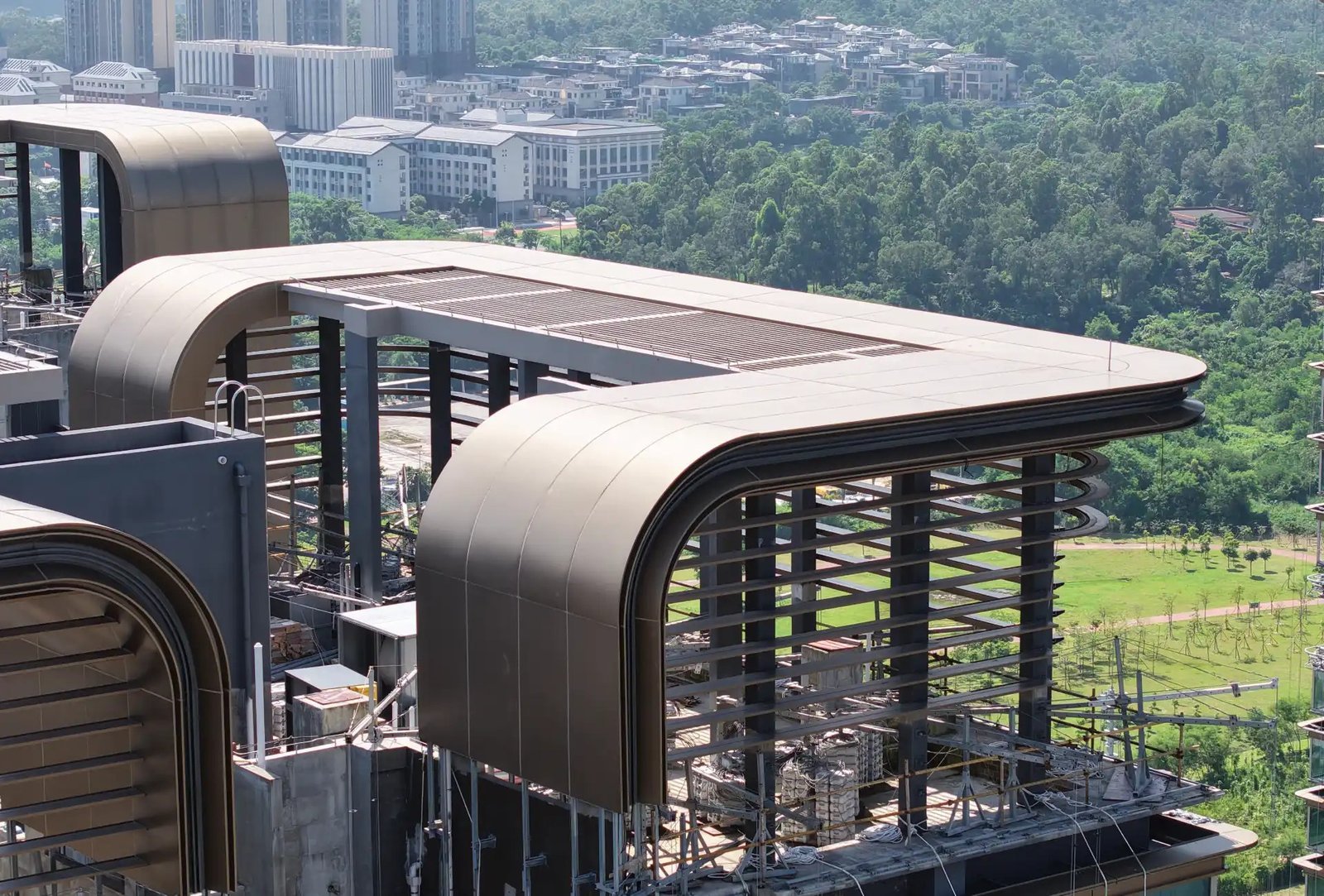
Search traffic to this page clusters on 3.0 mm, custom shaped, and building types—facade, curtain wall, stadium, shopping mall. Those are thickness and geometry decisions, not a different coating brand. Exterior public elevations stay on 3003-H14 at typically 2.0–3.0 mm with PVDF ≥ 30 μm. A stadium soffit or mall canopy that is shaped the same way may still take powder (AAMA 2604, typical DFT 60–80 μm) if UV and wash-down are lower than a west-facing curtain wall.
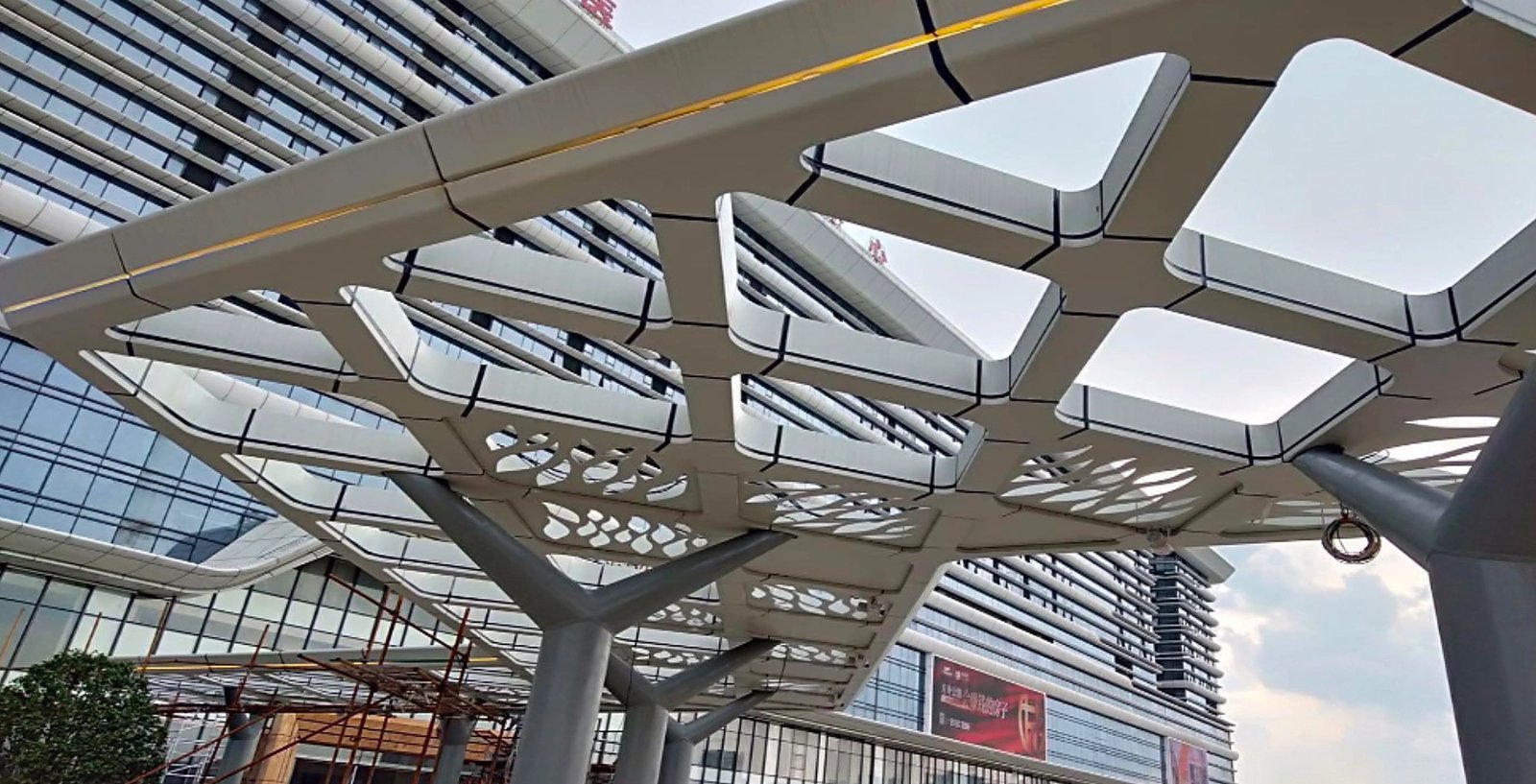
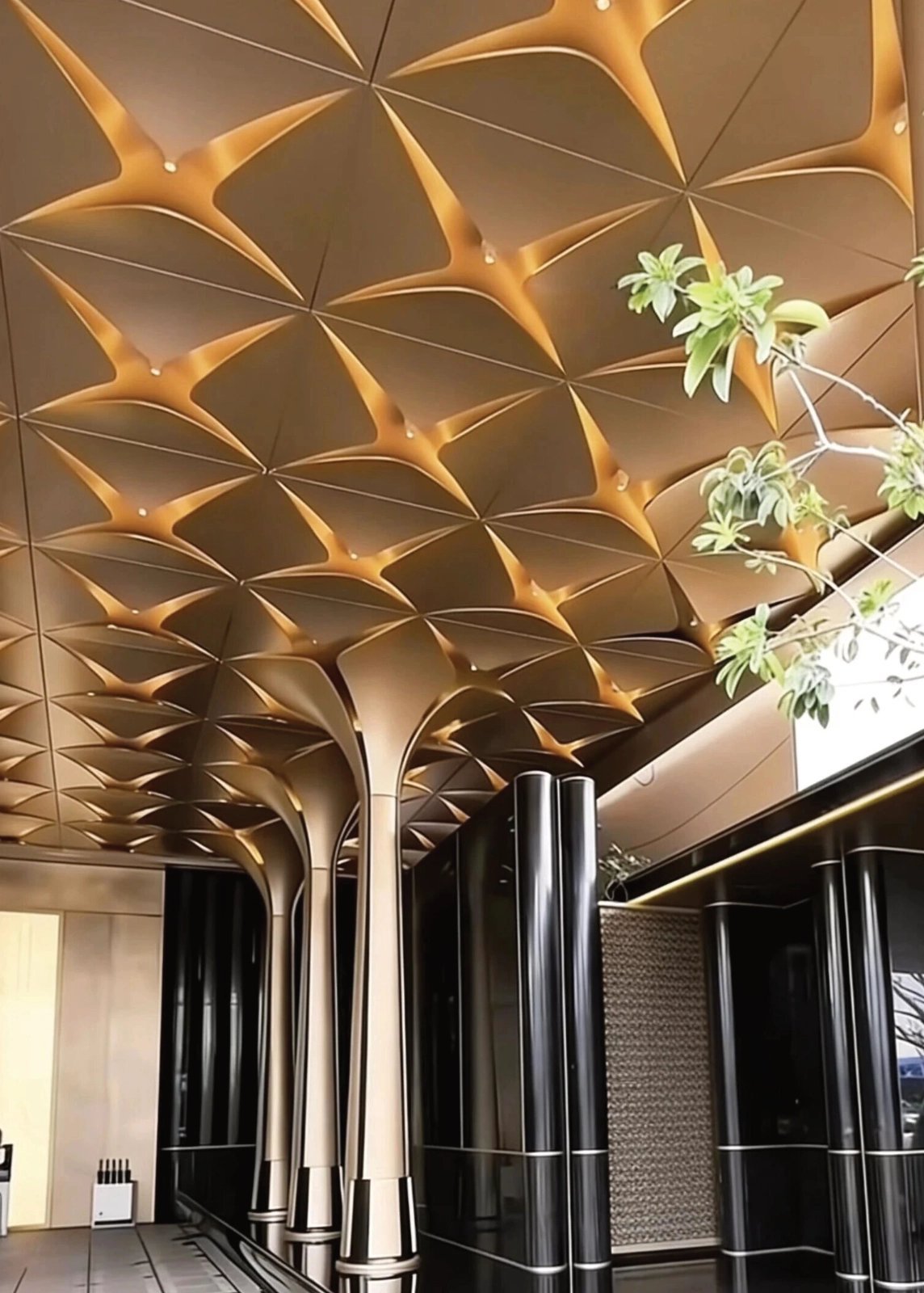
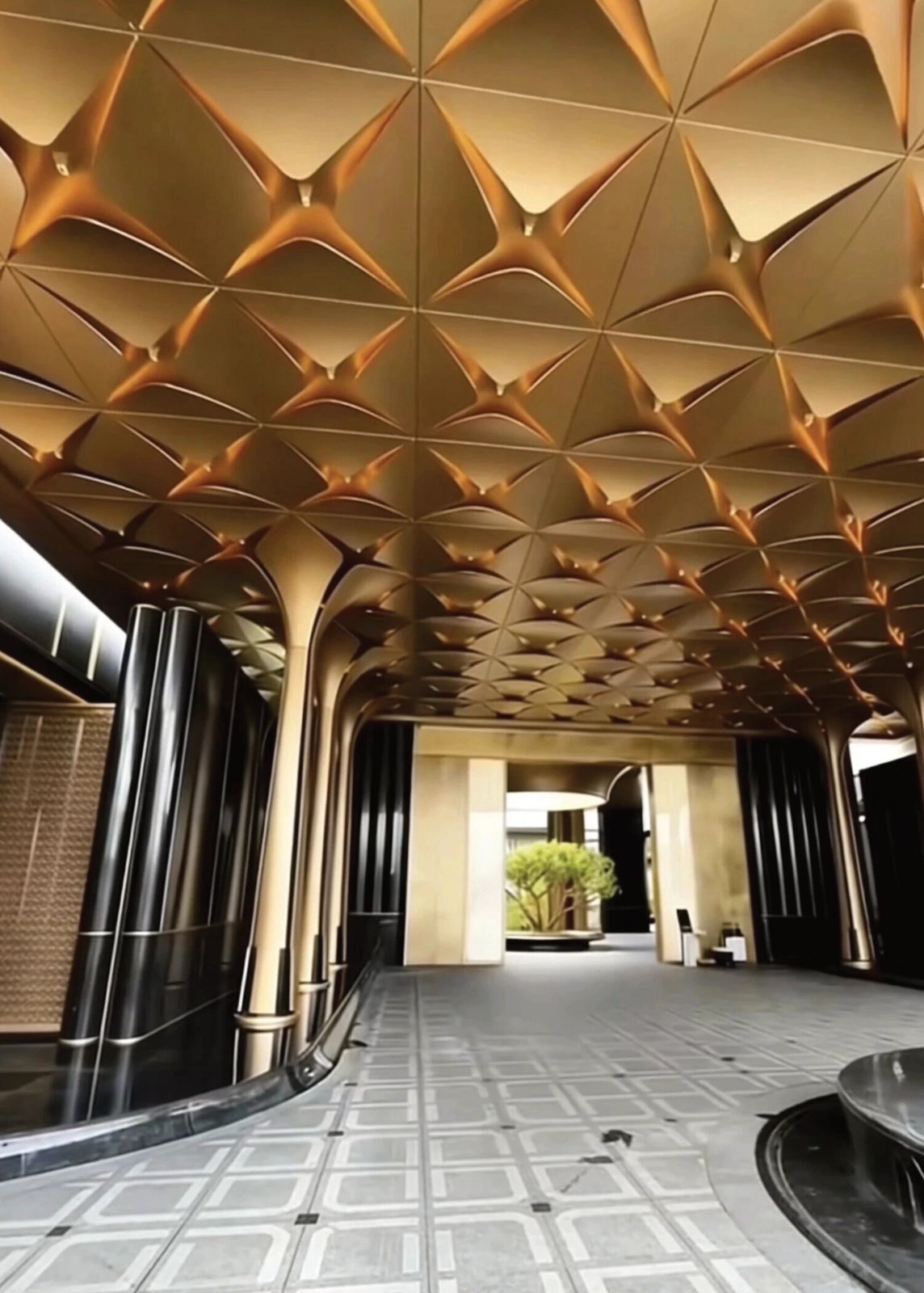
Custom-shaped modules are nested and formed before coating. The crown and folded returns in the photo are the same cassette logic used on hotel and transit canopies: lock the split, then coat the lot. Wind resistance follows module size, fold depth, and brackets on that split—not a catalog kPa copied onto a render.
PVDF vs powder coated aluminum veneer: technical comparison
Both finishes sit on solid aluminum sheet—typically Alloy 3003-H14 or 1100—not on polyethylene-core ACP. The difference is the coating chemistry and the performance class you can honestly warrant on an exterior wall.
PVDF (polyvinylidene fluoride, often 70% Kynar 500® or equivalent fluoropolymer) is a liquid spray or coil-coat system. Architectural powder coating is a dry thermoset film applied electrostatically and baked. For custom solid aluminum facade, that chemistry change drives UV resistance, chalk rating, and replacement cost.
| Parameter | PVDF (AAMA 2605 class) | Powder coating (typical AAMA 2604) |
|---|---|---|
| Typical dry film | 25–35 μm primer + color + clear | 60–80 μm single or two-coat |
| Exterior color/gloss retention | High; 10–20 year architectural warranties common | Moderate; faster fade in equatorial UV |
| Chalking / pollution | Strong resistance on coastal and urban sites | Adequate inland; weaker in salt air |
| Color range | Wide, but metallics and specials need mill approval | Very wide RAL/custom, including textures |
| Repair on site | Limited; factory recut preferred | Easier local touch-up |
| Relative first cost | Higher | Lower |
| Typical use | Exposed facades, airports, coastal towers | Interiors, soffits, low-UV elevations |
ISO 9001 process control does not replace the coating standard. Ask for the AAMA class on the data sheet, not only a brand name. AAMA 2605 is the high-performance fluoropolymer bar. AAMA 2604 is the usual architectural powder bar. Mixing those labels in a bid is a common specification error.
How LINDELACR specifies the finish on a real facade
Selection is a climate and detailing problem, not a catalog preference.
- Map UV, salt, and pollution. Equatorial, desert, and marine sites almost always justify PVDF on exposed aluminum veneer. Inland offices with deep overhangs can use powder on sheltered faces.
- Fix the alloy and thickness first. Exterior solid veneer is commonly 2.0–3.0 mm 3003-H14. Thinner 1100 sheet is for simple, low-wind panels. Coating will not hide oil-canning from an underspecified plate.
- Lock the AAMA class in the specification. Write “PVDF, AAMA 2605, 70% fluoropolymer resin” or “powder coating, AAMA 2604” plus color, gloss, and warranty years. Do not write “fluorocarbon or equivalent” without a class.
- Approve a sprayed sample against the actual alloy. LINDELACR produces color chips on the same 3003-H14 coil that will be fabricated, then records batch numbers for the project lot.
- Protect formed edges. Brake-formed returns and perforated holes expose cut edges. Pretreatment (degrease, conversion coat) must reach those edges before PVDF or powder, or corrosion starts at the fold—not on the face.
ASTM D3359 cross-hatch adhesion and gloss readings after QUV exposure are the shop checks that matter. LINDELACR records those tests per batch so the facade package can be inspected before container loading.
Factory and customization notes: MOQ, CAD, and lead time
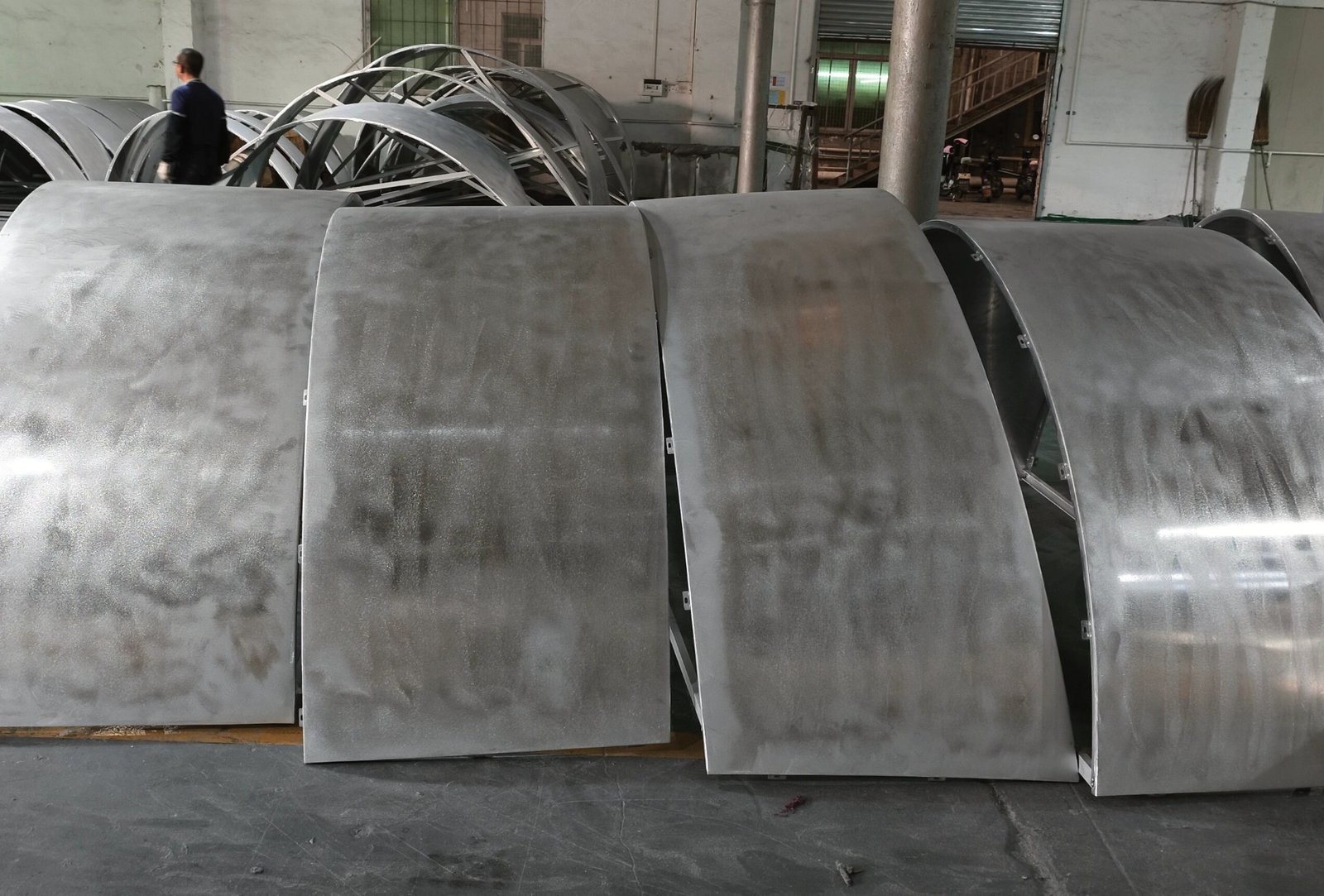
Uncoated formed cassettes leave the brake before they enter the coating line. That is when unique stadium or mall shapes are still cheap to recut. After PVDF, a geometry change is a new color lot.
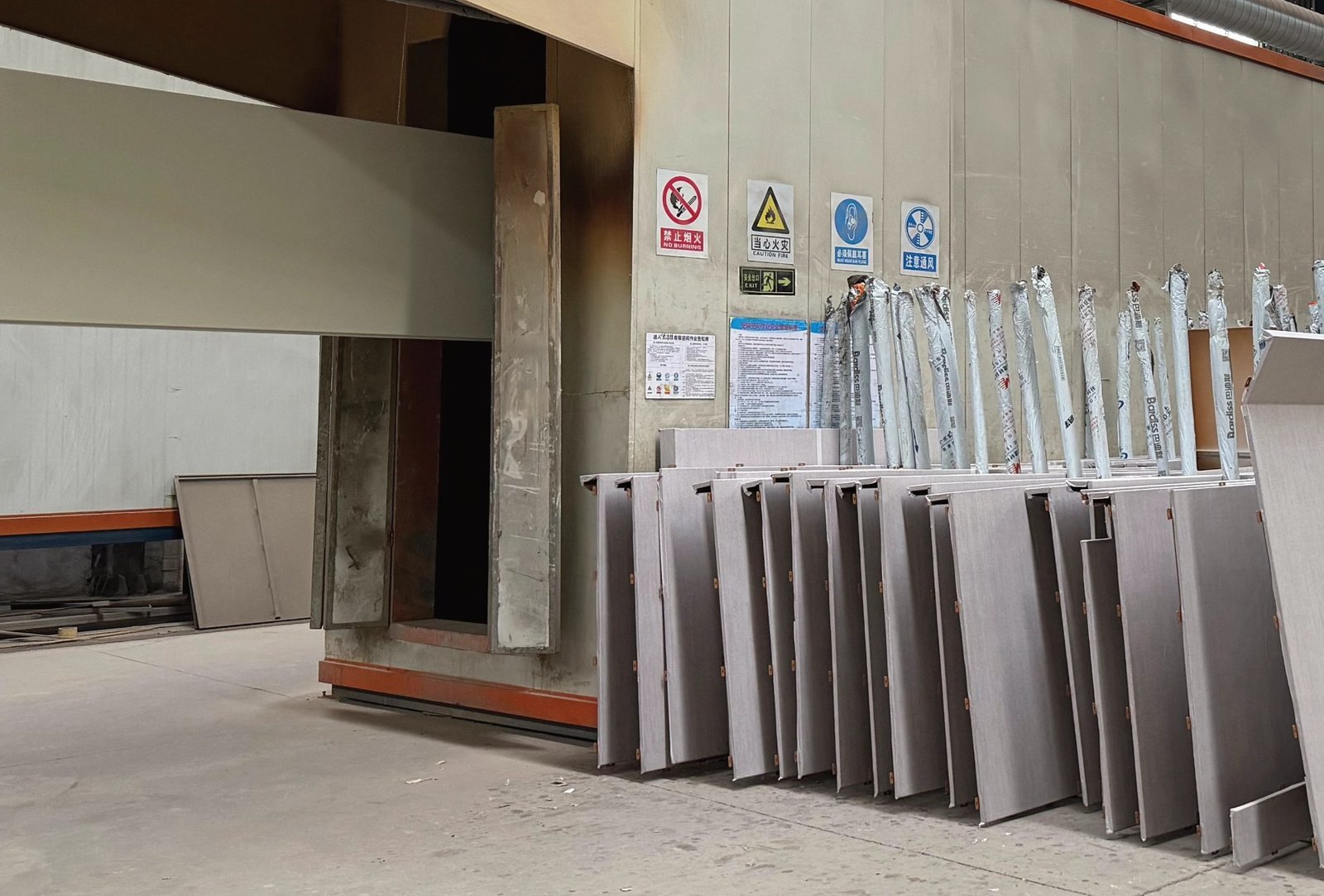
Custom architectural aluminum veneer is made to the shop drawing, not sold from a color-card warehouse. LINDELACR therefore quotes a project lot instead of a generic carton MOQ. Small feature walls can still be produced; the constraint is coating line minimums for a unique PVDF formula, not the press brake.
Send CAD or BIM of the elevation grid, opening schedule, and wind-load zones. Our engineers return fabrication drawings with expansion joints, bracket layout, and panel nesting. That step prevents color-batch splits across adjacent modules—especially visible on large PVDF metallic faces.
After drawing approval, typical fabrication is 3–6 weeks. Special PVDF colors add coating-queue time. Powder is often faster when the RAL already sits on the line. If the program is fast-track, freeze the finish and color before you freeze every hyperbolic module; recoding a PVDF metallic mid-project is slower than recutting a powder interior soffit.
Browse current flat metal panel if you need to match veneer with baffles, perforated screens, or curved panels in one package.
Lifecycle cost, not only first-price
Powder coating usually wins a first-cost comparison on aluminum veneer. PVDF usually wins a 15–25 year facade comparison. Repainting or replacing faded powder on a mid-rise envelope often exceeds the original coating premium, especially where swing-stage access, traffic control, and matching metallics are involved. LINDELACR therefore prices both options on the same 3003-H14 nest so the bid shows coating delta, not mixed fabrication methods.
For mixed envelopes, a practical split is PVDF on the public elevation and powder on interior soffits or back-of-house metal ceilings. Keep the alloy and joint geometry consistent so installers do not run two bracket logics. Document the split on the shop drawing cover so procurement does not issue one coating for the entire bill of materials.
If the specification calls for wood-grain or heavy texture, confirm whether that effect is a PVDF print, a powder texture, or a sublimation film. Outdoor durability is not interchangeable across those processes even when the RAL number looks the same.
Frequently asked questions
Is PVDF better than powder coating for exterior aluminum veneer?
Yes for most exterior facades. PVDF systems that meet AAMA 2605 hold color and gloss longer under UV and pollution. Powder coating is better for interiors, sheltered elevations, or projects that need a wide color range at a lower first cost.
What aluminum alloy should be used under PVDF or powder coating?
LINDELACR typically uses 3003-H14 for exterior aluminum veneer because it forms well and resists corrosion. Alloy 1100 is reserved for simpler, lighter panels. Pretreatment quality matters more than alloy grade for coating adhesion.
Does AAMA 2605 apply to powder coated aluminum veneer?
AAMA 2605 is the high-performance fluoropolymer specification used for PVDF. Most architectural powder systems are specified to AAMA 2604. Confirm the exact AAMA class on the coating data sheet before you freeze the facade specification.
What is the typical MOQ and lead time for custom PVDF aluminum veneer?
Custom architectural veneer is usually quoted from one project lot rather than a stock MOQ. After shop drawings are approved, LINDELACR typically needs 3–6 weeks for fabrication, plus coating queue time for special PVDF colors.
Is 3.0mm PVDF-coated aluminum veneer the right thickness for stadiums and shopping malls?
3.0 mm 3003-H14 is the typical exterior and large-module spec. A stadium soffit or mall canopy can stay at 2.0–3.0 mm; the finish may be PVDF (AAMA 2605, ≥ 30 μm) on exposed faces or powder (AAMA 2604) where UV is lower. Thickness follows span and fold depth, not the building type name.
Request a finish recommendation and project quote
If you are comparing PVDF vs powder coated aluminum veneer for a facade package, send LINDELACR the elevation drawings, location, and target warranty. We will recommend the AAMA class, alloy, and thickness, then issue samples and a factory quote. Contact the project team with CAD files or a performance specification.
When the specification is plate versus composite rather than coating chemistry, see solid aluminum panel vs ACP for exterior cladding.