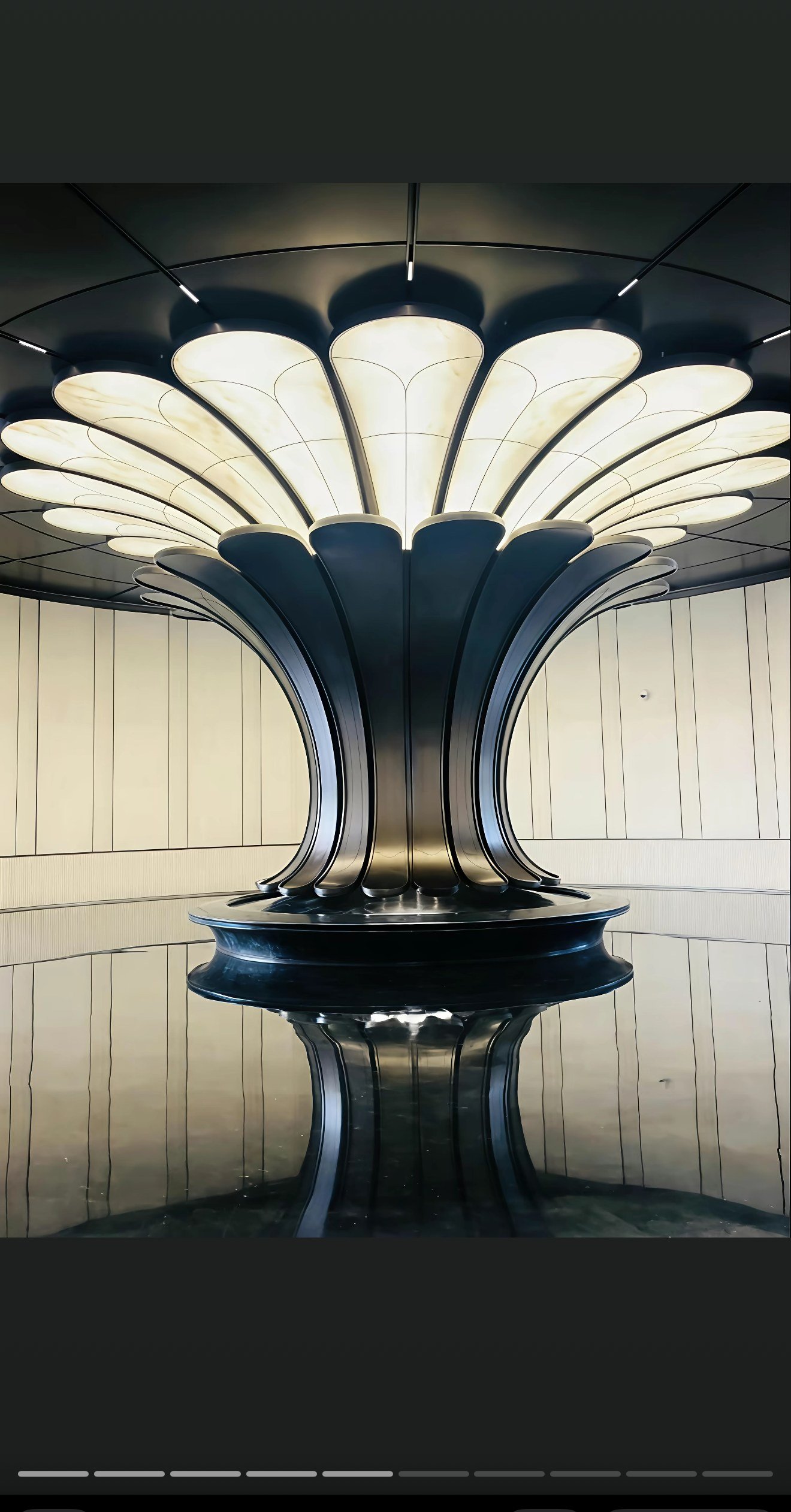
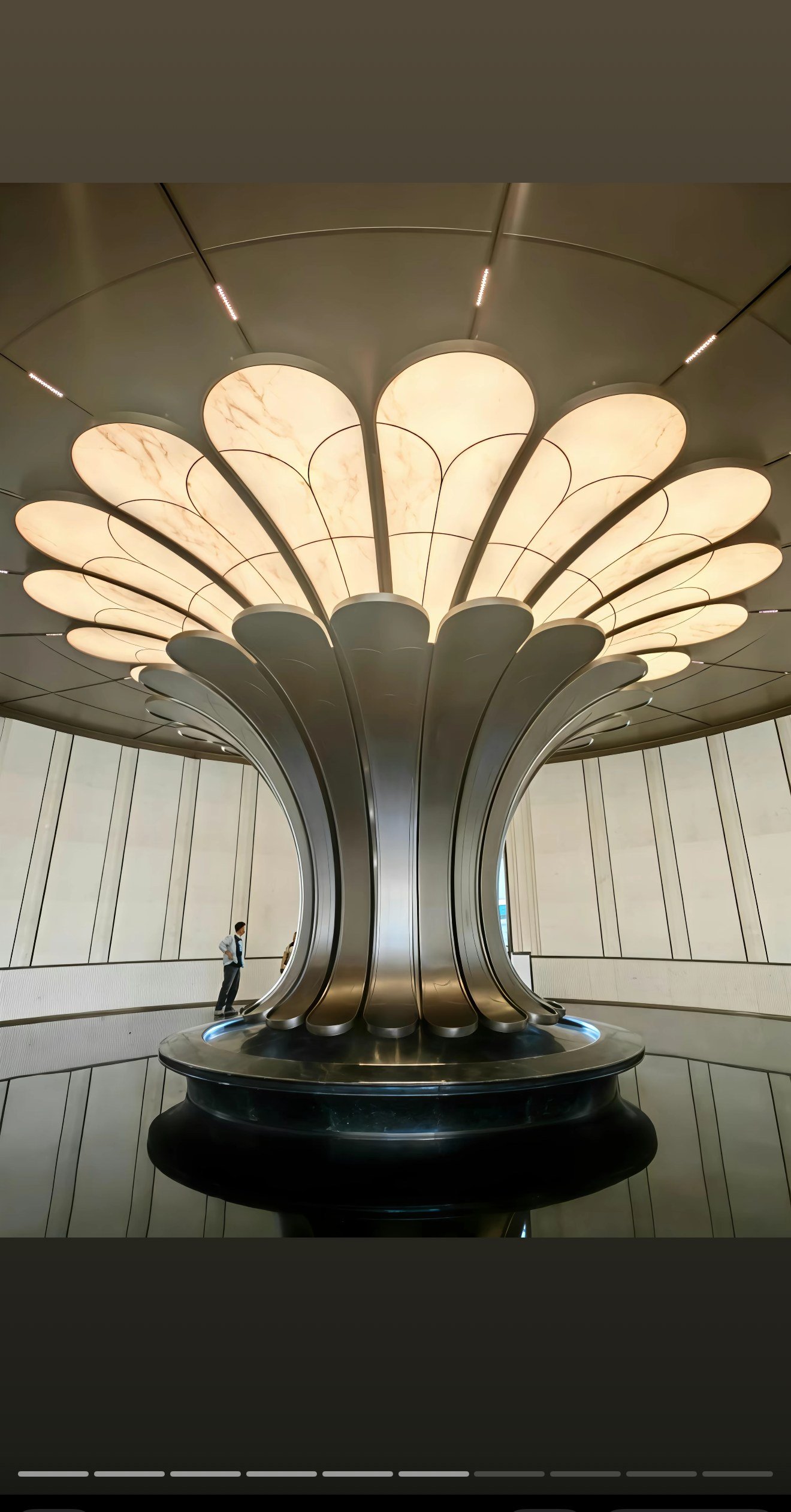
A hyperbolic aluminum column cladding for a luxury lobby is a solid-plate, multi-petal skin—not ACP. LINDELACR scans the as-built core, splits a biomorphic flower into CNC-able segments, compound-bends and die-aligns each rib, then frames backlit canopy inserts so the sculpture meets both the floor ring and the ceiling grid.
What “hyperbolic column cladding” actually means
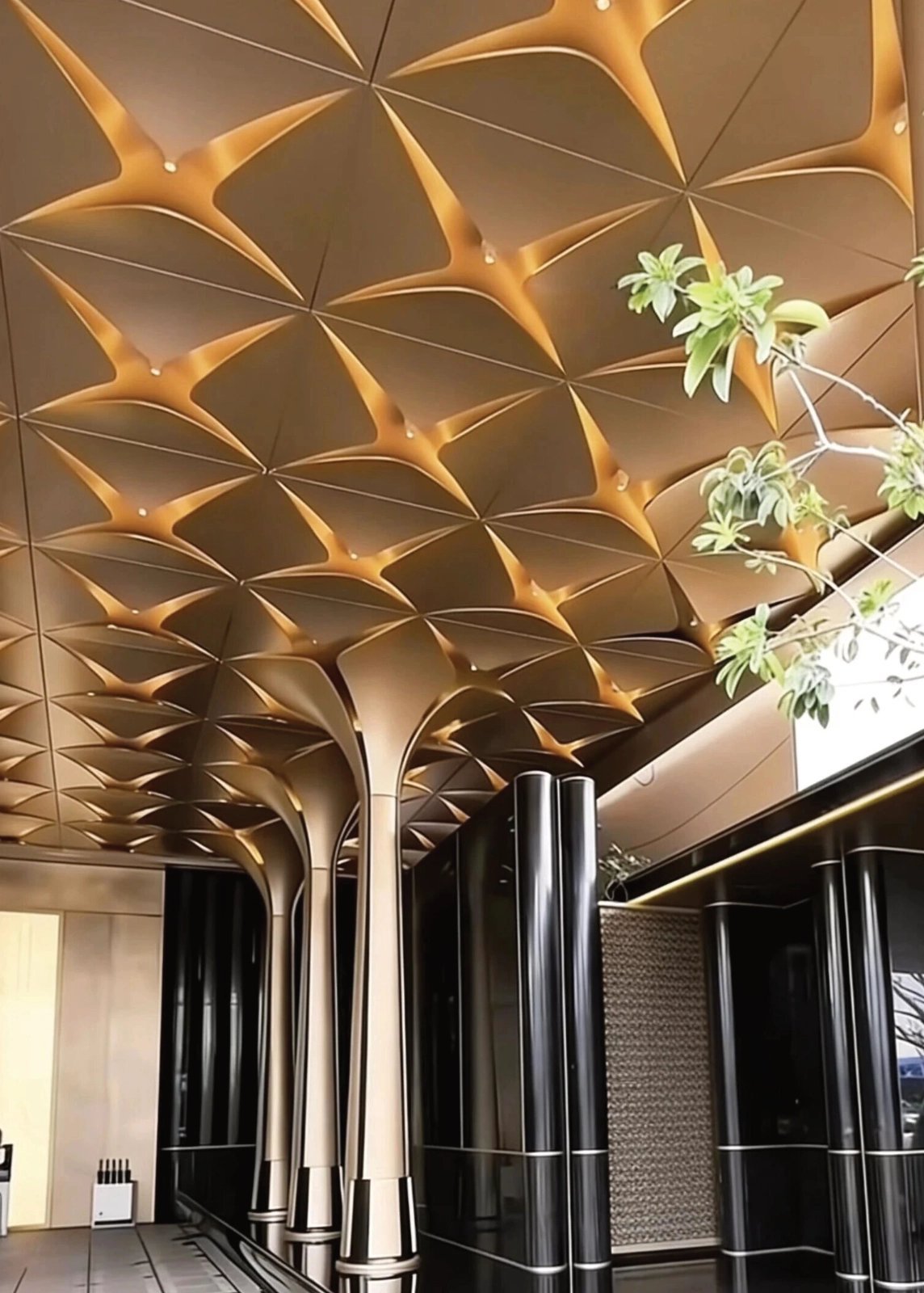
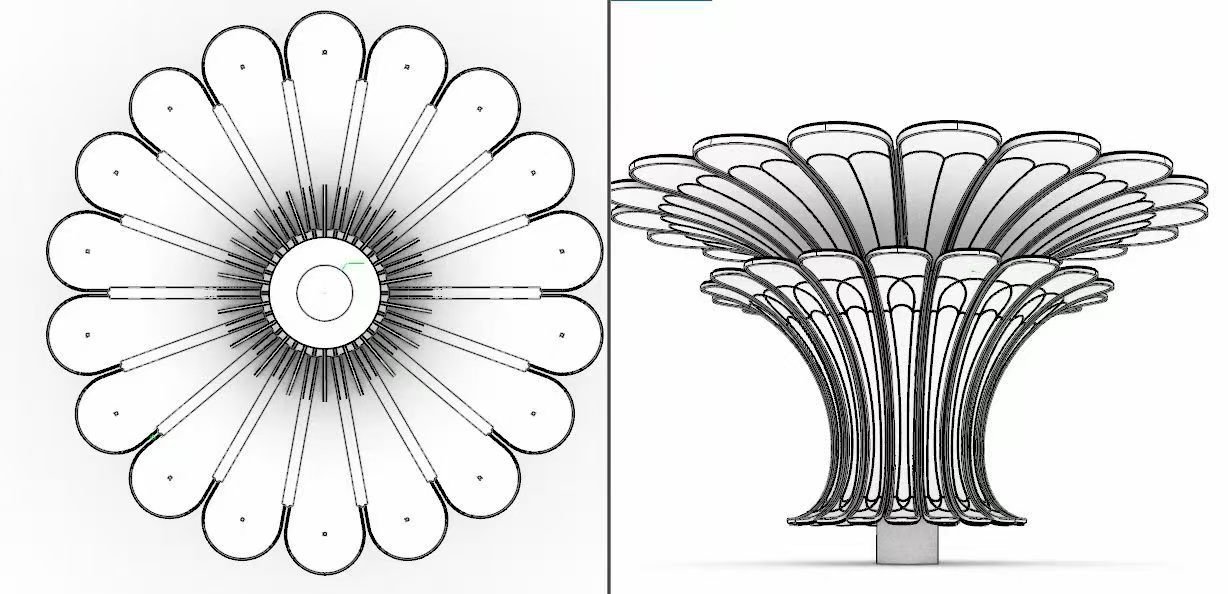
Architects sketch a blossom. The structure is still a round column that must be fire-safe, cleanable, and installable on a live slab. The metal is a column cover: a ventilated or closed skin around the core. Hyperbolic means each petal has compound curvature—radius changing in two directions—so a brake press alone will not finish the part.
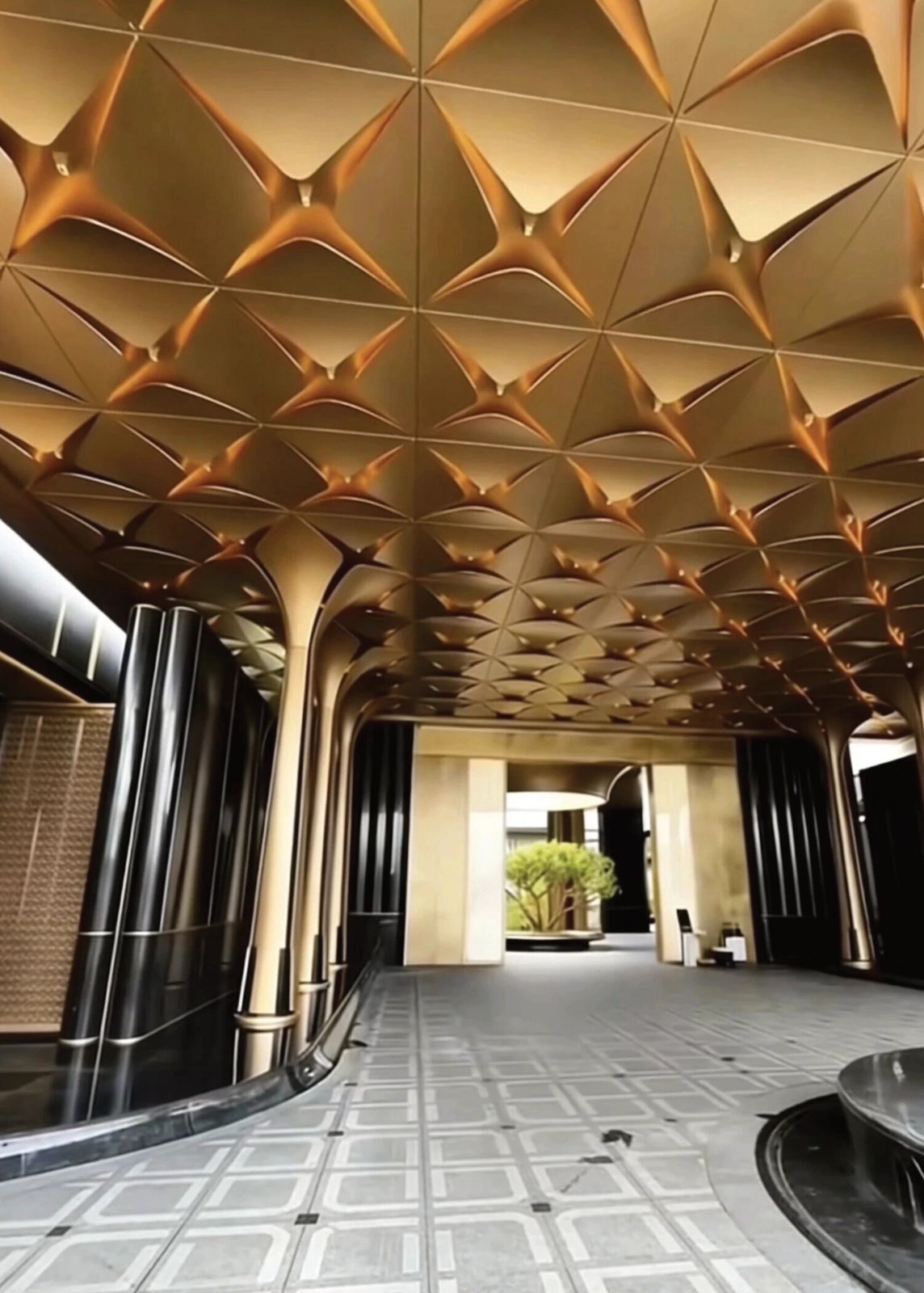
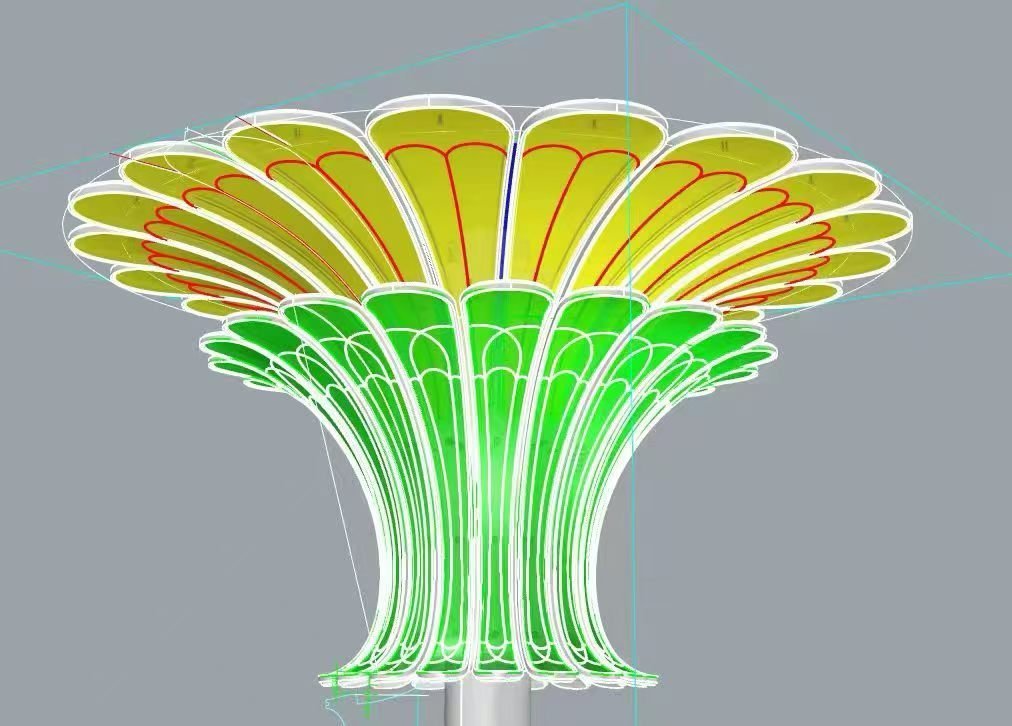
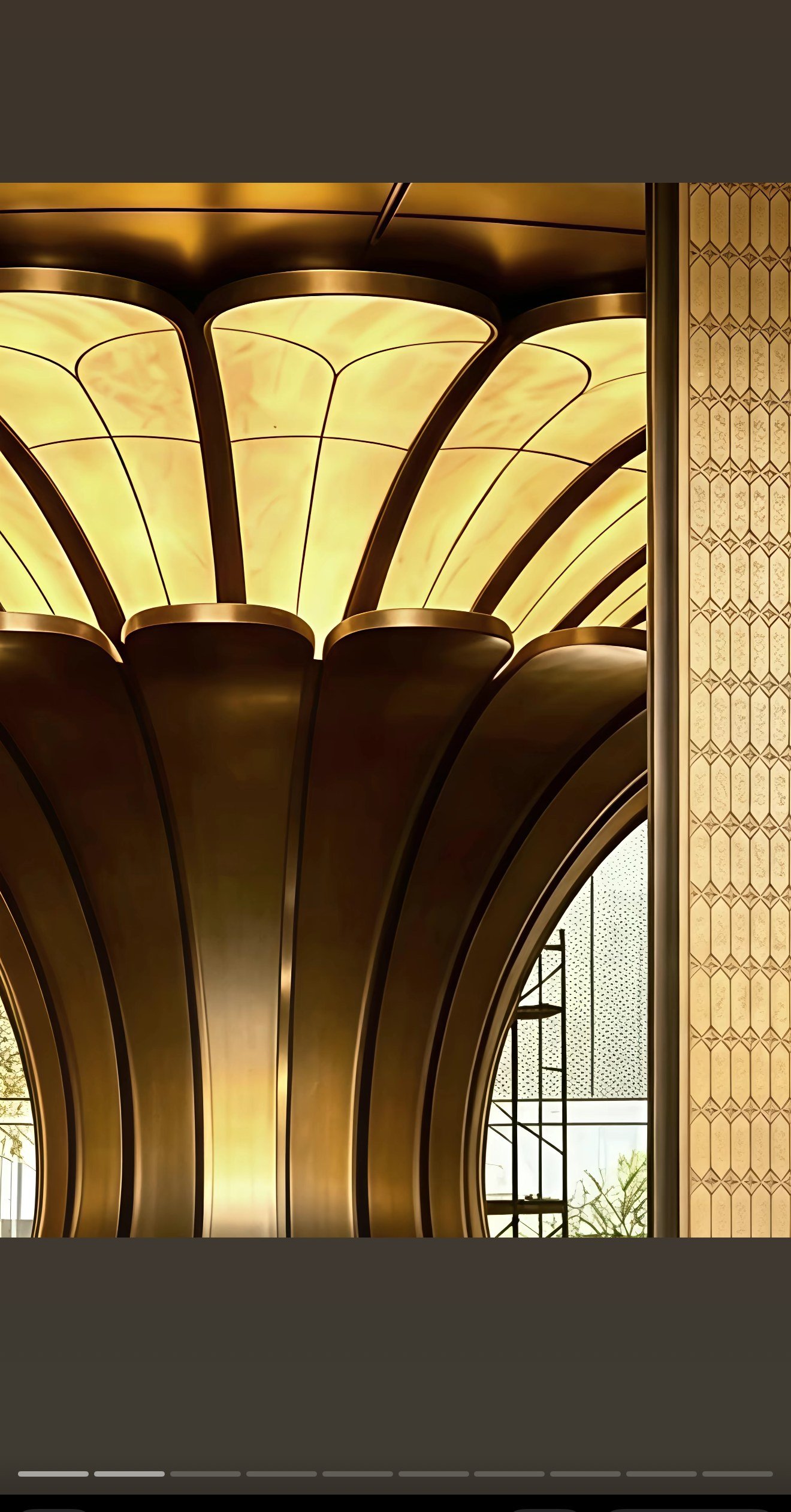
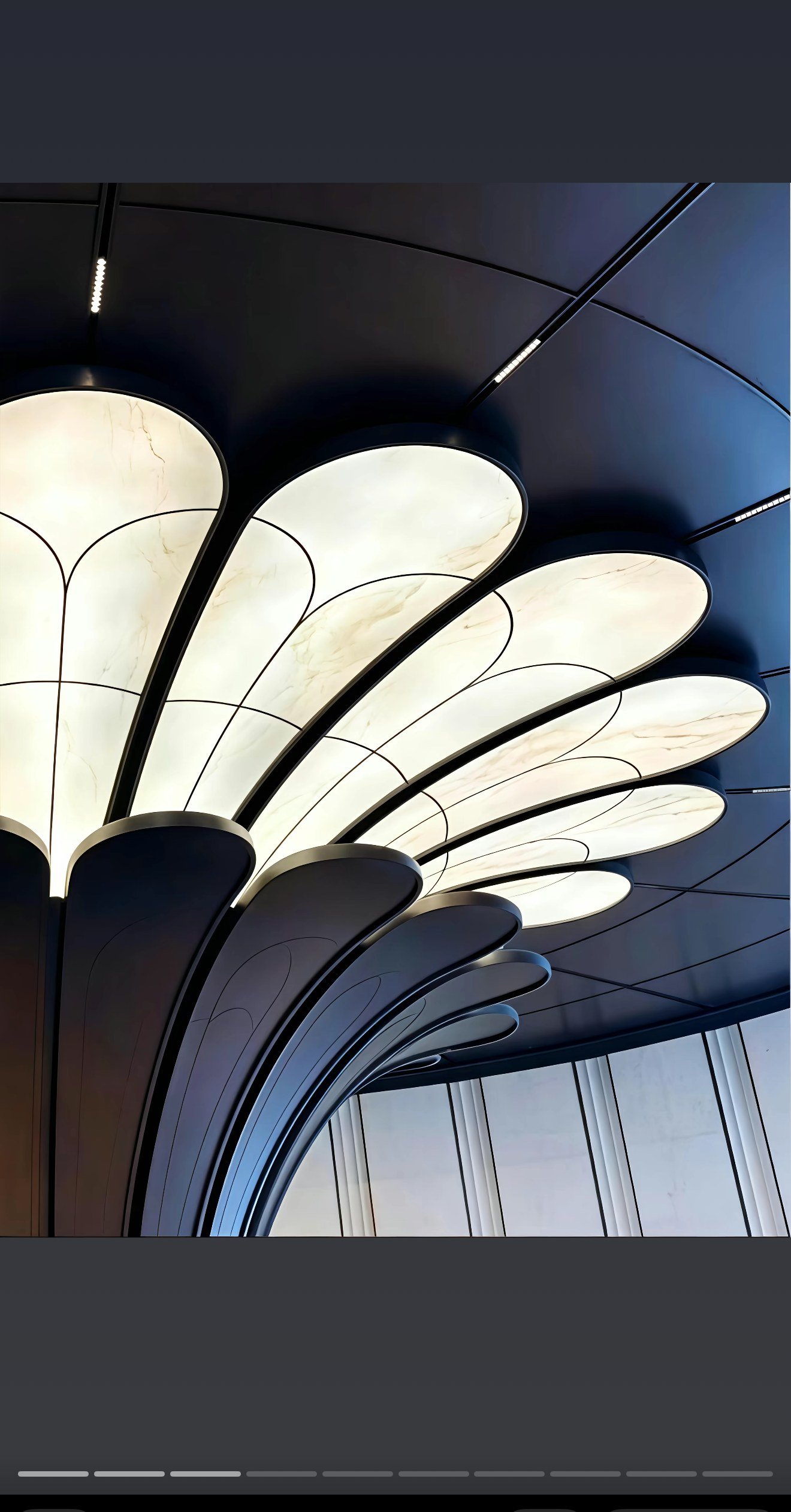
CTS Baichen Yunqi (CTS Grand Horizon), a China Travel Service luxury residence, is the worked example. Sixteen identical petals flare from a cylindrical base into a lighted canopy. The same problem appears in hotel atria and museum halls: organic language, metal discipline.
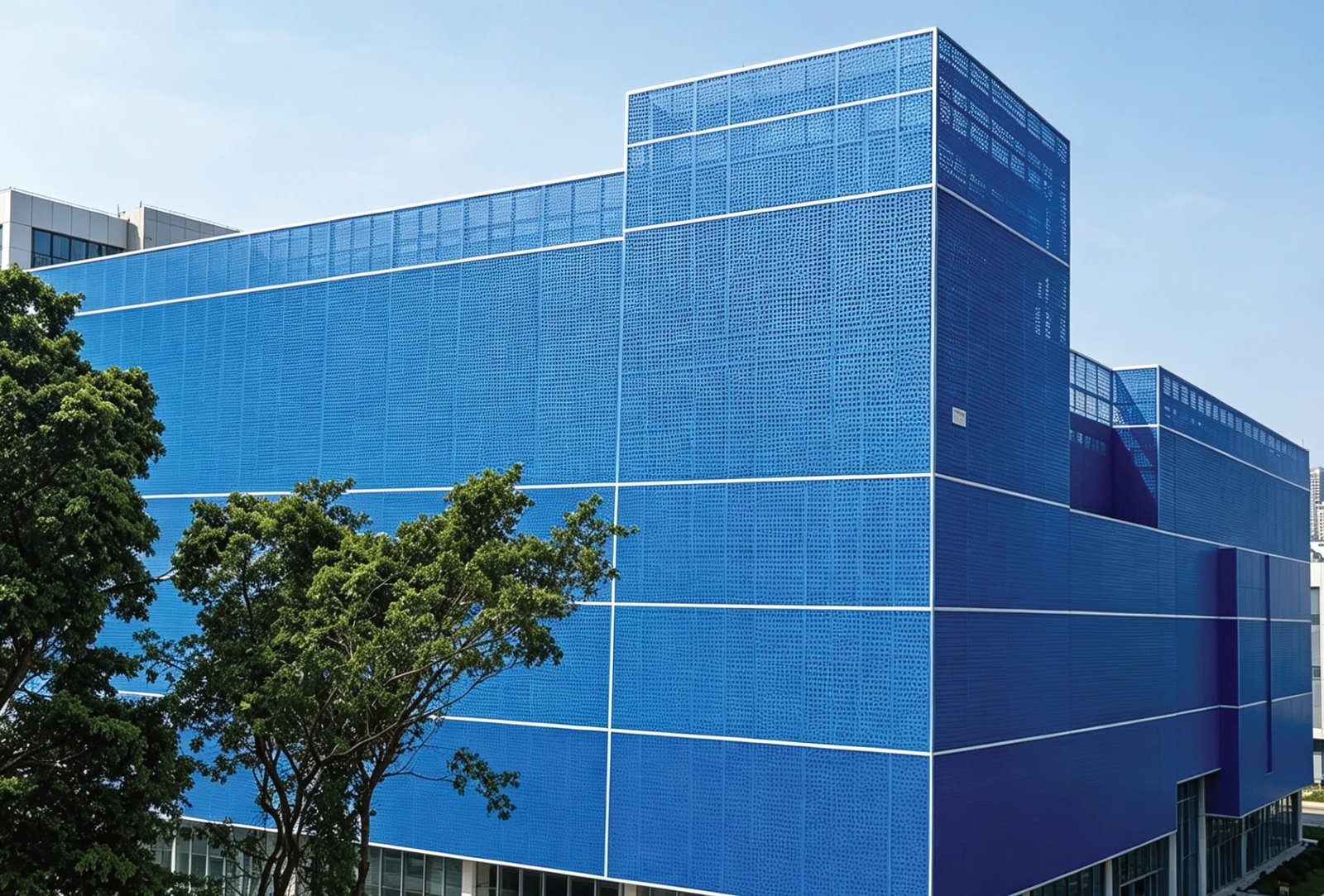
Solid aluminum vs ACP on freeform columns
| Parameter | Solid aluminum column cladding | ACP / ACM tray |
|---|---|---|
| Skin | Single architectural plate, carved and formed | Two thin skins + PE or mineral core |
| Compound flare | CNC + stretch / die; deep returns possible | Core crush at tight double curvature |
| Carved veins | Machined into the plate | Limited to print or shallow rout |
| Lighting frames | Petal ribs as lamp housing | Extra subframe, visible joints |
| Fire / warranty | Metal plate + coating class | Core type governs many codes |
| Best use | Landmark lobbies, biomorphic sculpture | Flat or singly curved infill |
LINDELACR therefore prices this work as solid aluminum cladding and metal carving panel logic, not as an ACP feature wall wrapped around a pipe.
From scan to shop drawing
Step one is not the pretty render. It is a 3D laser scan of the core, floor, and ceiling. Drawings lie; slabs drift. The point cloud becomes the datum for petal length, flare radius, and how the canopy hits the ceiling grid.
Step two is parametric split. Sixteen segments on Baichen Yunqi balance truck length, CNC bed, and joint count. The model also locks the void for the structural column and the pedestal ring. Step three is shop drawings with die-curvature notes, coating batch, and lighting cutouts—one file for metal and light.
If this sequence is skipped, the failure is predictable: petals that look correct in Rhino fight the slab, the canopy misses the ceiling grid, and lighting becomes a second contractor’s box. LINDELACR will not nest metal until scan, split, and die notes agree. That hold point is cheaper than grinding joints on a finished lobby floor.
Factory sequence that keeps 16 petals identical
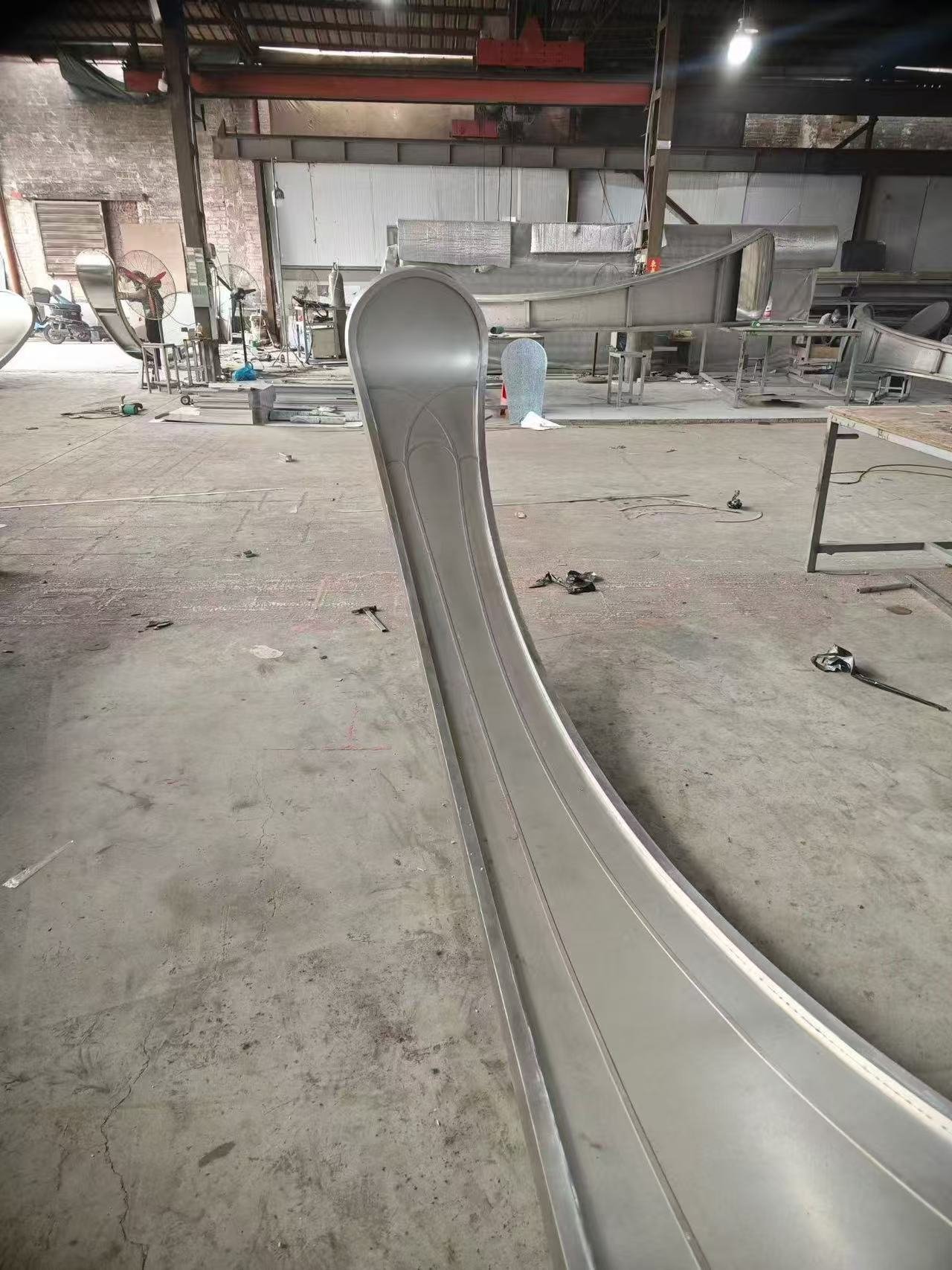
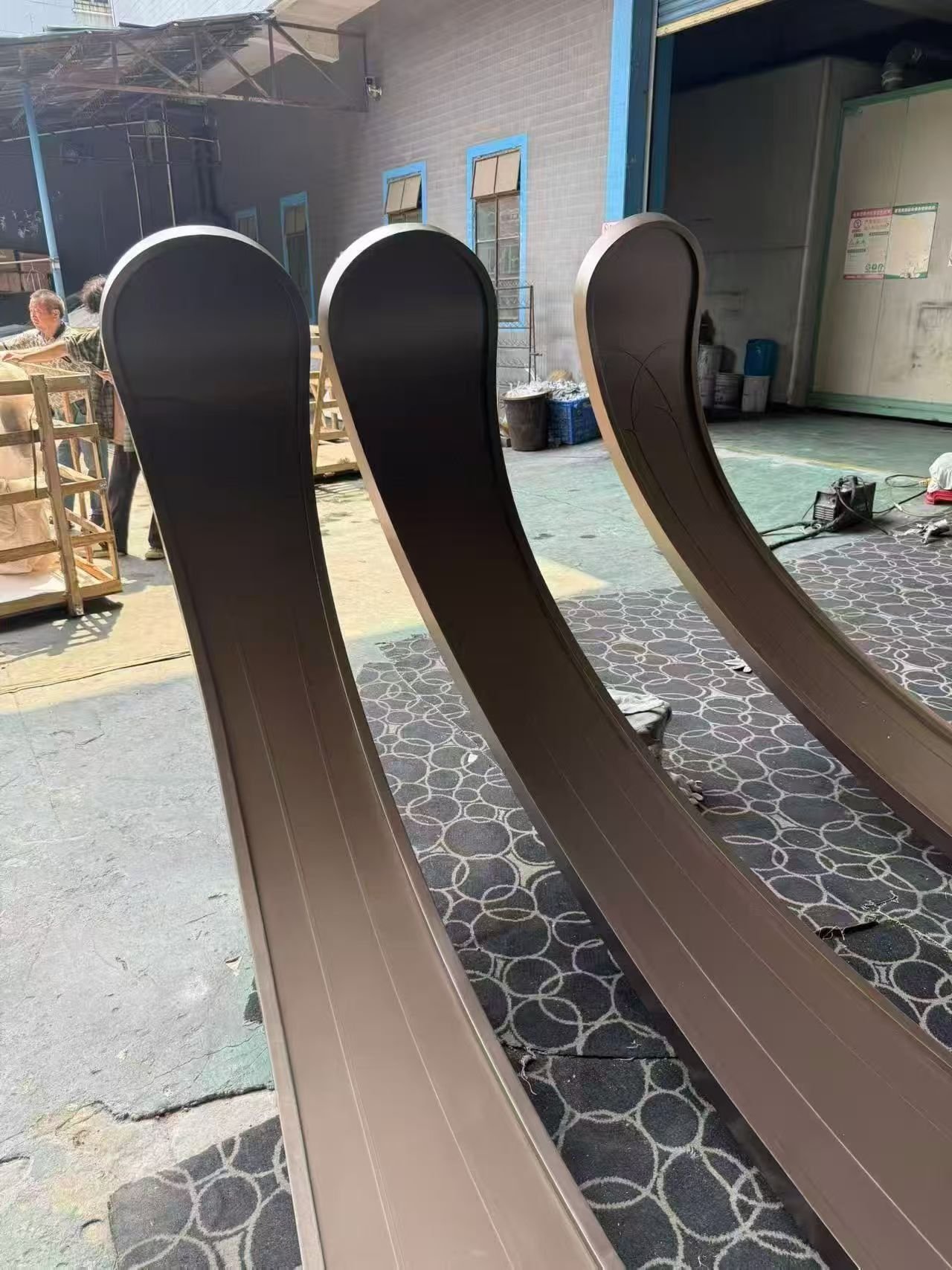
Foshan production runs: nest and CNC-cut; carve flow veins; compound-bend the paddle-shaped skin; check against a rigid die so torsion sections match; coat in one batch; crate in install order. A 1:1 sample petal is the architect’s hold point before the remaining fifteen are released.
On the shop floor you see the truth of the geometry: a long aluminum paddle with a bulbous head. That head is the lighted canopy. If the die is wrong, sixteen heads will not close into a circle under the ceiling. Die alignment is why LINDELACR keeps forming in-house rather than outsourcing the flare.
Installation and lighting as one sculpture
Install from the pedestal up. Radial joints are clocked to the ceiling LED slots so the eye reads continuous growth. Translucent inserts drop into the petal frames; the metal is the luminaire body. Looking up, sixteen glowing fans sit inside dark ribs against a concentric metal ceiling—the same language as the CTS Baichen Yunqi project case.
What to specify so the bid is buildable
Write solid aluminum column cover, hyperbolic forming, site scan, CNC carving, die alignment, and coordinated backlit canopy. Name alloy class and coating system in the performance spec; let the fabricator set thickness from module size and fold depth. Ask for a petal sample and a joint mock-up, not only a CGI.
Coating should be specified to an architectural class appropriate to an interior landmark—stable color under mixed LED and daylight, repairable in batch. Do not leave “gold metal” as the only finish line. Transport crates should follow install order around the clock face of the column so the site team is not hunting for petal 11 in a mixed pile.
LINDELACR’s 20,000 m² plant already runs this sequence for metal ceilings and solid cladding together. More than a thousand engineering projects use that package. A luxury lobby flower column is the same file discipline at a higher curvature, with the same inspection sheet from nest to crate.
Frequently asked questions
Why not use ACP for a flared luxury-lobby column?
ACP skins are thin and the core crushes at tight compound bends. A biomorphic flower column needs deep returns, carved veins, and die-aligned joints. Solid aluminum plate can be CNC-carved and hyperbolic-formed; ACP cannot hold that geometry as a single engineered skin.
What does 3D laser scanning change on a lobby column job?
Scanning captures the as-built core, floor, and ceiling—not the drawing. LINDELACR fits petal curvature to that point cloud so CNC nests and shop drawings absorb slab and steel tolerance before metal is cut.
How many segments should a radial flower column use?
CTS Baichen Yunqi uses 16 identical petals. Segment count is set by transport length, CNC bed, bend radius, and how the canopy meets the ceiling grid. More splits ease shipping; fewer splits reduce joint lines. The model decides, not a catalog module.
What should architects send LINDELACR to price hyperbolic column cladding?
A Rhino or BIM model (or a sketch plus target height), finish intent, lighting yes/no, and site photos or a scan. LINDELACR returns a panel split, alloy/finish note, sample plan, and lead-time window from the 20,000 m² Foshan plant.
Request a petal sample or lobby quote
Send the biomorphic sketch. LINDELACR will return a manufacturable split, a coating note, and a fabrication window—the same path used on CTS Baichen Yunqi.