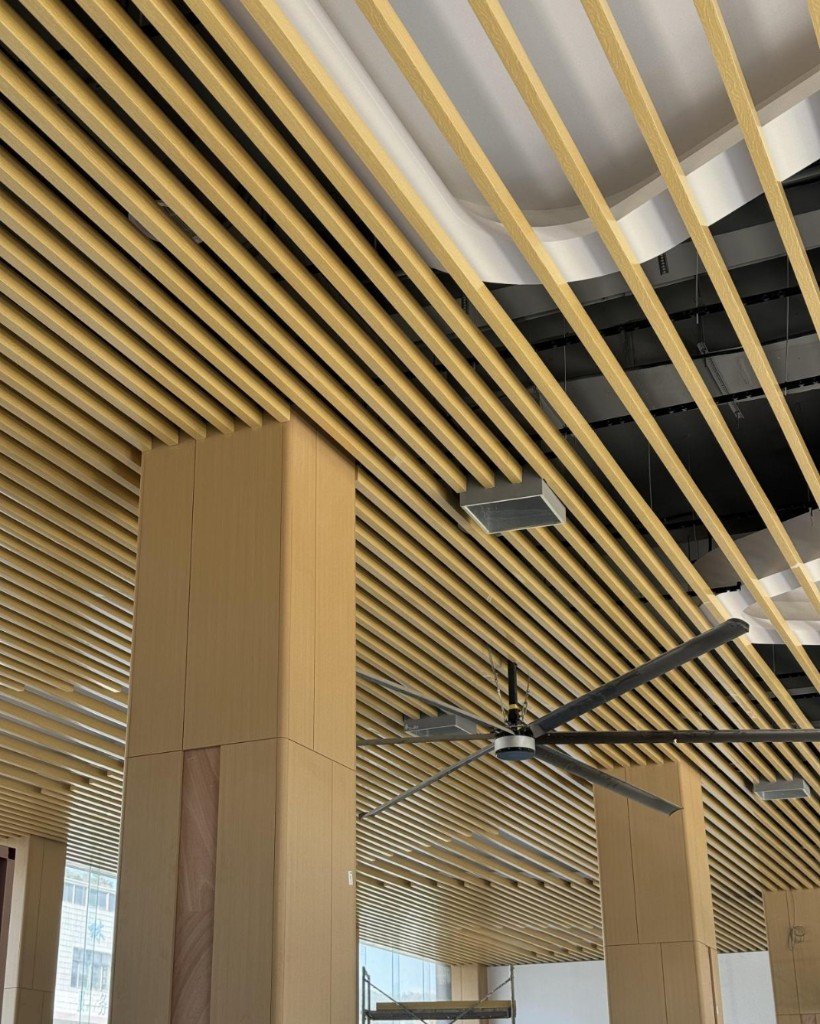
What Changes a Metal Cladding Price in the UAE?
A metal cladding price in the UAE is not a rate per square metre. The quote moves with plate thickness, the coating the sun will see, and whether each panel is a repeated module or a one-off radius. LINDELACR does not publish a universal number. Exterior plate is 2.0–3.0 mm.
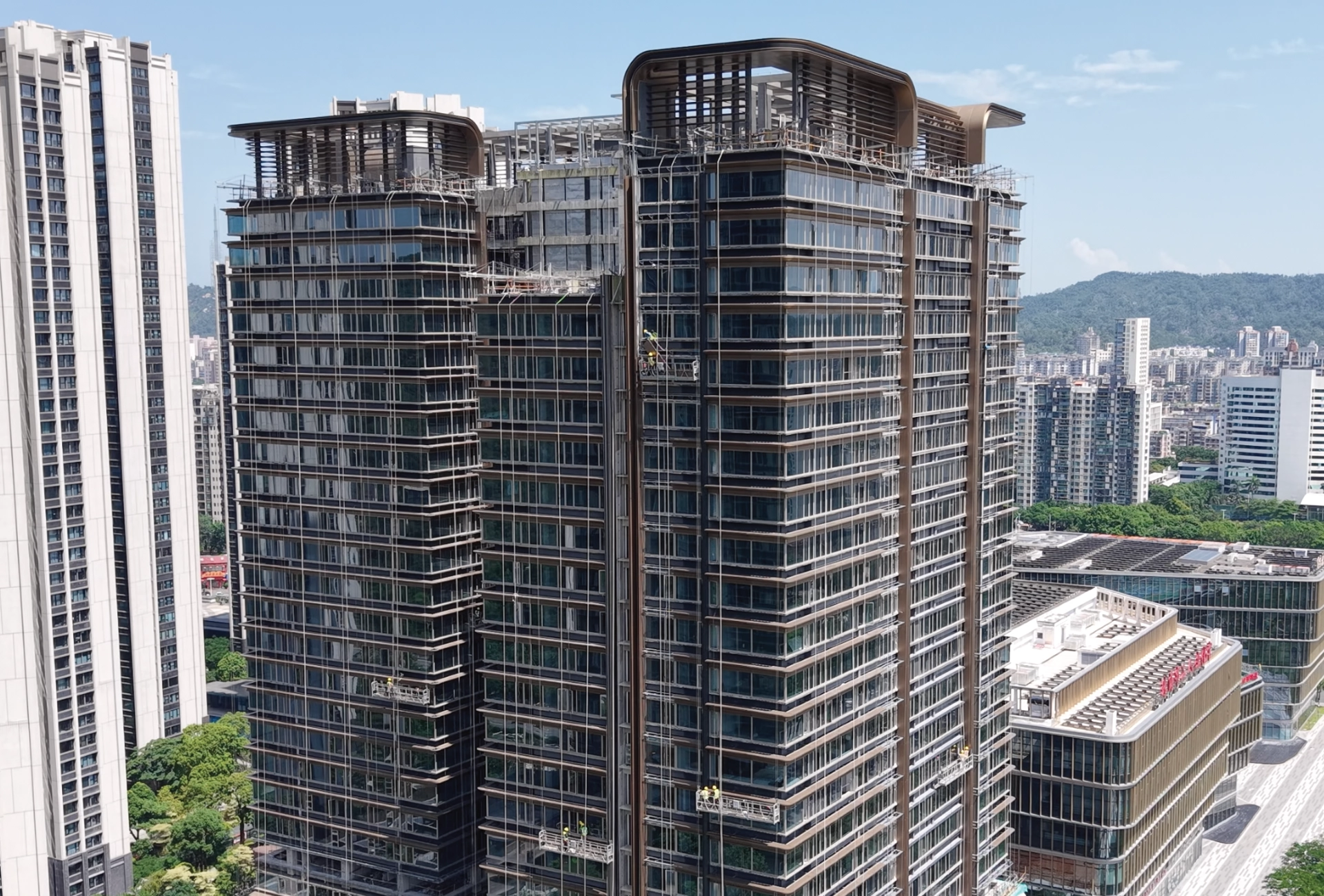
Bronze aluminum is going onto a tower while the face is still open. Gondolas hang on the elevation. The steel behind the glass is still visible on the upper floors. Those are the contractor’s lines: access, mullion, anchor. The panel is a separate line. This photograph is not a Dubai address, and LINDELACR is not the installer on this tower. It is the split a UAE quotation has to make before anyone writes a number. Plate and coat come from the shop. Subframe and site labor stay with the team that hangs them.
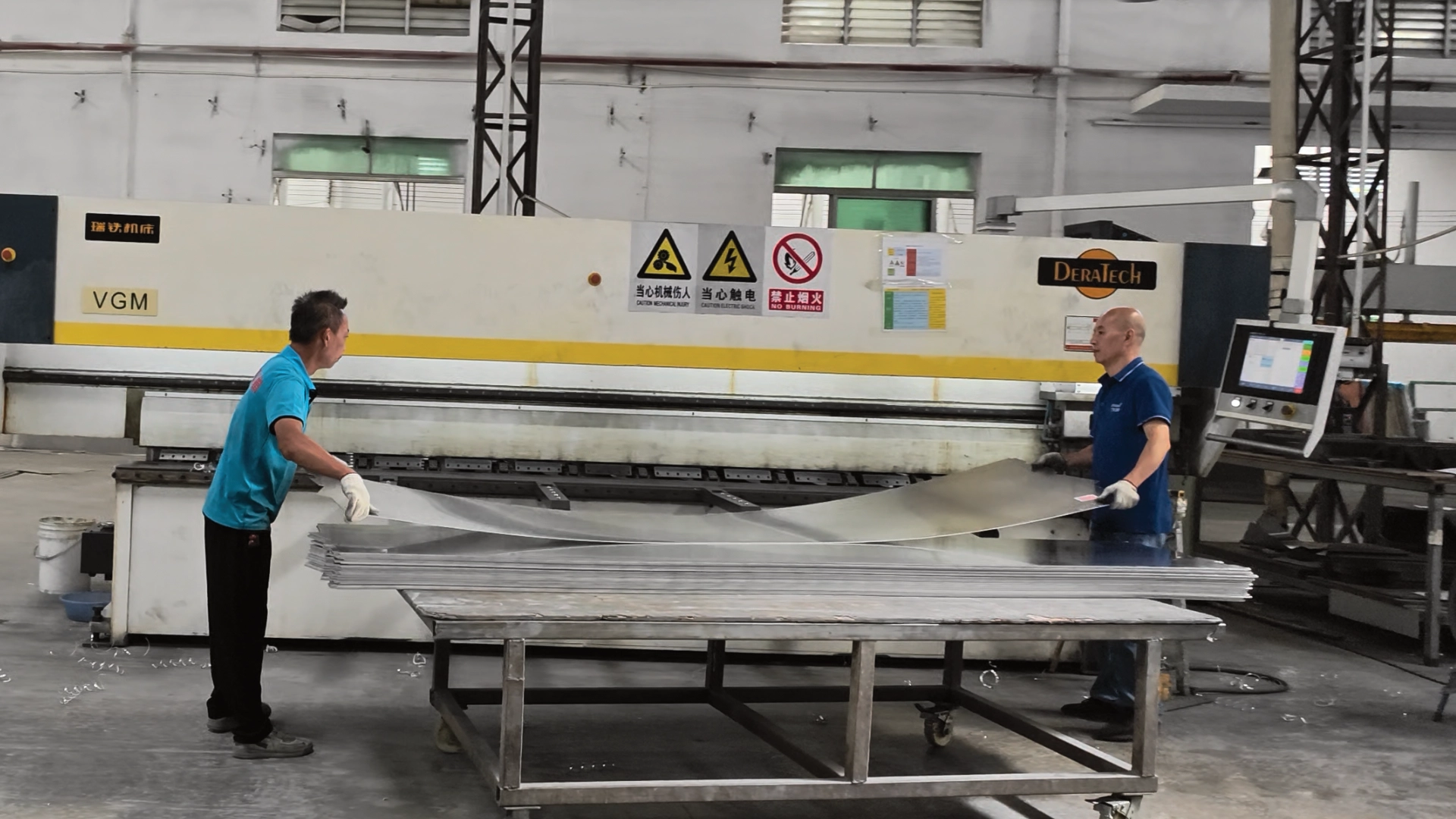
The shop is in Foshan. Plant area is 20,000 m². The path on a cladding order is scan → CAD → CNC → fold, then one coating lot. Wind on the panel is the engineer’s calculation for that bay and that return. LINDELACR does not publish a kilopascal, a dirham rate, or a square-metre price that ignores the elevation. A buyer who asks only “how much per metre in the Emirates” gets a guess. Send the module, the thickness, and whether the face sees sun, sand, or a coastal soffit.
Five lines that move a UAE cladding quote
| What moves the quote | Raises it | Holds it |
|---|---|---|
| Plate | Ceiling gauge, 0.6–0.8 mm, drawn as a facade | Exterior plate 2.0–3.0 mm |
| Coat | Indoor powder on a sun or coastal face | PVDF, AAMA 2605, dry film ≥ 30 μm, one lot |
| Module | A new radius on every bay | One width, repeated, folded once |
| Subframe | Mullion, anchor, and gondola left inside the panel rate | Contractor’s line, specified before the nest |
| Site cut | Recut in Dubai after the coat | CNC and fold in Foshan, one coating lot |
Published ranges from other shops mix material, resin brand names, and an installed tower into one column. They are not a quotation, and they are not this shop’s number. Use the table as the questions to close before the PO. A fire class, a core, and a keel belong on the engineer’s specification. Do not treat a brochure rating as a LINDELACR test report. If stainless hangers are required, the engineer writes the grade. The panel quote does not silently include them.
Freight to a Dubai site is its own line, and so is floor sequence. A crate that arrives before the mullion is up sits in the sun under film. A crate that arrives after the opening has moved is a recut. Neither is fixed by a lower coil price. Ask who receives the crate and which floor is first.
Thickness is the first split
Exterior plate is not a ceiling tile
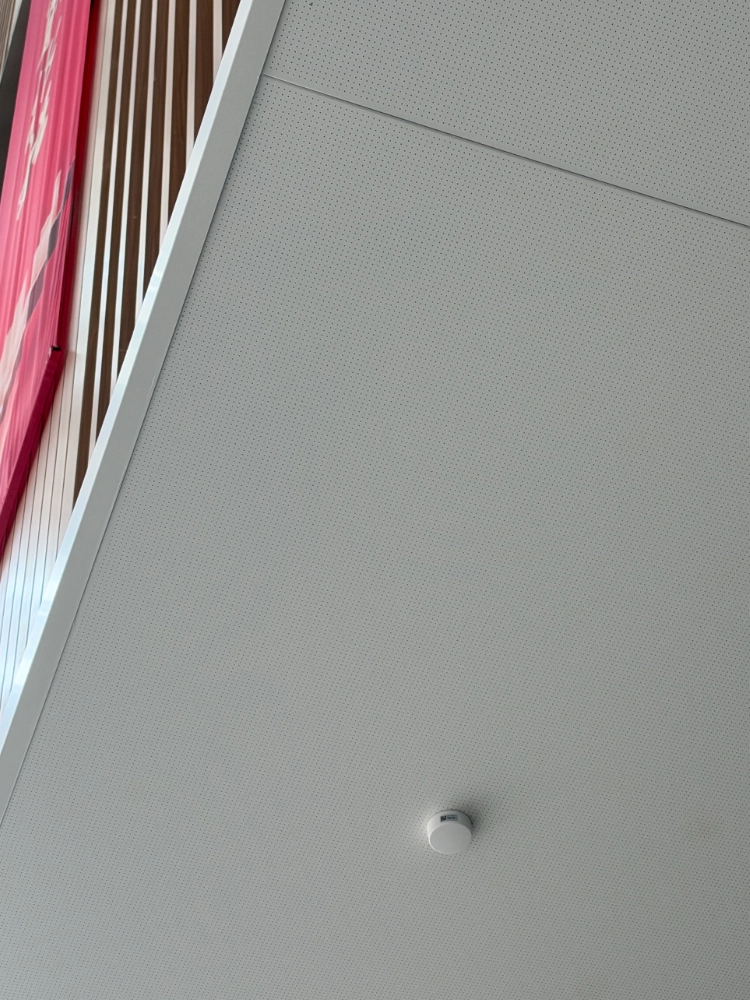
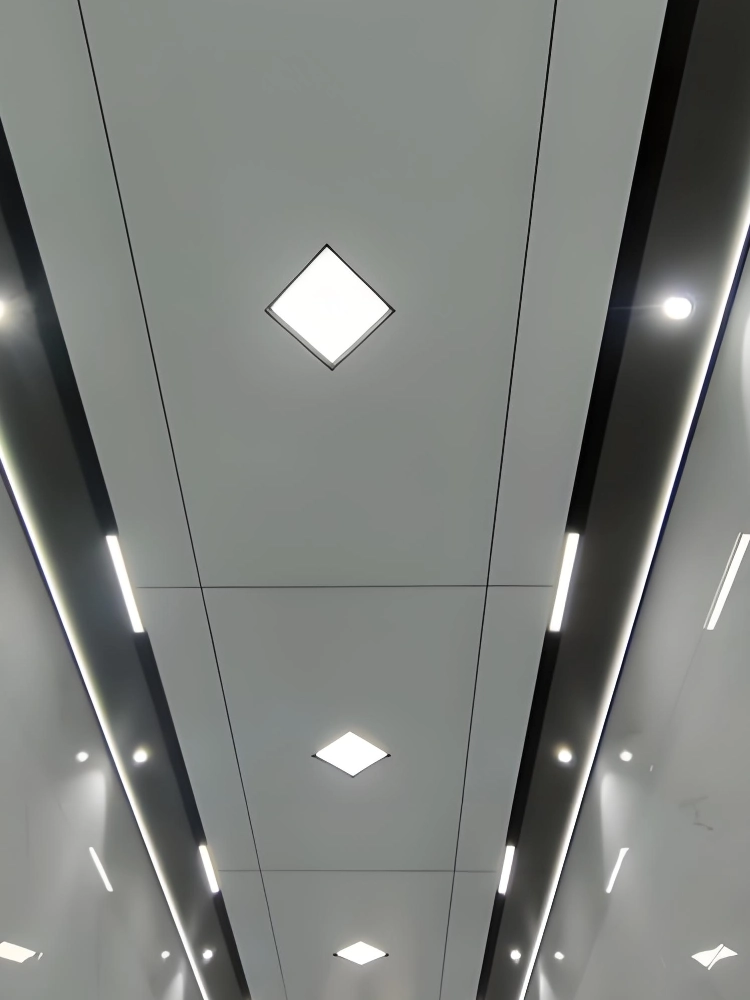
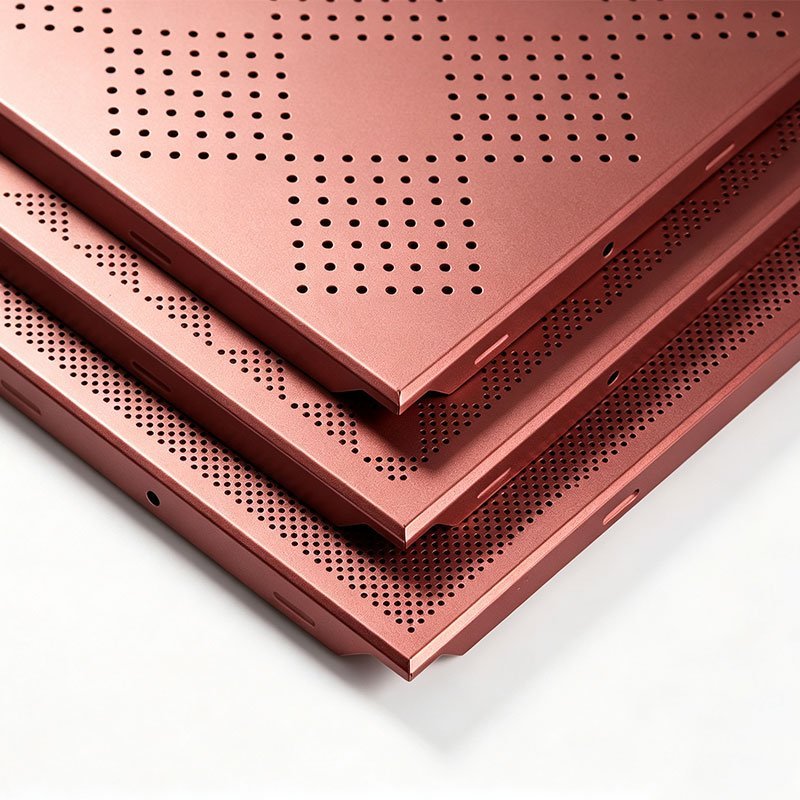
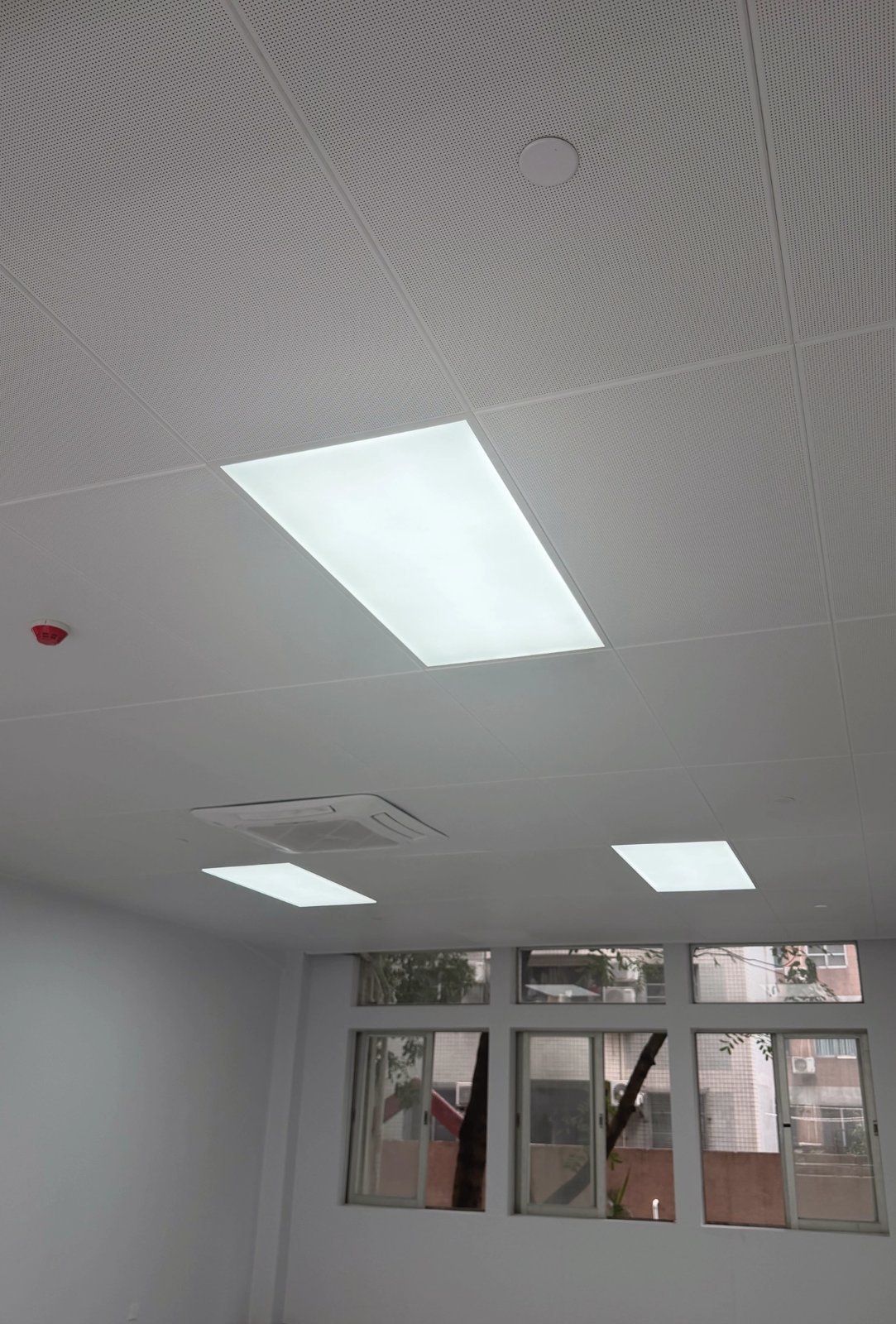
Indoor ceiling tile at LINDELACR is 0.6–0.8 mm. Alloy 1100 is enough on a simple dry room. 3003-H14 is the step up when the module is larger or the return has to stay flat. That is a ceiling. It is not a high-rise face. Exterior and weather-soffit plate is 2.0–3.0 mm. Putting the ceiling gauge on a tower to “save metal” is how a facade quote leaves the facade range and then fails the return.
The thickness band, and when 2.0 mm is the wrong saving, is in standard thickness for exterior aluminum veneer. A typical indoor return is 20–25 mm. A cladding return is set by the mullion the contractor already bought. Fold to that dimension in the shop. Do not ship a flat sheet and ask the site to invent the leg.
The coat has to match the Gulf face
Powder to AAMA 2604 is the indoor coat, one lot, for a dry room. Sun, driving rain, sand, and a coastal soffit call for PVDF to AAMA 2605, dry film at least 30 μm. The two lots are not interchangeable because a chip looked similar under office light. A west elevation in the Emirates sees UV the corridor never sees. Specify the exposure on the drawing, then keep that elevation on one coating lot. A later lot will show on a bronze field before anyone argues about the module.
Where each coat belongs, and what the dry-film number means on a cassette, is in PVDF versus powder on aluminum veneer. Spare panels come from the same lot. Do not add a second color on the crown unless the elevation actually changes. Film stays on until the gondola is at that floor.
A radius is not a repeated cassette
Each curve is its own drawing
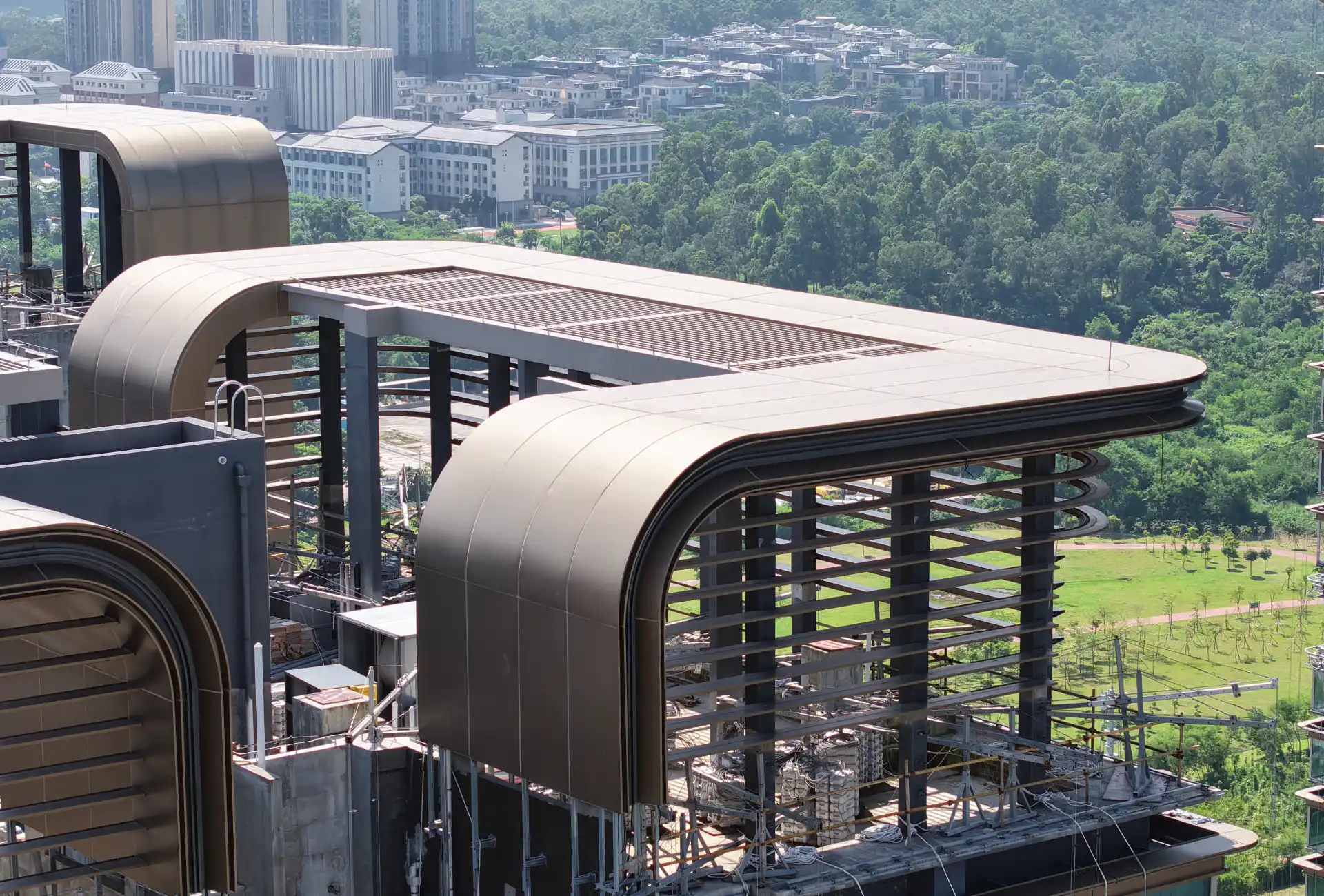
This crown is a radius. The bronze skin turns the corner, the louver sits in the opening, and the panel below is a separate folded piece. None of that is a flat cassette you can count by area and multiply. Each curved panel is a drawing, a nest, and a brake setup. A rectangular module that repeats down the shaft stays on the first number. A one-off sweep on every bay does not. Price the crown as the crown. Price the flat field as the field.
The same rule applies to a canopy or a soffit that leaves the wall line. If the engineer has already fixed the mullion spacing, the panel width follows that spacing. Changing the width after CNC is a new nest, not a site trim. Custom shape is allowed. It is priced as custom shape. Averaging it into a flat-cassette rate is how the second revision appears.
Fold the return before it ships
The channel is already formed
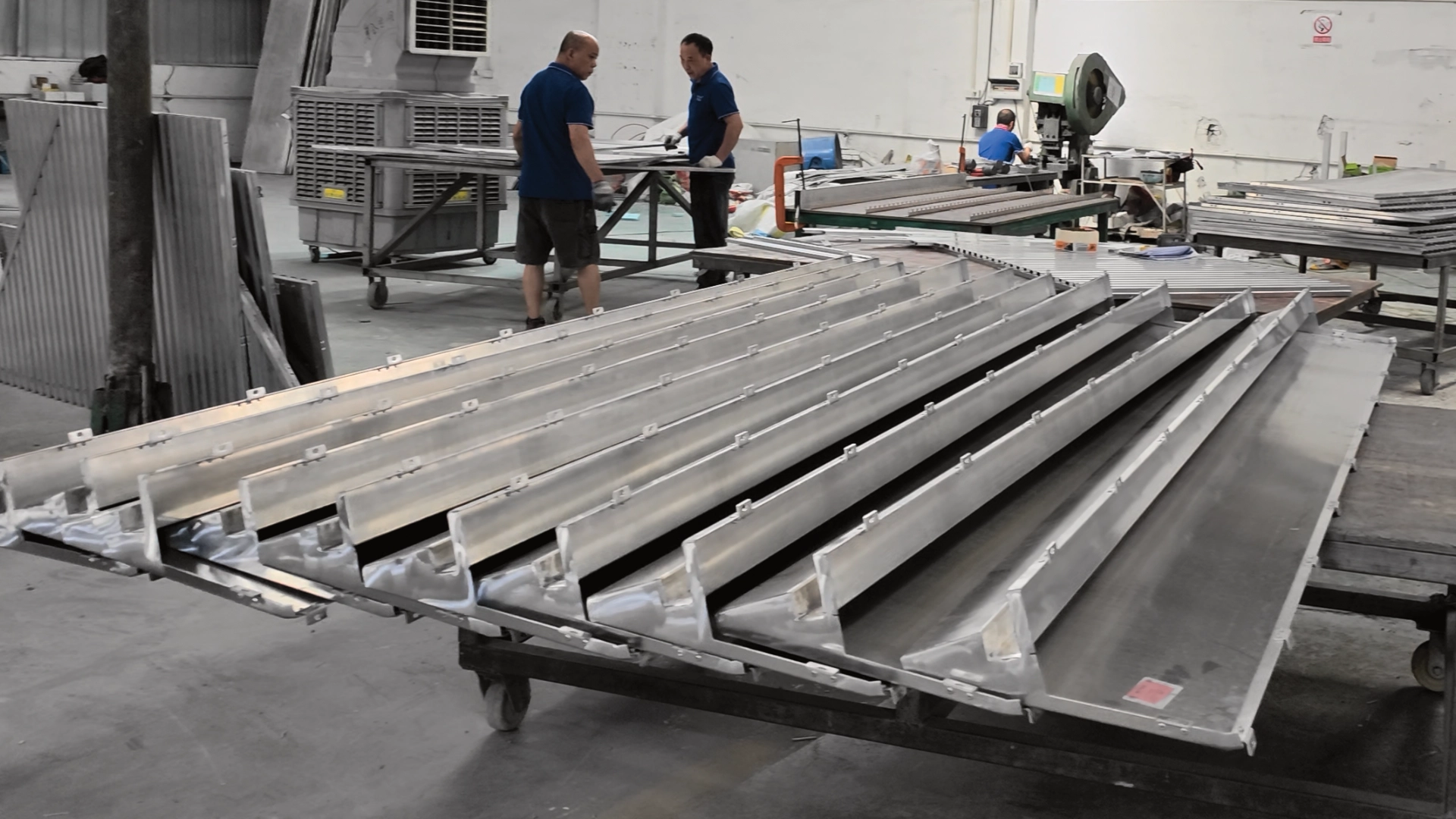
These are mill-finish aluminum channels on a cart in Foshan, return already folded, still short of coat. They are not a finished facade and they are not a ceiling tile. The return depth, the stiffener, and the leg that meets the engineer’s bracket are in the panel. A flat-sheet rate leaves them out, then the site tries to add them with a saw. A panel cut after PVDF is a new panel. Touch-up on a bronze face does not match the lot.
Holes for brackets belong on the CNC nest, taken from a shop drawing the contractor has signed. A bracket added in Dubai after the crate is open is the overrun. It is not a property of aluminum. LINDELACR does not roll the steel mullion and does not claim a cut in site hours. The saving is the recut you do not make. Send the elevation with the module, 2.0–3.0 mm called out, PVDF or powder named for that face, and the subframe listed as the contractor’s. A square-metre number without those lines is not a UAE quote.
Frequently asked questions
What affects metal cladding prices in the UAE?
Plate thickness, the coating the elevation will see, whether the module repeats, and who owns the subframe and the gondola. A rate per square metre that skips those lines is not a quote.
Is 0.6 mm aluminum enough for a UAE facade?
No. Indoor ceiling tile is 0.6–0.8 mm. Exterior wall plate at LINDELACR is 2.0–3.0 mm. Using the ceiling gauge on a tower is a different product, not a saving.
Should Gulf cladding be PVDF or powder?
Sun, sand, and a coastal soffit call for PVDF to AAMA 2605, dry film at least 30 μm. Powder to AAMA 2604 is the indoor coat. Do not put the indoor lot on a west elevation because the sample looked the same indoors.
Does factory folding change the site bill?
It removes the recut. The return is folded in Foshan to the drawing, then shipped. A panel sawn on a Dubai floor to miss a bracket is a new panel. LINDELACR does not hang the mullion, and does not publish a percentage for site time.
Send the elevation before anyone invents a rate
Mark the module, 2.0–3.0 mm on the weather face, and PVDF where the sun or the coast hits. Keep powder on the indoor lot. LINDELACR folds the return in Foshan and ships one coating lot. The mullion and the gondola stay on the contractor’s bill.