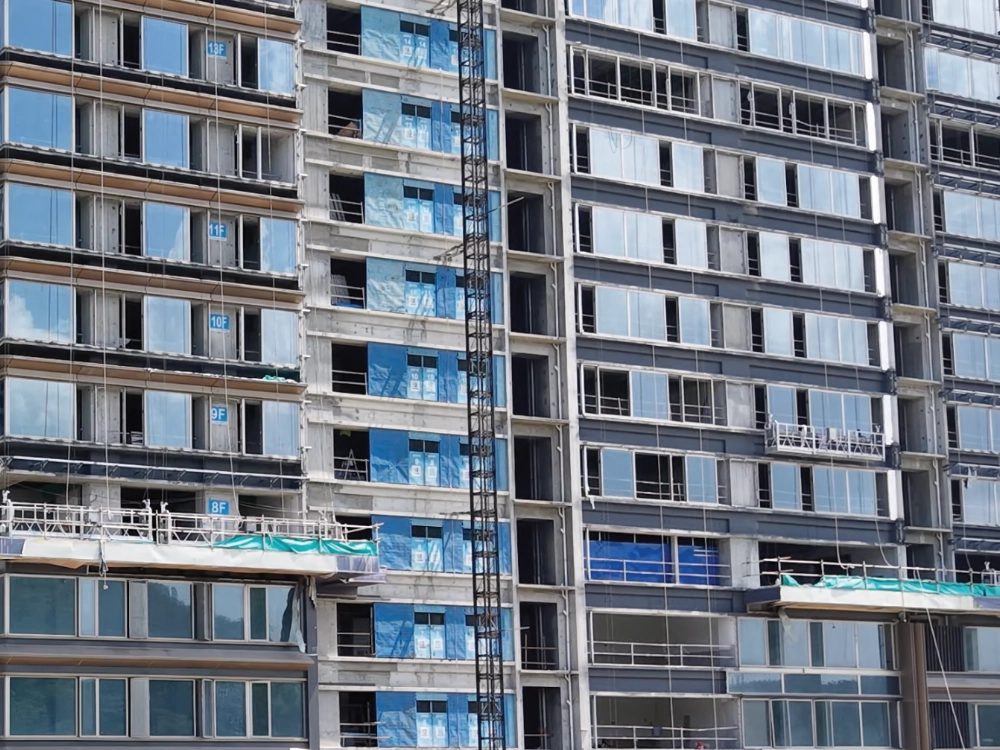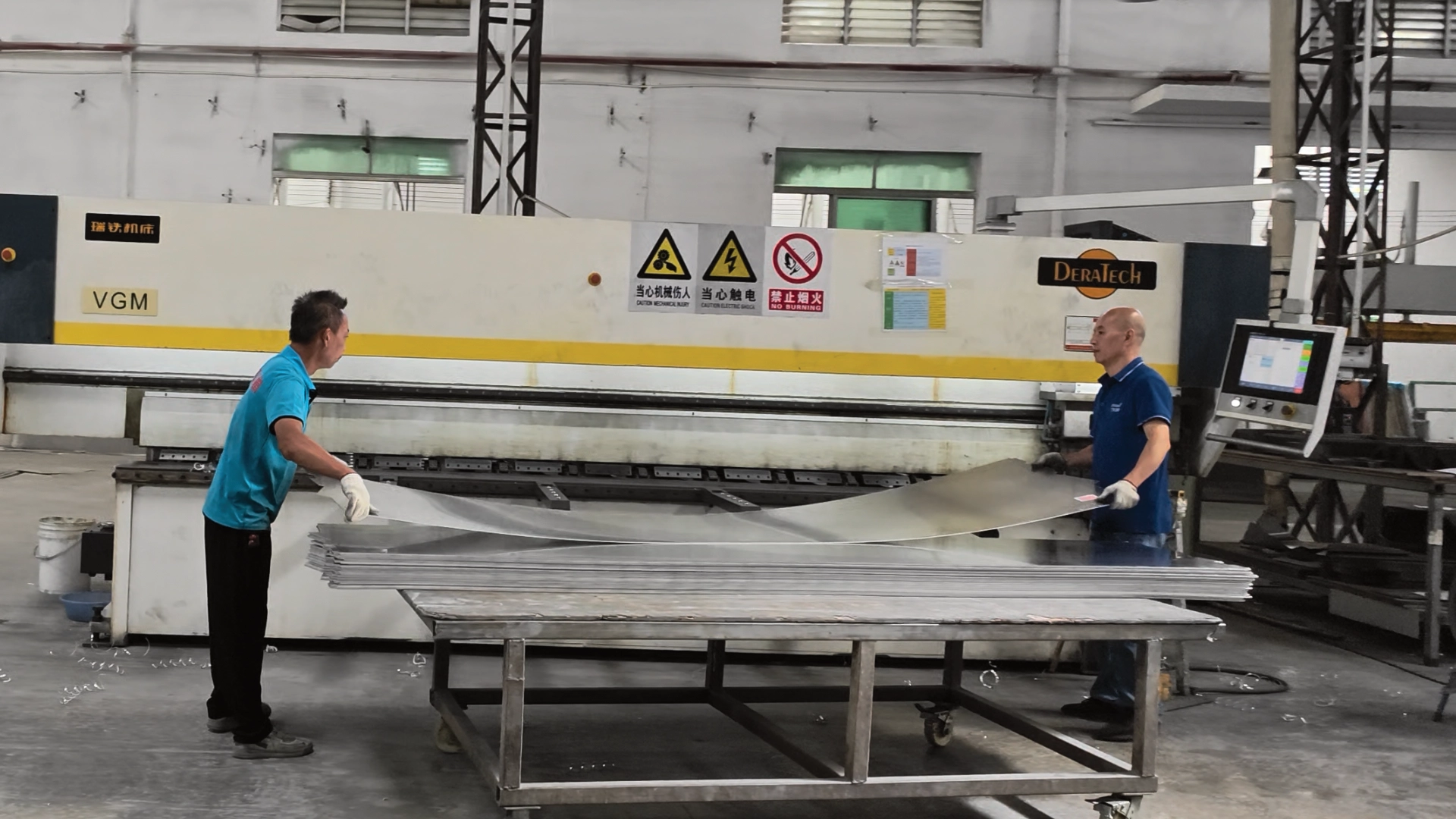
Oil canning on a flat aluminum wall panel is visible waviness in the broad face. It is an appearance issue that shows up in raking sun, not a coating defect. On a LINDELACR exterior cassette the controls are alloy, thickness, return depth, a true substrate, and clips that can move. Write those on the shop drawing before the brake. A thicker PVDF film will not hide a wide, thin flat.
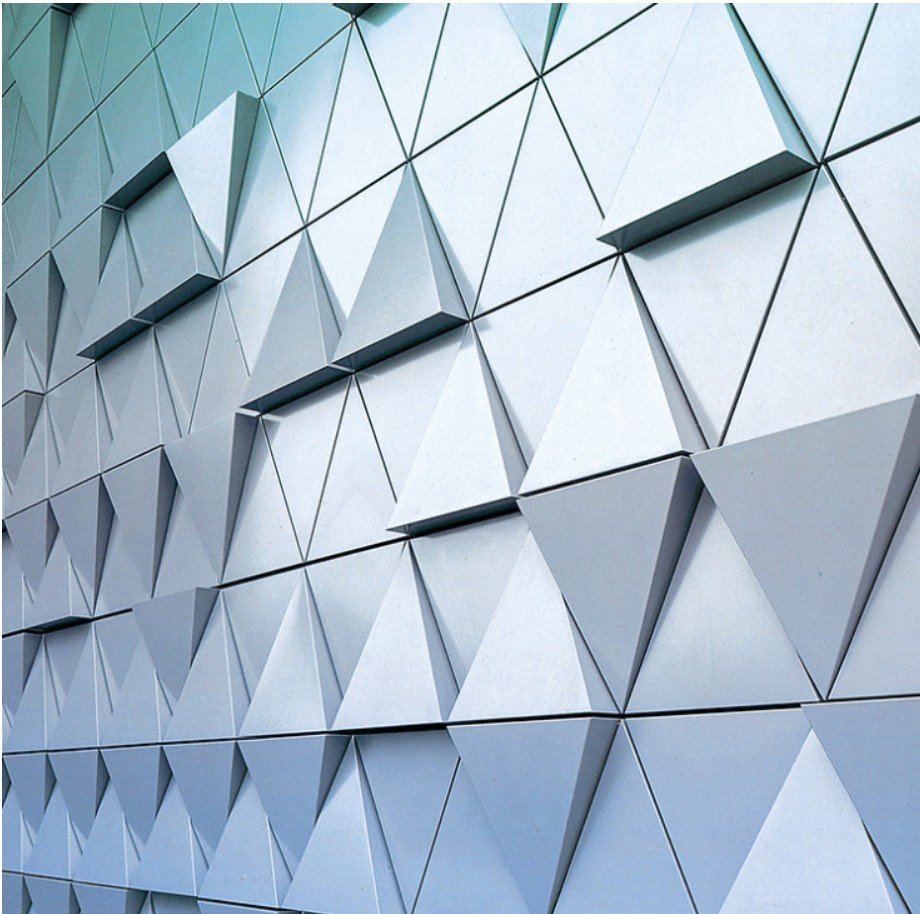
What oil canning is
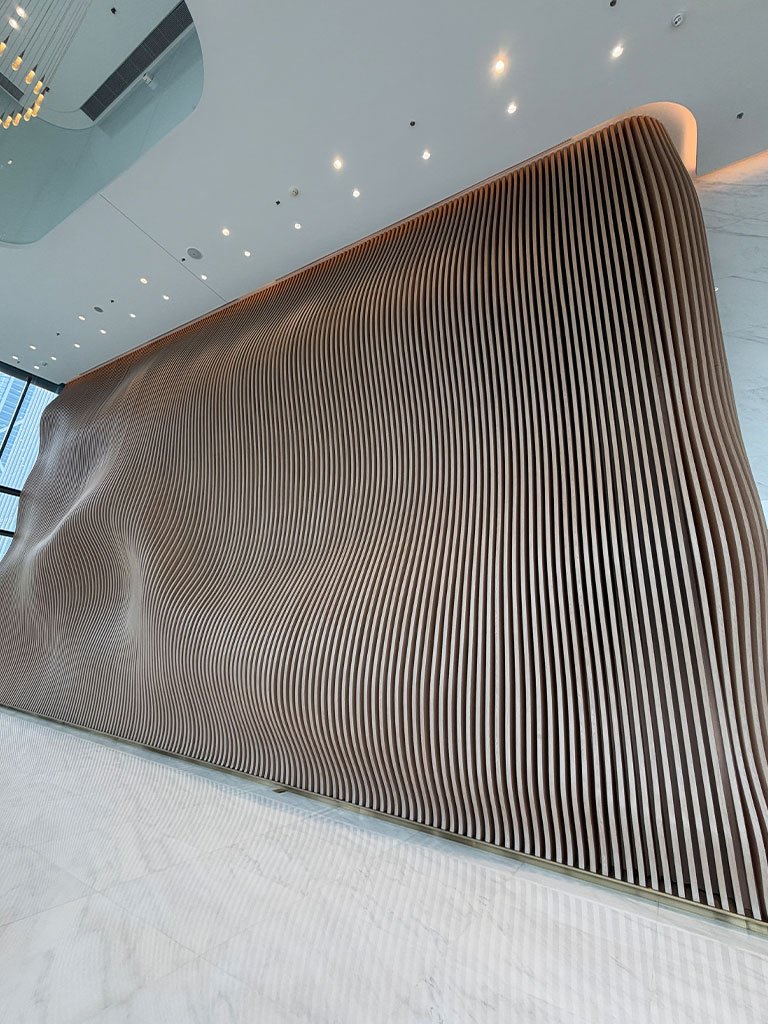
The Metal Construction Association describes oil canning as visible waviness in the flat areas of metal roof and wall panels. The same bulletin treats the words waviness, elastic buckling, and stress wrinkling as the same appearance. It occurs in steel, aluminum, zinc, and copper. Wider flats and thinner sheet make the wave easier to see. Sun angle and viewing angle change how obvious it is, often between two photos taken minutes apart.
MCA also states that oil canning is inherent in light-gauge cold-formed metal with broad flats. A careful specification reduces how often it shows and how strong it looks. It does not delete the characteristic. If a face is badly locked or the substrate is out of plane, check that condition against the drawing. Do not treat every shadow line as a structural failure, and do not ignore a panel that will not sit on its clips.
Source: Metal Construction Association, oil canning in metal roof and wall systems.
Decide this before the coil is cut
Search results for this topic are specification guides, not product catalogs with a magic flatness number. Architects and contractors want to know what causes the wave and what to write into the panel ticket. LINDELACR does not publish a separate oil-canning page today, so this note sits beside the existing thickness and shop-drawing pages rather than replacing them.
Read the face with the standard thickness for exterior aluminum veneer in the same sentence as the return. A wide curtain-wall module that oil-cans is a thickness-and-return problem. Paint is the next decision, not the fix.
Where the wave comes from
Residual stress in the coil and at the brake
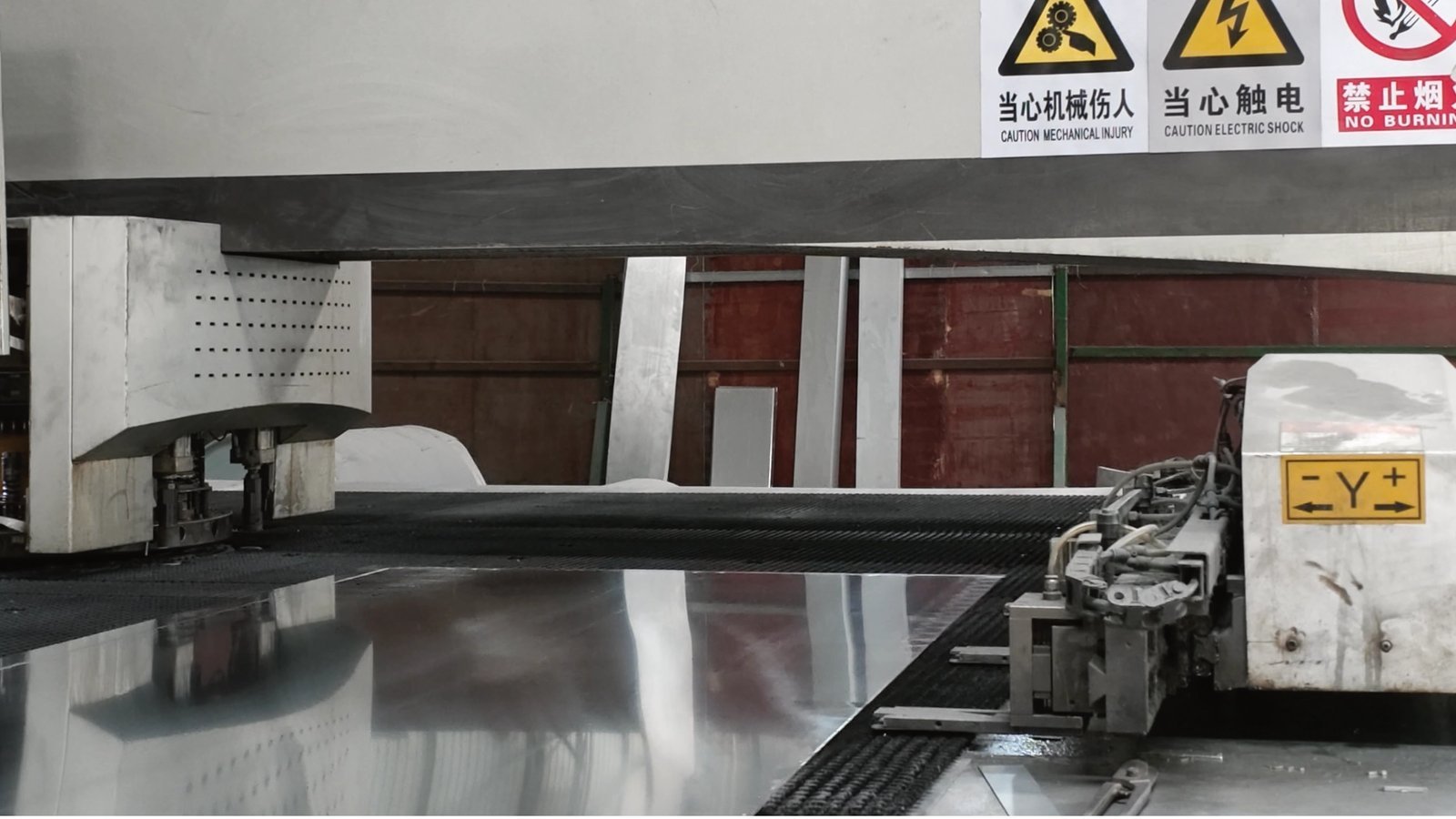
Sheet starts as coil. Rolling, slitting, and leveling leave residual stress. MCA names full center, wavy edge, and camber as coil conditions that exist to some degree in light-gauge flat-rolled metal. Edge forming then works the perimeter more than the middle of the sheet, so the stress is not symmetrical. Tension-leveled coil and a forming sequence that does not overwork one edge reduce the risk. They do not license a promise of a mirror face on a very wide module.
A wide flat on a thin plate
Stiffness drops as the unsupported flat gets wider and the plate gets thinner. On this shop the exterior formed sheet is 3003-H14, not 1100. Published exterior thickness is 2.0–3.0 mm of base metal. The thickness page sets 2.5 mm as the default exterior flat, and 2.0 mm only for a small, sheltered, or interior-adjacent bay. Custom-shaped faces, and mall, hospital, airport, and curtain-wall planes that must keep their return, are written at 3.0 mm. Do not copy a ceiling gauge or another product’s skin onto this wall.
A substrate or a clip line that forces the face
If the wall frame is out of plane, the cassette is pulled onto that error. Fasteners that pin the panel so it cannot expand and contract add a second stress. Aluminum moves with temperature. The attachment has to allow that movement along the joint the shop drawing shows. Shim only where the drawing permits. Do not bend a return to close a gap the structure should have been corrected for.
What the shop drawing has to carry
If the sheet cannot run the brake without a phone call, it is not a shop drawing. The facade shop-drawing ticket already lists the fields that control oil canning:
| Line on the ticket | What LINDELACR writes |
|---|---|
| Alloy and temper | 3003-H14 for formed exterior cladding. 1100 stays on simple, low-wind interior sheet. |
| Thickness | 2.0–3.0 mm base metal. Typical exterior flat 2.5 mm. 3.0 mm on custom-shaped and high-exposure curtain-wall planes named above. 2.0 mm only on a small sheltered bay. |
| Return | Cassette return typically 20–25 mm, deeper where the bay needs stiffness. Read the depth on the unfold, not from a brochure. |
| Coat | Exposed faces: PVDF to AAMA 2605, dry film at least 30 μm. The coat does not correct an underspecified plate. See PVDF versus powder coat. |
| Support and joints | Substrate plane, clip type, and a movement allowance. No invented gap size: the joint dimension comes from the project movement calculation. |
A first article in mill finish, before the color lot, is the right moment to accept or reject the face. Recoating a wavy cassette does not flatten it.
When geometry beats another coat of paint
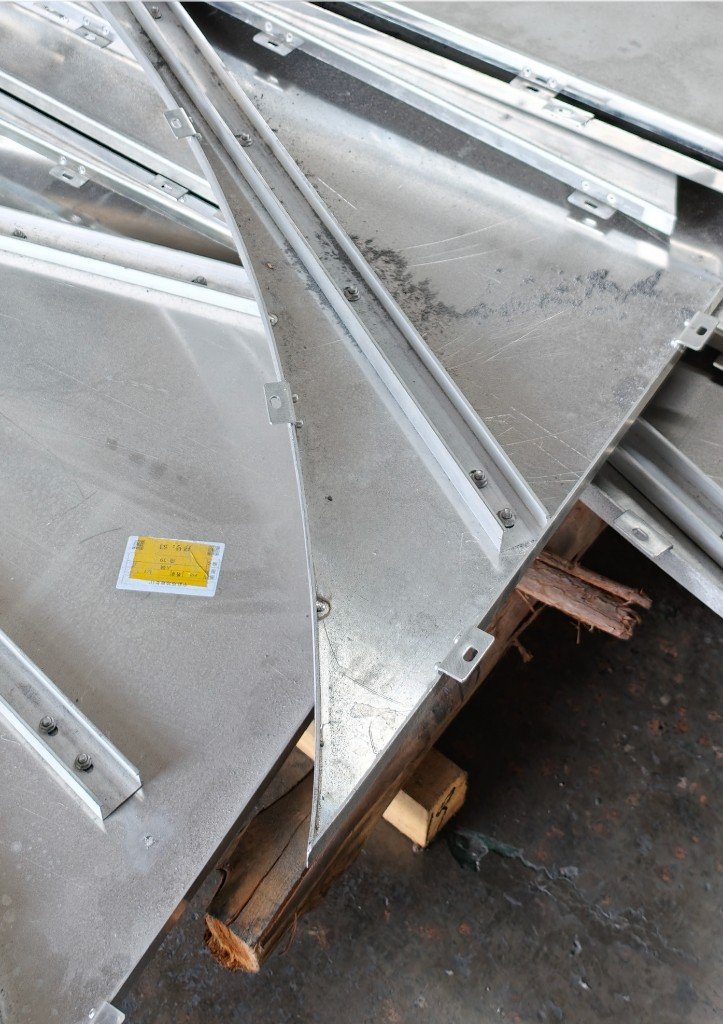
A completely flat, wide pan is the most honest architectural face and the most sensitive one. A shallow rib, a striation, or a deeper return breaks that pan into narrower flats and raises stiffness. Choose the profile for the elevation, not as an afterthought when the mock-up waves. Honeycomb or another named core belongs on the drawing only when the module is too wide for a solid 3003 skin. Do not call a solid cassette a honeycomb panel because the file name said so.
Formed edges still need pretreatment before PVDF or powder. Cut edges and returns are where corrosion starts if the conversion coat misses them. That is a durability note. It is separate from oil canning.
How to accept the face on site
Agree the viewing distance, the time of day, and what counts as acceptable waviness before installation, using a sample panel or a small mock-up on the real substrate. MCA’s own photographs show the same panel reading differently as the sun moves. Inspect under the light the building will actually see, from the distance a person stands, not from a telephoto across the street and not with a light raked along the face at dawn unless that is the agreed condition.
- Check the frame with a laser or a string line. Correct plane errors before the first cassette hangs.
- Match alloy, thickness, finish, and panel mark to the approved ticket.
- Confirm returns, clip holes, and openings against the unfold.
- Hang so the panel can move. Do not draw every fastener tight to “remove” a wave.
Questions specifiers ask
What causes oil canning in flat aluminum wall panels?
Residual stress from coil production and forming, a wide flat on a thin plate, a substrate that is out of plane, and fasteners that stop thermal movement. On LINDELACR exteriors the plate in that sentence is 3003-H14 at 2.0–3.0 mm, with the return on the shop drawing.
Will 3.0 mm or a thicker PVDF film remove it?
Thicker 3003-H14 is stiffer than 2.0 mm of the same geometry, which is why exposed curtain-wall planes on this site are written at 2.5 mm or 3.0 mm rather than a thin decorative skin. Thickness alone does not eliminate oil canning. PVDF dry film of at least 30 μm to AAMA 2605 is a weathering coat. It does not flatten the metal.
Are ribbed or returned panels less likely to show it?
Yes, as a visual and stiffness matter. Ribs, striations, and a real return narrow the flat and add section. The result still depends on coil condition, thickness, and whether the installer forces the panel onto a bad frame.
Does oil canning mean the panel is structurally unsafe?
Industry guidance treats ordinary oil canning as an appearance condition. A panel that cannot be clipped without distorting the return, or a substrate that is visibly out of plane, should be checked against the drawing before more panels are hung. This page does not assign a wind-load rating.
Can a fabricator guarantee zero oil canning?
No. It is inherent in broad light-gauge flats. The enforceable promise is the ticket: alloy, thickness, return, a level substrate, movement at the joint, and a mock-up accepted under an agreed light.
Send the elevation before the thickness is guessed
Two ways to start. Use either or both.
Short RFQ. Email lindelacr@lindelacr.com or the contact page with four items: your name, company, work email, and the CAD, BIM, or BOQ file. Add area, site, and program if you have them. Ask for a shop-drawing split that marks which bays stay at 2.5 mm and which go to 3.0 mm. The hook we can print is: request a 2.5 mm / 3.0 mm sample box, or submit drawings for a CAD feasibility check and a factory quotation. Whether that box is free, what is inside it, and which regions it ships to is confirmed on the quote, not assumed here.
WhatsApp. Message +86 186 7237 3479 with project location, system type, and the thickness or coating you intend. The number is the one published on this site.