
What Should You Specify on a High-Traffic Acoustic Ceiling Tile?
A high-traffic ceiling tile is specified by gauge, edge, and access. NRC is not impact resistance. Indoor aluminum is 0.6–0.8 mm, return 20–25 mm.

A high-traffic ceiling tile is specified by gauge, edge, and access. NRC is not impact resistance. Indoor aluminum is 0.6–0.8 mm, return 20–25 mm.
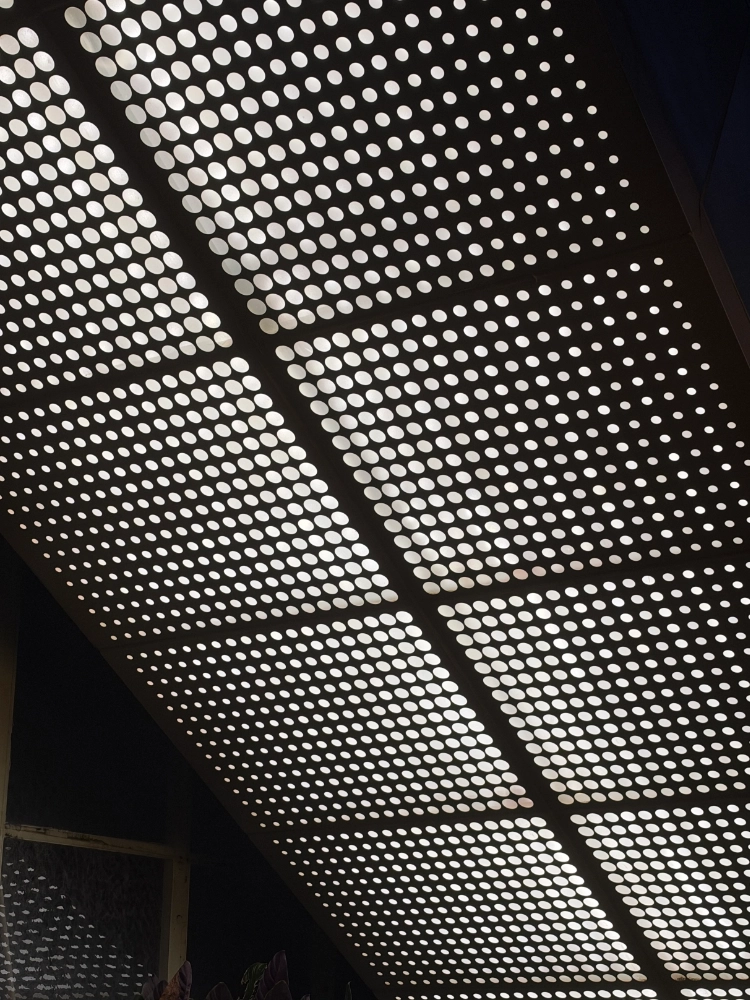
A 2×2 tile covers 4 sq ft and is not a 600 mm module. A 2×4 covers twice the area. Match the grid, the lights, and the edge before you count panels.
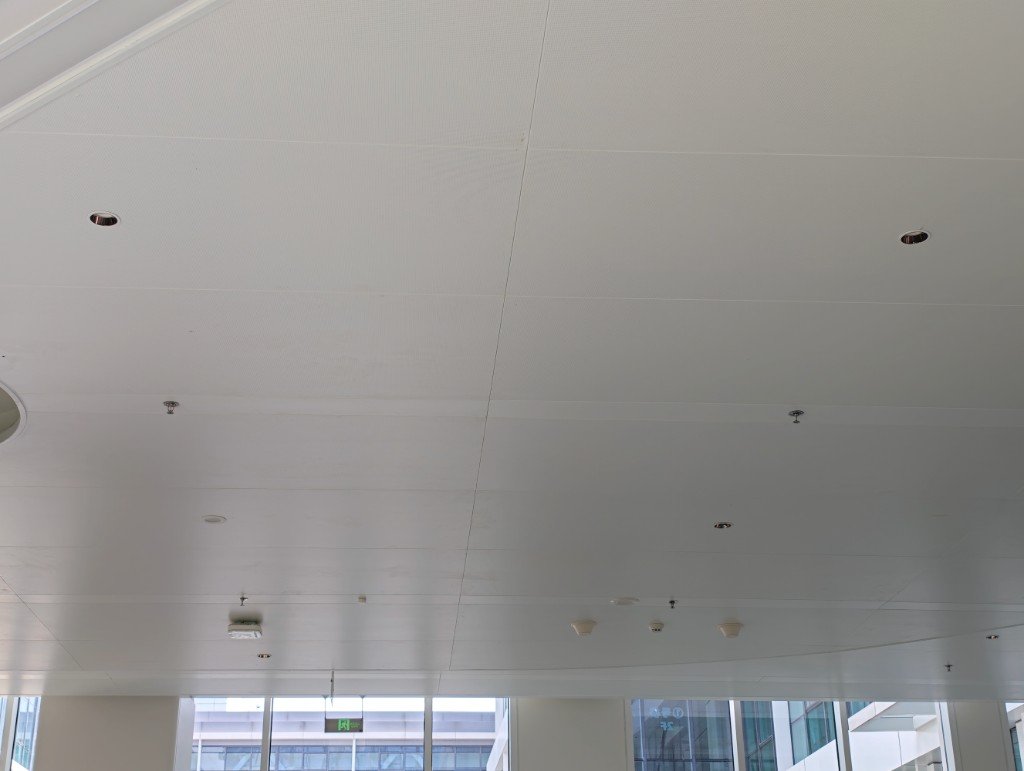
A replacement acoustic tile has to match the module, the edge, and the powder lot. Indoor aluminum is 0.6–0.8 mm. One tile comes down whole.
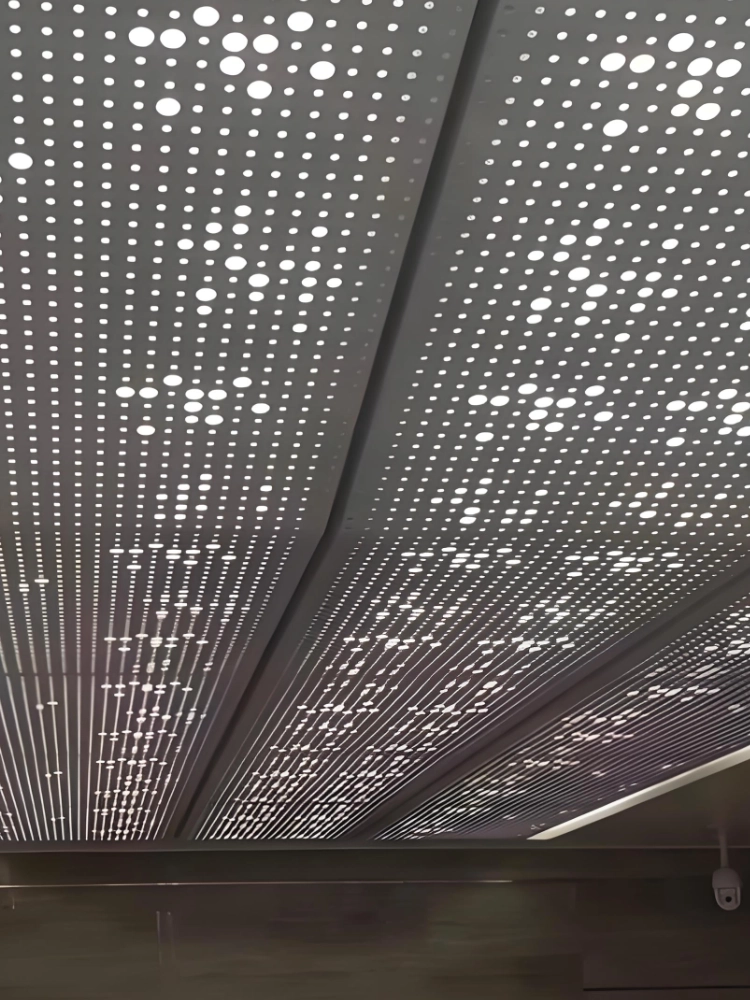
Name the panel, the backing, the grid, and the hanger before you call a ceiling acoustic. Indoor aluminum is 0.6–0.8 mm. LINDELACR publishes no NRC.
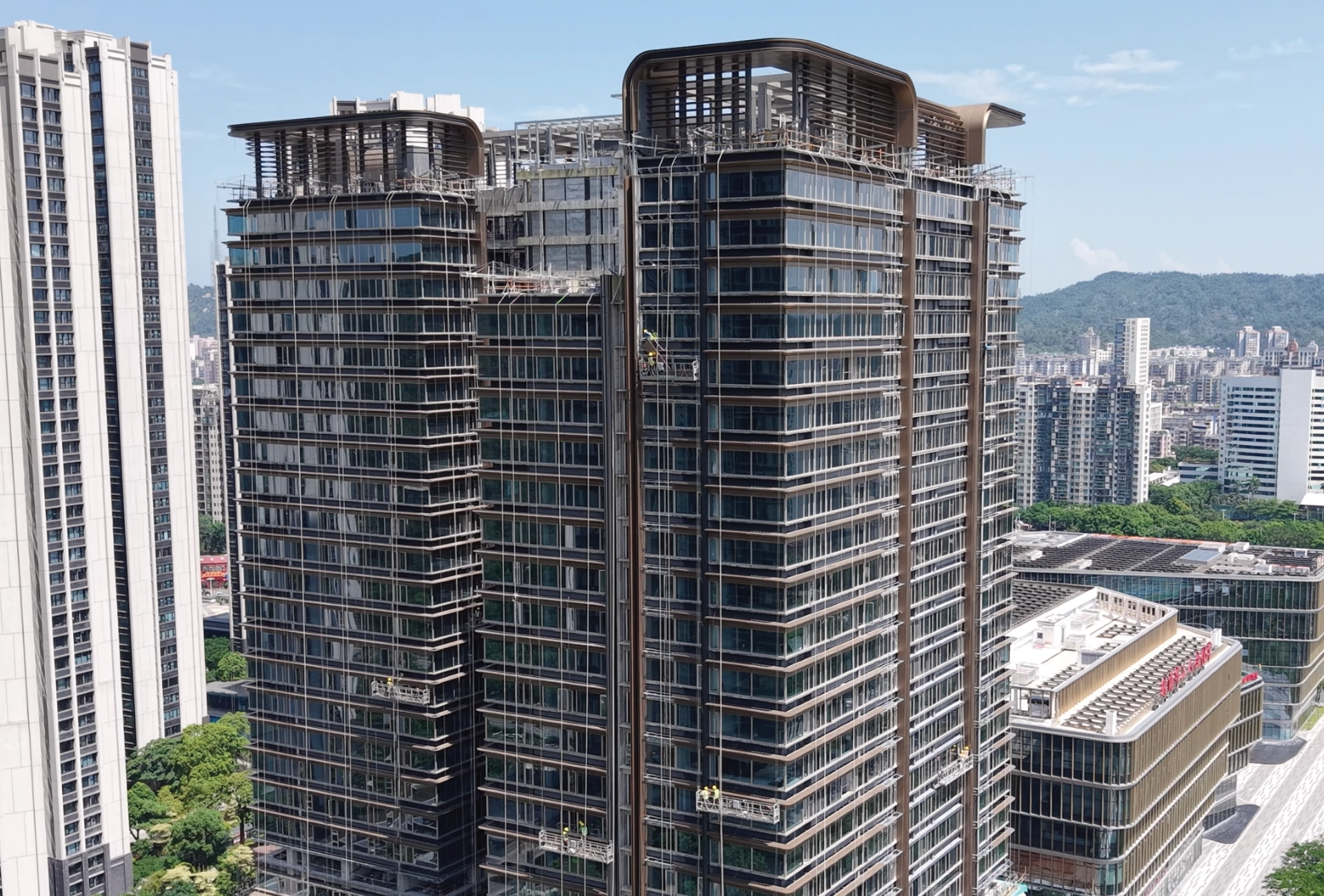
A UAE cladding quote moves with 2.0–3.0 mm plate, PVDF versus indoor powder, and a repeated module versus a one-off radius. No rate per square metre.
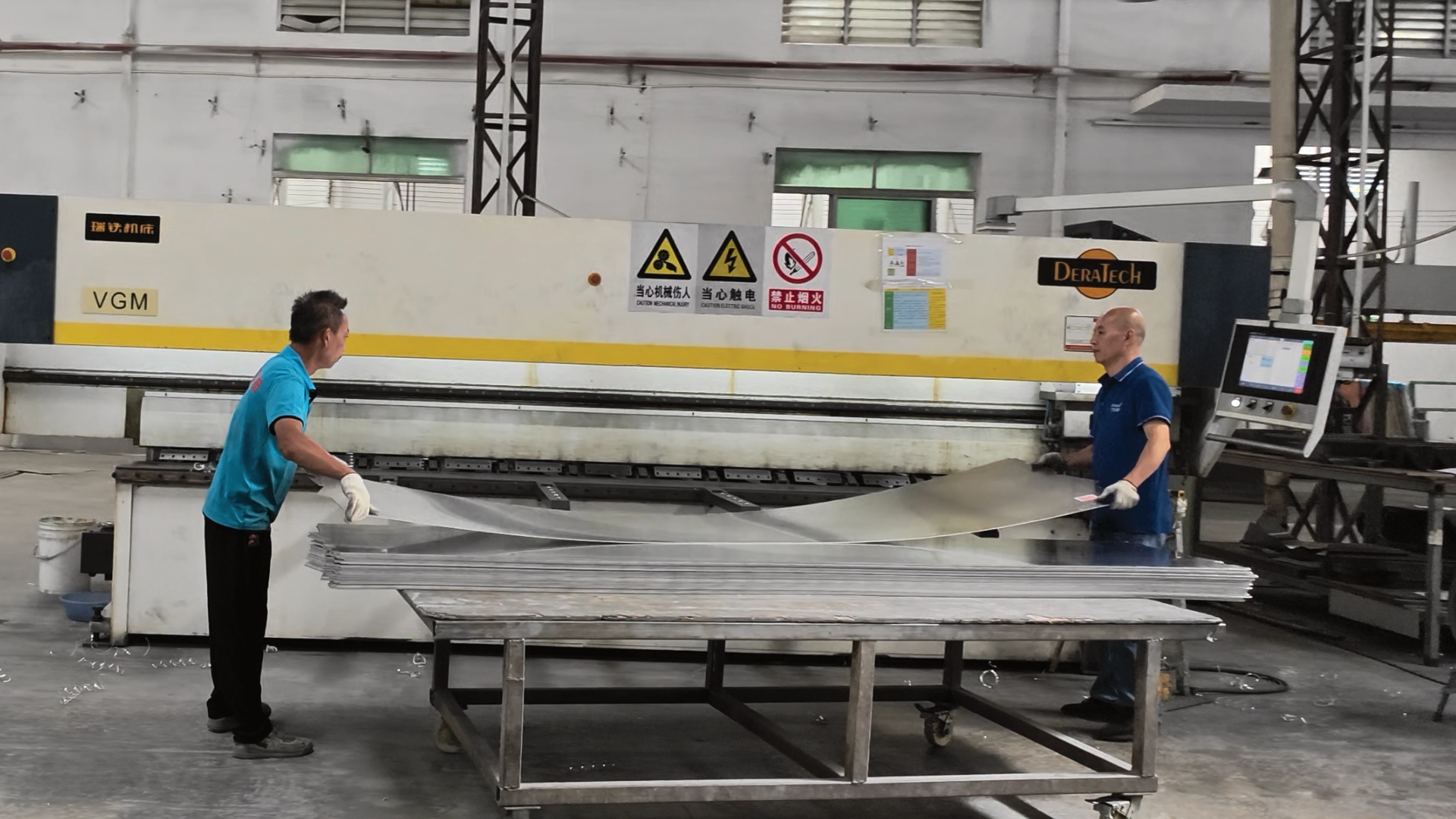
A drop ceiling quote moves with the module, the powder lot, and whether lights are frozen before CNC. Indoor aluminum is 0.6–0.8 mm. No rate per foot.
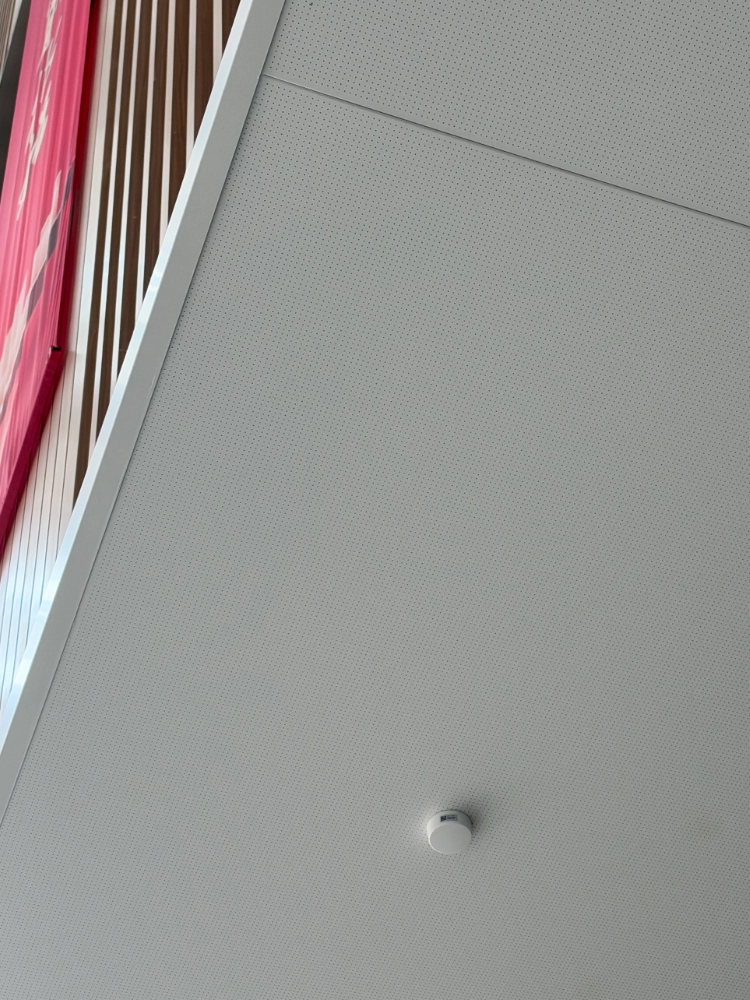
A T-bar ceiling tile has to seat in the tee. Square edge fits a 24 mm face. Tegular needs the same profile. Indoor aluminum is 0.6–0.8 mm, one lot.
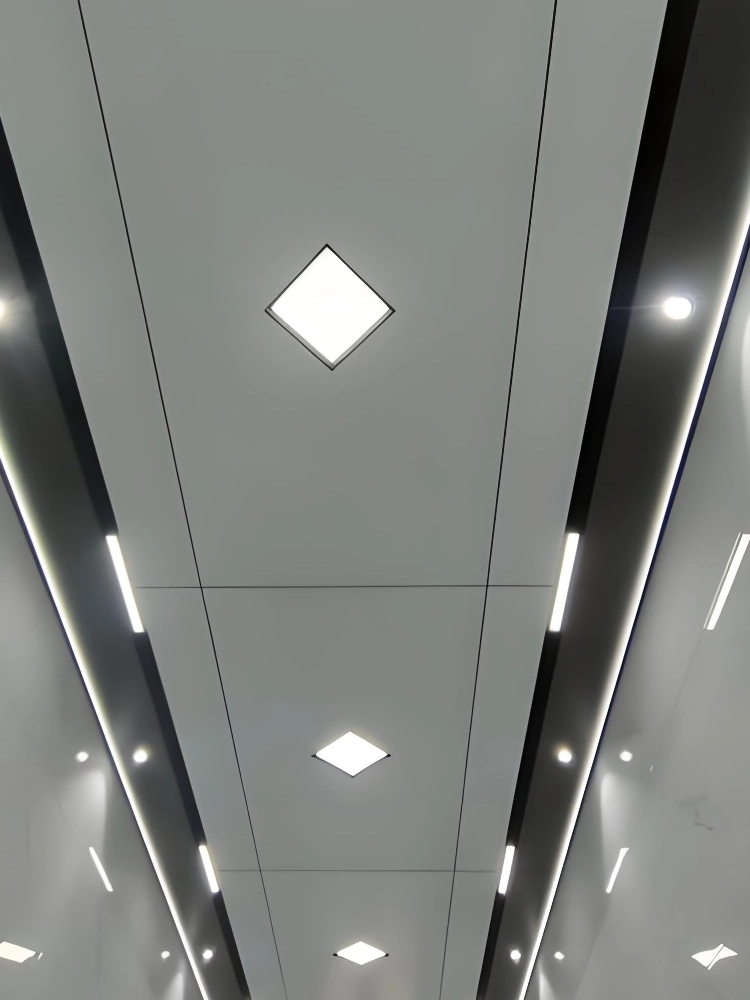
Exposed grid shows a 24 mm tee and lifts by hand. Concealed clip-in hides the carrier behind a hairline joint. Indoor aluminum is 0.6–0.8 mm.
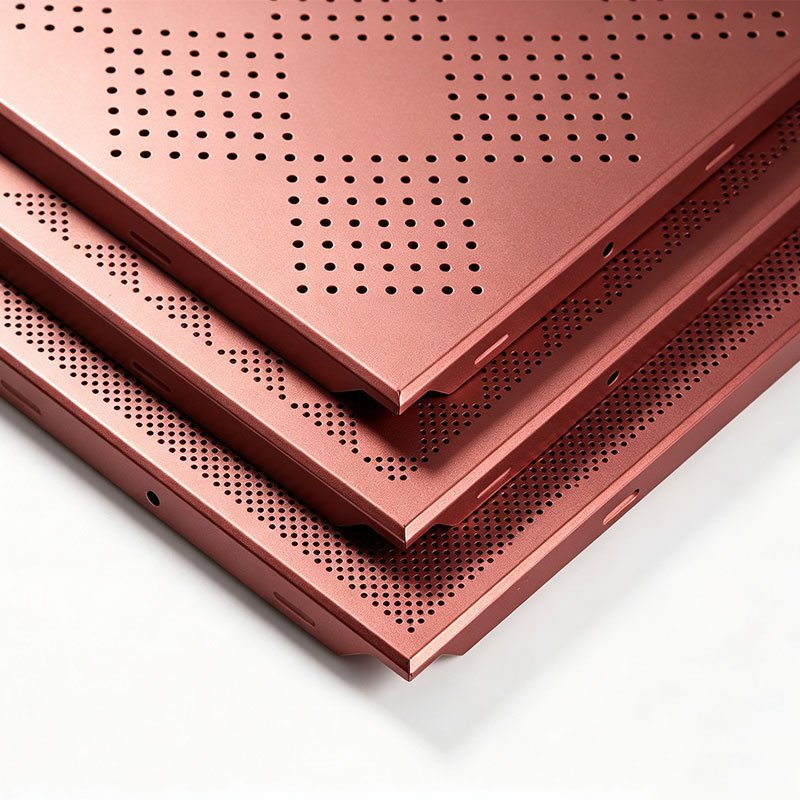
Corrosion-resistant T-bar ceiling: match the metal to the room. A dry office can keep a steel tee. Pools fail at the cut edge. Tile is 0.6–0.8 mm.

